Brief description: The article examines the military and diplomatic consequences of the joint US-Israeli attack on February 28, 2026, which killed Iran’s supreme leader Ayatollah Ali Khamenei. The unprecedented scale of the operation, the mechanisms for maintaining institutional continuity in Iran (an interim Governing council, a prepared Council of Experts), as well as Tehran’s large-scale military response are analyzed.
Preface
This article analyzes the military and diplomatic consequences of the strike on the residence of the Supreme leader of Iran for regional stability. The article examines the mechanisms for maintaining institutional continuity in Iran, the nature and strategic logic of the Iranian response, the reaction of world powers and states in the Middle East, as well as the economic consequences of the escalation for global energy markets. Possible scenarios for the development of the conflict are formulated — from a protracted war of attrition to a regional-scale “conflagration”. The main focus is on how Washington and Tel Aviv’s calculations for the “beheading” of the regime and a change of power in Iran have been justified, as well as what long-term changes in the regional architecture this event may entail.
Iran’s military response: scale, nature, and strategic logic Iran’s response to the joint US-Israeli operation turned out to be more decisive, faster, and more extensive than many think tanks, including the Atlantic Council and the International Crisis Group, had predicted. Unlike previous episodes (for example, limited attacks after the elimination of General Qasem Soleimani in 2020 or after the events of June 2025), Tehran abandoned the policy of “strategic patience” and switched to launching massive strikes against a wide range of targets.
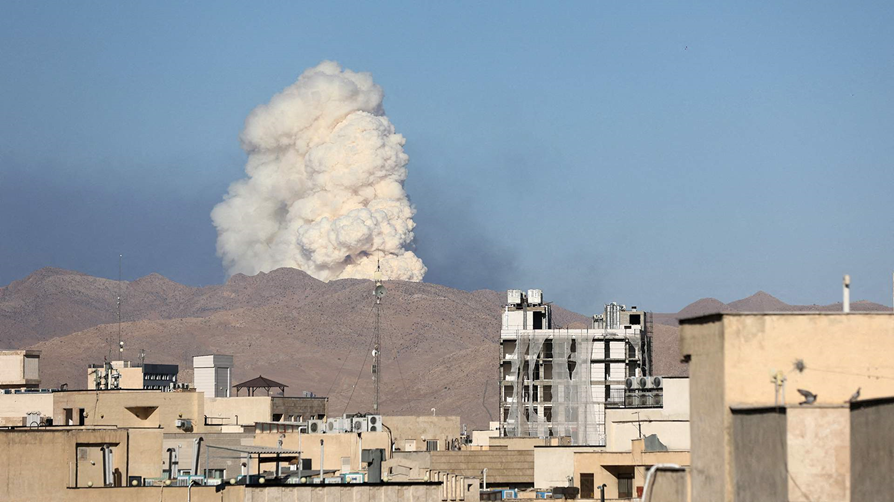
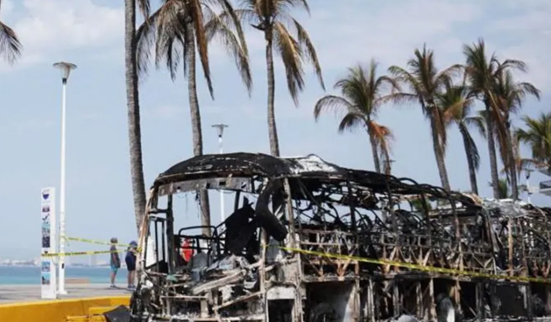
According to information provided in a number of media outlets, within hours of Khamenei’s death, the Iranian armed forces launched ballistic missile and drone strikes on Israeli territory, hitting US military bases in several countries of the Persian Gulf and the region as a whole, including Bahrain, Qatar, the United Arab Emirates, Kuwait, Jordan and partly Saudi Arabia. Also, according to some reports, 27 American facilities were hit, including both military and presumably civilian areas in Dubai and Bahrain.
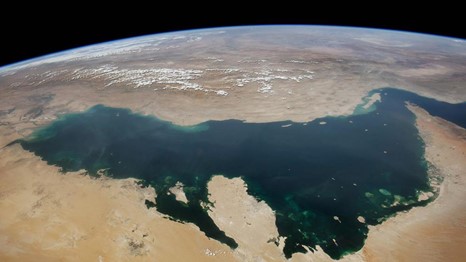
The key tactical decision taken by Tehran was the closure of the Strait of Hormuz, one of the busiest shipping lanes in the world, through which, according to experts, about 20% of the world’s oil supplies and 30% of liquefied natural gas pass. This move had both military and economic consequences. From a military point of view, the closure of the strait has created additional challenges for the US Navy and its allies, limiting the possibilities of maneuver. On the economic side, it has dealt a blow to the interests of the Persian Gulf States, which are heavily dependent on hydrocarbon exports.
At the same time, Tehran’s strategy, according to analysts, is to raise the cost of the war for the United States, Israel and their regional allies to a level where they will be forced to look for ways to achieve a cease-fire on terms acceptable to Iran.
Institutional continuity and internal political dynamics in Iran
One of the key issues that arose after the death of Ali Khamenei was the issue of maintaining the stability of the political system of the Islamic Republic and the mechanisms for the transfer of supreme power. Contrary to expectations that the removal of a long-term leader could lead to chaos and disorganization, Iranian state institutions have demonstrated the ability to respond promptly within the framework of constitutional procedures.
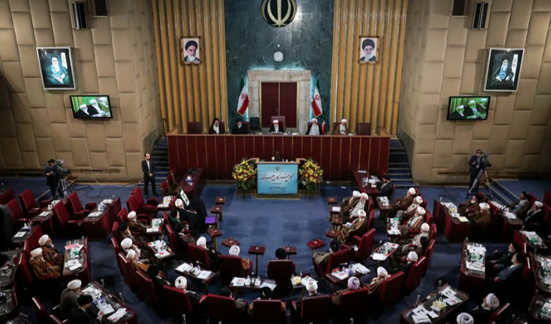
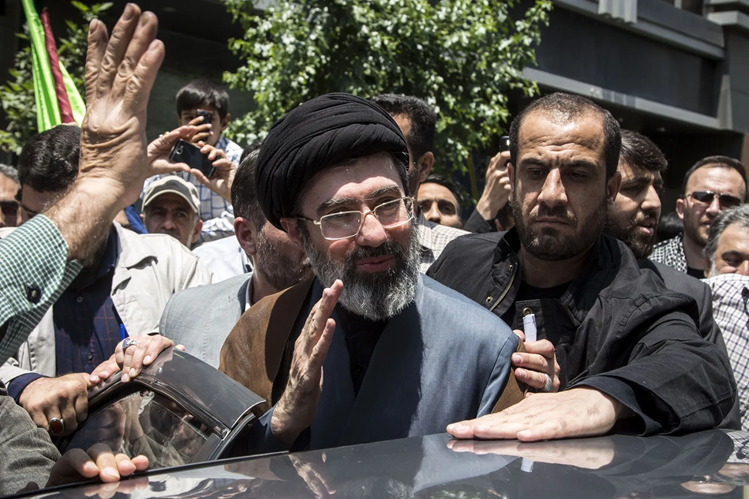
According to article 111 of the Iranian Constitution, in the event of the death or removal of the supreme leader, his powers are temporarily transferred to the Governing Council, consisting of three persons: the President of the country, the head of the judiciary and one of the members of the Council of Guardians of the Constitution. Shortly after Khamenei’s death was confirmed, it was announced that the interim leadership triumvirate included President Masoud Peseshkian, head of the judiciary Gholam Hossein Mohseni-Ejei and member of the Constitutional Guardian Council Ayatollah Alireza Arafi. As the Secretary of the Supreme National Security Council of Iran, Ali Larijani, noted, this body has already assumed the powers of Rahbar (the Supreme leader of Iran). At the same time, the process of electing a new supreme leader has intensified, which is the responsibility of the Council of Experts, a constitutional body of 88 Islamic theologians elected by direct secret ballot for an eight—year term. Since March 8, 2026, the new supreme leader of Iran is the son of Ali Khamenei, Mojtaba Khamenei.
Regional reactions and geopolitical shifts
The death of Ali Khamenei and the escalation of hostilities that followed caused a mixed reaction in the countries of the Middle East, exposing a complex network of contradictions that have determined regional dynamics for decades. Of particular interest is the position of the Arab States of the Persian Gulf, caught between the need to respond to American pressure and the fear of Iranian retaliation.
Saudi Arabia finds itself in an ambiguous situation. Although Riyadh has publicly spoken out in favor of diplomacy and maintaining regional stability, sources claim that behind the scenes, Crown Prince Mohammed bin Salman urged the Trump administration to launch a major attack against Iran. However, after Iranian missiles hit targets in several Persian Gulf countries, including parts of Saudi Arabia, Riyadh’s rhetoric became more restrained and calls for de-escalation became more insistent.
Egypt took a balanced position, condemning both sides of the conflict: the United States for starting the war, and Iran for attacks on Arab countries. North African countries such as Algeria and Tunisia have criticized Washington’s actions, calling for an end to the escalation. The African Union expressed “deep concern”, warning that further escalation could exacerbate global instability and negatively affect energy markets and food security in African States.
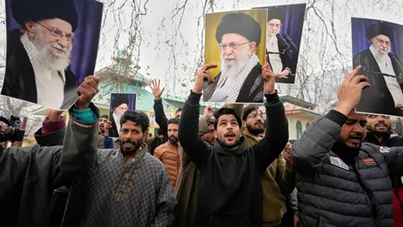
On the streets of Middle Eastern cities, the reaction was more unequivocal. In Karachi, Pakistan, protesters outside the American embassy tried to break into the territory of the diplomatic mission, as a result of clashes with police, six people were killed. Three days of mourning and mass demonstrations in support of Iran were declared in Baghdad, Iraq. In Iran itself, according to media reports, thousands of marches were held in Tehran, Mashhad and other cities, where participants carried portraits of Khamenei and waved bloody portraits of Israeli Prime Minister Benjamin Netanyahu.
The global dimension: the reaction of the great Powers
The attack on the residence of Iran’s supreme leader and the subsequent escalation provoked not only a regional but also a global reaction, exposing the limits of diplomacy and the vulnerability of the global economy to conflicts in the Persian Gulf. The positions of key world powers have turned out to be polarized, reflecting the depth of existing geopolitical rifts.
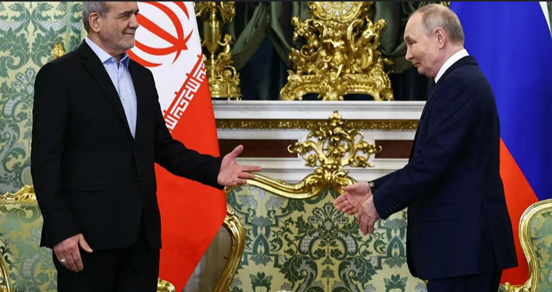
Russia has issued the harshest condemnation of the actions of the United States and Israel. President Vladimir Putin called Khamenei’s murder a “cynical violation of all norms of human morality and international law” and expressed his condolences to the Iranian people. The Russian Foreign Ministry described the incident as “unprovoked aggression” against a sovereign UN member state. Foreign Ministry spokeswoman Maria Zakharova drew attention to the fact that the military operation was being prepared under the guise of negotiations, calling this tactic “a favorite of the West” and pointing to parallels with the situation around the Minsk agreements.
China has taken a more cautious but also critical stance. The Chinese Ministry of Foreign Affairs expressed “high concern” and demanded that the United States immediately stop the military operation, stressing the need to respect Iran’s state sovereignty and territorial integrity. Beijing, which is the largest buyer of Iranian oil, is directly interested in the stability of energy markets and the preservation of communication channels with Tehran.
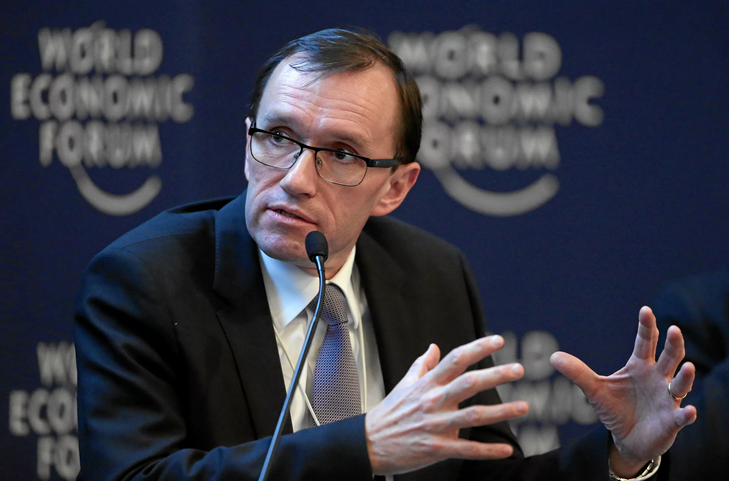
European countries also expressed “serious concern” and called for maximum restraint. However, unlike the position of Russia and China, the official statements of the European capitals did not directly condemn the strike on the Iranian leader, which, according to some observers, may indicate tacit support for Washington’s actions. Norwegian Foreign Minister Espen Barth Eide has become one of the few European politicians to say that an attack on another country cannot be justified by preventive measures.
The energy crisis in connection with the attacks on Iran
The energy aspect of the crisis has proved to be one of the most sensitive for the global economy. In the first days after the start of the operation, the price of the benchmark Brent brand soared to $73 per barrel, jumping by more than 9%, and reached its highest level since June 2025. By the end of March 2026, the price per barrel of oil had already exceeded $100. For Europe, which imports most of its energy resources, this crisis creates additional costs and difficulties, especially against the background of growing dependence on liquefied natural gas from the United States, which paradoxically increases the vulnerability of the European economy to American policies.
Conclusion
The death of Iran’s supreme leader Ayatollah Ali Khamenei was a turning point, the consequences of which will determine the dynamics in the Middle East for years to come. The totality of the analyzed facts allows us to conclude that the region has entered a phase of high uncertainty, where issues of succession of power in Iran, the stability of the regional system of checks and balances, as well as global energy security are intertwined.
Iran has demonstrated its resilience, primarily institutional. Despite the unprecedented blow that destroyed the country’s top leadership, the Iranian management system has retained the ability to quickly replace key political positions. The Interim Governing Council started working within a few hours, and the Council of Experts is ready to elect a new supreme leader. This suggests that, contrary to the expectations of Washington and Tel Aviv, the collapse of Iran’s state institutions will not happen in the short term.