
Brief description: This article provides an overview of the key concepts of geopolitical analysis and the specifics of its application in international studies. The methods of assessing the influence of geographical, political and economic factors on the world stage are analyzed, and the main approaches to studying the interaction of states, regional conflicts and global trends are described. Special attention is paid to methodological tools used for the systematic assessment of geopolitical processes and forecasting their development.
Preface
In the era of globalization and rapid changes in the international environment, the role of geopolitical analysis is becoming increasingly important. It provides tools for understanding the impact of geographical location, resources, political and economic strength of States on their behavior and interaction on the world stage. Geopolitical analysis helps to uncover the causes of conflicts, identify the strategic interests of countries, and predict possible scenarios for the development of international events. For every person interested in international politics, it is necessary to consider the basic concepts and methodological approaches to conducting geopolitical research, as well as their application to assess modern global processes. The effective use of these tools contributes to a deeper and more comprehensive understanding of the complex system of international relations.
Key concepts in the geopolitical analysis
The basic concepts in geopolitical analysis are based on a number of important terms that help to understand and interpret the processes of interaction between states and regions on the world stage. One of the fundamental ones is geography and the geographical factor. Geography is the study of the location, size, natural conditions and features of territories. In geopolitics, it plays an important role: strategic decisions are often related to the location of countries, the availability of natural resources, transport routes, natural obstacles and climatic conditions. For example, the location of sea straits or key trade routes significantly affects the capabilities and strength of the state.
The next significant concept is strategic interests. They represent a set of goals and objectives pursued by States to ensure national security, develop the economy and expand their influence on the world stage. These interests shape the country’s foreign policy course and serve as the basis for decision-making in international relations.
Power and influence are also essential aspects. Power is the ability of a state to impose its interests on others by implementing domestic and foreign policy, and influence is the ability to influence processes and decisions on a global scale, shape global public opinion, and manage the global system.

Equally important are the concepts of regional and global spaces. Regions are territorial associations within which certain interests, political and economic ties are realized. For example, the European Union, BRICS, or the Middle East region have their own characteristics that influence global dynamics.
Another key concept is resources and natural resources. Access to the most important natural resources (oil, gas, water or minerals) significantly affects the economic and political power of the state. Control over resources can cause conflicts or be an important tool for exerting pressure on other countries.
Finally, concepts such as balance of power and geoeconomics are used in a theoretical context. The theory of the balance of power involves the creation of a balance between states and blocs to prevent the dominance of one of them. Geoeconomics analyzes the influence of economic factors and resources on global processes and international stability. All these concepts allow for a more comprehensive and systematic approach to the study of international processes, State strategies and their impact on the global system.
Methods and tools of geopolitical analysis
Geopolitical analysis relies on a variety of methods and tools to study and interpret the processes of international relations, assess the impact of various factors, and model future developments.
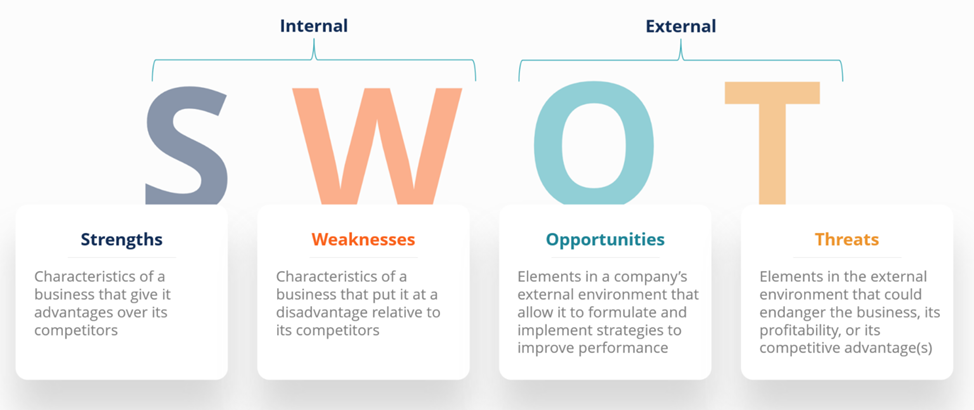
One of the widely used methods is SWOT analysis. It helps to identify the Strengths, Weaknesses, Opportunities and Threats of a State or region, which contributes to an understanding of their internal and external situation.
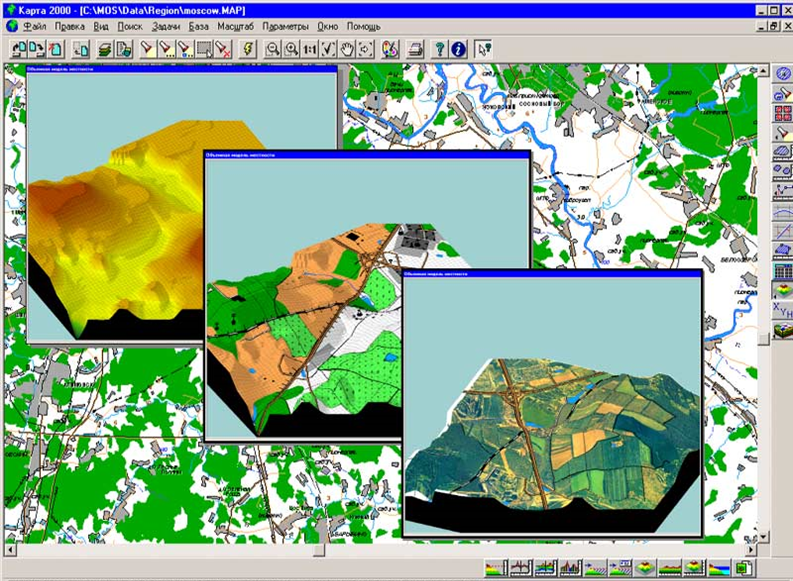
Another important tool is the analysis of geopolitical maps and data. Its essence is the use of spatial data to identify key territories, transport routes, resource concentrations, and infrastructure. Modern technologies such as geographic information systems (GIS) allow you to create detailed maps and models that help visualize and analyze the situation.
Scenario modeling is a technique that involves developing possible scenarios based on current trends and assumptions. It helps to anticipate the consequences of various political, economic and military decisions, as well as prepare for possible crises.
The sources of information used include official documents, analytical reports, statistical data, as well as media and intelligence materials. The processing and interpretation of this data plays an important role, which is carried out through analytical approaches such as the theory of balance of power, concepts of geo-economics and dominance strategies.
Application of methodology in international research
It is worth noting that the methodology of geopolitical analysis plays an important role in conducting various international studies, allowing us to obtain objective and systematic assessments of the situation, as well as predict possible scenarios for the development of events. In practice, various approaches and techniques are used, each of which serves to solve specific tasks and goals.
One of the key areas is the analysis of international conflicts and security. Here, methods are used to assess the strategic interests of the parties, analyze power balances, and assess the likelihood of conflicts. The use of scenario modeling makes it possible to predict the possible development of crisis situations and find ways to prevent them.
Also, the geopolitical methodology is widely used in the study of regional and global strategies. In this case, the factors of influence, resources and economic ties are analyzed, which helps to understand the reasons for the formation of alliances and confrontations.
Another important example is the assessment of the impact of natural resources and industry on international relations. Using comparative analysis, modeling, and risk assessment methods, experts identify key resources that determine political stability and exchange rates, as well as determine the dependence of countries’ development on resource exports.
In general, the application of methodology in international research allows for a systematic approach to the analysis of complex processes, taking into account many factors and diverse points of view, as well as more accurately anticipating prospects and developing optimal strategies for behavior on the world stage.
Problems and prospects of development of geopolitical analysis
The main problems in geopolitical analysis are related to the high complexity of modern processes, their uncertainty and rapid changes. Significant difficulties are also created by the lack and subjectivity of information sources, as well as technological challenges associated with the development of digital technologies and artificial intelligence. In addition, analytical approaches often remain fragmented, which reduces their effectiveness.
Positive prospects include the introduction of new technologies such as AI ( artificial intelligence), big data and automated analysis systems, which increases accuracy and efficiency. An interdisciplinary approach involving geography, economics, and information technology is also developing. International cooperation, the creation of global analytical platforms and data exchange will open up additional opportunities for improving geopolitical analysis.
Conclusion
Thus, the understanding of key concepts and the application of modern analysis methods play an important role in the study of international processes. They allow for a more detailed assessment of the balance of power, resources and influence of territories, which contributes to the formation of more accurate forecasts. Despite the existing difficulties, the introduction of innovative technologies and closer international cooperation open up great opportunities for the development of geopolitical analysis, making it a more accurate and reliable tool for making strategic decisions in a rapidly changing world.