Brief content: The paper analyzes the reaction of three key regional institutions (the Shanghai Cooperation Organization (SCO), the Organization of Islamic Cooperation (OIC) and BRICS) to the escalation of the US-Iranian conflict in 2026. It is concluded that none of the structures considered is capable of fulfilling the function of an effective mediator or guarantor of collective security in a conflict zone of moderate intensity. The SCO demonstrates rhetorical unity while actually moving towards bilateral formats (Russia/China — Iran), in turn, the OIC is in a state of internal division between the affected Arab monarchies and Iran, and the BRICS, due to the direct involvement of its members in the confrontation, took a pause in developing its position on the conflict.
The military conflict between the United States and Iran, which entered an active phase on February 28, 2026 and began with massive airstrikes on Iranian territory and the death of Supreme Leader Ayatollah Ali Khamenei, became another test for the entire architecture of international relations. In response to the crisis, various regional organizations have demonstrated different but somewhat similar patterns of behavior.
The SCO’s political response: support for sovereignty and institutional constraints. With the outbreak of hostilities on February 28, 2026, the Shanghai Cooperation Organization promptly expressed a consolidated position. In an official statement on March 2, the Member States “expressed serious concern about developments in the Middle East and military strikes on the territory of the Islamic Republic of Iran.” A key element was the emphasis on the need to ensure Iran’s sovereignty, security and territorial integrity. The organization called on the parties to exercise restraint and expressed its solidarity and support for the Government and people of Iran. At the same time, SCO Secretary General Nurlan Yermekbayev clearly outlined the institutional framework of the organization in this conflict: the SCO is not a military-political union, the principle of collective security does not apply in it, and its role is limited to political dialogue. Later, Yermekbayev admitted the possibility of providing economic assistance to Iran in the future, mentioning the creation of an emergency fund, but stressed that no specific requests had been received from Tehran.
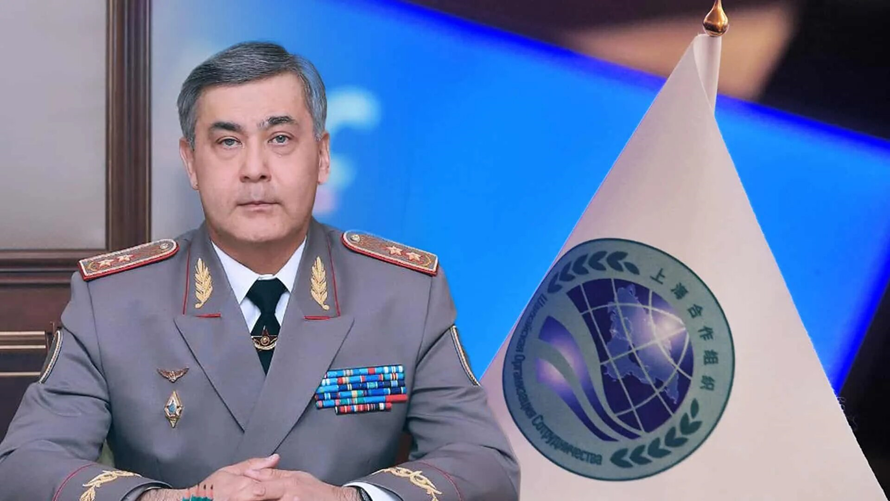
SCO Secretary General Yermekbayev Nurlan Bayuzakovich
At the same time, difficult discussions are also continuing within the organization to develop further actions in the current situation, since Iran and the Gulf states of Saudi Arabia, the United Arab Emirates, Qatar, Kuwait and Bahrain (which have the status of dialogue partners), which are on opposite sides of the conflict, simultaneously belong to the organization.
Thus, the SCO’s response to the US-Iranian conflict in 2026 was ambivalent. On the one hand, the organization demonstrated political unity by expressing support for Iran’s sovereignty and calling for de-escalation. On the other hand, its economic opportunities turned out to be limited, and internal disagreements between the participants require accuracy in making collective decisions. It is also worth noting that China and Russia, the key players in the organization, preferred to bypass formal structures by providing military, technical and economic assistance to Tehran directly. According to a number of experts, this crisis has called into question the effectiveness of the SCO as a platform for a multipolar world capable of influencing global conflicts.
Organization of Islamic Cooperation. With the outbreak of active hostilities at the end of February 2026, the OIC General Secretariat issued a series of statements. So, on February 28, the organization expressed “strong condemnation and rejection” of Iran’s strikes on the territory of several member states, including Saudi Arabia, the United Arab Emirates, Qatar, Kuwait, Bahrain and Jordan. Tehran’s actions were described as an “unacceptable escalation that threatens the stability of the entire region.” At the same time, the OIC called for an immediate cessation of any offensive actions, restraint and a return to the negotiating table. The OIC General Secretariat warned that “the ongoing violations of the sovereignty of Member States and the principles of international law constitute a serious precedent and undermine the foundations of international relations based on good-neighborliness, mutual respect and non-interference in internal affairs.” At the same time, the organization welcomed the previous diplomatic efforts between Washington and Tehran, emphasizing the preference for political methods to resolve the situation.
Organization of Islamic Cooperation
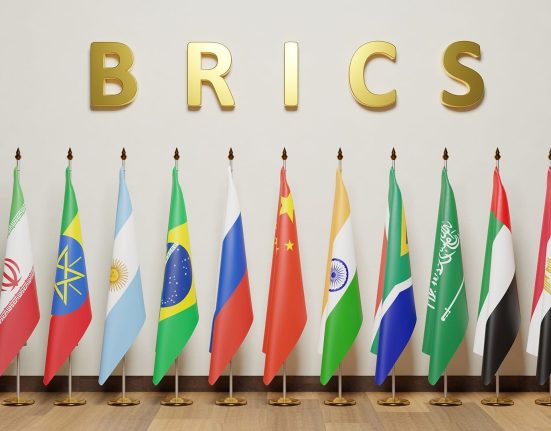
The political and diplomatic reaction of the BRICS. The reaction of the BRICS was the most revealing. In June 2025, when Brazil held the presidency, the bloc promptly condemned the US-Israeli strikes on Iran. However, in 2026, under the Indian presidency, the BRICS was unable to agree on an official position. The reason is the direct involvement of several members of the bloc in the conflict: Iran and the UAE on the one hand, and Saudi Arabia on the other (the latter is in the process of joining). The diplomats prepared several versions of the statement, none of which was accepted. Indian Foreign Ministry representative Randhir Jaiswal bluntly admitted: “Some BRICS members are directly involved in the current situation in West Asia, which has influenced consensus-building.” Former Indian Ambassador to the United States Mira Shankar pointed out that “BRICS is not a union of like–minded people, but a loose group with a broad agenda covering trade, development and economic cooperation.”
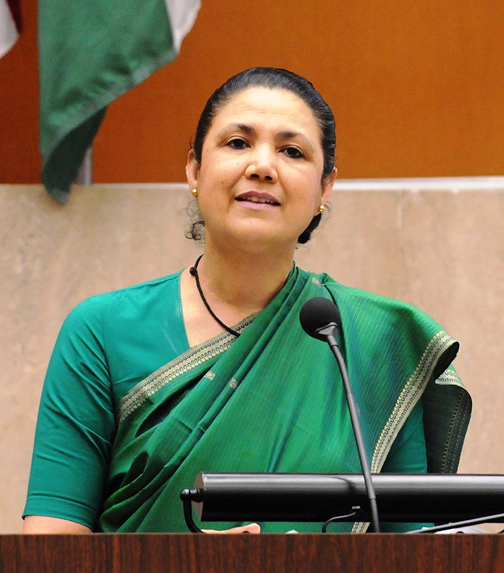
Mira Shankar was the Indian Ambassador to the United States of America from 2009 to 2011
Dmitry Peskov, the Kremlin’s official representative, added that “membership in the BRICS does not provide for obligations to help during armed aggression.” Fyodor Lukyanov, editor-in-chief of “Russia in Global Affairs” magazine and director of Research at the “Valdai” Club, offered a key conceptual explanation for the BRICS inaction. In his opinion, the disappointment in the BRICS is due to an exaggerated interpretation of the possibilities of this community: in the summer of 2023, at the summit in South Africa, participants deliberately preferred an extensive development path (quantitative expansion) to an intensive one (deepening cooperation), creating a “geopolitical space without the West,” which some experts already questioned.
Conclusion: the systemic crisis of multipolarity. Summarizing the presented positions of international organizations and expert comments, the following can be concluded. Firstly, none of the three organizations considered (SCO, OIC, BRICS) was able to act as an effective mediator or guarantor of security. Their reactions ranged from restrained diplomatic support to open internal divisions and an inability to come up with a common statement. Secondly, economic interests, primarily in the energy sector, have proved to be a stronger destabilizing factor than the declared principles of multipolar solidarity. Russia benefited from rising oil prices, China and India lost, the Arab monarchies demanded the condemnation of Iran – and these multidirectional impulses paralyzed collective action. Thirdly, Iran’s real support was provided through bilateral channels, which indicates a fundamental shift in the international system: at the moment, regional-level multilateral organizations operating within their institutional capabilities cannot act as arbitrators in international conflicts. This, in turn, demonstrates the strengthening of trends in the return of international political processes to the classical logic of balance of power and ad hoc coalitions.
Based on the previous analysis, the following scenarios should be identified::
1. The erosion of multilateral institutions. The lack of effective mediation between the SCO and BRICS leads to a protracted phase of “hybrid confrontation.” The United States and Israel continue to strike at Iran’s air defenses and nuclear facilities. Iran continues to escalate through proxy forces (Hezbollah, pro-Iranian groups in Iraq and Syria), attacking American bases and the energy infrastructure of the Persian Gulf. Regional organizations remain as platforms for political and economic dialogue, but without crisis management mechanisms. The main role in the conflict settlement will be played by bilateral relations between the parties to the conflict (the United States, Iran, Israel), as well as intermediaries (Russia, China and India).
2. Global institutions as a platform for dialogue. In this situation, the UN can act as a key factor in resolving the situation in the region as an intermediary between the great powers, thereby balancing the interests of all participants in the international community.