Brief description: This article is an analysis of the veto power of the permanent members of the UN Security Council as an institution of international governance. The article examines the historical grounds and legal procedure for the use of the veto, its role in the functioning of the collective security system, as well as the consequences of using this mechanism for the effectiveness and legitimacy of global political decisions. Critical assessments and proposals for reforming the voting procedure in the UN Security Council are analyzed.
Preface
The right of veto in the UN Security Council is one of the most significant and at the same time controversial institutions of the modern system of international relations. Enshrined in the UN Charter in 1945, this mechanism reflected the realities of the post—war world order and the need to ensure the unity of the great victorious powers in World War II. For decades, the veto has remained an instrument that allows the five permanent members of the Security Council (Russia, the United States, China, Great Britain, and France) to block any decision, including resolutions on international peace and security.
The article examines in detail the legal grounds for the use of the veto, the procedural aspects of its use, as well as the implications for global governance, including the impact on the effectiveness of the United Nations, the legitimacy of its decisions and the development of alternative formats for international cooperation. Understanding the veto mechanism is crucial for analyzing current crises in the work of the Security Council and discussions on UN reform.
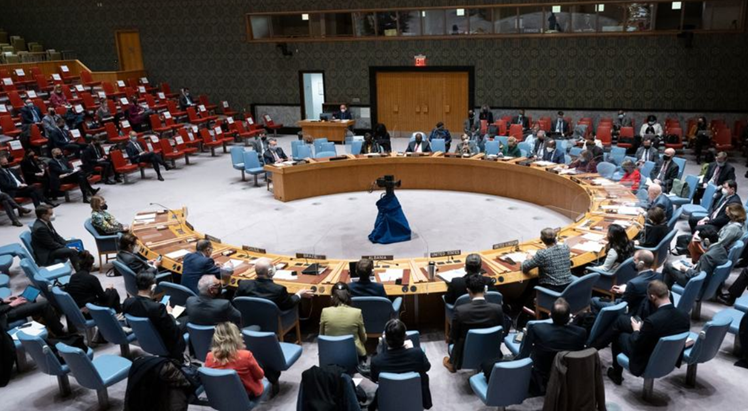
Legal basis and place in the international security system The right of veto is regulated by the UN Charter, adopted on June 26, 1945. The key provisions are set out in Article 27 of the Charter, which defines the voting procedure in the Security Council. According to paragraph 3 of Article 27, decisions on all matters other than procedural ones are considered adopted if they are supported by the votes of at least nine members of the Council, including the concurring votes of all permanent members. Thus, the absence of at least one vote among the five permanent members (the Russian Federation, the United States of America, and the People’s Republic of China, the United Kingdom of Great Britain and Northern Ireland, and the French Republic) automatically blocks the decision.
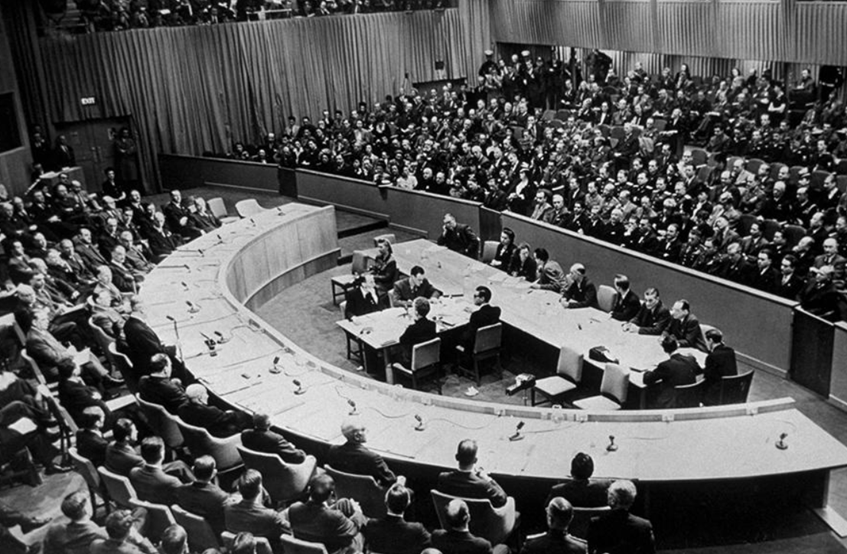
This institution occupies a special place in the architecture of collective security: it gives permanent members the exclusive right to prevent any binding measures, including sanctions, peacekeeping operations and military interventions. The right of veto does not apply to procedural issues, however, in practice, the distinction between procedural and substantive issues may become the subject of a separate vote, including the so-called “double veto” (when a permanent member first blocks the qualification of an issue as procedural, and then the substantive decision itself).
Functions and procedure of the veto
The main function of the veto is to ensure the coherence of the actions of the great Powers in responding to threats to international peace. Historically, the mechanism was conceived as a tool to prevent a split within the Security Council and, as a result, to prevent a repeat of the catastrophe of the Second World War. The veto acts as a safety valve: no significant coercive action can be taken against the will of any of the permanent members, which theoretically reduces the risk of direct clashes between them. The procedure for applying the veto has the following features. Any permanent member of the Security Council can veto both the draft resolution as a whole and its individual provisions. Voting is conducted openly, and the position of each member is recorded in the official minutes. A veto can be used at any stage of consideration of an issue, from the inclusion of an item on the agenda to the final vote on the draft decision. At the same time, a permanent member is not required to provide a written justification for its decision, although in practice such justifications are often given in the statements of representatives.
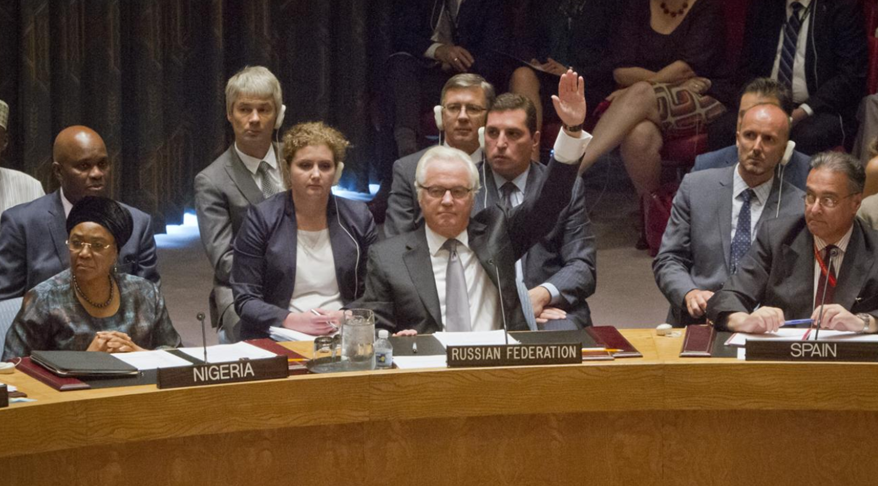
A distinction should be made between an “explicit veto” (a vote against) and an “implicit veto” (the threat of its use, which leads to the withdrawal of a draft resolution before the vote). In modern practice, significant parts of potential conflicts are resolved at the consultation stage, when the authors of projects assess the likelihood of a veto in advance and adjust the text. This reduces the number of formally documented cases of the use of the veto, but does not negate its deterrent effect.
Historical examples and usage dynamics
Since the creation of the United Nations, the veto has been used repeatedly, with the frequency and motives of its use varying depending on the period of the Cold War and the post-bipolar era. In the early decades, the veto was used primarily to block decisions on decolonization, regional conflicts in the Middle East, and the entry of new States into the United Nations. The largest number of vetoes during this period fell to the share of the USSR (later Russia) and the United States. In the 1990s, after the end of the cold war, the frequency of the use of the veto decreased, which was associated with hopes for a more consensual work of the Security Council. However, since the 2010s, there has been a new increase in the use of this mechanism, especially in connection with the conflicts in Syria, Libya, Yemen and around the situation in Ukraine. Russia and China have repeatedly blocked draft resolutions that criticized the Syrian government or called for the imposition of sanctions. The United States, in turn, used its veto to block resolutions critical of Israel’s policies.
A significant precedent is the practice of “humanitarian vetoes”, when permanent members blocked projects aimed at preventing mass violations of human rights. This sparked a discussion about the compliance of the use of the veto with the principles of Responsibility to Protect (R2P) and gave rise to initiatives to voluntarily limit the use of the veto in situations of mass atrocities (Franco-Mexican initiative, code of conduct “ACT”).
Implications for global governance
The effects of the veto on global governance are twofold. On the one hand, the veto makes it possible to maintain the functionality of the Security Council in the face of deep disagreements between the great Powers. Without this mechanism, the United Nations could repeat the fate of the League of Nations, paralyzed by the inability to make decisions. The veto prevents situations when the Security Council makes binding decisions that are obviously impossible due to the opposition of one of the permanent members or its allies. This preserves at least a minimal level of unity and predictability in international relations.
On the other hand, excessive or politically motivated use of the veto undermines the effectiveness and legitimacy of the Security Council. When resolutions aimed at ending the bloodshed or investigating violations of international humanitarian law are blocked, the international community faces a paralysis of collective action. This creates the phenomenon of “substitutive multilateralism”: regional organizations (NATO, the EU, the African Union, and the SCO) or ad hoc coalitions of states assume functions that the UN cannot perform. In the end, this erodes the central role of the United Nations in the global governance system.
In addition, the veto creates an asymmetry of responsibility. The permanent members, having exclusive powers, do not bear formal responsibility for the inaction of the Security Council. This leads to increased criticism from non-permanent members, small and medium-sized States, as well as civil society. The discussion on the reform of the Security Council, including the limitation or abolition of the right of veto for certain categories of decisions (for example, concerning mass violations of human rights), remains one of the central topics on the agenda of the UN General Assembly.
Influence and political significance
Despite numerous critical assessments, the right of veto remains a fundamental element of the modern world order, reflecting the real distribution of military, economic and political power. Any proposals to reform it face resistance from the current permanent members, for whom this instrument is a guarantor of national sovereignty and the ability to block unwanted international interference.
The political significance of the veto goes beyond the formal voting procedure. The very possibility of its application affects the formation of the Security Council’s agenda: many potentially conflicting issues are not submitted for consideration at all if it is obvious that a permanent member will veto. This creates a “hidden filter” that is difficult to quantify, but which significantly limits the range of situations receiving official UN response.
The veto also serves as an indicator of the state of international relations. An increase in the number of vetoes or their public discussion often correlates with periods of heightened geopolitical competition. On the contrary, periods of relative consensus (as in the early 1990s) are characterized by a decrease in the use of this mechanism. Thus, the dynamics of the veto can be considered as one of the barometers of the stability of the collective security system.
The right of veto in the UN Security Council is an institution that simultaneously ensures the stability of the modern system of international relations and poses serious challenges to its effectiveness and legitimacy. On the one hand, the veto performs the function of preventing deep splits between the great powers and preserves the minimal capacity of the United Nations in the face of disagreements. On the other hand, it is non-transparent or politically motivated use leads to the paralysis of collective action, the erosion of trust in universal international institutions and the search for alternative formats outside the UN framework.
Understanding the procedural and political aspects of the use of the veto is necessary to analyze current crises in the work of the Security Council, predict the likelihood of adoption of certain resolutions, as well as assess the prospects for UN reform. The veto institution remains a central link in the architecture of global governance, reflecting both the historical compromises of 1945 and the current balance of power in the international arena. The evolution of its application and discussions about possible limitations will largely determine the future of multilateral diplomacy and the role of the United Nations in resolving international conflicts.