Regional dynamics in the active phase: military pacts, border disputes and socio-cultural rifts
Short description: The article analyzes the key political processes in Southeast Asia in February 2026. The focus is on deepening military-technical cooperation between Russia and Myanmar, Indonesia’s dilemmas in the framework of the international mission in Gaza, the results of the parliamentary elections in Thailand and the escalation of the border conflict between Thailand and Cambodia. The US-Vietnamese technological agreements, the surge in anti-Korean sentiment in the region, and ASEAN’s efforts to strengthen strategic dialogue with Russia and other powers are also being considered. The combination of these events reflects the growing complexity of the regional architecture, where traditional security issues are intertwined with new challenges, from cultural nationalism to multi–vector diplomacy.
Preface
February 2026 was a period of intense diplomatic activity and simultaneous escalation of contradictions for Southeast Asia. The region, traditionally viewed as an arena of great Power rivalry, has demonstrated a growing subjectivity in building its own security agenda. However, it remained vulnerable to external impulses and internal faults.
The central event of the month was the signing of the long-term plan for Russian-Myanmar military cooperation for 2026-2030, which confirms the strategic course of both countries to deepen defense ties regardless of the international situation. At the same time, Indonesia, the largest economy in ASEAN, has outlined strict “national reservations” regarding the participation of its contingent in the US-initiated international mission in the Gaza Strip, demonstrating a desire to maintain the autonomy of its foreign policy.
Intraregional dynamics was characterized by two multidirectional trends. On the one hand, Thailand has entered the phase of forming a new government coalition after the parliamentary elections and the constitutional referendum. This opens up prospects for political stabilization. On the other hand, the border conflict with Cambodia has escalated. The sides exchanged mutual accusations of violating the December ceasefire agreements, which jeopardized the fragile truce reached after the bloody clashes at the end of 2025.
The unprecedented surge of anti-Korean sentiment that has engulfed Malaysia, Indonesia and Thailand deserves special attention. This happened after an incident at a concert by the K-pop group Day6. The socio-cultural conflict, which rapidly escalated into a digital confrontation with calls for a boycott of South Korean goods and culture, exposed deep-seated contradictions that had accumulated over the years against the background of asymmetric cultural exchange and labor migration.
Military-strategic dimension: Russia and Myanmar deepen defense partnership
On February 2, 2026, in the capital of Myanmar, Naypyidaw, Deputy Minister of Defense of the Russian Federation Vasily Osmakov met with the Minister of Defense of Myanmar, General Maung Maung Аye. As a result, a plan for Russian-Myanmar military cooperation for the period 2026-2030 was signed. This event marks the next stage in the development of bilateral relations, which have been steadily strengthening over the past few years. This is despite international pressure on Myanmar after the military coup of 2021.
The signed document is of a framework nature and defines the main directions of cooperation for a five-year perspective. Although the specific content of the plan was not disclosed, the Russian Defense Ministry said in a statement that “the current state and prospects for the development of bilateral cooperation in the military field” were discussed during the talks. The expert community links this agreement to the ongoing modernization of Myanmar’s armed forces, much of whose equipment is of Russian origin. According to the Stockholm International Peace Research Institute, Russia remains one of the key arms suppliers to Myanmar, including fighter jets, air defense systems, and armored vehicles.
For Myanmar, partnership with Russia is of critical importance at a time when Western countries have imposed harsh sanctions against its military leadership and limited arms supplies. Russian support allows the Myanmar military to maintain its combat capability and continue fighting numerous rebel groups on the periphery of the country. In addition, military-technical cooperation is complemented by political support. Moscow has repeatedly blocked or softened UN Security Council resolutions condemning the actions of the Myanmar military.
It is important to note that the signing of a long-term cooperation plan is taking place against the backdrop of Russia’s intensifying foreign policy in the Asia-Pacific region as a whole. Earlier, similar agreements were concluded with Vietnam, Laos and other ASEAN countries. This demonstrates Moscow’s systematic approach to building a network of military and political ties in the region that are alternative to existing alliances involving the United States and its allies.
Thus, the signing of the Russian-Myanmar military cooperation plan until 2030 is a significant event that strengthens the positions of both countries in the regional security architecture. It confirms the stability of their partnership in the face of external pressure and lays the foundation for long-term cooperation in the defense sector. This will inevitably be taken into account by other actors when planning their policies in Southeast Asia.
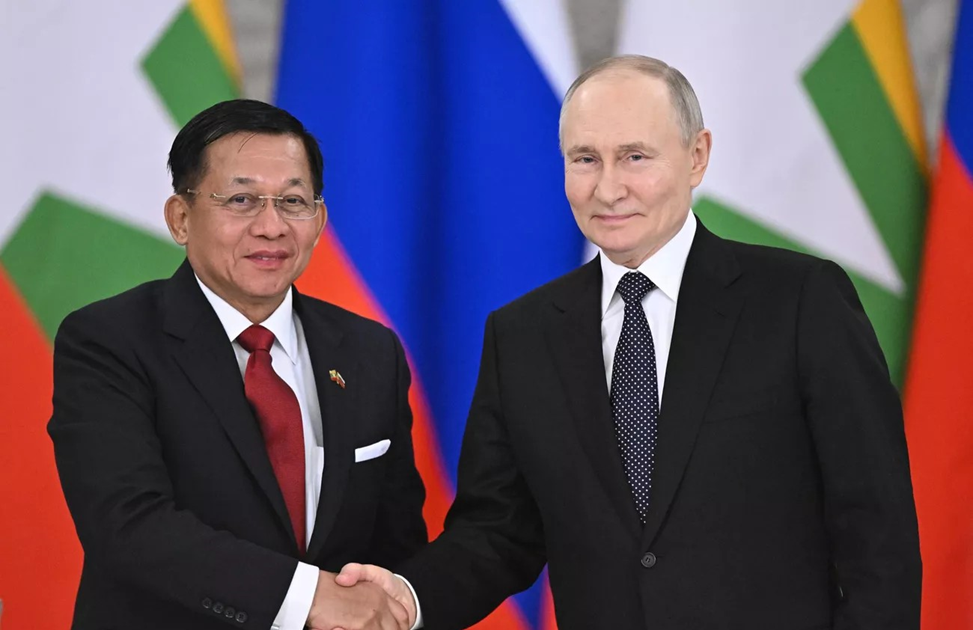
Russian President Vladimir Putin and Chairman of the State Administrative Council, Prime Minister of the Republic of the Union of Myanmar Min Aung Hlaing
Foreign policy maneuvering: Indonesia, Vietnam and ASEAN in search of balance
On February 16, the Ministry of Foreign Affairs of Indonesia issued a statement in which it emphasized the right of Jakarta to terminate participation in the mission at any time if its implementation deviates from the “national reservations” formulated by Jakarta. Indonesia is preparing a military contingent of 600 to 8000 people. However, the functions of the Indonesian military will be exclusively humanitarian in nature: protection of civilians, assistance in the delivery of aid, reconstruction work and training of the Palestinian police. The basic conditions are the consent of the Palestinian authorities, the restriction of operations to the territory of the Gaza Strip as an “integral part of Palestine” and non-participation in hostilities against any armed groups, including Hamas. Jakarta also reiterated its rejection of any attempts at demographic change or forced displacement of Palestinians.
This position reflects Indonesia’s traditional policy of a “free and active” foreign policy, as well as its special role in the Islamic world and support for the Palestinian people. Participation in a mission under the auspices of the United States does not automatically mean acceptance of all American approaches. Jakarta strives to preserve its autonomy and prevent involvement in the conflict on the side that contradicts its principled position.
At the same time, Vietnam has demonstrated successful diplomacy in relations with Washington. The visit of the head of the Communist Party of Vietnam, To Lam, to the United States and his talks with President Donald Trump led to a fundamental decision by the American side to exclude Vietnam from the list of states subject to restrictions on the transfer of advanced technologies. According to Bloomberg, citing a statement from the Vietnamese government, Trump supported deepening economic, scientific and technical cooperation. To Lam, in turn, called for negotiations to resolve outstanding trade issues.
At the multilateral level, ASEAN Secretary General Kao Kim Hourn‘s speech at the Munich Security Conference on February 13 was noteworthy. He confirmed that the association is working to strengthen strategic trust with major powers, including “of course, Russia,” as well as India, Japan and others. Kao Kim Hourn noted the increased foreign military presence in the region, including ships not only from the United States, but also from Europe and India.
This statement underlines ASEAN’s consistent policy of multi-vector approach and rejection of the logic of “dividing lines” in the Indo-Pacific region. The Association strives to maintain its central role and a dialogue platform where the interests of all stakeholders can meet, including Russia, which the West seeks to isolate. This shows the pragmatism of the regional elites, who consider cooperation with various centers of power as a way to strengthen their own stability.
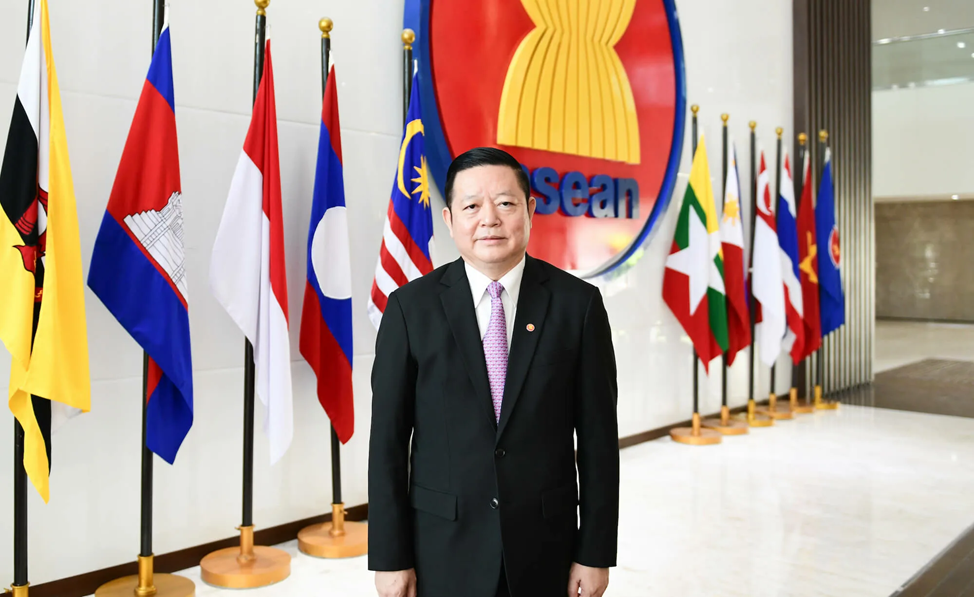
Kao Kim Hourn, Secretary General of the Association of Southeast Asian Nations (ASEAN)
Intra-regional contradictions: the Thai-Cambodian border conflict and political dynamics in Thailand
On February 8, parliamentary elections were held in Thailand, combined with a referendum to amend the Constitution. According to preliminary data, the conservative Pride of Thailand Party, led by Acting Prime Minister Anutin Charnvirakul, won a landslide victory, winning about 200 seats in the 500-seat lower house. The Progressive People’s Party came in second with 100 seats, while the liberal Party «For Thailand» came in third with about 70 seats. Commenting on the results, Anutin Charnvirakul stated that he sees them as an indication to the people of the need for sustainable development of the country and solutions to the problems of concern to citizens. Pride of Thailand is expected to form a coalition government with the For Thailand party, which will ensure a stable parliamentary majority.
Against the background of internal political processes, relations with Cambodia have sharply deteriorated. On February 19, the official representative of the Thai Army Command, Major General Vinthai Suvari, denied the accusations made by Cambodian Prime Minister Hun Manet. Earlier, the Cambodian leader, in an interview with Reuters in Washington, said that Thai troops, violating the joint ceasefire statement of December 27, 2025, were occupying “significant Cambodian territories” along the border, partially enclosing them with barricades of shipping containers and barbed wire. Hun Manet also claimed that 80,000 Cambodian displaced persons could not return home due to Thailand’s actions. This conflict highlights the deep-seated problems of bilateral relations, which are rooted in history and have not been resolved so far. The dispute over the status of the border territories and the position of ethnic Khmers on the Thai side remains a source of constant tension, which under certain circumstances can escalate into new armed clashes. The coincidence of the escalation with the period of internal political transformation in Thailand creates additional risks. The new government, which does not yet have full legitimacy and stability, may face pressure from nationalist circles demanding a tough response to Cambodia’s actions.
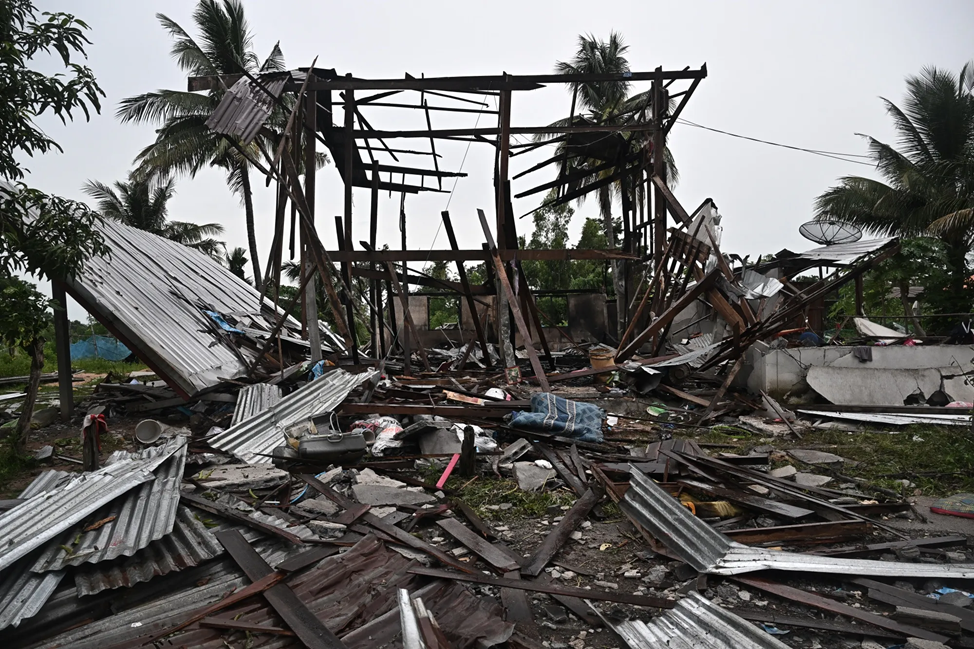
A house destroyed by fire after being hit by Cambodian artillery, Thai border province of Surin
Sociocultural rift: anti-Korean sentiments and new forms of regional identity
On January 31, a local conflict occurred during a Day6 concert in Kuala Lumpur: several Korean fans tried to bring prohibited cameras with telephoto lenses to the venue and got into an argument with the local security service. The video of the incident, distributed on social media, caused a wide response. However, the real catalyst for the mass outrage was the subsequent mocking comments by some Korean users about the countries of Southeast Asia, their economies and culture. A post in which the women of the region were portrayed in a derogatory way, which gained about 83 million views, received a special resonance.
The response was not long in coming: calls for a boycott of Korean products, including electronics, cars, cosmetics, as well as cultural content such as music, films and TV series, began to spread on social networks in Southeast Asian countries. The hashtag #Seabled, appealing to the solidarity of the Southeast Asian states, has gained popularity. Users of the region, in turn, began to publish critical materials about South Korea itself, focusing on such sensitive topics as the high prevalence of plastic surgery, suicide rates, and the peculiarities of national cuisine, which are perceived as exotic and unacceptable in the region.
Analysts interviewed by the South Korean publication «Hanguk Ilbo» describe what is happening as a typical “spiral of digital nationalism”, when mutual accusations increase the escalation of tension. However, there are deeper structural reasons behind this conflict. South Korea’s rapid economic and cultural growth, active tourism, and the presence of a significant number of migrant workers from Southeast Asian countries have created a sense of cultural superiority in part of Korean society, which inevitably led to the accumulation of irritation in the region. At the same time, the sense of a common regional identity is growing in the ASEAN countries, which is why local disputes are rapidly becoming collective.
Experts recall the precedent of the Milk Tea Alliance movement in 2021, when the youth of a number of Asian countries have already demonstrated the ability to quickly unite in the digital space around a common agenda. The current conflict, however, has a more pronounced economic and cultural component, affecting the interests of large corporations and the entertainment industry.
This incident demonstrates that in the modern world, the factors of “soft power” and cultural perception are becoming increasingly important in international relations. The successes of the Korean wave (K-wave), which had been cultivated for decades as a tool to enhance the country’s attractiveness, turned into vulnerability overnight when cultural dominance began to be perceived as cultural imperialism. For the countries of Southeast Asia, what is happening is becoming an important lesson about the need to build balanced cultural exchanges and respect for the national dignity of partners.

Members of the South Korean pop-rock band Day6
Conclusions:
The analysis of the events of February 2026 in Southeast Asia makes it possible to identify stable trends that determine the trajectory of the region’s development in the medium term. The combination of military-political, diplomatic, and socio-cultural processes is shaping a new reality in which traditional mechanisms for maintaining stability are being tested, and regional factors are forced to adapt to an increasingly complex external environment.
February 2026 confirmed the trend towards strengthening bilateral military ties outside the framework of multilateral institutions. The signing of the Russian-Myanmar cooperation plan until 2030 demonstrates the sustainability of partnerships that are being formed regardless of the position of Western states. At the same time, the intensification of the US-Vietnamese technological dialogue and ASEAN’s statements about its intention to strengthen strategic trust with Russia, India and Japan indicate the multi-vector nature of the foreign policy of the countries of the region, seeking to diversify ties and avoid unilateral dependence.
The escalation of the border dispute between Thailand and Cambodia, accompanied by mutual accusations of violating the ceasefire agreements, indicates that the historical contradictions between the ASEAN states remain capable of escalation. The lack of effective settlement mechanisms within the framework of the Association and the use of the conflict for domestic political purposes (especially during the formation of the new Thai Government) create risks of a return to the active phase of the confrontation.
The unprecedented surge in anti-Korean sentiment that has engulfed Malaysia, Indonesia and Thailand has demonstrated the growing importance of socio-cultural factors and digital nationalism. The conflict, which began with a local incident at a concert, in a matter of days acquired a scale comparable to political crises, exposing deep contradictions that accumulated against the background of asymmetric cultural exchange and labor migration. The formation of regional identity through opposition to the external “other” is becoming a stable trend capable of influencing economic and political ties.
Indonesia’s position on participating in the international mission in Gaza with clearly defined “national reservations” and the right of veto at any time reflects a new model of interaction with the initiatives of the great Powers. Jakarta is demonstrating its willingness to cooperate globally, but on its own terms, which demonstrates the growing confidence of regional leaders in their ability to defend national interests. A similar approach, albeit in a different form, is being implemented by Vietnam, which is deepening its technological partnership with the United States without severing ties with China.
Forecasts for the coming months of 2026
Scenario 1. The ASEAN countries continue their policy of multi-vector maneuvering, successfully balancing between competing centers of power. Thailand and Cambodia, through the mediation of the Association, are returning to dialogue and freezing the border conflict on the basis of compromise agreements. Indonesia implements its participation in the Gaza mission in strict accordance with “national reservations,” which strengthens its international credibility and does not lead to internal complications. Anti-Korean sentiments are gradually fading due to diplomatic efforts and economic interdependence, but the cultural policies of the countries of the region are being adjusted towards greater respect for national dignity. Military cooperation with Russia, the United States and China is developing in parallel, without sudden lurches in one direction or another. In this scenario, ASEAN retains a central role in the regional architecture, adapting its mechanisms to new challenges.
Scenario 2. The border conflict between Thailand and Cambodia is getting out of control: provocations on both sides lead to the resumption of full-scale hostilities, which forces ASEAN to urgently intervene, but its effectiveness is low. The internal political instability in Thailand during the formation of the new government is exacerbating the situation. Anti-Korean sentiment, fueled by new incidents and careless statements by politicians, is escalating into a sustained consumer boycott, damaging trade ties and hitting the positions of South Korean companies in the region. Against this background, the competition between the United States and China for influence is intensifying, which forces the ASEAN countries to make more definite choices, deepening internal contradictions within the Association. Russia is taking advantage of the situation to step up its military and political presence in Myanmar, which is causing concern to other regional players. In this scenario, ASEAN loses its ability to act collectively, and the region plunges into a phase of increased turbulence.
The implementation of one scenario or another will depend on the ability of key actors – both intraregional (Thailand, Indonesia, Vietnam) and external (USA, China, Russia) – to exercise restraint, dialogue and search for compromises. The effectiveness of ASEAN mechanisms in resolving disputes and maintaining regional stability is of critical importance. In the coming months, the foundations for the long-term development trajectory of Southeast Asia will be laid.