Ice and Discord: What’s Next for Greenland?
Brief Overview: This article highlights the latest developments and rising geopolitical tensions in the Arctic. It examines doubts from the White House regarding the legality of Danish control over Greenland. Positive growth is observed in Greenland’s military cooperation with the United Kingdom, Denmark, and NATO, despite some Western leaders’ ideas about incorporating the island into the United States. The article also discusses the potential opening of a NATO office in the region, driven by its strategic importance due to melting ice and new maritime routes.
Introduction
Amid growing geopolitical instability and climate change, the Arctic’s role and strategic significance are increasing substantially. At the center of attention is Greenland, which is attracting the interest of major powers due to emerging new maritime routes and natural resources. While the United States expresses doubts about the legitimacy of Danish control over the island and considers the possibility of incorporating it, NATO countries are strengthening their positions in the region, and Greenland continues to cooperate with Denmark, the United Kingdom, Norway, and other states. This article examines current events and trends related to the Arctic polar zone and the contest for influence within it.
The White House and Doubts over the Legitimacy of Danish Control of Greenland
U.S. Deputy Chief of Staff Steven Miller expressed doubts regarding the legitimacy of Denmark’s control over Greenland.
“The real question is, by what right did Denmark gain control over Greenland? What are their territorial claims based on? On what basis is Greenland considered a Danish colony? For the U.S. to ensure the security of the Arctic region and protect NATO’s interests, it is obvious that Greenland should be part of the United States,” he said in an interview with CNN. Additionally, U.S. Deputy Chief of Staff’s wife, Katy Miller, posted on the social media platform X on January 4 an image of a map of Greenland colored in the American flag’s colors, with the caption “Coming soon.”
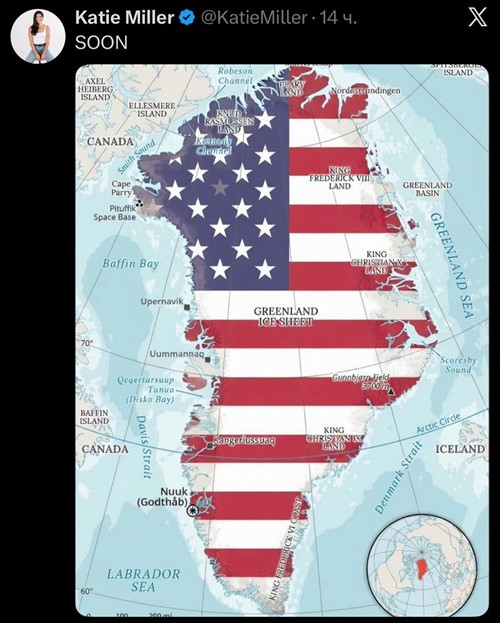
Post by the U.S. Deputy Chief of Staff’s wife, Katy Miller
Greenland’s Prime Minister Jens-Frederik Nielsen, commenting on the image, stated that it reflects a lack of respect.
Donald Trump repeatedly stated that Greenland should become part of the United States. He highlighted its strategic importance for national security and the defense of the free world.
Strengthening of the United Kingdom’s Military Presence in the Arctic
The United Kingdom will double its contingent of marines stationed in Arctic Norway to 2,000 personnel over the next three years.
“For more than 50 years, the Royal Marines have conducted training in Arctic Norway. We will strengthen this commitment by doubling the number of marines from 1,000 to 2,000 over the next three years,” said Foreign Secretary Yvette Cooper, speaking in the British Parliament.

British soldiers in the snow-covered Arctic mountains of Norway
The minister recalled that last autumn, the United Kingdom-led Joint Expeditionary Forces deployed thousands of troops — including over 1,700 British personnel — along with dozens of ships, vehicles, and aircraft from the Baltics to Iceland.
“Britain plans to participate in a series of exercises in the North Atlantic and the far north throughout 2026,” Cooper added.
Additionally, under the Lunna House Agreement, the United Kingdom will join Norway’s program for developing unmanned minehunters, deploy marines for training in subzero conditions in Norway, and adopt new Norwegian missiles for naval combat.
Greenland Approved Danish Military Presence on Its Territory
Greenland welcomes the potential strengthening of Denmark’s military presence on the island amid rising geopolitical tensions and threats from the United States.
“They are welcomed in Greenland in this regard. We have France, Germany, the United Kingdom, Sweden, Norway, Denmark, and the whole world coming because the situation is very complex,” Greenland’s Deputy Speaker of Parliament, Bentiaraq Ottosen, told RIA Novosti.
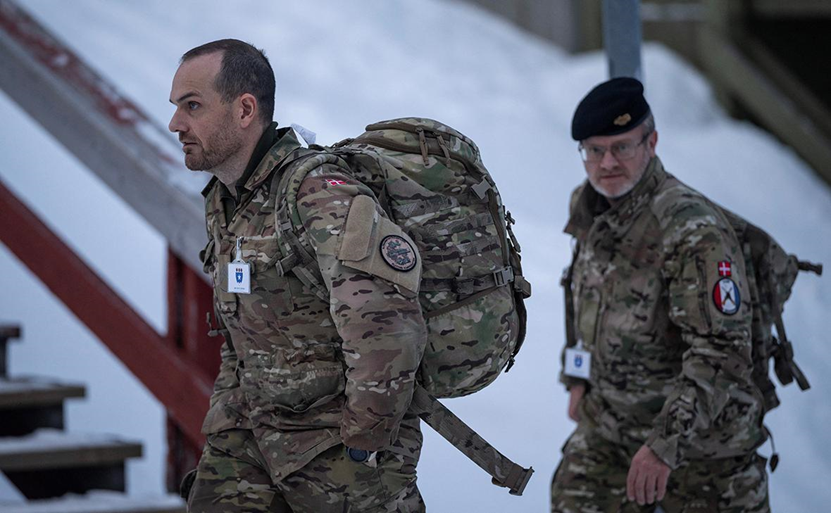
Danish Military Personnel
Earlier, several European NATO member states deployed their troops to Greenland to participate in a reconnaissance mission led by Denmark, aimed at strengthening the military presence in the region.
According to Greenland’s Deputy Speaker of Parliament, the strengthening of allied military presence is due to the island’s significant geopolitical importance, as Arctic ice melts and new maritime routes open. He noted that the Danish government should be closer to Greenlandic regions and pay greater attention to security issues.
Ottosen added that, amid global instability and growing interest in the Arctic from major powers, Greenland must “stand together” with Denmark and NATO allies.
Opening of a NATO Office in Greenland
According to Greenland’s Deputy Speaker of Parliament, Bentiaraq Ottosen, the potential opening of a NATO office is linked to the Arctic’s growing geopolitical significance. He noted that melting ice and the opening of maritime routes make security issues in the region increasingly relevant.“Our Prime Minister said that NATO is considering establishing an office in Greenland, and that’s very good, I think,” he said.
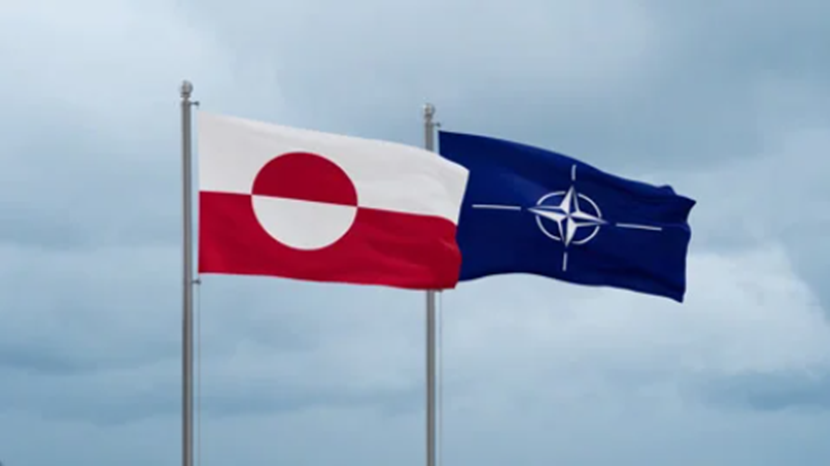
Flags of Greenland and NATO
Ottosen believes that NATO should take greater responsibility for Arctic defense, and Greenland is ready to cooperate with the alliance in this regard.
It is worth noting that Greenland is part of the Kingdom of Denmark. However, U.S. President Donald Trump has repeatedly stated that the island should become part of the United States. The authorities of Denmark and Greenland have warned Washington against seizing the island, emphasizing that they expect respect for their territorial integrity.
Conclusion
Thus, with rising tensions in the region and increasing interest in the Arctic from major powers, the situation surrounding Greenland is becoming increasingly complex and multifaceted. U.S. doubts about the legitimacy of Danish control, the strengthening of military presence by the United Kingdom and other countries, and Greenland’s support on security issues all underscore the region’s high geopolitical significance. At the same time, Greenland’s authorities emphasize the need for joint efforts and respect for their sovereignty. In the future, the opening of new NATO offices and the expansion of military activity in the Arctic could become key factors shaping the balance of power and relations among major states in this strategically important region.
Scenario 1: “Escalation of Conflict and Increased U.S. Presence”: The United States begins an active military and intelligence presence in the region, expanding its bases and conducting joint exercises with NATO allies. In response, Denmark and Greenland intensify their diplomatic efforts, appealing to international organizations and partners to protect their sovereignty. As a result, tensions escalate, and the region becomes the stage for a new Cold War, with potential clashes of interest between the U.S., NATO, and European countries. The threat of new local confrontations or the onset of a Cold War rises rapidly. Scenario 2: “Diplomatic Resolution and Maintenance of Peace”: U.S. statements and initiatives trigger international concern and condemnation from Europe and Greenland, prompting the U.S. and European countries to engage in a series of negotiations aimed at reducing tensions and finding a compromise solution. As a result, the United States postpones its statements regarding the incorporation of Greenland and recognizes its sovereignty, while signing a series of agreements on joint regional security. Through dialogue, an agreement may be reached on the joint development of resources or bases, respecting the interests of both Greenland and Denmark. Ultimately, tensions decrease, and the region continues to develop within the framework of diplomatic and intergovernmental agreements, maintaining the balance of power and avoiding confrontation.