Brief description: This article provides an overview of the role of the Council of Experts in the political system of the Islamic Republic of Iran. The article analyzes the functions of this body, the procedure for electing its members, as well as the mechanism of participation in the appointment of the supreme leader. The article examines the legal basis of the Council’s activities, its place in the system of government and its impact on the processes of political succession in the country.
Preface
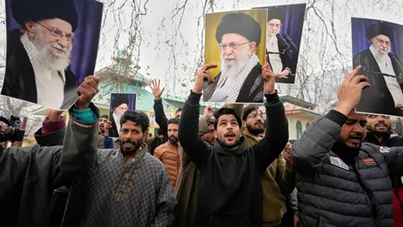
The Council of Experts is one of the key institutions of the political system of the Islamic Republic of Iran, which plays a special role in ensuring the continuity of supreme power and preserving the ideological foundations of the state. This body embodies the principle of velayat-e faqih (rule of an Islamic jurist) and serves as a mechanism for legitimizing the highest authority in the country. In the article, we will examine in detail the functions of the Council, the order of its formation and its significance in the process of appointing the supreme leader of Iran, as well as consider historical precedents and the current dynamics of its activities. Understanding the work of this institute is critically important for analyzing Iran’s domestic policy and forecasting scenarios for the transit of power.
Legal basis and place in the system of government
The activities of the Council of Experts are regulated by the Constitution of Iran (articles 107-112). According to the basic law, the Council is accountable exclusively to the voters and has the exclusive right to elect, control and, if necessary, remove the Supreme leader. This body occupies a special place in the hierarchy of power: formally, it does not belong to any of the three branches (legislative, executive, judicial), but performs an oversight and legitimizing function in relation to the highest post in the country. The Council of Experts acts as a guarantor of the compliance of the Supreme leader’s policy with the principles of Islamic governance and the interests of the Shiite community. Its decisions have the highest legal status in matters concerning the supreme authority and are not subject to review by other bodies.
Functions of the Council of Experts The main functions of the Council cover a wide range of powers related to the supreme power in the country. The main and most significant function is the election of the supreme leader: the Council selects the rakhbar (the Supreme leader) from among the theologians who meet the established criteria. At the same time, candidates must have deep knowledge of Islamic law, an impeccable reputation and recognized authority among religious figures.
The Council also constantly monitors the activities of the Supreme Leader, assessing whether his actions are in line with the interests of the Islamic community and the principles of the Faqih Velayat. In case of deviations from these principles, the Council has the right to initiate the procedure for removing the leader from office. The grounds for this may be loss of competence, inability to perform duties, or actions contrary to the Constitution and Islamic norms.
In addition, the Council of Experts has the authority to interpret the provisions of the Constitution regarding the powers of the Supreme Leader and the Council itself. This allows him to clarify the legal framework of interaction between various authorities and define the boundaries of what is acceptable in the policy of the supreme leader. The Council also sets criteria for the selection of candidates for the post of supreme leader, including theological qualifications, moral qualities and political loyalty to Islamic values. These criteria can be adjusted depending on the current situation in the country and the challenges facing the regime.
The order of election of Council members
The members of the Council of Experts are elected by direct universal suffrage for a term of 8 years. The process of forming the Council includes several successive stages, each of which has its own characteristics.
At the first stage, candidates are nominated. Any Iranian citizen over the age of 30 who has a theological education and a reputation as a “fair believer” can apply to participate in the elections. This presupposes that the candidate has in-depth knowledge of Islamic law, experience in religious activities, and recognition from the local religious community.
The next stage is the selection of candidates by the Council of Guardians of the Constitution. This oversight body verifies applicants’ compliance with formal requirements, including religious qualifications, loyalty to the regime, and the absence of compromising facts in their biographies. At this stage, a significant number of applications are eliminated: candidates may be rejected due to insufficient theological training, suspected links with opposition groups, or violations of Islamic norms in their personal lives.
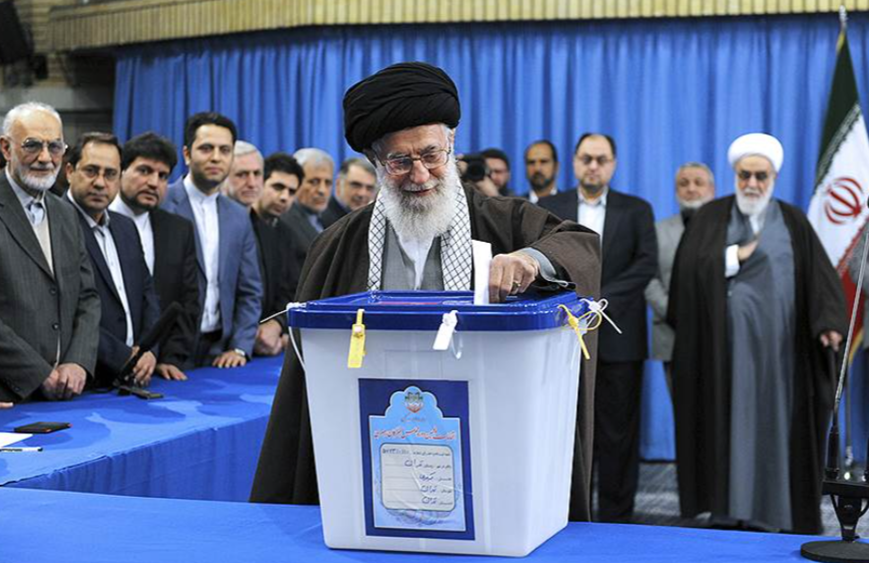
After the approval of the list of candidates, general elections are held. All Iranian citizens over the age of 18 can participate in the voting. Electoral districts are formed taking into account the religious significance of the regions, which ensures the representation of key theological centers. The winners are the candidates who receive the majority of votes in their districts.
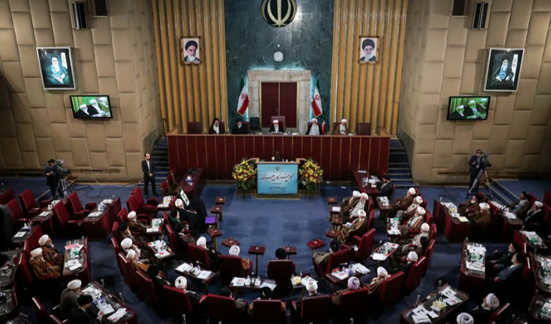
The Council consists of 88 members representing various religious centers of the country (primarily Qom and Mashhad). This distribution guarantees a balance between conservative and moderate theologians, although in recent years there has been a tendency to strengthen the conservative wing.
Role in the appointment of the Supreme Leader
The procedure for electing the supreme leader is spelled out in detail in the Iranian Constitution and provides for a strict sequence of actions. After the death or removal of the current leader, the Council of Experts convenes for a special meeting as soon as possible. This meeting is closed, which allows Council members to freely discuss candidates without external pressure.
The Council members discuss the candidates and hold a closed vote. To be elected, it is necessary to obtain an absolute majority of votes (≥50%+1). If no candidate gets the required number of votes, a second round is held with the participation of the two leaders of the first round. Such a mechanism ensures consensus among the Council members and reduces the risk of a split within the religious and political elite.
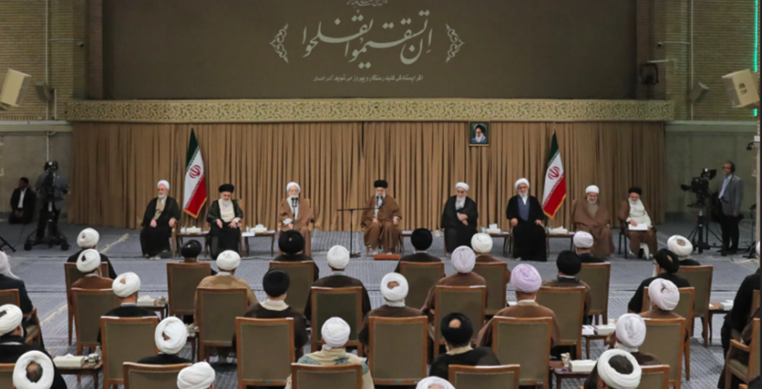
The elected leader takes the oath of office in front of the Council members and officially assumes office. The oath includes obligations to follow the Constitution, defend Islamic values and act in the interests of the Shiite community. This ritual highlights the sacred nature of the rahbar’s authority and his responsibility to the religious community.
Historical example: in 1989, after the death of the founder of the Islamic Republic, Ayatollah Ruhollah Khomeini, the Council of Experts elected Ayatollah Ali Khamenei as the new supreme leader. This decision was of particular importance because Khamenei at that time did not have the same theological authority as his predecessor. However, his political experience and loyalty to the ideas of the Islamic Revolution allowed the Council to make a choice in his favor. This precedent has shown that, if necessary, the Council can move away from strict theological criteria in favor of political expediency.
Influence and political significance
Despite its formal independence, the Council of Experts is closely linked to the country’s religious and political elite. His decisions reflect the balance of power between various factions within the Iranian establishment, including conservatives, reformers, and pragmatists. The Council serves as a mechanism for legitimizing supreme power through a religious and legal procedure, which gives the leader’s decisions additional authority in the eyes of the population and the international Shiite community.
It also ensures the continuity of the regime even in times of crisis, preventing a power vacuum and minimizing the risks of elite split. The Council’s decisions, especially on leadership, are often taken behind closed doors and depend on behind-the-scenes agreements between influential ayatollahs and security forces. This allows you to find compromises in difficult situations and avoid open conflicts between factions.
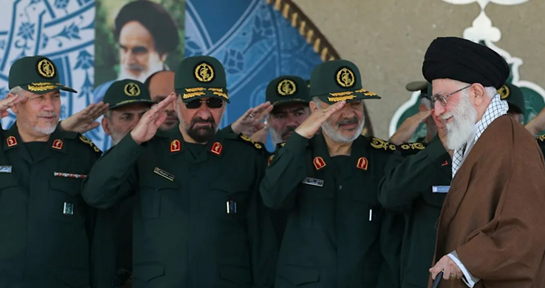
The composition of the Council is gradually changing towards more conservative theologians, reflecting the general evolution of the Iranian political system. In recent decades, the influence of representatives of the Islamic Revolutionary Guard Corps (IRGC) and its close circles has increased, which affects the selection of candidates for Council members and their positions on key issues.
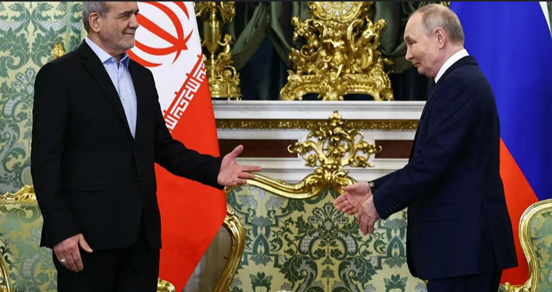
The Council plays the role of an arbitrator in disputes between different branches of government, relying on its right to control the supreme leader. For example, he may intervene if the president or Parliament makes decisions that contradict Islamic principles or Rahbar’s policies. This makes the Council a key link in the system of checks and balances within the Iranian model of government.
Conclusion
The Council of Experts is not just a formal institution, but a key element of the Iranian model of government, combining religious norms with political mechanisms. He performs three important tasks: ensures the ideological continuity of supreme power, legitimizes the choice of a leader through a procedure recognized by the Shiite community, and serves as an arbitrator in matters of compliance of the leader’s actions with the principles of Islamic governance.
Understanding the role of the Council of Experts is necessary for analyzing Iran’s domestic policy and forecasting scenarios for the transit of power in the country. This institution remains a central link in the system of Islamic governance, ensuring the stability of Iran’s political model for decades. Its evolution reflects changes in the balance of power within Iranian society and the regime’s response to internal and external challenges. In the future, the Council’s role may strengthen, especially in the context of geopolitical instability and the need to consolidate elites around the idea of Islamic sovereignty.