Security Architecture in the Middle East at the Beginning of 2026: The ‘Peace Council,’ U.S.–Iran Confrontation, and the Strategic Agreement Between Damascus and Kurdish Forces
Brief Overview: The review provides a detailed analysis of the key events and strategic shifts in the Middle East in January 2026. It focuses on three interrelated processes: the launch of the controversial U.S. initiative “Board of Peace” aimed at governing Gaza; the critical escalation in the U.S.–Iran confrontation, including an analysis of the parties’ demands and possible war scenarios; and the landmark agreement between the Syrian government and the Kurdish Syrian Democratic Forces (SDF), marking the restoration of Syria’s territorial integrity. The study also examines Israel’s new, war-hardened domestic political consensus, which combines unity on security issues with deep internal divisions. It concludes that the growing military-political tensions in the region are creating an extremely fragile security architecture, one that risks escalating into broader military conflict involving external actors.
1. Introduction
The international political situation in the Middle East in January 2026 was shaped by the intersection of several interrelated processes. The initiative of the administration of Donald Trump to establish a “Board of Peace,” intended to serve as an extra-institutional mechanism for managing the settlement in Gaza, was launched amid escalating tensions between the United States and Iran. At the same time, Syria witnessed a strategic rapprochement between the government of Ahmed al-Sharaa and Kurdish formations, radically reshaping the country’s internal balance of power. These developments unfolded against the backdrop of the emergence in Israel of a new, hardline security consensus coexisting with a deep socio-political divide. The defining feature of January was a shift away from multilateral institutions toward personalized, transactional, and force-based solutions, the stability of which depends directly on the domestic political climate in key capitals.
2. Board of Peace: Structure, Mandate, and Regional Assessments
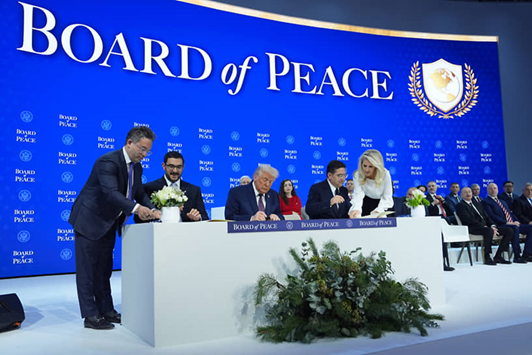
Established on January 16, 2026, and officially launched on the sidelines of the World Economic Forum in Davos on January 22, 2026, the initiative introduced a highly centralized governance model. According to the draft resolution, President Donald Trump, as Chair of the “Board of Peace,” is granted exceptional powers: to appoint senior officials, including the High Representative for Gaza and the Commander of the International Stabilization Force; to approve and suspend resolutions; and to designate his own successor. Critics note that the organization’s charter effectively grants the Chair absolute control over membership, the composition of the Executive Council, decision-making procedures, and even the interpretation of the Charter itself. Such an institutional design stands in sharp contrast to the principles of multilateralism and collective decision-making that characterize the United Nations and other international organizations. A notable feature of the initiative is its funding model. Membership in the Council is limited to three years but may become permanent upon a one-time contribution of $1 billion. This “pay-to-access” mechanism was publicly criticized by figures such as former Prime Minister of New Zealand Helen Clark, who described the model as “absurd” and illegitimate for the governance of international affairs. This approach reflects a pragmatic, transactional view of diplomacy in which influence is directly correlated with financial contribution.
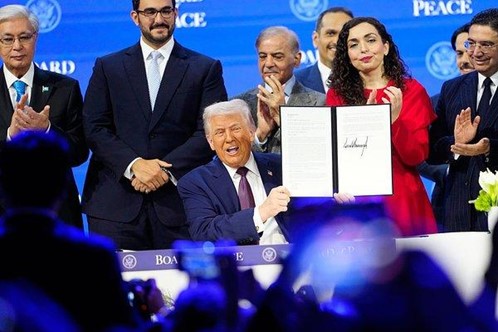
The signing ceremony of the Charter of the “Board of Peace” in Davos on January 22, 2026 (center – U.S. President Donald Trump)
This model has triggered a deep divide. More than 20 countries, including several Arab states — Bahrain, Egypt, United Arab Emirates, and Saudi Arabia — as well as Israel and countries such as Hungary and Pakistan, agreed to participate. Their motivation is linked to a desire to influence the process in Gaza from within and to maintain channels with Washington amid broader instability. On the other hand, key Western allies of the United States — France, United Kingdom, and Italy — refused or suspended their participation, expressing concerns regarding international law and the role of the United Nations. This demonstrates that the project is perceived not as a collective Western initiative, but as a distinctly American — and personally Trump-driven — endeavor.
The most vulnerable aspect of the initiative is the complete absence of Palestinian political representation within the structures determining Gaza’s future. The technocratic “National Committee for the Administration of Gaza” (NCAG), headed by Ali Shaas, has been delegated to carry out administrative functions under the supervision of a council dominated by American and allied figures. As experts note, the current peace plan reduces national rights to humanitarian issues. It is characterized by a lack of democratic legitimacy and by the disregard for the Palestinians’ right to establish their own state.
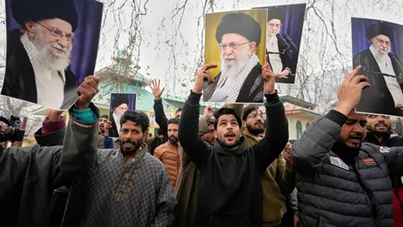
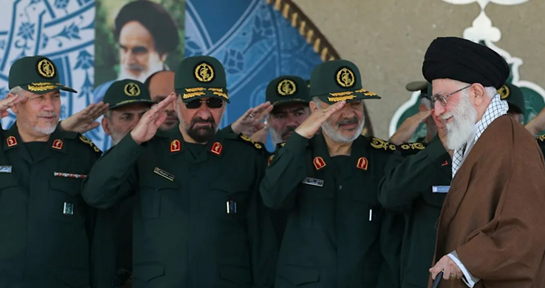
3. Escalation of U.S.–Iran Relations The emergence of the “Board of Peace” cannot be viewed in isolation from the broader tensions in the Middle East in January 2026, particularly in light of the sharp escalation between the United States and Iran. Over the course of the month, the administration of Donald Trump came close to launching a military strike against Iran, but was ultimately forced to step back due to a decline in the intensity of domestic protests in Iran — which failed to produce regime change — and insufficient preparation for carrying out a full-scale military intervention.
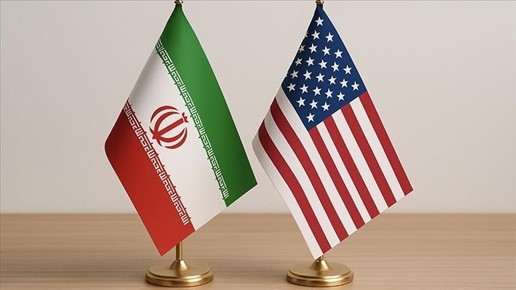
Flags of the Islamic Republic of Iran and the United States of America
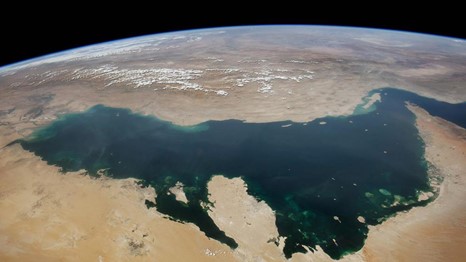
At the same time, as reported by Al Jazeera, the deployment of a U.S. carrier strike group — led by the aircraft carrier USS Abraham Lincoln — to the Arabian Sea in late January, along with Trump’s ultimatum-style rhetoric that “time is running out,” was accompanied by increasingly uncompromising demands from both sides.
U.S. Demands to Iran:
- A complete cessation of all nuclear activities (including civilian programs), the termination of uranium enrichment, and the transfer of all existing stockpiles (more than 400 kg of uranium enriched to 60%, according to International Atomic Energy Agency data from May 2025).
- A substantial limitation of missile programs capable of reaching Israel and U.S. military bases.
- The termination of support for all proxy groups within the so-called “Axis of Resistance.”
Iran’s Demands to the United States:
- The full and unconditional lifting of all economic sanctions that led to the collapse of the rial (to as much as 1.5 million per dollar) and the impoverishment of the population.
- Recognition of its right to a peaceful nuclear program and limited uranium enrichment. Tehran refuses to grant access to inspectors from the International Atomic Energy Agency, arguing that their reports serve as a pretext for strikes (as in June 2025).
- The preservation of its missile program as a means of deterrence, primarily against Israel.
Drawing on an expert survey, the authors of the article identify the following key factors and likely scenarios for further developments:
- The continuation of economic and military pressure aimed at forcing Iran to enter negotiations. Experts such as Christopher Featherstone question the prospects for a durable agreement, citing the unpredictability of Donald Trump and the deep mistrust in Tehran.
- As an alternative to full-scale war, analysts such as Roxane Farmanfarmaian considered the possibility of the United States seizing Khark Island, through which approximately 90% of Iran’s oil exports pass, assuming it could be captured swiftly.
- Another scenario highlighted in the article can be described as one of mutual distrust and mounting domestic pressure — the economic crisis in Iran and the pre-election environment in the United States of America — which prevent a breakthrough while simultaneously restraining the sides from full-scale escalation, leaving the situation in a prolonged state of uncertainty.
In the context of the escalating U.S.–Iran tensions, it is also important to consider the political situation of Washington’s key regional ally — the State of Israel.
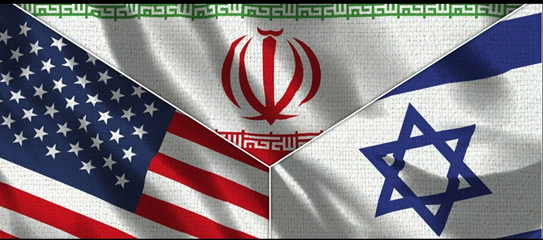
Flags of the United States of America, the Islamic Republic of Iran, and Israel
An analysis of Israeli sources indicates that by January 2026, a renewed foreign policy consensus had emerged. However, this apparent unity conceals deep internal political divisions.
Key Features of the New Consensus:
- The definitive rejection of the Palestinian state paradigm. A resolution of the Knesset (July 2024), supported by both right-wing and centrist factions, declared the establishment of a Palestinian state an “existential threat.”
- The dominance of the doctrine of preventive action. The failure of deterrence (October 7, 2023) led to the adoption of a strategy of preemptive threat elimination, supported by both the ruling coalition and the opposition. Benny Gantz, for example, called for a return to a “1948 mode.”
Public Opinion Poll Results (Institute for National Security Studies, January 2026):
- 62.5% of Israelis expect a renewed war with Iran within the next six months; 45% support a preventive strike (43% oppose it).
- Only 26% believe that any political party truly represents their views (the lowest figure since 2003).
- A deep divide in perceptions of security between Jewish citizens (33% feel protected) and Arab citizens of Israel (7%).
- High trust in the military (73%) contrasts with record-low trust in the government (27%). Thus, a security consensus exists against the backdrop of an acute socio-political divide.
This consensus is simultaneously strong and dangerous. It ensures unity in the face of external threats while masking a crisis of legitimacy within society. In this context, the foreign policy (anti-Iranian) consensus within Israel’s military-political leadership — along with the Israeli public’s readiness for escalation — constitutes a significant factor increasing the likelihood of a military scenario in the region involving the United States of America.
4. Military and Political-Diplomatic Outcomes in Syria in January 2026
The key event of the month was the conclusion of a comprehensive agreement between the government of Ahmed al-Sharaa and the Kurdish Syrian Democratic Forces (SDF).
A successful government offensive, launched on January 13, allowed Damascus to establish control over key economic assets in the northeast: the largest oil field, “Omar,” the “Conoco” gas field, and the strategic “Tabqa” dam. By January 18, these facilities were under the control of the Syrian army, highlighting the military weakness and disorganization of the SDF.
Content and Significance of the Agreement
- Military Integration: the formation of a new military division composed of three brigades made up of former SDF fighters under the auspices of the Syrian Ministry of Defense. Government troops were redeployed, and Interior Ministry forces were introduced into the city centers of Al-Hasakah and Qamishli.
- Administrative Integration: the gradual merger of Kurdish self-governance institutions with state structures. Control of the provinces of Raqqa and Deir ez-Zor, including prisons holding ISIS fighters, was transferred to Damascus.
Cultural Concessions by Damascus: even before the final deal, on January 16, Ahmed al-Sharaa issued a historic decree recognizing the Kurdish language as “national,” granting citizenship, and officially recognizing the Nowruz holiday. The agreement guarantees the protection of civil and educational rights.
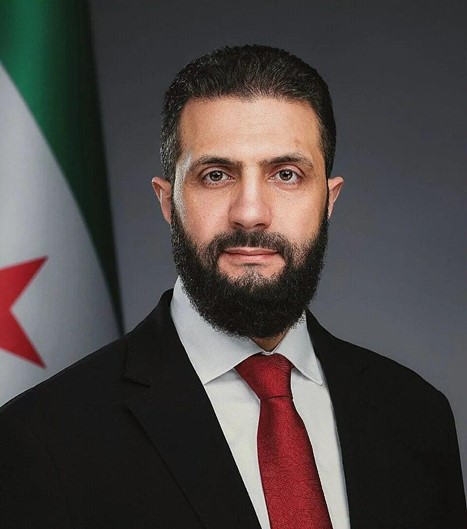
President of Syria, Ahmed al-Sharaa
For Damascus, this represents a strategic victory in restoring territorial integrity and control over resources. As noted by Professor Weisel Kurt, the agreement established a “new legal foundation” reflecting the position of the victorious side. For the SDF, it was a forced strategic retreat amid the loss of previous levels of U.S. support. The United States also played a significant role in the negotiations. American diplomacy, represented by Special Envoy Tom Barrack, was instrumental in organizing the talks. According to sources, Washington consented to the offensive on the condition that civilian populations be protected. Ambassador Barrack described the final agreement as a “profound and historic milestone,” confirming the shift of the U.S. partner in Syria from the SDF to the Ahmed al-Sharaa government.
- Conclusion and Scenarios for Further Developments
The events of January 2026 indicate that the Middle East is entering a phase of escalating military-political tension. This phase is characterized by the prioritization of transactional and force-based solutions over institutional approaches, both at the international and regional levels. The “Board of Peace,” which claims to serve as an institutional platform for addressing international issues, particularly in the Middle East, functions more as another instrument of U.S. smart power rather than reducing the persistent backdrop of high threats to regional stability, including military risks.
Based on this dynamic, the following scenarios for further developments can be identified:
- “Fragile Status Quo.” The region continues to balance on a knife-edge. The “Board of Peace” will face operational difficulties and Palestinian rejection but will not be disbanded. The Syrian agreement will be implemented slowly and contentiously. The U.S.–Iran confrontation will remain in a “simmering” state without full-scale war, though limited military operations remain possible. Domestic divisions in the United States will restrain the most radical measures.
“Chain Reaction.” A local incident involving the U.S. or Israel and Iranian forces in Syria, Iraq, or at sea could result in unacceptable losses and trigger a cascade of retaliatory strikes, rapidly escalating the conflict to a direct U.S.–Iran confrontation. This could provoke large-scale missile attacks on Israel by Hezbollah and lead to a regional war, completely undermining the fragile January agreements.