Africa 2026: The Vector of Strategic Pragmatism and the Reconfiguration of Regional Alliances
Brief Overview: The political and economic landscape in Africa at the turn of 2025–2026 is characterized by a shift toward “strategic pragmatism” and a departure from traditional Western governance models. North Africa is demonstrating a move away from political reforms toward large-scale economic mega-deals in Libya and strengthening Morocco’s image through “sports diplomacy.” West Africa is reaching a point of no return in the process of legitimizing military regimes and dismantling the unified ECOWAS space amid trade wars. East Africa is undergoing a radical realignment of alliances in the Horn of Africa against the backdrop of the catastrophic escalation of the civil war in Sudan and authoritarian backsliding in Tanzania. Central Africa is striving for economic sovereignty and diversification of defense partnerships, while remaining hostage to the protracted conflict in the DRC. Southern Africa is balancing efforts to overcome large-scale climate disasters with the development of new technological ties with Russia, while simultaneously hardening its diplomatic stance in dialogue with the West.
Introduction
At the beginning of 2026, North Africa found itself at a unique juncture where economic, political, and social fault lines intertwine with unexpected windows of opportunity. A region long associated with chronic instability is now demonstrating multiple vectors of movement at once: from bold investment surges and breakthroughs in the realm of “soft power” to tightened security control and the entrenchment of authoritarian practices. Libya’s signing of a multi-billion-dollar oil deal with Western corporations has once again placed the country among the world’s priority energy hubs, temporarily pushing the issue of nationwide elections into the background. Meanwhile, Morocco is leveraging sports diplomacy as a catalyst for infrastructure modernization and national brand strengthening, turning the Africa Cup of Nations into a locomotive for tourism and investment. At the opposite pole stands Tunisia, where the prolonged state of emergency and expanded powers of the security apparatus are transforming security into the dominant — yet increasingly fragile — foundation of state stability.
North Africa
At the beginning of 2026, the region demonstrated a combination of major economic breakthroughs and strengthened internal security measures. Libya concluded a historic $20 billion investment agreement with Western corporations, shifting the focus from political elections to large-scale development of the oil sector. Morocco became the center of the continent’s sporting life by successfully hosting the Africa Cup of Nations, triggering a powerful influx of tourists and record growth in infrastructure revenues. Tunisia, meanwhile, focused on maintaining rigid stability by extending the state of emergency and preserving expanded powers for security forces to maintain control over society.
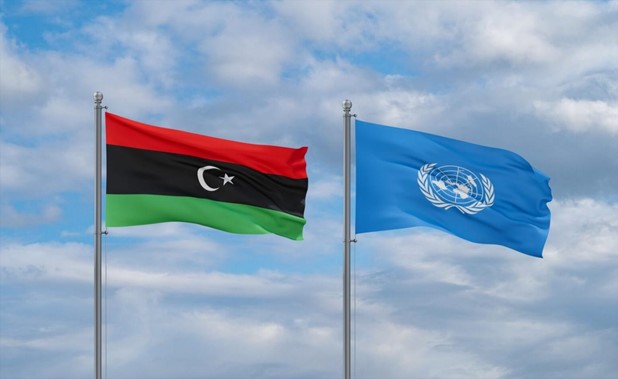
Libya began 2026 with a major economic breakthrough that temporarily overshadowed its protracted political crisis. The key event was the signing on January 24 of a historic 25-year agreement between the National Oil Corporation (NOC) and Western energy giants TotalEnergies and ConocoPhillips. The deal, valued at over $20 billion, is aimed at developing fields in the Waha Basin and is expected to increase oil production to 850,000 barrels per day.
This success was a direct result of the new U.S. strategy under the administration of Donald Trump, which, instead of pursuing forced democratization, placed its bet on “economic pragmatism.” Washington actively facilitated the alignment of interests between rival camps — the government of Abdul Hamid Dbeibeh in Tripoli and the eastern faction led by Khalifa Haftar — resulting in the consolidation of key items within the national budget. While political initiatives by the United Nations and its envoy Hanna Tetteh aimed at organizing nationwide elections continue to stall due to elite resistance, Libya has effectively entered a phase of “transactional governance.” Big business and oil revenues have become the primary glue preventing the country from fragmenting, even in the absence of a unified and legitimate government.
The period from December 2025 to January 2026 became a time of national triumph and a demonstration of “soft power” for Morocco, thanks to its hosting of the Africa Cup of Nations (AFCON 2025). The tournament, held from December 21 to January 18, turned the kingdom into the continent’s premier sporting venue and attracted hundreds of thousands of foreign tourists. Matches were hosted at stadiums in Casablanca, Rabat, Marrakesh, Agadir, Tangier, and Fez, requiring the flawless performance of the country’s upgraded infrastructure.
The economic impact of the event proved to be enormous. The country’s airports operated at maximum capacity, while international retailer Avolta reported record sales driven by the launch of interactive zones and digital entertainment for fans in transit hubs. The successful organization of the championship not only stimulated the tourism and services sectors but also strengthened Rabat’s geopolitical standing as a safe and modern hub of Africa. For the Moroccan authorities, this month served as a full-scale rehearsal ahead of future global events, demonstrating the country’s ability to convert sporting excitement into tangible financial dividends and enhanced investment appeal.
In Tunisia, the beginning of 2026 was marked by the consolidation of security control and the preservation of a rigid vertical power structure. The defining event was the decision of President Kais Saied to extend the nationwide state of emergency until January 30, 2026. The corresponding decree, published at the end of December, granted the Ministry of the Interior exceptional powers, allowing it to act outside standard judicial procedures.
The state of emergency, formally in place since 2015, grants security forces the authority to ban strikes and public gatherings, impose curfews, conduct searches without warrants, and exercise control over the press and even cultural events such as theatrical performances. The latest extension of these measures has drawn criticism from human rights organizations, which accuse the authorities of “normalizing the state of exception” and using security concerns as a pretext to suppress civil liberties. Against the backdrop of a stagnating economy and the absence of large-scale reforms, the prolongation of the state of emergency has reaffirmed President Kais Saied’s strategy of maintaining stability exclusively through administrative and security-driven methods, effectively freezing political activity in the country.
Thus, in 2026, North Africa finds itself at a point of bifurcation. The region demonstrates an ability to adapt and grow, yet this growth is distributed highly unevenly. Morocco is asserting itself as a leader of modernization and “soft power,” successfully converting stability into investment. Libya has been given a chance for economic revival through pragmatic collusion between domestic elites and the West, but it remains politically fragmented. Tunisia serves as a cautionary example of how authoritarianism without sufficient resources can lead to economic degradation. For external observers and investors, the key takeaway is the need for a differentiated approach. The region can no longer be viewed as a single entity: engagement strategies must be tailored to each national trajectory — from high-tech partnerships with Morocco to hard-nosed pragmatism in the energy sector with Libya and sustained humanitarian monitoring in Tunisia.
Central Africa
On January 21, a working visit by a Belarusian delegation to N’Djamena, led by Chairman of the State Authority for Military Industry Dmitry Pantus, came to an end. The main outcome of the talks was the signing of a roadmap for military-technical cooperation between Belarus and the Republic of Chad for the period 2026–2030. The document was signed with Chad’s Ministry of National Defense, Veterans and War Victims. According to the State Authority for Military Industry of Belarus, the roadmap transforms strategic intentions into concrete projects and establishes a clear mechanism for implementing the agreements reached, laying a solid foundation for bilateral relations.
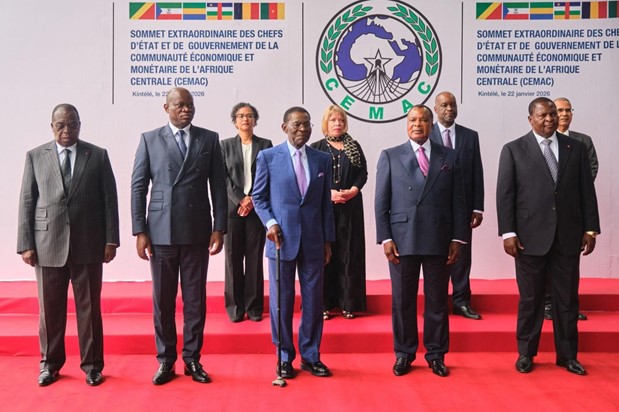
An extraordinary summit of the heads of state of the Economic and Monetary Community of Central Africa (Economic and Monetary Community of Central Africa, CEMAC) was held in Brazzaville. The meeting, initiated by the President of the Republic of the Congo, Denis Sassou Nguesso, brought together the leaders of the Central African Republic and Equatorial Guinea, representatives of Cameroon and Chad, as well as delegates from the International Monetary Fund and the Bank of Central African States. Participants discussed the macroeconomic situation, inflation, and debt risks. The leaders called for accelerating economic reforms, including the digitalization of budgetary processes and greater transparency in public finances. Particular attention was given to the repatriation of export revenues and overseas assets, as well as negotiations with extractive companies. The strategic objective outlined was a policy of import substitution and deeper regional integration to shield the bloc from external shocks.
The situation in the Democratic Republic of the Congo remains critical. The confrontation between the government and the armed groups March 23 Movement (M23) and Congo River Alliance (AFC) continues amid a deepening humanitarian catastrophe. Despite mediation efforts by the United States, the peace process remains stalled, a fact also acknowledged by Russian Foreign Minister Sergey Lavrov. At the same time, Kinshasa is seeking to implement economic agreements with the United States in the extractive sector. However, these plans have faced legal resistance within the DRC: a “Collective of Lawyers” has filed a lawsuit challenging the constitutionality of the deal, arguing that transferring control over natural resources to foreign entities violates national sovereignty and requires a nationwide referendum.
On January 26, the AFC/M23 rebel coalition issued a communiqué stating that it had no intention of withdrawing from the territories it controls, claiming to have established sustainable peace there. The exception was the city of Uvira, from which its forces withdrew on January 17. Coalition spokesperson Lawrence Kanyuka категорically rejected accusations by the Congolese army of looting and destruction of infrastructure in Uvira. In response, the rebels accused government forces of violating the ceasefire, shelling densely populated areas, and blocking internet access. Tensions are further exacerbated by mutual accusations between the Democratic Republic of the Congo and Rwanda over escalating the conflict.
Thus, the events of January 2026 demonstrate that Central Africa is undergoing a sharp historical turning point, where two opposing processes are unfolding simultaneously: an active effort to achieve genuine sovereignty and the threat of large-scale destabilization. The common thread linking Chad’s military contract with Belarus, the economic pushback within Economic and Monetary Community of Central Africa (CEMAC), and the lawsuit challenging the U.S. resource deal in the Democratic Republic of the Congo is a rejection of the old model of external governance. The region no longer believes in the effectiveness of Western security guarantees — evidenced by the failure of U.S. mediation in the DRC — nor in the fairness of Western economic models, as reflected in CEMAC’s demands to repatriate assets and renegotiate contracts. The region’s development is increasingly taking the form of a competition. On the one hand, CEMAC leaders are attempting to build a “fortress” through import substitution, financial digitalization, and capital repatriation in order to shield themselves from external shocks. On the other hand, the situation in the Democratic Republic of the Congo is acting as a “battering ram,” undermining these plans. The consolidation of rebel forces from March 23 Movement (M23) and Congo River Alliance (AFC) in the territories they control, along with Kinshasa’s inability — even with the support of external partners — to restore authority, is creating a “black hole” at the center of the continent. This conflict is obstructing regional trade and deterring the very investors whom reform efforts are intended to attract.
Sub-Saharan Africa
January 2026 became a period of serious trials for the countries of Southern Africa, where the struggle against natural disasters coincided with an active restructuring of international relations. The region faced a large-scale humanitarian crisis caused by extreme weather events; however, this did not halt diplomatic efforts aimed at securing new technological partners and firmly defending national sovereignty on the global stage.
The security situation for the population deteriorated sharply due to anomalous heavy rains that struck Southern African states. According to the United Nations Office for the Coordination of Humanitarian Affairs, by the end of the month flooding had claimed at least 159 lives, while the total number of affected people exceeded 655,000. The epicenter of the disaster was Mozambique, where thousands of homes and infrastructure facilities were destroyed. However, the impact of the extreme weather was also felt by residents of Zimbabwe, Zambia, South Africa, Madagascar, and neighboring states. Experts warn that due to swollen rivers and ongoing rainfall, the risk of further destruction remains extremely high, requiring urgent mobilization of resources by local governments.
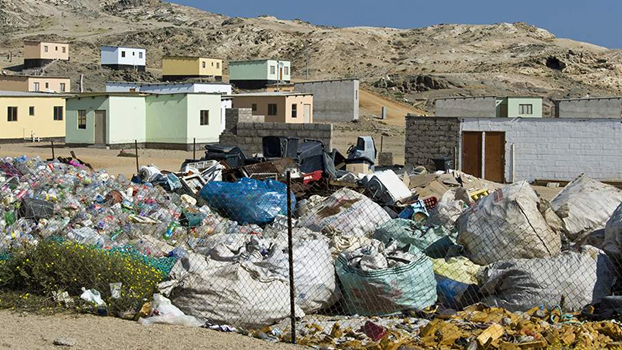
Against the backdrop of environmental and infrastructure challenges, Namibia has moved toward deepening technological cooperation with Russia. At the end of the month, the republic’s ambassador, Monica Nashandi, appealed to the Russian Ministry of Natural Resources and the Russian Environmental Operator for assistance in creating a modern waste management system. For sparsely populated Namibia, Russia’s experience in building a circular economy — including landfill reclamation and waste-to-energy generation — has become a critically important development tool for its cities. This step reinforces the political agreements previously reached by the foreign ministers of the two countries, Sergey Lavrov and Selma Ashipala-Musavyi, which are aimed not only at resuming regular consultations but also at increasing trade turnover with Africa to $50 billion by the end of the decade.
Parallel to its economic rapprochement with new partners, the region’s key player — South Africa — demonstrated firm resolve in defending its political boundaries. At the end of January, Pretoria declared the chargé d’affaires ad interim of Israel, Ariel Seidman, persona non grata, ordering him to leave the country within 72 hours. The diplomatic scandal erupted over insulting remarks directed at President Cyril Ramaphosa and alleged protocol violations. It became a logical continuation of the acute crisis in bilateral relations that began after South Africa accused Israel of genocide at the International Court of Justice.
Taken together, these developments highlight the complex trajectory of Southern Africa at the beginning of 2026. On the one hand, acute vulnerability to climate change is forcing countries to seek external support for infrastructure modernization, thereby opening new niches for Russian business and technology. On the other hand, the region’s states — led by South Africa — are shedding the status of passive observers, responding firmly to perceived external disrespect and shaping their own agenda in dialogue with major global powers.
East Africa
The beginning of 2026 became a period of profound turbulence for East Africa, where the escalation of armed conflicts coincided with a radical reshaping of political alliances. While Sudan and Tanzania are sinking deeper into crises marked by violence and authoritarianism — threatening regional stability — an unexpected rapprochement between Ethiopia and Somalia is altering the established balance of power in the Horn of Africa. These developments illustrate how the region is simultaneously confronting the risks of a humanitarian catastrophe and attempting to construct a new, more pragmatic security architecture.
Sudan’s civil war in late 2025 and early 2026 escalated to a critically new level, threatening the complete collapse of the state economy. The Rapid Support Forces (RSF) seized the strategic initiative, capturing the Heglig oil field in December and a military base in Babanusa, depriving the central government of vital revenues. Moreover, in January, hostilities spread to Blue Nile State — a region that had previously remained on the periphery of the conflict. There, the RSF, together with a faction of the Sudan People’s Liberation Movement-North (SPLM-N), opened a new front in an attempt to push toward central Sudan. The situation took on an international dimension after the Sudanese army accused Ethiopia of training mercenaries and carried out airstrikes on cross-border convoys. Amid the fighting, the humanitarian crisis reached catastrophic proportions: 12 million displaced persons have been recorded nationwide, and famine has been officially confirmed in the besieged cities of El Fasher and Kadugli.
At the same time, Tanzania — long regarded as a pillar of stability in the region — plunged into a deep political crisis. Following the disputed elections at the end of 2025, the country was swept by an unprecedented wave of repression: human rights advocates report more than 2,000 arrests, including opposition leaders and journalists, many of whom have been charged with treason. The authorities imposed strict censorship, intimidating local media outlets and restricting access for foreign observers, while periodic internet shutdowns obscured the true масштабы of violence used to suppress protests. The climate of fear and reports of mass disappearances of activists point to a sharp authoritarian rollback, threatening the country’s democratic institutions and raising alarm within the international community.
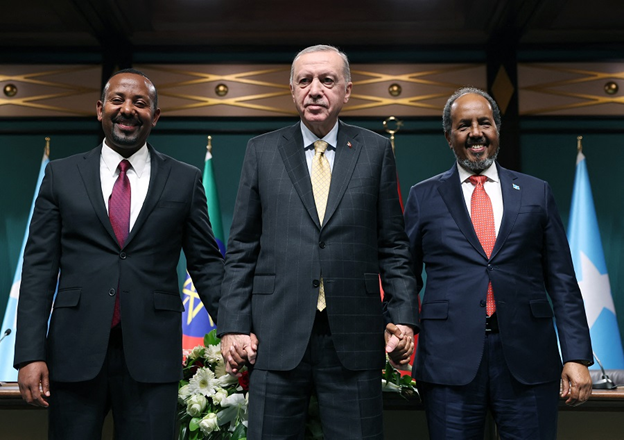
Amid instability in neighboring states, the Horn of Africa witnessed an unexpected diplomatic breakthrough. Relations between Ethiopia and Somalia, which had been deadlocked for the past two years, began to warm rapidly following the implementation of the “Ankara Declaration.” January visits by the leaders of both countries consolidated the course toward reconciliation: Addis Ababa pledged to respect its neighbor’s sovereignty in exchange for negotiations on commercial access to the sea. Ethiopia also secured an important role in the regional security architecture by agreeing to deploy 2,500 troops as part of the new African Union mission (AUSSOM). This rapprochement significantly alters the regional balance of power, putting pressure on the previously formed anti-Ethiopian alignment between Egypt and Eritrea, which are now compelled to reassess their strategies for containing Ethiopia in the Red Sea region.
West Africa
The end of 2025 marked the conclusion of the transition period in Guinea, effectively legitimizing military rule through electoral mechanisms. On December 31, the electoral commission announced the victory of General Mamady Doumbouya in the presidential election held three days earlier. The result — 86.72% of the vote — was achieved amid an opposition boycott and the disqualification of key rivals. This precedent carries regional significance: it demonstrates a successful model for transforming a junta leader into an “elected president,” potentially serving as a roadmap for similar regimes in Mali and Burkina Faso.
In January 2026, the countries of the Alliance of Sahel States (AES) faced the side effects of their sovereigntist rhetoric. A “currency fever” erupted across the region’s information space, with rumors spreading about the immediate abandonment of the CFA franc and the introduction of a unified AES currency. The hype escalated to such an extent that on January 27 the Ministry of Economy and Finance of Mali was forced to issue an official denial, labeling the reports as fake news. The incident exposed a gap between the high expectations of populations eager for financial independence from France and the alliance’s technical unpreparedness for such abrupt economic reforms.
The political divorce between the AES bloc and Economic Community of West African States (ECOWAS) has begun to evolve into a tangible trade war. In December, Niger introduced mandatory systematic inspections of all cargo arriving from Nigeria, citing security threats. By January 2026, this had led to a logistical collapse at the border: the accumulation of trucks triggered shortages and rising food prices in border areas. Economic ties that had bound the region together for decades are unraveling, giving way to protectionism and mutual distrust.
The events of the 2025–2026 turning point indicate that West Africa is passing a point of no return in its process of bifurcation. On the one hand, military regimes — illustrated by the case of Guinea — are successfully consolidating their authority, transitioning from interim administrations to long-term rule. On the other hand, attempts to accelerate economic sovereignty (as seen in the rumors surrounding an AES common currency) and rising isolationism (reflected in Niger’s border measures) are creating serious risks for public welfare. The region is moving away from the unified economic space of the Economic Community of West African States (ECOWAS) toward a system of two competing blocs with hardened borders and divergent political models.
Conclusion
Thus, at the turn of 2025–2026, the African continent entered a phase of “strategic pragmatism,” in which traditional political ideals have definitively given way to economic deals and the search for new security guarantors. The reporting period revealed a profound diversification of development trajectories: while some countries are successfully converting stability into global investment and reputational gains (Morocco, Namibia), others are balancing on the brink of systemic collapse due to protracted wars and the erosion of state institutions (Sudan, Democratic Republic of the Congo).
The dominant continental trend has been a departure from Western governance models in favor of bilateral, pragmatic arrangements. This is reflected in Libya’s shift toward “transactional governance” with U.S. backing, the expansion of Belarus’s military-technical presence in Chad, and the technological rapprochement between Russia and Namibia. At the same time, processes of “bifurcation” are intensifying in West and East Africa: regions are splitting into competing blocs, where military juntas legitimize their rule through managed elections (as in Guinea), and long-standing economic ties are fraying under the pressure of trade disputes and mutual distrust—most notably between Nigeria and Niger.
Further dynamics will depend on whether economic sovereignty and regional integration (such as Economic and Monetary Community of Central Africa (CEMAC) and the Alliance of Sahel States) can become a genuine shield against external shocks, or whether the “black holes” of conflict in Sudan and the Democratic Republic of the Congo will absorb the resources of neighboring states, turning the continent’s patchwork map into a zone of permanent instability. In this regard, it is advisable to outline the following development scenarios:
Scenario 1: “Pragmatic Stabilization and Economic Breakthrough”
Economic deals in Libya lay the groundwork for national reconciliation, while the diplomatic breakthrough between Ethiopia and Somalia stabilizes the Horn of Africa. Successful reforms within Economic and Monetary Community of Central Africa (CEMAC) aimed at capital repatriation and import substitution trigger industrial growth in Central Africa. New technological partnerships with Russia, China, and Turkey help Southern African states overcome the consequences of climate disasters, while Morocco’s “soft power” model becomes a benchmark for continent-wide modernization.Scenario 2: “Systemic Degradation and Fragmentation”
The failure of peace initiatives in Democratic Republic of the Congo and Sudan leads to a spillover of instability into neighboring states, potentially triggering a regional “great war.” Populist rhetoric in the Sahel, unsupported by real monetary and financial instruments, results in economic collapse and social upheaval. The intensification of repression in Tunisia and Tanzania ultimately pushes these countries out of the investment landscape, while climate shocks in South Africa and the broader Southern African region — without large-scale assistance — drive the humanitarian situation to a point of no return.