
Icebreaker for Coalitions: Shifts in East Asia and the Asia-Pacific region
Summary: The article highlights a number of important international events related to East Asia and the Asia-Pacific region, as well as their relations with other states. South Korea’s plans for a test passage of a vessel along the Northern Sea Route and related negotiations with Russia are being considered, as well as Japan’s record investments in the US economy against the background of strengthening the bilateral union. In addition, it tells about the re-election of Japanese Prime Minister Sanae Takaichi and preparations for the IX Congress of the Workers’ Party of Korea under the leadership of Kim Jong-un, which illustrates the intensification of domestic political processes and strategic partnerships in the region.
Preface
In today’s global political and economic realities, leaders and analysts are monitoring developments that could significantly affect the balance of power and strategic interests of East Asia and the Asia-Pacific region. It is important to closely monitor the dynamics of tension in the Pacific Ocean, where issues of logistics, energy security, and military-political alliances are becoming the subject of heated discussions. Changes in laws and initiatives related to defense capabilities and international cooperation are rapidly becoming relevant, which underscores the importance of these developments in the international arena.
3. Northern Sea Route and Seoul’s warning
The Government of the Republic of Korea intends to conduct a trial cargo transportation along the Northern Sea Route (NSR) in September 2026. In this regard, Seoul plans to hold consultations in the first half of the year and obtain permission from Moscow for the vessel to pass through waters controlled by Russia.
According to the South Korean “Yonhap” News Agency, the Ministry of Maritime Affairs and Fisheries of the Republic of Korea has submitted a plan for the development of Arctic shipping, providing for the dispatch of a 3,000 TEU container ship from Busan to the Dutch port of Rotterdam. Acting Minister Kim Seong-Beom confirmed the government’s commitment to the implementation of this plan, noting that the area of the Northern Sea Route has the least ice in September.

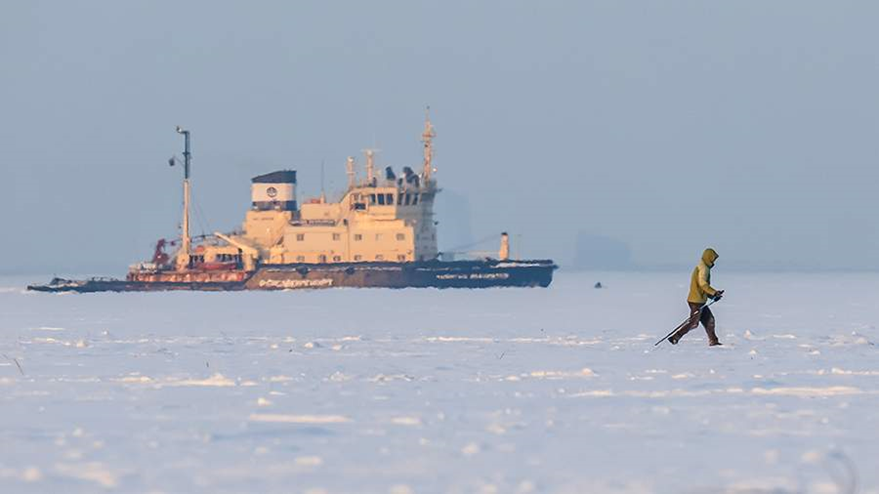
According to the diplomat, Seoul is preparing to hold consultations with the Russian authorities, as key sections of the NSR pass through the territorial waters or the exclusive economic zone of Russia. Russian Ambassador to the Republic of Korea Georgy Zinoviev said that Moscow is ready for a “constructive dialogue” if the intentions of the Korean side turn out to be realistic.
The South Korean government acknowledged that during the preparation of the draft, special attention is paid to preventing violations of the sanctions regime. Kim Seong-Beom said that since the country is also involved in Western sanctions against Russia, it is planned to find a mutually acceptable plan combining the sanctions regime with the Arctic project.
Experts consider this step as Seoul’s desire to diversify logistics routes and reduce dependence on traditional routes through the Suez Canal, despite the difficult political and economic situation.
4. The transformation of the Japanese-American Alliance
Japan plans to invest $36 billion in oil, gas and mineral extraction projects in the United States, Bloomberg reports. It is expected that this is the first tranche of the 550 billion dollars that Tokyo will allocate in accordance with the trade agreement between the countries concluded in July 2025.
US President Donald Trump commented on the event on the Truth Social network, stressing that the agreement is aimed at restoring the American industrial base and creating hundreds of thousands of jobs. Japanese Prime Minister Sanae Takaichi noted that the projects will create sustainable logistics chains through cooperation between the two countries in the field of economic security and AI technologies.
Key investments include the construction of a 9.2 gigawatt natural gas power plant in Ohio, a deepwater oil production terminal in the Gulf of Mexico, and a synthetic diamond manufacturing plant in Georgia. Japan Bank for International Cooperation and Nippon Export and Investment Insurance will play a key role in financing.
These investments demonstrate an unprecedented level of economic integration between the allies amid growing tensions in the Asia-Pacific region.
1. Political consolidation in Japan and the DPRK The head of the ruling Liberal Democratic Party, Sanae Takaichi, has been re-elected as Prime Minister of the country. The decision was made by the lower house of the Japanese parliament, where the current prime minister won the support of 354 parliamentarians. Takaichi, who became the first female prime minister in Japanese history last October, is highly popular with the Japanese.

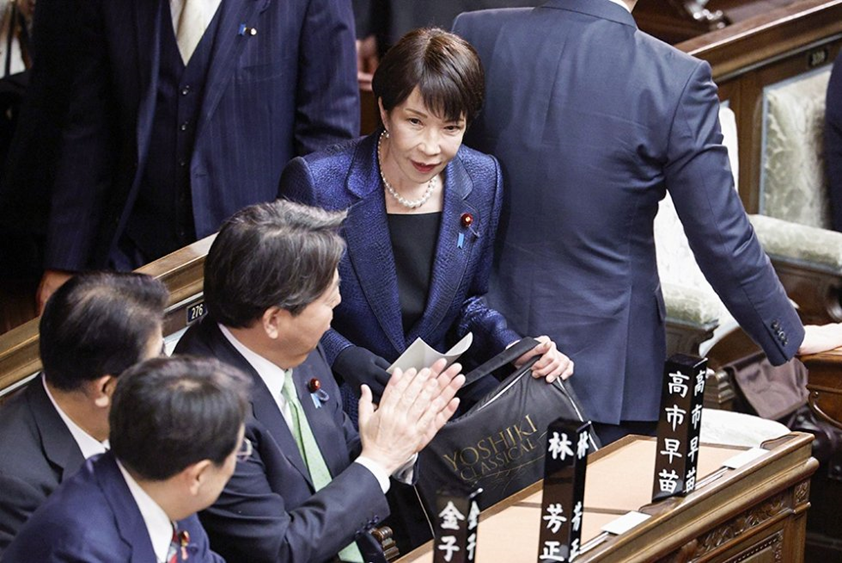
Prime Minister of Japan Sanae Takaichi
Sanae Takaichi is known for her tough views on security and advocates a revision of the ninth article of the constitution, which enshrines the country’s renunciation of war. Against the background of her statements on the Taiwan issue, relations with China have cooled, which has led to a reduction in the tourist flow and the cancellation of cultural events.
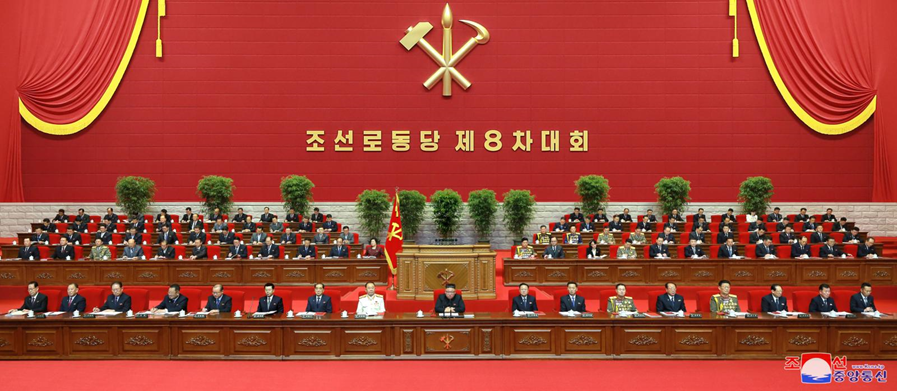
Meanwhile, the IX Congress of the Workers’ Party of Korea, which is supposed to determine the state course of the DPRK for the next five years, will open in late February 2026 in Pyongyang. The decision was made at a meeting of the Political Bureau of the Central Committee of the party under the leadership of North Korean leader Kim Jong-un. Expert circles do not rule out discussing the restoration of the post of chairman of the state on the model of the times of Kim Il Sung.

2. The Nagasaki incident and diplomatic tension
Japanese authorities have detained a Chinese fishing vessel that was trying to escape after receiving an order to stop for inspection in Japan’s exclusive economic zone off the coast of Nagasaki Prefecture. The ship’s captain, a 47-year-old Chinese citizen, was arrested. This is the first time since 2022 that the agency has impounded a Chinese fishing vessel.
Secretary General of the Cabinet of Ministers of Japan Minoru Kihara said that the authorities will continue to take decisive measures to curb the illegal fishing activities of foreign vessels. The incident occurred amid tense relations following statements by Prime Minister Sanae Takaichi about the possibility of military intervention in the event of a Chinese attempt to seize Taiwan by force.
China has not yet responded to Japan’s statement, but similar incidents have previously led to serious diplomatic consequences and restrictions on exports of rare earth metals.
Conclusion
Thus, today’s events show how dynamically the international situation around East Asia and the Asia-Pacific region is developing. South Korea’s desire to develop the Northern Sea Route demonstrates the growing importance of Arctic logistics and Seoul’s willingness to seek compromises with Russia under the sanctions regime. Japan’s record investments in the American economy testify to the unprecedented strengthening of the bilateral alliance under the leadership of Sanae Takaichi and Donald Trump. Internal political processes, including the re-election of the Japanese prime minister and preparations for the congress of the Workers’ Party in the DPRK under the leadership of Kim Jong-un, point to the consolidation of power in key countries in the region. All these steps indicate that East Asian countries are looking for a balance between economic development and strengthening their positions in the international arena in the face of growing geopolitical tensions.
Scenario 1. “Balanced development and diplomatic adaptation”: South Korea successfully coordinates with Russia a test passage through the Northern Sea Route, finding mechanisms that do not violate the sanctions regime, which opens up new logistical opportunities. Japan is deepening economic integration with the United States, gaining access to energy resources and technology, while softening its rhetoric against China to stabilize bilateral trade. The internal political stability in Japan and the predictable course of the DPRK allow the region to maintain a delicate balance.
Scenario 2. “Escalation of tension and block confrontation”: Negotiations on the Northern Sea Route are stalled due to sanctions restrictions, which increases Seoul’s frustration. The incident with the detention of a Chinese ship in Nagasaki provokes a new round of trade war between Beijing and Tokyo. Japan, under the leadership of Sanae Takaichi, is accelerating the revision of the constitution and building up its military potential in close coordination with the United States, which provokes a harsh reaction from China and the DPRK, where Kim Jong-un at the IX congress declares a course to further strengthen nuclear deterrence.