
Transatlantic turbulence and the search for a new security architecture
Short description: The article analyzes the key political processes in Europe in January–February 2026. The focus is on the deepening crisis of trust in relations between the United States and the European Union, the EU’s energy transformation amid the abandonment of Russian resources, as well as the evolution of approaches to resolving the conflict in Ukraine. The period under study is characterized by the intensification of discussions about the strategic autonomy of Europe, attempts to resume direct dialogue with Moscow and reformatting the mechanisms of military support for Kiev.
Introduction
The period January-February 2026 marked a time for the European Union to fundamentally reassess its foreign policy priorities and security arrangements. Against the background of the ongoing transformation of the global order and the changing approaches of the new US administration to allied commitments, European states are faced with the need to develop an independent strategy capable of compensating for the reduced predictability of the transatlantic partnership.
The central event that set the tone for the entire period was the 62nd Munich Security Conference, on the eve of which representatives of European elites publicly expressed concern about the state of relations with Washington. In parallel with the intensification of discussions on security, there was a forced reformatting of the EU’s energy architecture. The total ban imposed by the Council of the European Union on the import of Russian gas from 2027 (including pipeline fuel and LNG) marked a final break with the previous model of energy cooperation. However, the practical implementation of this course already in early 2026 exposed new vulnerabilities: the rapid substitution of Russian volumes with American liquefied natural gas led to an increase in energy prices, an increase in the cost of European industrial products and the emergence of critical dependence on one external supplier. Significant changes have also taken place in the Ukrainian direction. The transfer of the chairmanship of the Contact Group on Defense of Ukraine (Ramstein) from the United States to Britain and Germany marked a new stage in the burden-sharing of military support for Kiev.
Thus, the beginning of 2026 demonstrates Europe’s transition to a phase of forced strategic reorientation. The EU faces a complex task: to preserve transatlantic unity in the face of erosion of trust, ensure energy security at the cost of painful structural restructuring of the economy, and develop a consolidated position on resolving the conflict in Ukraine without losing its subjectivity in dialogue with key global players.
Transatlantic relations: undermining trust and searching for a new model of interaction
February 2026 marked a turning point in the evolution of transatlantic relations. A series of events, including public statements by the American leadership and the reaction of European capitals to them, have exposed the deep contradictions that have accumulated over the past years. The most symptomatic manifestation of the crisis was the situation around Greenland: President Donald Trump’s statements about the need to acquire the island and the possibility of using force to achieve this goal were perceived in Europe as a challenge to the fundamental principles of sovereignty and territorial integrity.
In parallel with the rhetorical dimension of the crisis in US-European relations, institutional changes in the mechanisms of interaction took place. At a meeting of NATO defense ministers on February 12, the United States delegated Elbridge Colby, Deputy Secretary of Defense for Political Affairs, to the meeting, which was perceived as a reduction in the level of representation. A more significant signal was the transfer of the chairmanship of the Contact Group on Defense of Ukraine (Ramstein) from the United States to Great Britain and Germany. Although NATO Secretary General Mark Rutte publicly denied the thesis of Washington’s retreat from its leadership role, pointing to the preservation of 90% of critical supplies for the Ukrainian air defense by the United States, the fact of the redistribution of organizational functions indicated a new configuration within the alliance.
The adaptation of European allies to the changing role of the United States manifested itself in the creation and expansion of the PURL mechanism, a program for European countries to purchase American weapons for Kiev. In July 2025, a scheme was agreed upon according to which Ukraine draws up a monthly list of necessary weapons produced exclusively in the United States, and European partners purchase them. By the beginning of 2026, 17 European countries had joined the initiative, as well as Canada, New Zealand and Australia. Rutte described Britain’s accession to PURL in February 2026 as an “important signal” of Europe’s intensification in the defense sector.
Against the background of these processes, a discussion has intensified within Europe about the need to form a “European pillar” of NATO, a more autonomous defense structure capable of acting independently in the event of a reorientation of American priorities. According to Ischinger, Europe must show the United States, Russia and China that “it is determined not to be just an item on the menu, but to have a place at the negotiating table.” This attitude reflects a fundamental shift in the European perception of transatlantic relations: from unconditional loyalty to a pragmatic balancing of interests.


Elbridge Colby, Deputy Secretary of Defense for Political Affairs
EU energy transformation: sanctions costs and the formation of a dependent relationship
In January-February 2026, the energy policy of the European Union entered a crucial phase in the implementation of long-term decisions taken in previous years. On January 26, the EU Council officially approved a complete ban on the import of Russian gas, including pipeline supplies and liquefied natural gas (LNG), from January 1, 2027. The document also requires member states to submit national import diversification plans by March 1, 2026, and by the end of 2027, the European Commission intends to propose a legislative initiative to phase out imports of Russian oil. These decisions formally end the EU’s long-term energy dependence on Russia, but their practical implementation in early 2026 exposed serious economic and political costs.
A critical dimension of energy transformation is the formation of a new dependence on American liquefied natural gas. As of January 2026, the share of the United States in total LNG imports to Europe reached 60%, while in Germany this figure was 96%. This concentration of supplies is causing concern even in official EU structures: European Commissioner for Energy Dan Jorgensen has publicly acknowledged the risk of replacing one dependence with another. Brussels is considering the possibility of expanding purchases from alternative suppliers in the Persian Gulf and Canada, but the actual contracts and infrastructure are still focused mainly on the American market.
An additional factor of instability is the situation with the fullness of underground gas storage facilities. As of February 10, 2026, German UGS facilities were filled by only 26%, which is significantly below the seasonal norm. The reason is called cold weather and active fuel extraction. Against this background, experts do not rule out a rise in prices to the highest levels in the last two years, which will increase the pressure on industry and households.
Thus, the accelerated energy reorientation of the EU, dictated by political decisions, generates a set of interrelated problems: rising production costs, the threat of deindustrialization, the formation of a new monopoly dependence on the United States and the strengthening of intra-bloc contradictions. The further development of the situation will be determined by the ability of European institutions to diversify their sources of supply and build mechanisms to protect the domestic market from price shocks.

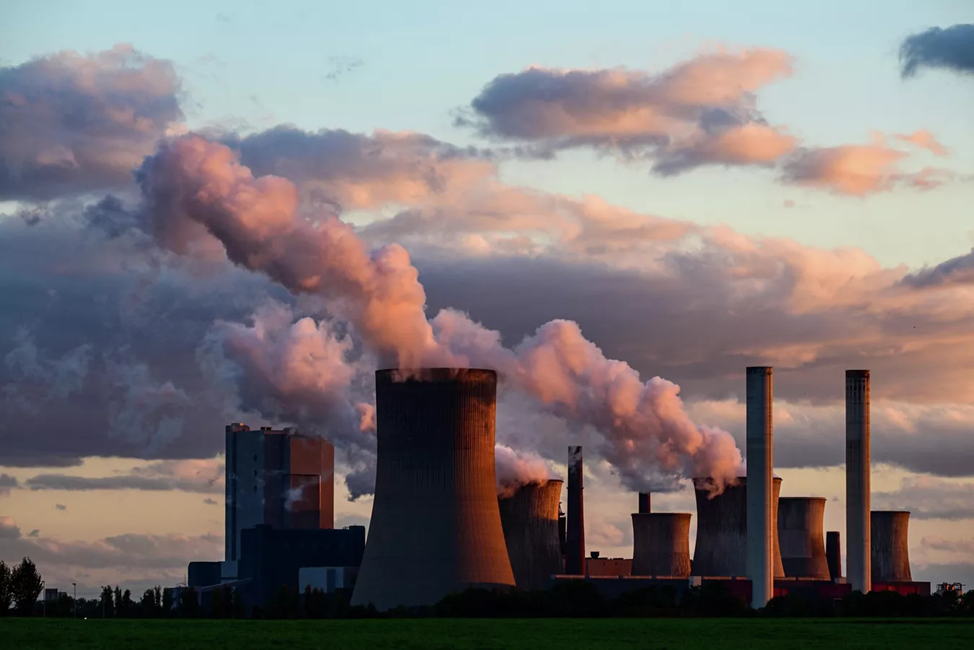
Niederaussem coal-fired power plant in Germany
Ukrainian settlement: reformatting support mechanisms and discussions on international dialogue
In January-February 2026, the architecture of international support for Ukraine underwent significant changes due to both institutional adaptation to the new role of the United States and increased discussions on the prospects for a peaceful settlement. The central event was the meeting of NATO Defense Ministers on February 12, during which the Ukraine–NATO Council and the Contact Group on Defense of Ukraine (Ramstein format) met. For the first time since the group’s creation in 2022, it was chaired not by the American side, but by the United Kingdom, represented by Defense Minister John Healey, with the participation of his German counterpart Boris Pistorius.
The transfer of the presidency to the European allies reflects a broader trend of reallocation of the organizational burden within the alliance. As NATO Secretary General Mark Rutte explained at a press conference following the meetings, the United States retains a critical role in ensuring the combat capability of the Ukrainian air defense (up to 90% of supplies), but operational management of military coordination processes is increasingly shifting to European structures. This model corresponds to the general logic of “Europeanization” of Kiev’s support while maintaining the American technological and industrial base.
At a press conference following the meeting, John Healy announced the decision of the participants of the Contact Group to allocate additional military assistance to Ukraine in the amount of $ 3 billion. “We will increase military assistance to Ukraine. We will increase the pressure on Russia. And we want 2026 to be the year of the end of this war, the year of peace,” the British minister said. At the same time, Germany confirmed its commitment to strengthen the Ukrainian air defense: Boris Pistorius announced his readiness to supply five additional Patriot PAC-3 interceptor missiles, provided that other partner countries provide a total of 30 units of similar systems.
At the same time as the intensification of military support in the European political space, an intensive discussion unfolded about the need for direct dialogue with Russia. The visit of French President Emmanuel Bonn’s diplomatic adviser to Moscow in early February was the first publicly confirmed contact of this level in recent years. Although neither the Kremlin nor the Elysee Palace initially commented on the meeting, on February 10, Russian Presidential spokesman Dmitry Peskov confirmed “the resumption of contacts with France at the technical level,” allowing them to transform into a high-level dialogue.
Czech Prime Minister Andrei Babis also called for parallel talks between European leaders with Trump and Putin, suggesting forming a negotiating group of key European politicians – Macron, Meloni, German Chancellor Friedrich Merz and British Prime Minister Keir Starmer. However, a consolidated position in the EU has not yet been achieved: British Foreign Minister Yvette Cooper and Finnish President Alexander Stubb have taken a restrained position, insisting there is no evidence of Moscow’s readiness for peace. The head of European diplomacy, Kaya Kallas, in turn, stated the need to enter into negotiations not with general statements, but with a “list of demands” to Russia, which implies maintaining a tough negotiating line.

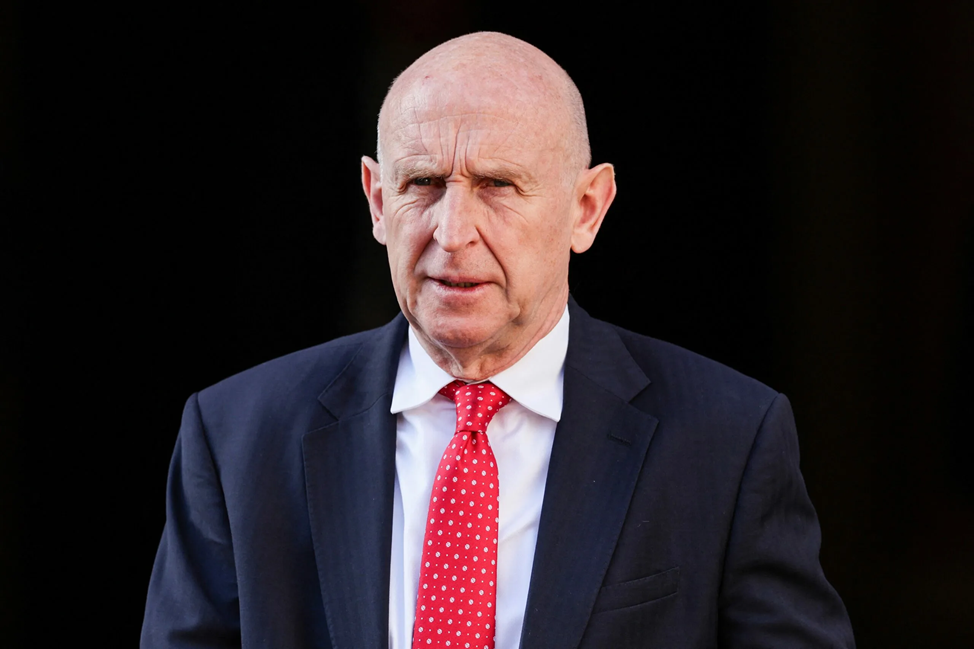
John Healey, British Minister of Defense
The military-political dimension: a review of strategic priorities
In parallel with the institutional restructuring of Ukraine’s support mechanisms and energy transformation, in January-February 2026, there was an intensification of military-political rhetoric both from European structures and in statements by officials of NATO member states. The key trend has been the intensification of mutual accusations of preparing for conflict and the build-up of a military presence along the borders with Russia and Belarus.
On February 12, Colonel-General Andrei Serdyukov, Chief of the Joint Staff of the Collective Security Treaty Organization (CSTO), announced at a briefing the accelerated militarization of European countries and their preparations for war against Russia. According to him, “the presence of coalition troops in the immediate vicinity of the CSTO countries is actively increasing, as well as operational equipment of territories and improvement of the relevant infrastructure.” The CSTO representative attributed these actions to the West’s desire to prolong the conflict in Ukraine and create a long-term threat to security on the eastern flank.
The intra-European security debate has taken on new dimensions amid a crisis of confidence in the United States. As former U.S. Ambassador to NATO Ivo Daalder noted, “Europe cannot trust America today and will not be able to trust America tomorrow until the United States takes action to restore that trust.” This position is reflected in the growing demand for the EU’s strategic autonomy in the defense sector. The head of the Munich Security Conference, Wolfgang Ischinger, called on Europe to move from empty rhetoric to decisive action and demonstrate to the United States, Russia and China that “it is determined not to be just an item on the menu, but to have a place at the negotiating table.”
It is significant that against the background of these processes, disagreements remain within Europe regarding the degree of threat and methods of its neutralization. While the Baltic states and Poland insist on maximum deterrence, the governments of France, Germany and Italy are more willing to engage in dialogue with Moscow, subject to compliance with the basic principles of international law. This divergence of approaches reflects the fundamental contradiction between the geographically determined perception of the threat and the desire to preserve the space for diplomatic maneuver.
Thus, the military-political dynamics of the beginning of 2026 is characterized by the overlap of two processes: on the one hand, the objective build–up of military potential and infrastructure along the line of contact with Russia, on the other, the deepening of the internal debate on strategic autonomy and the limits of transatlantic solidarity. These trends will determine the EU’s defense policy in the medium term, regardless of the outcome of the ongoing negotiations on Ukraine.

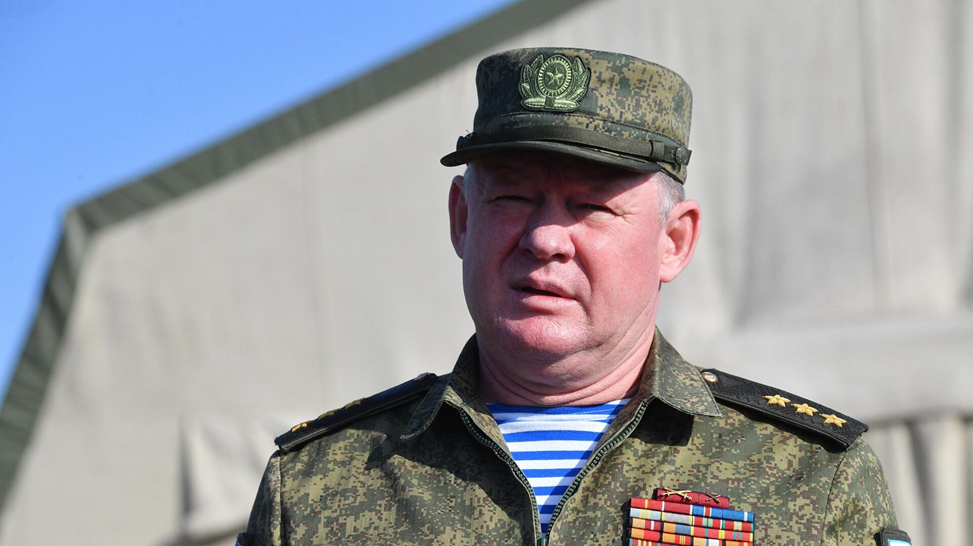
Andrey Serdyukov, Chief of the Joint Staff of the Collective Security Treaty Organization (CSTO)
Conclusions:
The analysis of the events of January-February 2026 allows us to identify several stable trends that determine the trajectory of the European Union in the medium term. The combination of external and internal factors forms a new configuration in which European states will have to act in conditions of increased uncertainty and fragmentation of traditional allied ties.
Transatlantic relations have entered a phase of structural adjustment. The crisis of confidence provoked by the actions of the Donald Trump administration (including the rhetoric around Greenland and the redistribution of roles in the Ramstein format) is not a temporary tactical episode. It reflects a fundamental shift in American foreign policy strategy towards greater transactionalism and shifting the burden of responsibility onto allies. Europe is forced to adapt to a model in which the automaticity of security guarantees is no longer guaranteed, and cooperation requires constant confirmation of mutual benefit.
The EU’s energy transformation creates new vulnerabilities. The forced abandonment of Russian energy resources, reinforced by the decisions of the EU Council, has achieved its institutional goal, but at the cost of serious economic costs. The rising cost of industrial products, the threat of deindustrialization and the formation of critical dependence on American LNG pose long-term challenges to the competitiveness of the European economy. Intra-bloc contradictions on this issue (the position of Hungary and Slovakia) indicate a lack of consensus on the optimal model of energy security.
The Ukrainian direction is characterized by a redistribution of functions while maintaining common goals. The transfer of the presidency of the Contact Group to European allies and the expansion of the PURL mechanism demonstrate adaptation to the new role of the United States. Europe is taking on an increasing financial and organizational burden, while maintaining dependence on American production facilities in critical segments (air defense systems). Discussions on the need for direct dialogue with Russia reflect the desire of a number of European leaders to return the EU to subjectivity in the negotiation process, but a consolidated position on this issue has not yet been reached.
Intra-European contradictions are intensifying. The heterogeneity of approaches to dialogue with Russia, energy policy, and defense strategy poses a risk of further fragmentation of the EU. The gap between the “old” (France, Germany, Italy) and the “new” (Baltic states, Poland, Finland) Europe, as well as the special positions of Hungary and Slovakia, make it difficult to develop a unified foreign policy line and weaken the negotiating positions of Brussels.
Forecast for the coming months of 2026
Scenario 1.
European institutions and key member States (France, Germany) are making coordinated efforts to offset the negative effects of the transatlantic crisis. In the energy sector, this will result in accelerated diversification of suppliers (signing long-term contracts with Qatar, Canada, and African countries) and accelerated development of renewable energy. In the defense sector, we need to increase national budgets and launch joint projects within the framework of the European Defense Fund, but without breaking with NATO. A dual line will remain on the Ukrainian issue: continued military support through the PURL mechanism with parallel attempts to probe negotiating opportunities through technical channels (modeled on Bonn’s visit to Moscow). This scenario will allow the EU to maintain internal unity and avoid sharp breaks, but it will not solve the fundamental problem of dependence on the United States in the field of security.
Scenario 2.
In the event of a further escalation of Washington’s rhetoric (new trade duties, a demonstrative reduction in the military presence in Europe) and/or an escalation of the conflict in Ukraine, the EU’s internal contradictions will come to the surface. The group of “hawks” (Great Britain, Poland, the Baltic States) may initiate the creation of narrow military-political coalitions outside the EU, focused on maximum containment of Russia and the preservation of Atlantic solidarity at any cost. The “continental” group (France, Germany, Italy) is stepping up efforts for dialogue with Moscow, which will lead to accusations of “appeasement” and deepen the split. In the energy sector, pressure will increase on Hungary and Slovakia to force them to completely abandon Russian resources, which will provoke lawsuits and a political crisis. This scenario will lead to a paralysis of the EU’s common foreign policy and a significant weakening of its role in global affairs.