
Short description: In this article it is reviewed a hypothetical scenario of a change of power in Iran after the death of Ayatollah Ali Khamenei in 2026 as a result of strikes by the United States and Israel. It is analyzed the internal stability of the regime, the reaction of key international players (the United States, Russia, and China), and the consequences for regional diplomacy in the Middle East. Three possible scenarios are described: Iran’s nuclear breakthrough, an asymmetric war, and the fragmentation of the country. The conclusion is drawn about the failure of the regime’s “decapitation” strategy and the risk of an uncontrolled chain reaction in the region.
Preface
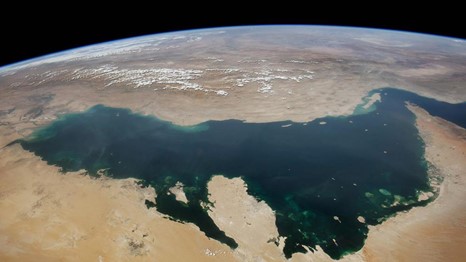
In modern history, Iran has been a geopolitical hub between the Middle East and Eurasia due to its unique geographical location and valuable resources. Iran connects the Middle East, South Caucasus and Central Asia into a single logistics network (including the North—South corridor and China’s One Belt, One Road). Control of the Strait of Hormuz turns Tehran into a global intermediary capable of cutting off up to a third of the world’s oil supplies in the event of a conflict and provoking the collapse of the Western economy.
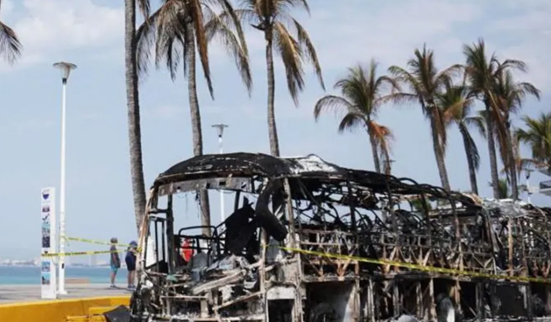
Military actions by the United States and Israel led to the death of Iran’s spiritual leader Ayatollah Ali Khamenei. This paved the way for a potential change of power and regime. It is important to note that any internal destabilization or transit of power in Tehran will never remain a local problem. They will inevitably trigger a geopolitical domino effect that will disrupt Eurasian trade and redraw the map of the entire macroregion.
The innerpolitical context and the regime’s strength As described above, more specifically, in March 2026, as a result of massive “US and Israeli airstrikes, they led to the death of Supreme Leader Ayatollah Ali Khamenei and a number of high-ranking military commanders, as well as damaged the country’s key infrastructure.” The United States and Israel used these attacks to seek a change of power in Iran. According to experts, there are two scenarios to achieve this goal: a) betting on mass protests by Iranian citizens and the fall of power as a result of such protests; b) cooperation between the Iranian elites and Donald Trump, which will result in a transformation of power. Alexander Kargin, an expert on the Middle East, mentions these scenarios: “Their main idea is a change of power either through supporting speeches inside the country in the conditions of a weakened Iranian state, or through cooperation with part of the elites. And moreover, this is the part of the elites that will remain now, which will not be touched.”

The actual situation differs from the expected scenarios
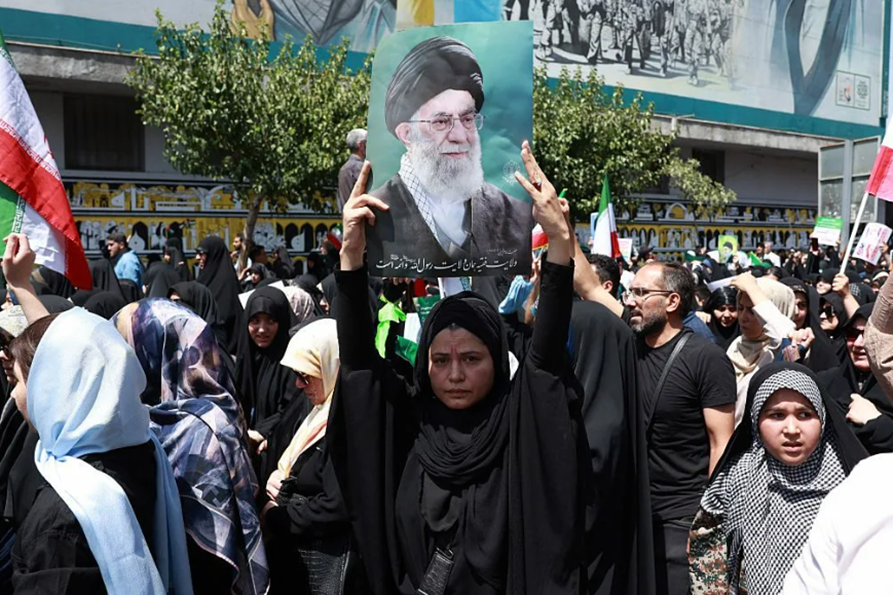
The administration of Donald Trump was counting on the rapid collapse of the Iranian system. However, external aggression has only led to the consolidation of society around the current leadership. US intelligence has released a report in which it acknowledged the impossibility of regime change in Iran by military means, as there are no alternative political forces in the country ready to take power. “Moreover, during the American aggression, the newspaper’s interlocutors did not notice any signs of a split among the Iranian elites in the government or law enforcement agencies, as well as a possible mass popular uprising that could potentially lead to a change in the political system.” Israel also fears that prolonging the war will provoke an increase in Israeli military spending and a possible global economic crisis.
Despite the death of Supreme leader Ali Khamenei at the beginning of the American-Israeli operation, his son Mojtaba was promptly elected as the new head of state. Against the background of all the statements, the situation in the region remains critical due to the ongoing mutual rocket attacks and attacks on infrastructure facilities.
Iran’s current power structure
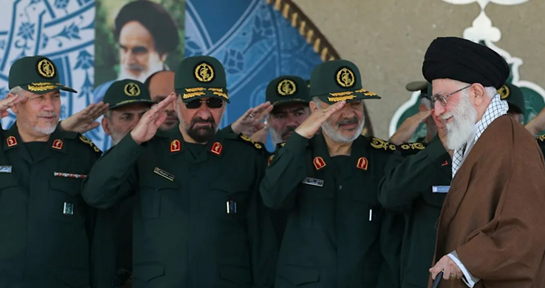
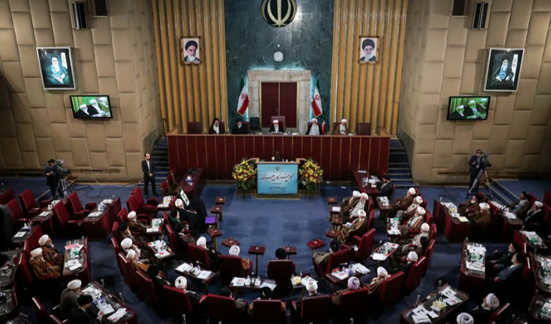
Experts call Iran’s state structure a “poly-dictatorship,” where influence is reliably distributed among religious institutions, law enforcement agencies, and big business. The main pillar and “muscles” of the current government remains the IRGC, which controls not only the army, but also the most important sectors of the economy. To ensure continuity of control during the war, the IRGC command has identified reserve successors three levels down the hierarchy in advance.
The deeply rooted religious ideology and culture of martyrdom are also a powerful factor in the cohesion of government and law enforcement agencies. At the same time, the Iranian opposition, which includes reformers, monarchists and representatives of the Diaspora, is historically fragmented and does not have a single decision-making center.

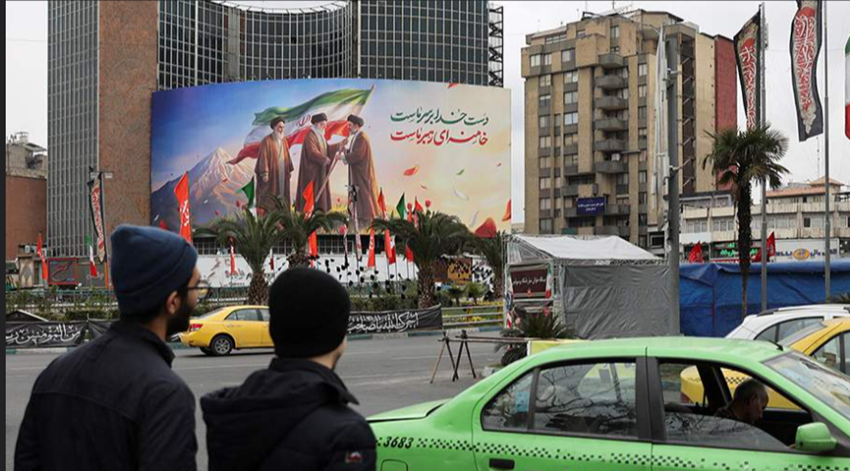
The absence of protest leaders is affecting discontent due to economic problems and the brutal suppression of recent demonstrations. Thousands of people died in the process. To stop any attempts at internal resistance, the government uses total surveillance of the population using artificial intelligence and regularly blocks the Internet. Although analysts consider the fall of the Islamic Republic historically inevitable, at the moment the continued cohesion of the elites and the security apparatus makes a rapid collapse of the system unlikely.
The reaction of key international actors (USA, Russia, China)
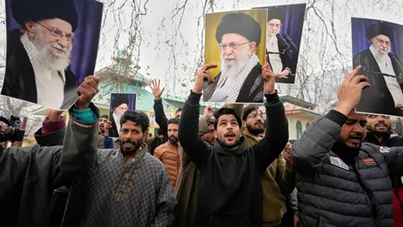
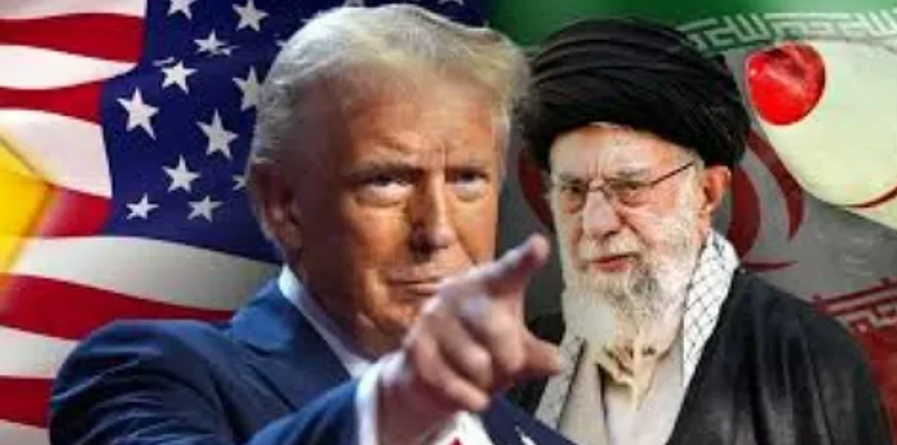
Joe Kent, former director of the US National Counterterrorism Center, admitted that Washington understood in advance the ineffectiveness of such attempts. According to the American intelligence services, coordinated attacks by the United States and Israel on the Iranian leadership and the IRGC naturally led to the consolidation of Iranian society. In the face of an external threat, even dissidents and citizens dissatisfied with the current regime have consolidated around the government. Despite the failure to change the political system, the US president said that Washington was satisfied with the current situation. According to him, Iran has no leaders left to negotiate, and the country’s military infrastructure, including the army, navy, and air defense systems, has been completely destroyed. Thus, the United States recognizes the failure of the political goal of regime change due to the consolidation of Iranian society, but officially declares the achievement of purely military goals to destroy the country’s security apparatus.

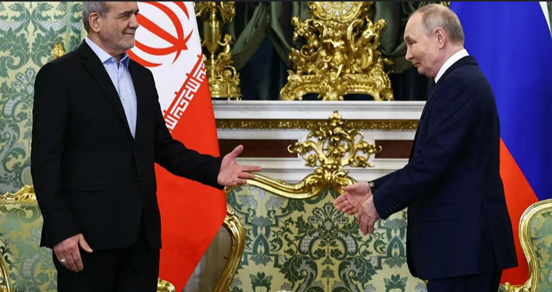
The closure of the Strait of Hormuz has led to an increase in oil prices, which increases economic pressure on the West and stimulates discussions about easing sanctions. In addition, the redirection of American weapons (including Patriot and HIMARS systems) to the Middle East significantly reduces the volume of military support for Ukraine. Despite its tactical successes, Russia’s long-term position in the Middle East is vulnerable due to the lack of a unified foreign policy decision-making mechanism.
China is using the Middle East conflict to systematically expand its influence without direct military intervention. Beijing is integrating countries under Western sanctions (including Iran and Russia) into its own international payment system, CIPS. At the same time, the Chinese satellite group is conducting large-scale intelligence gathering in the conflict zone, studying US military tactics in real time.
Implications for regional diplomacy (Middle East)
The weakening of Iran has stimulated Saudi Arabia’s ambitions to form a new Sunni security architecture. However, the Gulf monarchies fear that Iran’s fragmentation will bring uncontrollable chaos, threatening their own economies. The Great Turan project has intensified in the north: Azerbaijan, with the support of Turkey and the United States, has gained the opportunity to claim Iranian Azerbaijan, although the integration of millions of conservative Shiites carries internal risks for secular Baku.
The destabilization of the Iranian statehood has led to the autonomization of proxy forces and the emergence of new threats. The Yemeni Houthis, having lost control from Tehran, have become an independent and unpredictable player capable of blocking trade in the Red Sea in their own interests. In the east, Afghanistan began expanding into the Iranian province of Sistan-Baluchestan for access to the ocean, turning the region into a zone of conflict between the geopolitical interests of India, Pakistan and China. Israel, on the other hand, found itself in a diplomatic impasse: having eliminated the former leadership of Iran, it received a decentralized, uncompromising opponent in the face of disparate IRGC cells.
Conclusion
To summarize, the events of spring 2026 have become a global test for the entire system of international relations. The calculation of the United States and Israel for a rapid change of the political regime in Iran through a strategy of “decapitation” has failed. Instead of pro-Western democratization, the world has seen an unprecedented consolidation of Iranian society around a hard core of security forces and the radicalization of elites. This crisis has definitively proved that deeply rooted, ideologized systems cannot be destroyed solely by military means, and any attempts at artificial intervention inevitably trigger an uncontrollable chain reaction throughout the Eurasian space.
Given the current balance of power, the destruction of part of Iran’s conventional military infrastructure, and the reformatting of global alliances, the geopolitical landscape can develop according to three main scenarios:
Scenario 1: “besieged fortress” and nuclear breakthrough
Since the United States declares the destruction of Iran’s classical military infrastructure (navy, air defense and regular army), the IRGC remains the only reliable instrument of deterring external aggression — nuclear weapons. In this scenario, Tehran officially withdraws from all non-proliferation treaties and builds a nuclear bomb as soon as possible. The state is finally turning into a militarized “besieged fortress”, the economy of which is completely disappearing into the shadows and relies solely on Chinese financial systems (CIPS). This will fix the status quo, but will make Iran untouchable to direct invasions, forever changing the balance of power in the Middle East.
Scenario 2: Chronic asymmetric warfare and network chaos
With its economy and infrastructure destroyed, Iran is abandoning the rules of classical statehood and adopting the tactics of global guerrilla warfare. The decentralized cells of the IRGC and proxy forces that have emerged from direct control (the “Axis of Resistance”) are launching a permanent war of attrition against Israel, the United States and their Arab allies. In this case, the Strait of Hormuz and the Red Sea remain blocked for years. The world is plunging into a protracted economic crisis due to persistently high energy prices, which is leading to the decline of Western economies and the accelerated formation of alternative trade routes within the BRICS.
Scenario 3: Delayed fragmentation (“Balkanization” of Iran)
Although the regime has now demonstrated cohesion, the long-term effects of economic destruction and severe sanctions may take their toll. If the central government under the leadership of Mojtaba Khamenei is unable to meet the basic needs of the population, internal pressure will break through the repressive apparatus. A parade of sovereignties will begin: uprisings by Kurds, Balochis and Azerbaijanis will lead to the disintegration of Iran into several warring enclaves. This scenario will be a disaster for the region, with Turkey, Azerbaijan, Afghanistan and Pakistan drawn into a civil war, and a multimillion-strong wave of refugees flooding the South Caucasus and the Middle East.