
Positions and Shifts: Current Diplomatic Initiatives in and around the Caucasus
Brief overview: This article highlights the dynamics of diplomatic and regional developments in the South Caucasus and neighboring countries. Georgia maintains neutrality toward Russia and Ukraine, strengthens its tourism sector, and continues to uphold a balance regarding regional conflicts. Armenia and Russia are discussing Russian involvement in transport projects, while Armenia and Azerbaijan continue steps toward normalizing relations, including leaders’ meetings and peace agreements. These initiatives indicate that cooperation and diplomacy are rapidly evolving in the region.
Introduction
The region is witnessing active diplomatic activity and demonstrates varied national positions. Georgia maintains its neutral policy toward Russia and Ukraine, while Armenia and Russia are discussing Russian participation in regional transport projects. At the same time, Georgia is strengthening international cooperation in the tourism sector, achieving record numbers of tourist visits. Steps are also being taken to normalize relations between Azerbaijan and Armenia, including a secret meeting of leaders and previously signed agreements on peaceful conflict resolution. Overall, these developments reflect the countries’ pursuit of stability, growth, and peaceful solutions within a complex regional context.
Georgia’s Stability in Relation to Russia and Ukraine
Georgia has not changed its position regarding sanctions against Russia or the deployment of troops to Ukraine. This statement was made by the Speaker of the Georgian Parliament, Shalva Papuashvili, following Ukraine’s appointment of an ambassador to Tbilisi.“Georgia has not changed its policy. As we said four years ago, we will not impose bilateral sanctions, and we say the same today. As we said that we would not send troops to fight there, the state still has no plans to deploy military forces to Ukraine,” he stated.

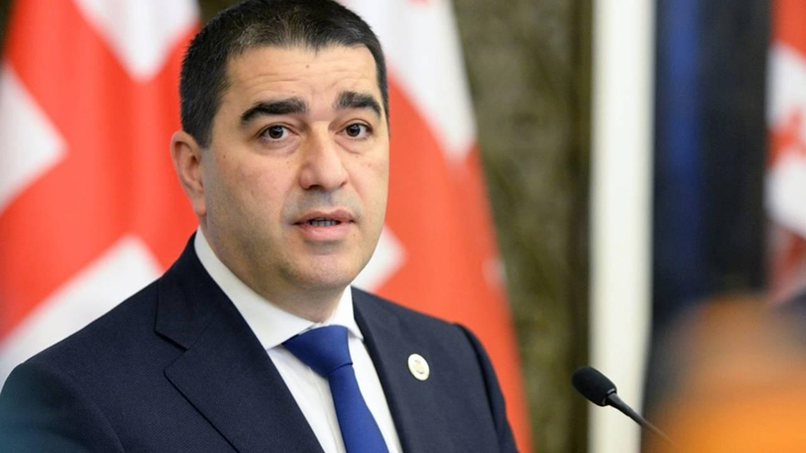
Speaker of the Georgian Parliament – Shalva Papuashvili
Papuashvili noted that Tbilisi welcomes Ukraine’s appointment of an ambassador and hopes that this step marks a reconsideration by the Ukrainian authorities of their previously hostile rhetoric toward Georgia.
Earlier, the President of Georgia, Mikheil Kavelashvili, stated that a war with Russia, as demanded of Tbilisi by Western countries, would have led Georgia to catastrophe.
Russia’s Involvement in the Trump Route: Armenia’s Response
The Speaker of the Armenian Parliament, Alen Simonyan, called Russia’s involvement in the Trump Transport Corridor (TRIPP), which connects parts of Azerbaijan through Armenia’s Syunik region, “absurd.” The official made this statement in an interview with the Factor TV channel.“In the first place, TRIPP is an Armenian-American initiative. If we are talking about opening such a route or road, in my view, it should be a separate initiative. But within the framework of TRIPP, it seems to me somewhat absurd, as it would mean doing everything to hinder TRIPP from starting work quickly,” the parliamentarian responded to a statement by Russian Foreign Ministry spokeswoman Maria Zakharova, who confirmed Moscow’s readiness to explore possible options for connecting to TRIPP.

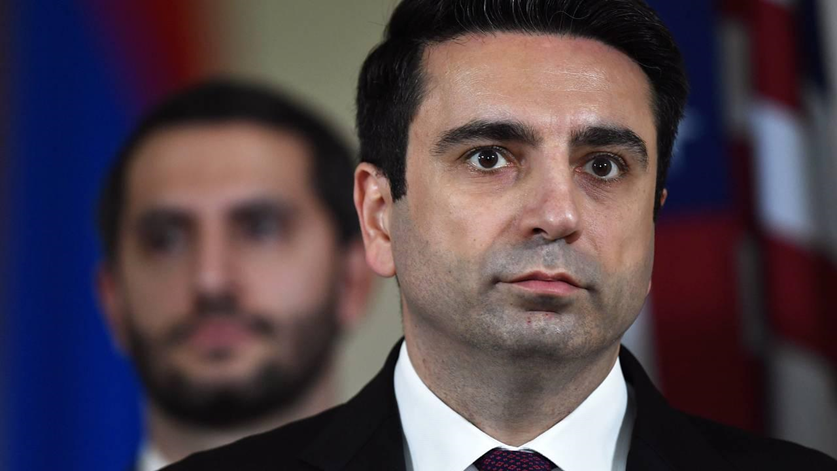
Speaker of the Armenian Parliament – Alen Simonyan
Simonyan also noted that Russia’s interest in the region is “normal,” as that is how a great power operates. Additionally, the Speaker stated that the tension in Moscow-Yerevan relations is greatly exaggerated. Thus, the position of the Armenian Speaker reflects the need for a more balanced and constructive dialogue on regional issues.
Meeting between the Prime Minister of Georgia and the Secretary-General of the UN World Tourism Organization The meeting took place in Dubai on the sidelines of the World Government Summit. Participants included Georgia’s Minister of Foreign Affairs, Maha Bochorishvili, Minister of Economy and Sustainable Development, Mariam Kvrivishvili, and Head of the Government Administration, Levan Zhorzholiani.

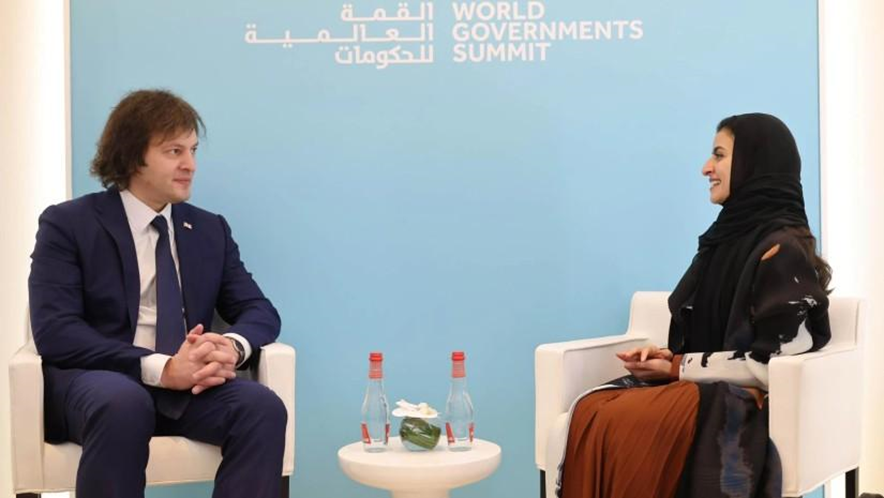
Prime Minister of Georgia – Irakli Kobakhidze and Secretary-General of the UN World Tourism Organization – Sheikha Nasser Al-Nawais
According to the Ministry, during the meeting the parties discussed the long-standing cooperation between the Government of Georgia and the UN World Tourism Organization. Attention was drawn to the positive development trends in Georgia’s tourism sector and the country’s diverse tourism potential.
It was noted that in 2025 the number of international tourist visits to Georgia exceeded 5.5 million, setting a record for the country’s history. The meeting also addressed steps taken by the Georgian government to further develop the nation’s tourism potential. Such an active approach demonstrates Georgia’s commitment to strengthening international engagement and attracting more tourists, contributing to economic growth and enhancing the country’s visibility on the global stage.
Private Conversation between Aliyev and Pashinyan
The President of Azerbaijan, Ilham Aliyev, and the Prime Minister of Armenia, Nikol Pashinyan, agreed to normalize relations between Baku and Yerevan, highlighting the two countries’ readiness for peace.
“Both leaders confirmed their readiness to continue efforts to further strengthen peace and stability between the two countries and agreed to maintain contacts to support the process of bilateral normalization,” the Report agency stated.

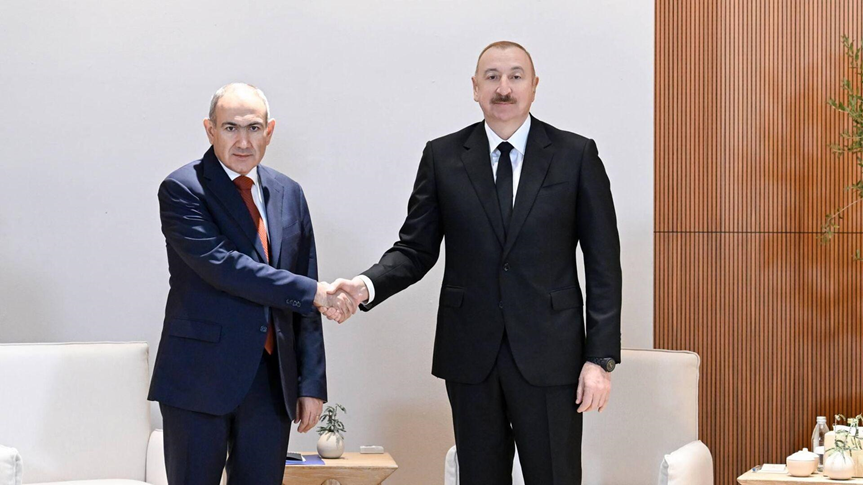
Prime Minister of Armenia – Nikol Pashinyan and President of Azerbaijan – Ilham Aliyev
In addition, Pashinyan and Aliyev discussed the implementation of U.S. President Donald Trump’s route through the territories of both countries as part of the Central Corridor from China to Europe, the resumption of bilateral trade, and the export of petroleum products from Azerbaijan to Armenia.
The meeting between Pashinyan and Aliyev in Abu Dhabi became known on February 4 and had not been announced in advance. On February 3, the Speaker of the Armenian Parliament, Alen Simonyan, called Russia’s involvement in the Trump route absurd, explaining that the section of the corridor in Armenia is purely an Armenian-American initiative.
It is worth recalling that on August 8, 2025, in Washington, Nikol Pashinyan and Ilham Aliyev signed a joint declaration concerning the peaceful resolution of the conflict between Yerevan and Baku. The document marked the first step toward signing a full peace treaty between the two countries and resolving the Karabakh issue. The act was mediated by Donald Trump.
Conclusion
Overall, the South Caucasus region demonstrates a commitment to stability and development through maintaining neutrality, active international engagement, and initiatives to normalize relations between countries. Each country adheres to its strategy: Georgia remains committed to neutrality and the development of tourism; Armenia and Azerbaijan are taking steps toward peace and dialogue, while also rejecting the interference of external powers, such as the Russian Federation, in regional transport projects. These processes thus reflect the countries’ desire to balance national interests with the maintenance of peace in a complex regional environment.
Scenario 1: Strengthening Stability and Gradual Development of Dialogue
Georgia will continue its position of neutrality, avoiding sanctions and military intervention, while Armenia and Russia will continue to draw closer through constructive dialogue, rejecting criticism and misunderstandings regarding transport projects. Regional cooperation will also increase, and tensions are expected to decrease due to more measured engagement. Azerbaijan and Armenia will make progress in the normalization process, potentially including the signing of peace treaties and the expansion of economic cooperation. As a result, the region will experience a new level of stability, fostering the development of economic ties, including transport projects and trade relations.
Scenario 2: Intensification of Confrontation and Crisis Situations
Georgia will maintain its neutrality, but internal or external pressures could force it to reconsider its position in favor of one side. New sanctions or diplomatic protests are possible. Tensions in the region are expected to rise due to disagreements over transport projects and Russia’s involvement, potentially triggering new confrontations between Armenia, Russia, and other stakeholders. Moreover, the normalization process between Azerbaijan and Armenia could stall or even lead to new conflicts, particularly in light of unresolved territorial disputes. International organizations and countries may be compelled to intervene to prevent crises; however, the lack of trust between the parties and emerging sources of tension could complicate efforts to find peaceful solutions, resulting in further destabilization and potential military clashes or political crises in the region.