
Russia and the World 2026: Strategic adaptation, electoral mobilization and the search for a new security architecture
Brief description: the beginning of 2026 is characterized by the entry of the Russian Federation into a phase of deep structural transformation amid preparations for the autumn electoral cycle in the State Duma. The internal political landscape is defined by an unprecedented increase in digital control and de-anonymization of society through new legislative initiatives such as the “anti-fraud package”. The country’s economy is balancing in a state of fragile equilibrium: Record defense and social spending are supporting demand, but rising VAT, staff shortages, and cost inflation pose risks of stagflation. The foreign policy vector finally consolidates the turn to the East, where deepening partnership with China and accelerating the creation of independent payment systems within the framework of the BRICS are becoming the main tools for ensuring sovereignty in the face of ongoing sanctions pressure.
Introduction
The entry of the Russian Federation into 2026 was marked not just by a calendar change of milestones, but by the crystallization of a fundamentally new political and economic reality. While previous years were marked by an emergency adaptation to external shocks, the current period records the state’s transition to a long-term development strategy in the context of a “new normal” and fierce geopolitical confrontation. January and February became a time of active mobilization of all the resources of the system on the eve of the key event of the domestic political calendar — the elections to the State Duma, scheduled for September.
The authorities have taken decisive action to consolidate society and stop potential threats, relying on building the infrastructure of a “sovereign Internet” and ideological solidity. At the same time, the government’s economic bloc is forced to solve the most difficult task of balancing the budget deficit, resorting to unpopular fiscal measures and relying on the military-industrial complex as the main driver of growth. On the foreign arena, Russia continues to strengthen the Moscow–Beijing axis, seeing it as a guarantee of its technological and resource sustainability. This analytical review examines the key trends in the first months of 2026, shaping the country’s image on the threshold of a large-scale electoral transit.
The author is Anastasia Yusupova-Vdovina Tags – Politics, Digital control, Electoral campaign, Economy, Budget deficit, Social sphere, Military-industrial complex, Business, Personnel shortage, Geopolitics, China, BRICS, Financial system, Sovereignty, Parliamentary elections, Stagflation, Information isolation, Anti-Russian sanctions.

The battle for digital: “Anti-fraud” as a tool of political control
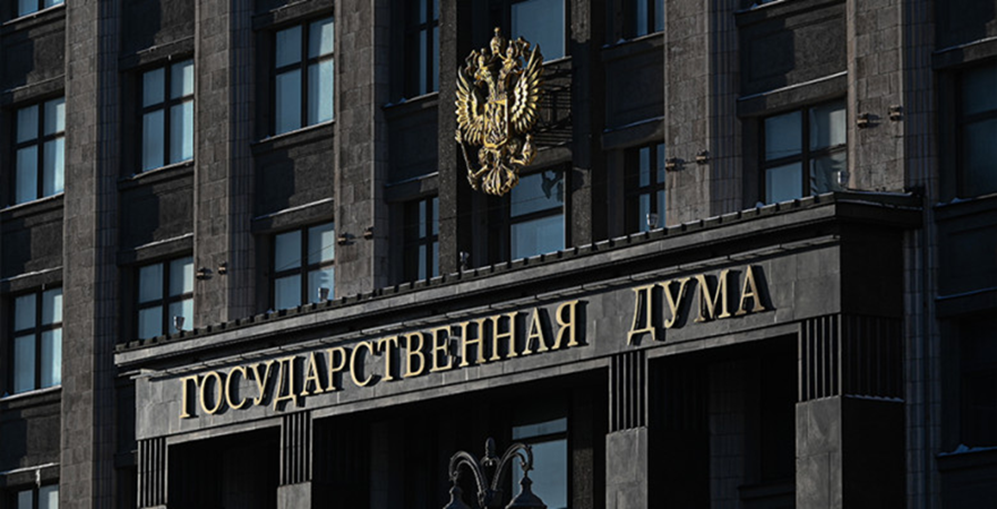
The key legislative event in February was the introduction of the so-called “new anti-fraud package” to the State Duma. “The Council of the State Duma has set February 10 as the date for consideration in the first reading of a package of additional measures aimed at countering cyberbullying and protecting our citizens from criminal attacks,” the Duma’s press service quoted Volodin as saying on Monday.
The new measures will oblige banks to protect applications from malicious code, limit the number of bank cards per citizen, and introduce labeling of international calls. Volodin noted the effectiveness of previously adopted laws: in 2025, IT crime decreased by 11.8%, remote theft – by 23.6%, and fraud — by 9%. The deputies will also discuss the introduction of criminal and administrative liability for the illegal sale of SIM cards. For repeated violations with damage of more than 5 million rubles, he will face up to a year in prison. In the second reading, stricter control over payment agents will be considered to prevent the withdrawal of stolen funds. In fact, we are talking about the de-anonymization of the Russian segment of the Network on the eve of the elections. The labeling of calls and the rigid binding of a digital ID to a physical identity create an infrastructure in which any protest activity in the digital environment becomes instantly identifiable.
In this context, the initiatives to grant Roskomnadzor the right to “switch off” (disconnect from the global network) look like an extreme measure, for which a legislative foundation is being created. The government is building a system in which disabling the external Internet will not lead to the collapse of internal services (Public services, banking, VK), but will completely cut off communication channels for the non-systemic opposition.
Party struggle: Populism versus Administrative resources
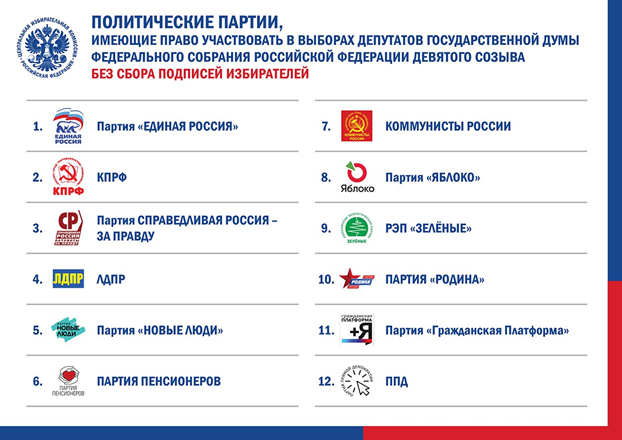
Against the background of stricter digital control, the systemic opposition is looking for narrow niches to increase its popularity without crossing the “red lines”. A striking example was the initiative of the deputies from the Communist Party of the Russian Federation, put forward in early February.
According to ComNews, the Communists proposed to impose a moratorium on blocking messengers, in particular Telegram, positioning themselves as defenders of freedom of communication.
This move by the Communist Party of the Russian Federation looks tactically sound. Realizing that Telegram has become the main information platform for millions of Russians (including the Z-community and military officers), the party is trying to intercept the agenda of the “New People” who traditionally worked with the urban digital audience. The initiative of February 4, 2026 is an attempt to play on society’s fears of complete information isolation. However, the chances of such a bill passing are minimal: United Russia, which has a constitutional majority, is likely to block the initiative, citing national security issues.

Budget Dissonance: Deficits and taxes
On October 22, the State Duma adopted in the first reading the draft federal budget for 2026 and the planning period 2027-2028. The key priorities of the financial document are the fulfillment of social obligations to citizens, strengthening the country’s defense and security, as well as the implementation of national projects. The budget deficit in 2026 is planned at 3.786 trillion rubles, which is 1.6% of GDP, but in the next two years it is expected to decrease to 1.2–1.3%. To balance the system, an outstripping increase in revenues is planned, the growth rate of which (8.6%) will significantly exceed the growth rate of expenses (2.9%).
The budget is adjusted based on the basic macroeconomic scenario, which assumes a partial stabilization of the geopolitical situation and a reorientation to the domestic market. The forecast assumes GDP growth of 1.3% in 2026 due to the cooling of overheated demand, followed by an acceleration to 2.8% in 2027. The inflation rate is expected to return to the 4% target. The calculations are based on the average annual dollar exchange rate of 92.2 rubles with a tendency for the national currency to weaken to 100 rubles by 2028 and the price of Urals crude oil in the region of 59 dollars per barrel. At the same time, a moderate increase in real incomes of the population is predicted against the background of a slowdown in wage increases.
The total revenue of the treasury in 2026 will amount to 40.283 trillion rubles. In the revenue structure, the trend towards reducing dependence on the oil and gas sector will continue, the share of which will decrease to 21-23%. The main inflow of funds, providing 80% of oil and gas revenues, will be generated by turnover taxes and income tax, with domestic and import VAT charges increasing by 18.6% and 25.5%, respectively.
National defense remains the largest item in the expenditure part of the budget, which has undergone structural changes, with 12.93 trillion rubles allocated for it, or 29.3% of all expenditures. In second place is social policy, with funding of 7.1 trillion rubles (16.1%), providing for the indexation of pensions and benefits. Significant funds are also allocated to the national economy (4.77 trillion rubles), national security (3.91 trillion rubles) and public debt servicing (3.9 trillion rubles). It is noteworthy that the strongest percentage increase in expenses was recorded in the fields of culture, ecology and public debt servicing. The national debt will grow by 13.27%, reaching 43.67 trillion rubles, which led to a 23% increase in maintenance costs compared to last year. 6.668 trillion rubles will be allocated for the implementation of national projects in 2026, while the most expensive projects will be “Family”, “Infrastructure for Life” and “Youth and Children”.
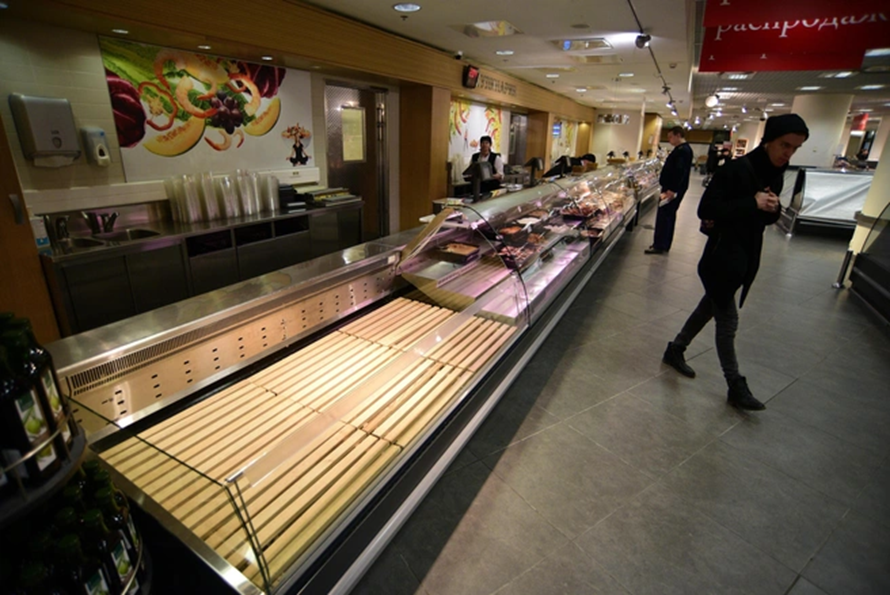
The increase in VAT had an immediate effect on consumer prices. The report MSK1.ru As of February 10, 2026, it records a sharp rise in the price of durable goods and electronics, as well as food. The “cost inflation” caused by the rise in the cost of logistics and the growing tax burden is hitting the middle class of large cities. It is noted that real inflation for households significantly exceeds the official 4-5%, being felt at the level of 12-15% in annual terms.
Regional cross-section: Business stagnation and staff shortage
The Fontanka publication dated January 20, 2026 describes the crisis in the field of small and medium-sized enterprises (SMEs). The business is caught in a vice: on the one hand, there is an increase in taxes and rental rates, on the other, there is a catastrophic shortage of personnel.
The mobilization measures of the past years and the demographic pit have led to the fact that the unemployment rate is at a historic low (about 2.4%), but this is “bad” employment. Enterprises are forced to poach employees with salaries that are not provided with productivity growth, which spins the spiral of inflation. Fontanka provides examples of the closure of cafes and service points that could not survive the January increase in fiscal burden and tariffs.
Thus, the economic model of the beginning of 2026 is based on two pillars: the state defense order, which pumps money into industry and related sectors, and consumer lending, which allows the population to maintain their usual standard of living in debt. However, experts warn that the resource of this model is limited, and without structural reforms (which are postponed until after the elections), the economy risks falling into stagflation.

Putin–Xi Jinping Video Summit: More than a partnership
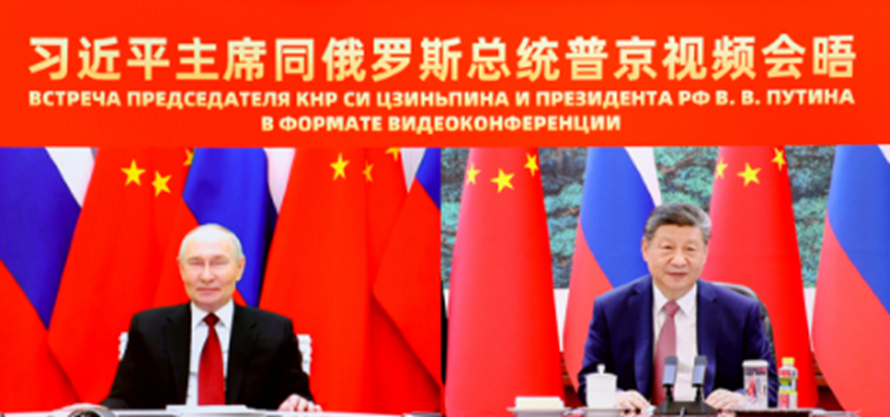
The central diplomatic event in February was the videoconference between Vladimir Putin and Xi Jinping, which took place on February 4, 2026. The date was not chosen by chance: it symbolizes the beginning of the lunar calendar year (the “Red Fiery Horse”) and the 25th anniversary of the Treaty on Good Neighborliness, Friendship and Cooperation. According to official transcripts from the Kremlin and the Chinese Foreign Ministry, the leaders reaffirmed their commitment to “deepening comprehensive partnership and strategic cooperation.” However, behind the protocol formulations lies a new reality: China has become the de facto guarantor of Russia’s economic survival. During the negotiations, not only issues of increasing hydrocarbon supplies were discussed (the Power of Siberia-2 project received a new impetus in discussions, although the final contract is still subject to bargaining), but also technological cooperation. Chinese companies occupy the niches vacated after the departure of Western brands, from the automotive industry to industrial equipment.
Presidential aide Yuri Ushakov emphasized in his commentary that the relations between the two countries “are not directed against third countries,” but are a factor of global stability. This is a diplomatic signal to Washington: Moscow and Beijing are coordinating their actions in resisting US pressure. Special attention was paid to the development of transport corridors (the Northern Sea Route and Belt and Road Initiative (BRI), which should ensure the independence of trade routes from the control of Western fleets. In the article from Diphis.ru He draws attention to the symbolism of the meeting: the year 2026 in the Chinese tradition is associated with the energy of fire and movement. For Russia, this is interpreted as a year of active actions. The Chinese side expressed its readiness to support the Russian initiative to build a “Eurasian Security Architecture,” which de facto means creating an alternative NATO bloc (or a system of bilateral alliances) in the East.

BRICS and Financial Sovereignty: A Race against Time
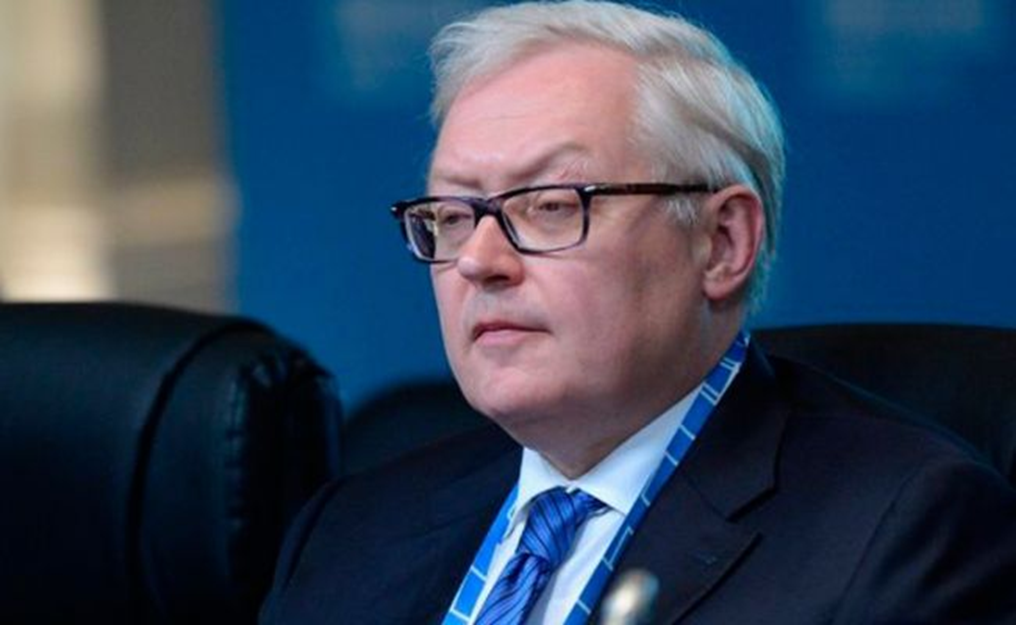
If China provides a commodity and technological rear, then BRICS becomes a platform for the struggle for financial independence. The statement by Deputy Foreign Minister Sergey Ryabkov on February 9, 2026 on the need for progress in creating the BRICS unified payment system (BRICS Pay or an analog based on digital currencies) sounds like an alarm signal. By the beginning of 2026, the pressure of secondary US sanctions on banks in Turkey, the UAE, and even China had reached a critical level. Traditional payment schemes through third countries are starting to fail, increasing business costs and payment deadlines. Ryabkov emphasizes: “There is a need for the BRICS to speak from a unified position, to speak with one voice on pressing international issues — a lot was said about this during the meeting today. Let’s see what tasks we will face given the rapidly changing international situation, but we are fully prepared and all participants in today’s meeting, both the BRICS members and the partner states that were represented at today’s event, agree that only strengthening cooperation, finding points of mutual understanding and points of joint growth is the way to go. which BRICS should follow,” the diplomat stressed.
Russia, which chairs or plays a key role in the BRICS working groups in 2026, is accelerating the creation of a digital platform for clearing in national currencies. This is not just an economic issue, but a national security issue. The success of this project by the end of 2026 could be a turning point in the fight against sanctions, while failure threatens to stifle foreign trade.
Conclusion
At the turn of January–February 2026, Russia is entering a phase of critical structural transformation, where internal stability is ensured by unprecedented tightening of administrative and digital control, and external stability is ensured by deepening strategic dependence on partners in the East. Preparations for the parliamentary elections have become a catalyst for finalizing the infrastructure of the “sovereign Internet” and deanonymizing society, which allows the authorities to prevent any protest risks and marginalize the opposition. The country’s economic model demonstrates a delicate balance, relying on record budget injections into the defense sector and social support, but rising cost inflation, staff shortages and an increased tax burden pose a real threat of a transition to stagflation. Geopolitically, Moscow is fixing the irreversibility of the break with the West, relying on the alliance with China as a key guarantor of technological and resource security, while forcing the creation of an independent financial system within the framework of the BRICS to protect against suffocating secondary sanctions. Thus, the beginning of 2026 marks the transition of the state to a long-term strategy of mobilization survival, the success of which depends on the ability of the system to balance between the militarization of the economy and the preservation of socio-political consensus. In this regard, it is advisable to identify the following development scenarios:
Scenario 1. “Pragmatic stabilization and controlled transit”
If negotiations with Trump’s emissaries are successful and the work of the “Board of Peace” is launched, geopolitical tensions will decrease. This allows Russia to avoid new sanctions packages and stabilize the ruble exchange rate (the forecast range is 92-95 rubles/$). The economy is moving towards a moderate growth trajectory (1.3–2%) due to investments from friendly countries and government defense orders. The elections to the State Duma are held according to an inertial scenario with the dominance of United Russia, and protest activity is channeled through the systemic opposition (LDPR, New People).
Scenario 2. “Isolation stagnation and income erosion”
If the dialogue with Washington reaches an impasse and pressure on third countries (secondary sanctions) increases, the Russian economy will face an investment crisis and a technological deficit. Inflation will exceed the forecast values (4%), offsetting the effect of pension and salary indexation. In response, the government will be forced to resort to further tightening digital control and repressive measures against “foreign agents,” which, against the background of public fatigue, may lead to an increase in hidden social tension and a decrease in the legitimacy of the 2026 election results.