
Regional security in the Middle East: the Iranian-American confrontation, the withdrawal of troops from Syria and Turkey’s diplomatic initiatives
Short description: This review provides an analysis of the key political and diplomatic events in the Middle East in February 2026. The main focus is on: the escalation of the US-Iranian confrontation; the institutionalization of the Trump administration’s “Peace Council”; the complete withdrawal of American troops from Syria after an 11-year presence; Turkey’s multi-vector diplomacy; as well as provocative statements by the US Ambassador to Israel, Mike Huckabee. The review concludes with a scenario analysis of the situation in the coming months.
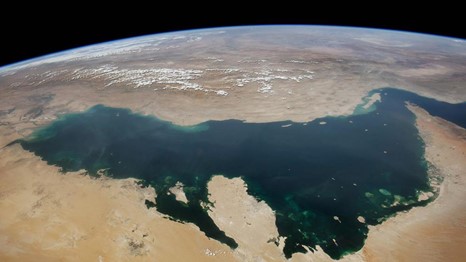
The central event of the month, which determined the entire regional dynamics, were the indirect talks between the United States and Iran, which took place on February 6 in Muscat and on February 17 in Geneva with the active mediation of Oman. Simultaneously with the diplomatic probe, Washington deployed the largest military group in the region since the invasion of Iraq in 2003. Washington has deployed two aircraft carriers, dozens of fighter jets and tanker planes in the Persian Gulf and at bases in Jordan, Qatar and Crete. This carrot-and-stick strategy is designed to force Tehran into an agreement on American terms.: no uranium enrichment in Iran, limitation of the ballistic missile program and curtailment of support for regional proxies.
Against this background, an unprecedented consolidation of the Arab and Muslim world took place, caused by provocative statements by the US Ambassador to Israel, Mike Huckabee, who declared Israel’s “divine right” to the lands from the Nile to the Euphrates. The joint statement by 14 States — Saudi Arabia, Egypt, Jordan, the United Arab Emirates, Qatar, Turkey, Palestine and others — demonstrated that the Palestinian issue and respect for the sovereignty of Arab States remain “red lines” capable of uniting even traditional rivals.
At the same time, the region witnessed changes in the situation in Syria. The complete withdrawal of American troops, the integration of Kurdish forces into the Syrian army, and plans to restore the U.S. diplomatic presence in Damascus after a 14-year hiatus mark a fundamental revision of Washington’s strategy. Turkey, in turn, has stepped up multi-vector diplomacy, strengthening relations with Egypt, Saudi Arabia and Greece, while offering mediation services in the Iran-US crisis and participating in Trump’s “Peace Council.”
1. The US-Iran standoff: from ultimatums to a negotiation marathon
February 2026 was the month of the highest tension in relations between Washington and Tehran since the assassination of General Qassem Soleimani in 2020. According to Al Jazeera, the administration of Donald Trump, having deployed the largest military group in the Persian Gulf region since 2003, actually presented Iran with an ultimatum. Two aircraft carriers, the USS Abraham Lincoln and the largest aircraft carrier, the USS Gerald R., were concentrated in the Arabian Sea. Ford, supplemented by dozens of fifth-generation F-35 and F-22 fighter jets, B-2 strategic bombers, as well as AWACS and reconnaissance aircraft at bases in Qatar, Jordan and Crete.

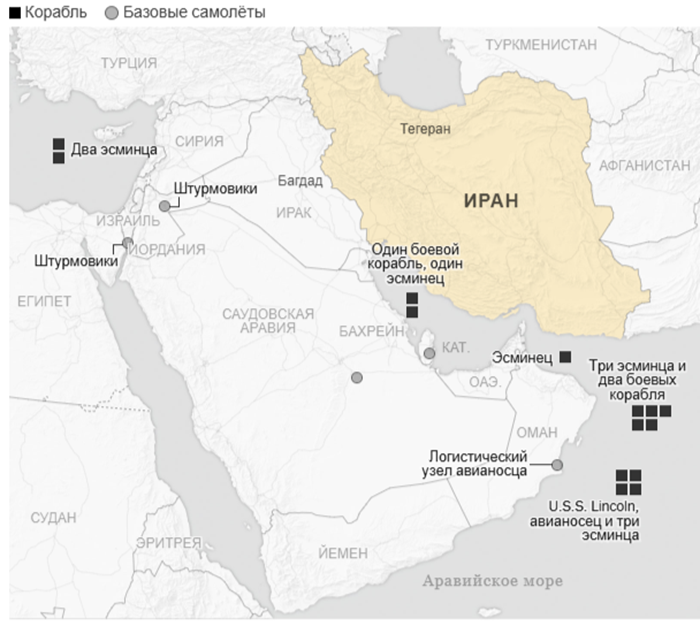
Approximate location of American ships, New York Times
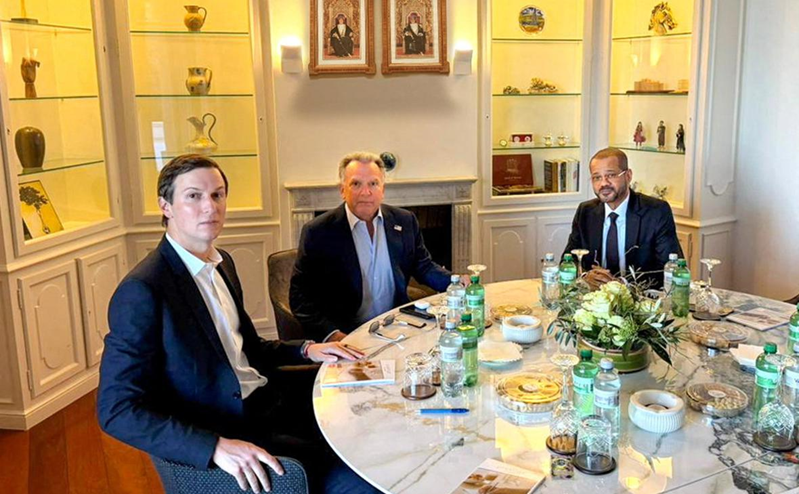
Simultaneously with the military buildup, the diplomatic channel continued to function with unprecedented intensity. On February 6, the first round of indirect talks between the United States and Iran was held in Muscat with the mediation of Oman. The American delegation included the head of the Central Command of the US Armed Forces, Admiral Brad Cooper, who actually served as the “force escort” of the deal: first, being present at the negotiating table in Oman, and then preparing plans for strikes in case of their final disruption. On February 17, the second round was held in Geneva with the participation of Special Envoy Steve Witkoff, Jared Kushner and Iranian Foreign Minister Abbas Araqchi. As a result, the parties reached an agreement on the “fundamental principles” of a possible nuclear agreement. The third round was held on February 26, and the parties announced significant progress, while the details were not disclosed. As The Guardian notes, there is no clear evidence that the two sides have come close to an agreement on the issue of uranium enrichment. At the same time, as noted, “Trump now has the military resources to strike Iran either as part of an expanded attack aimed at forcing regime change, or for a more targeted strike aimed at forcing Tehran to take a more flexible negotiating position. Trump’s forced negotiation deadlines have always been flexible, but his military command will not want to keep such a large and expensive concentration of forces on a leash for long.”

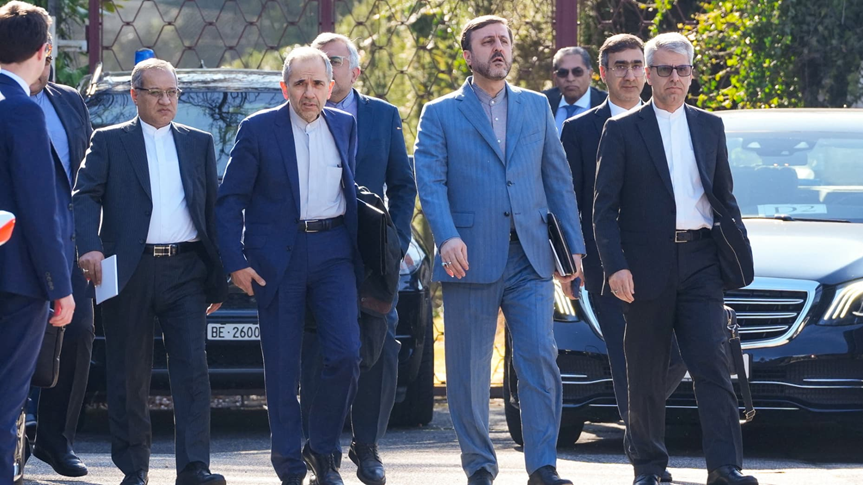
An Iranian negotiating delegation departs for the venue of negotiations with the United States in Geneva, Switzerland, on February 26, 2026
In the current circumstances, the forecast of the development of events that we discussed earlier remains relevant: the continuation of economic and military pressure to force Iran to negotiate.
2. The Palestinian direction: Trump’s “Peace Council” and the interview with the US Ambassador to Israel
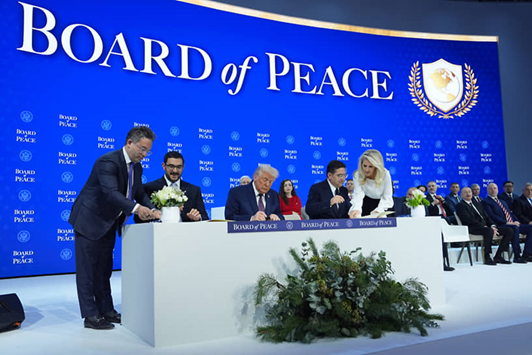
On February 19, Washington hosted the inaugural meeting of the Board of Peace, chaired by President Trump, which brought together representatives from more than 45 countries. Trump announced that nine member countries have agreed to provide $7 billion in aid to Gaza, and five countries (Indonesia, Morocco, Kazakhstan, Kosovo and Albania) will send troops as part of the international stabilization force. Egypt and Jordan have pledged to train police forces. The United States has committed $10 billion to the council.

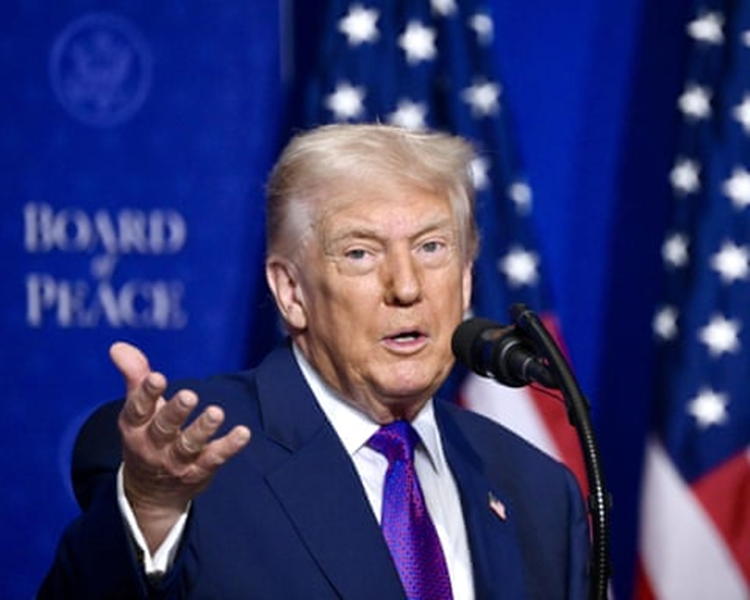
Donald Trump delivers his opening remarks at the first meeting of his Peace Council in Washington, DC
According to exclusive documents reviewed by The Guardian, the Trump administration plans to build a 5,000-person military base in Gaza, covering more than 350 acres, which will become an operational base for the International Stabilization Force. The UN Security Council has authorized the “Peace Council” to create an interim International stabilization force in Gaza, but it is unclear what the rules of engagement will be.
Experts questioned the legal basis of the project. Adil Haq, a Rutgers University law professor, stated: “The Peace Council is a kind of legal fiction that nominally has its own international legal personality, separate from both the United Nations and the United States, but in reality it is just an empty shell that the United States can use at its discretion.”
On February 21, a diplomatic crisis broke out, caused by statements by the US Ambassador to Israel, Mike Huckabee. In an interview with Tucker Carlson, he declared Israel’s “divine right” to the lands from the Nile to the Euphrates, adding: “It would be great if they took it all.” The reaction of Arab and Muslim countries was lightning fast. The Ministries of Foreign Affairs of 14 countries — Saudi Arabia, Jordan, the United Arab Emirates, Qatar, Indonesia, Pakistan, Egypt, Turkey, Syria, Palestine, Kuwait, Lebanon, Oman and Bahrain, together with the League of Arab States, condemned the rhetoric violating international law.
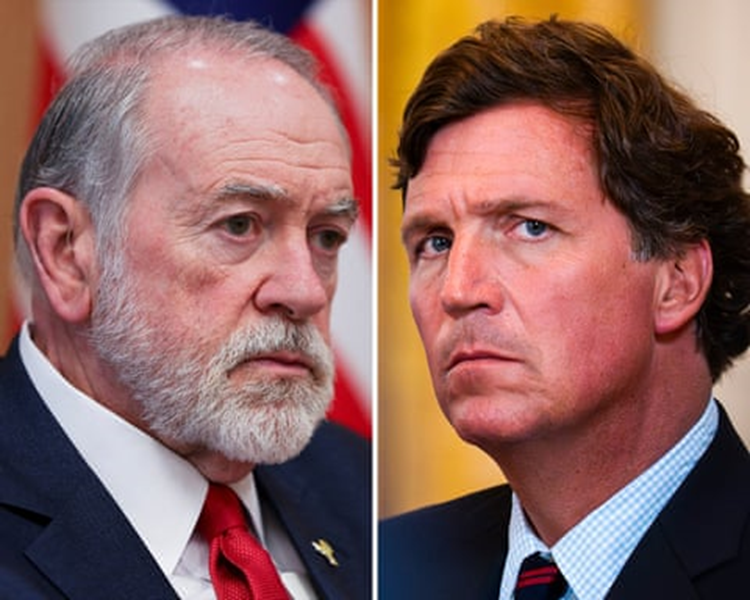
Tucker Carlson interviewed U.S. Ambassador to Israel Mike Huckabee
3. The Syrian Track: U.S. troop withdrawal and international reintegration
February was marked by the complete withdrawal of American troops from Syria, a decision that the Trump administration made after concluding that a large—scale US military presence in the country was no longer required. The United States is withdrawing about 1,000 remaining troops, ending a decade-long military operation. According to Reuters earlier, in February, the United States completed the withdrawal of troops from the Al-Shaddadi base and the Al-Tanf base, a key military outpost in the southeast of the country at the junction of the borders of Syria, Jordan and Iraq.
The Trump administration has determined that a military presence is no longer necessary for two reasons. First, the Syrian Government has agreed to take a leading role in the fight against terrorism. Syrian President Ahmed al-Sharaa visited Trump at the White House in November, the first such visit by a Syrian leader in history. Secondly, the al-Sharaa government struck a deal in January integrating the Kurdish Syrian Democratic Forces (SDF) into the Syrian armed forces.
On February 21, the Syrian government took control of the security of Qamishli airport in Hasaka province in the northeast of the country. On February 22, the Presidential Office appointed Brigadier General Ziad al-Ayesha as a special representative to monitor the implementation of the agreement with the SDF.
On February 20, the Trump administration notified Congress of its intention to reopen the US Embassy in Syria for the first time in 14 years. This plan became a top priority for the special Representative for Syria, Tom Barrack, who visited Syria last May and raised the US flag at the closed American embassy.
4. Activation of Turkey’s foreign policy at the beginning of the year
Against the background of increasing military tension, Turkey has taken a clear position aimed at preventing escalation. President Recep Tayyip Erdogan said: “We have informed all our colleagues that Turkey opposes military intervention in Iran.” Parliament Speaker Numan Kurtulmus warned that Ankara would use “all its potential” to prevent a strike that would be a “catastrophe” for the region.
On February 4, Erdogan met with Egyptian President Abdel Fattah el-Sisi in Cairo, signing a number of partnership agreements in the fields of defense, tourism, healthcare and agriculture. Al-Sisi noted that bilateral trade has reached almost $9 billion. On February 3, Erdogan visited Saudi Arabia, discussing coordination on Iran, Gaza and Syria.

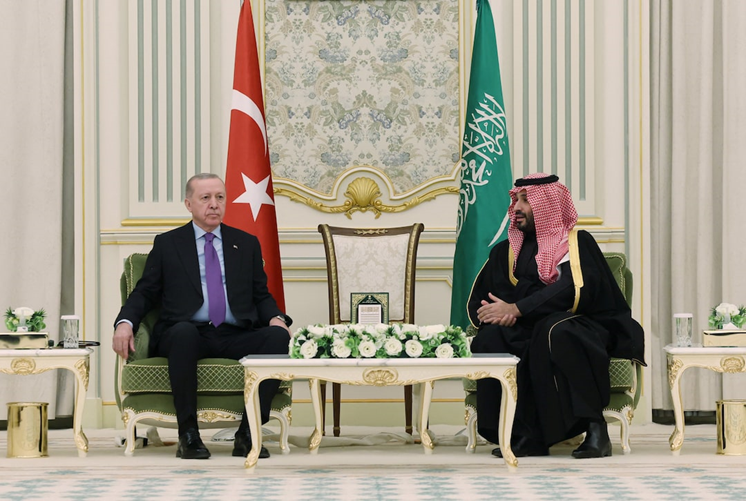
Turkish President Recep Tayyip Erdogan meets with Saudi Crown Prince Mohammed bin Salman in Riyadh, Saudi Arabia, February 3, 2026
On February 11, Greek Prime Minister Kyriakos Mitsotakis visited Ankara as part of the 6th meeting of the High-level Cooperation Council, signing a joint declaration on the development of friendly relations. On February 6, Foreign Minister Hakan Fidan met with the EU Commissioner for Enlargement Marta Kos. The parties confirmed Turkey’s status as a candidate country and the strategic value of the relationship.
On February 19, Fidan attended the inaugural meeting of the “Peace Council” in Washington, calling for decisive steps to resolve the Palestinian issue and reaffirming Ankara’s readiness to support the reconstruction of Gaza.
Conclusion and scenarios for the development of the situation in the region
An analysis of the events of February 2026 allows us to identify the following key trends.
The Trump administration is implementing a strategy of “dual deterrence” against Iran, while increasing military pressure and maintaining a diplomatic channel. The creation of a “Peace Council” with an expanded mandate indicates the desire to form a parallel UN structure of international governance. Plans to build a military base in Gaza demonstrate the materialization of this approach, although experts question its legal basis.
The joint statement by 14 States in response to Huckabee’s statements demonstrates that the Palestinian issue remains capable of uniting the Arab world. The withdrawal of troops from Syria after an 11-year presence and plans to open an embassy in Damascus mark a fundamental shift in U.S. policy. Erdogan’s visits to Egypt and Saudi Arabia demonstrate the intensification of diplomatic initiatives at the beginning of the new year.
Serious challenges remain for the region. Military experts warn that the implementation of a large-scale military campaign in Iran threatens to lead to a serious humanitarian crisis for the region and weaken the position of the United States in the eyes of its allies. Another challenge to regional security is the issue of rebuilding Gaza and the issue of disarming Hamas.
Based on the analysis, two possible scenarios can be identified.
Scenario 1: “Confrontation and escalation”. Negotiations are dragging on. Trump chooses the option of conducting a special military operation. Iran responds symmetrically and strikes at US bases in the region. The Peace Council continues to accumulate financial resources and partially implement its plans for the reconstruction of Gaza.
Scenario 2: “Diplomatic resolution of the situation.” Iran gives in to pressure and goes for a temporary freeze of its nuclear program in exchange for the lifting of some economic sanctions. Against the background of decreasing tensions, the Peace Council continues to actively accumulate financial resources and partially implement its planned plans for the transformation of Gaza.