

Brief overview: The article examines the key international developments of the second half of January 2026, which demonstrate a redistribution of roles and the formation of new coalitions in global politics. Particular attention is paid to the strategic self-presentation of major powers (India), domestic political crises affecting foreign policy (South Korea, China), and large-scale diplomatic deals reshaping the architecture of global trade (India–EU). Developments in New Delhi, Beijing, Seoul, and around North Korea reflect the complex interplay between symbolic displays of power, internal consolidation of authority, judicial accountability of elites, and the pragmatic reconfiguration of economic alliances. Based on an analysis of current dynamics, the article outlines potential scenarios for shifts in the balance of power in Asia and in transatlantic relations.
Introduction
The second half of January 2026 became a period in which the actions of the largest Asian powers and their interaction with the outside world outlined the contours of a possible new world order. Several interrelated processes unfolded simultaneously: the demonstration of military-technological sovereignty and diplomatic weight, a tough internal purge of security structures, the conclusion of high-profile judicial proceedings against senior officials, and the signing of historic economic agreements challenging traditional hegemons. The military parade in India, arrests within China’s military leadership, verdicts in South Korea, and the signing of the India–EU agreement represent different instruments for achieving national objectives amid heightened turbulence. These developments indicate that centers of power are increasingly operating through internal consolidation and the formation of alternative coalitions that bypass traditional poles, leading to further regionalization and fragmentation of the global system.
1. India’s Republic Day: A Demonstration of Strategic Sovereignty and Diplomatic Weight
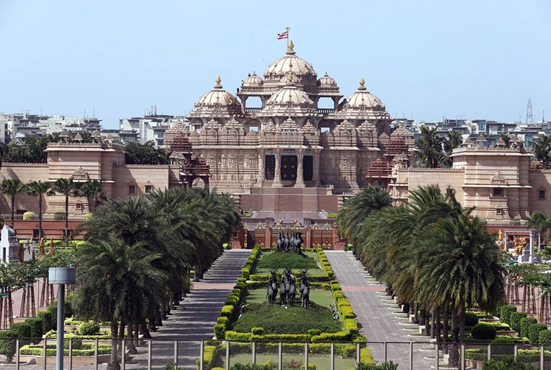
On January 26, India celebrated its 77th Republic Day with a large-scale military parade in New Delhi. The event, marking the adoption of the Constitution in 1950, has evolved into a comprehensive display of military power, technological partnership, and diplomatic recognition. The parade featured both Russian-made systems (T-90 tanks, Su-30MKI fighter jets, and BrahMos missiles) and Western weaponry (Rafale fighter jets and Apache helicopters), underscoring a strategy of multi-alignment and diversification of defense procurement. Particular emphasis was placed on the success of Operation “Sindoor,” a counterterrorism campaign conducted last spring, highlighting the country’s growing ambitions in the field of security.

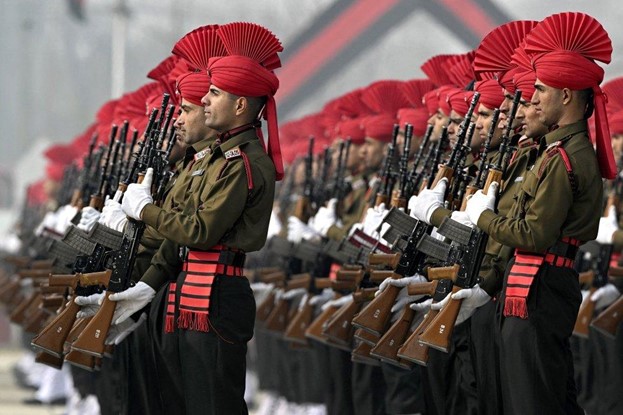
A key diplomatic signal was the presence of the European Union’s top leadership as guests of honor — President of the European Commission Ursula von der Leyen and President of the European Council António Costa. Their visit, coming the day after the signing of a historic trade agreement, gave the parade the character not only of a military spectacle but also of a geo-economic triumph. The event symbolized India’s consolidation as an independent center of power, capable of combining the legacy of past alliances with the formation of new, mutually beneficial partnerships, and of using national celebrations as a platform to showcase its growing international significance.
2. Crisis in China’s Military Leadership: Purges as an Instrument of Absolute Power Consolidation
At the same time, developments in China revealed deeper processes within the political system. Two senior members of the Central Military Commission (CMC) were arrested — Vice Chairman Zhang Youxia and Chief of the Joint Staff Department Liu Zhenli. They were accused of “serious violations of discipline and law,” a phrase that in China’s political lexicon typically denotes corruption. However, observers suggest that the underlying reasons may be more profound. According to Dennis Wilder, former head of the CIA’s China analysis unit, “Xi likely feared that Zhang had become all-powerful within the military… he had to worry that Zhang could lead efforts within the party to remove him.” The purge left only two figures in the top military body: CMC Chairman Xi Jinping and Zhang Shengmin, head of the anti-corruption commission.

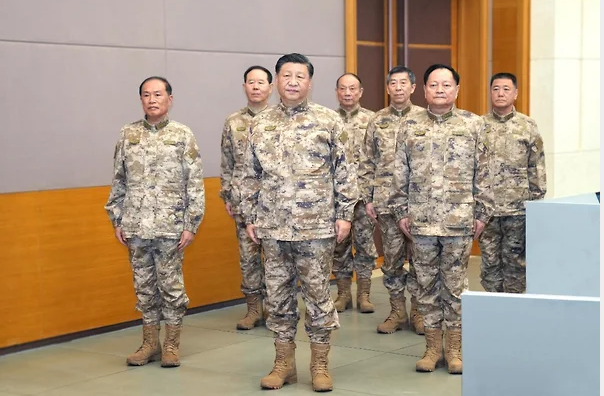
This move, undertaken on the eve of the 21st Congress of the Communist Party of China and the 100th anniversary of the People’s Liberation Army, serves several purposes. First, it eliminates potential centers of competing influence within a key power institution. Second, it signals the unconditional priority of personal loyalty and absolute control over the military ahead of a critical political milestone. Third, it demonstrates a willingness to take radical measures to safeguard regime stability, even at the cost of weakening the experienced command structure. This process illustrates a governance model in which the internal security of the ruling group prevails over all other considerations, including the operational effectiveness of state institutions.
3. Judicial Proceedings in South Korea: Institutional Processing of Political Crisis and Its Foreign Policy Implications
In South Korea, judicial proceedings related to the political crisis of December 2024 continued. Following the sentencing of former President Yoon Suk Yeol (five years for obstruction of justice), a court of first instance found his wife, former First Lady Kim Keon-hee, guilty and sentenced her to one year and eight months in prison for violating anti-corruption legislation. These trials represent an effort by the legal system to process a profound constitutional crisis and establish accountability at the highest levels of office. Although Kim Keon-hee was acquitted of the most serious charges (stock market manipulation), the very fact of her conviction symbolizes the functioning of mechanisms of political accountability.
At the same time, the country faced a sharp external reaction. U.S. President Donald Trump announced an increase in tariffs on South Korean imports from 15% to 25%, stating that “the legislature of South Korea is not fulfilling its obligations to the United States” and has failed to ratify the trade deal agreed upon by the leaders in 2025. This move places Seoul in a difficult position, intensifying domestic political instability while simultaneously subjecting the economy to additional pressure. As a result, it may push the country to seek alternative partners or adopt a tougher stance in negotiations with Washington.
4. The India–EU Agreement: Forming a New Economic Axis in Response to Global Uncertainty
The central development in international economics was the signing of a large-scale trade agreement between India and the European Union. Nearly two decades in the making, the deal was widely interpreted by global media as a strategic response to the actions of other major global players. Politico summarized the development as follows: “The EU and India have united against Trump and Xi Jinping to conclude a trade deal.” The Wall Street Journal described it as “the world’s response to Trump’s tariffs,” while Frankfurter Allgemeine Zeitung concluded: “India is moving away from Putin and Trump.”

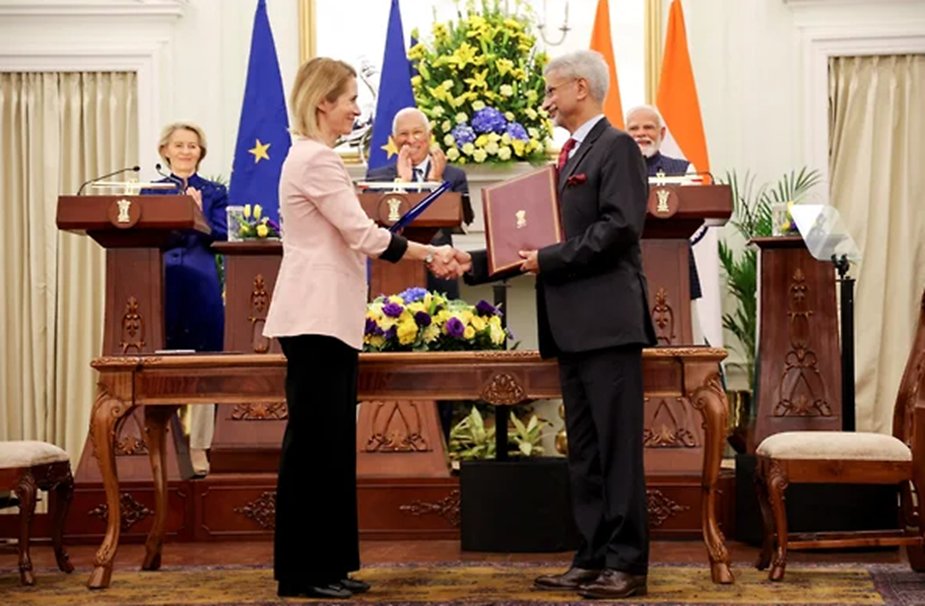
The agreement, covering markets with a combined population of 2 billion people, pursues several interconnected objectives. For the European Union, it represents diversification of supply chains, a reduction of strategic dependence on China, and the strengthening of partnership with a rapidly growing economy as a counterbalance to U.S. protectionism. For India, it provides access to technology and investment, reinforces its role as an independent pole of attraction, and signals its capacity to build equal partnerships with the world’s largest economic blocs. The creation of this new economic axis reshapes the geopolitical map by offering an alternative to bipolar confrontation and underscoring the growing importance of pragmatic multilateralism.
5. Tests in North Korea: A Local Demonstration of Force Amid Regional Reconfiguration
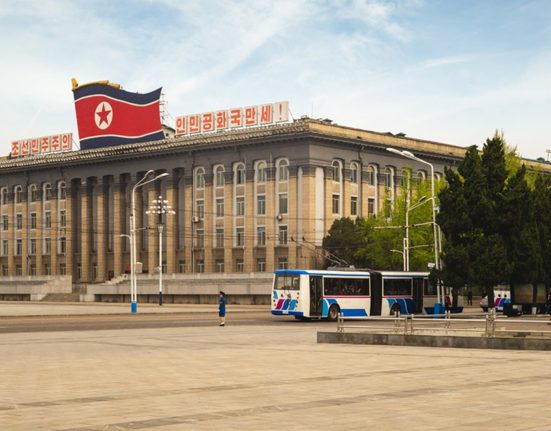
Amid these large-scale processes, North Korea conducted tests of a technologically upgraded large-caliber multiple launch rocket system (MLRS). The launch, personally overseen by Kim Jong Un — who declared that “in the foreseeable future no country in the world will be capable of developing a weapon of this level” — served as a classic instrument of internal consolidation and external signaling. At a time when regional and global powers are preoccupied with domestic crises and the formation of new alliances, Pyongyang is reminding the international community of its role as an independent factor of instability capable of shaping the security agenda in Northeast Asia. The episode underscores that even amid major global shifts, local conflict potentials do not disappear and can be activated at a strategically opportune moment.
Conclusion and Potential Development Scenarios
The developments of the second half of January 2026 depict a dynamic restructuring of international relations with a distinctly Asian focus. India is strengthening its status as a sovereign center of power through military demonstration and strategic economic alliances. China is consolidating its internal system through radical purges, sacrificing cadre continuity in favor of absolute loyalty. South Korea is attempting to overcome a deep political crisis through judicial mechanisms, yet faces additional external pressure. Meanwhile, the European Union and India are forming a new economic axis in response to U.S. protectionism and China’s dominance.
Current developments demonstrate growing pragmatism and a drive for strategic autonomy among key Asian actors, particularly India and South Korea, amid pressure from the United States and the internal concentration of power in China. A new regional configuration is taking shape, driven by a logic of risk diversification and the strengthening of sovereignty.
Based on this, the following scenarios can be identified:
Scenario 1: “The Formation of a Pragmatic Axis of Autonomy”
India, using its agreement with the European Union as a foundation, evolves into a key hub for countries seeking to distance themselves from U.S.–China confrontation. Its model — combining the demonstration of military strength (a parade showcasing equipment of diverse origins) with flexible economic diplomacy — becomes exemplary. South Korea, despite pressure from Donald Trump, follows a similar logic by deepening ties with the EU and ASEAN. Domestic stabilization through judicial processes in Seoul and purges in Beijing (“grossly undermining… the responsibility system of the CMC chairman”) temporarily reduces the foreign policy activism of these states, creating a vacuum that pragmatic New Delhi moves to fill. The result is an asymmetrical multipolarity, with India emerging as the principal beneficiary.
Scenario 2: “Escalating Pressure and Fragmentation”
A hardline tariff policy by Donald Trump toward South Korea and other partners, rather than producing the expected concessions, leads to the consolidation of an anti-American bloc. India and the European Union — whose agreement analysts interpret as a response to pressure (“united against Trump”) — begin forming more exclusive trade clubs, effectively sidelining not only the United States but also a China weakened by internal power struggles. Meanwhile, North Korea, perceiving a weakening of the U.S.–South Korea alliance, intensifies military provocations. East Asia fragments into several competing economic and security blocs, sharply increasing the risks of localized conflicts.The current situation most closely corresponds to elements of Scenario 1. However, the further trajectory will depend on two key factors: India’s ability to maintain its role as an honest broker rather than evolve into a new hegemon, and whether internal stabilization in China and South Korea transitions into a phase of foreign policy assertiveness — or, conversely, inward-looking restraint.