
From reforms to dialogue: educational and policy initiatives in Central Asia
Brief description: This article highlights the key internal and external political processes in Central Asian countries. Uzbekistan is carrying out a large-scale reform in the field of education, introducing compulsory “zero” classes. Kazakhstan announces the completion of the transition from a super-presidential to a presidential republic with a strong parliament. Foreign policy activity is manifested in Tajikistan’s strong condemnation of international terrorism and in the preparation of an interparliamentary dialogue between the countries of the region and the Republic of Korea in Tashkent. These initiatives demonstrate the desire of States to modernize, stability and strengthen regional cooperation.
Preface
There is an active phase of internal transformations and diplomatic interaction in Central Asia. Uzbekistan is focusing on a deep reform of the preschool education system aimed at long-term improvement of human capital. At the same time, Kazakhstan is consolidating political reforms at the constitutional level, redistributing the balance of power. In the international arena, Tajikistan confirms its principled position in the fight against terrorism, and Uzbekistan strengthens inter-parliamentary ties, preparing for an important regional forum. These multidirectional but complementary events reflect the common course of the countries of the region towards sustainable development and a multi-vector foreign policy.
1. Educational reform in Uzbekistan: the “zero” class as the norm
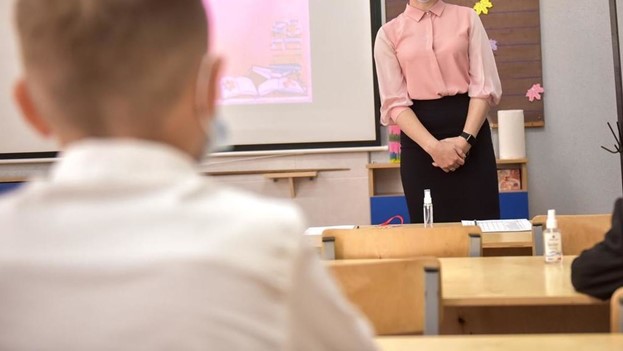
Starting from the 2027/28 academic year, “zero” classes for preparing children for school will become mandatory in Uzbekistan. Such a norm is fixed in the decree of the President of the Republic Shavkat Mirziyoyev dated February 5. “According to the document, the educational program of one—year school preparation groups is introduced as the initial component of compulsory general secondary education,” the Ministry of Justice reports. At the same time, private companies are also allowed to recruit children, and not only certified teachers, but also graduate students from specialized universities will be able to teach classes. Graduates will receive an electronic certificate of the state standard, and information about the completion of training will be reflected in the school certificate. Special emphasis in the reform is placed on the introduction of a playful form of learning and the creation of modern innovation centers “YangiAvlod” (“New Generation”). This large-scale initiative is aimed at systematically improving the quality of preschool education and early childhood development.
2. Kazakhstan: constitutional reform and new governance system President of Kazakhstan Kassym-Jomart Tokayev said that the country is finally moving from a “super-presidential” form of government to a presidential republic. “A panoramic look at the political reforms of recent years makes it possible to make sure that Kazakhstan is finally parting with the super—presidential form of government and moving to a presidential republic with an authoritative, influential parliament,” he said at an expanded government meeting. Tokayev explained that the draft of the new Constitution, which involves amendments to 77 articles, is aimed at creating a balanced system of “A strong president – an influential parliament – an accountable government.”

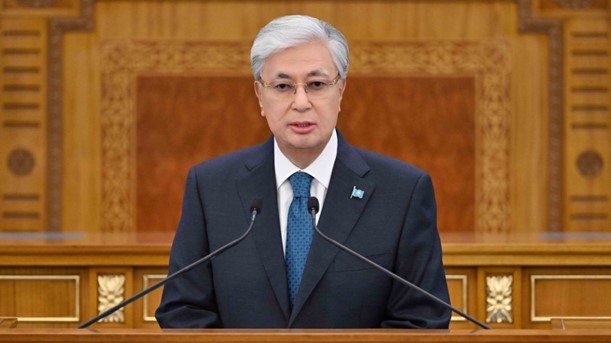
President of Kazakhstan Kassym Jomart Tokayev
“In the draft of the new Constitution, the principle of “not man for the state, but the state for man” has acquired more tangible outlines,” the President stressed. The starting point of the reform was his initiative to move to a unicameral parliament.
3. Tajikistan: a principled position in the fight against terrorism
President of Tajikistan Emomali Rahmon has strongly condemned the suicide bombing of a Shiite mosque in Islamabad, Pakistan, on February 6. In his telegrams to Pakistani President Asif Ali Zardari and Prime Minister Shahbaz Sharif, he expressed his condolences.

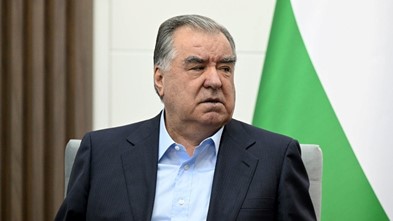
President of Tajikistan Emomali Rahmon
“Tajikistan strongly condemns this brutal terrorist act and, as always, any manifestations of terrorism, always emphasizing the need for an uncompromising fight against it,” the message of condolences reads. This step confirms Dushanbe’s consistent anti-terrorist position in the international arena.
4. Uzbekistan as a platform for inter-parliamentary dialogue
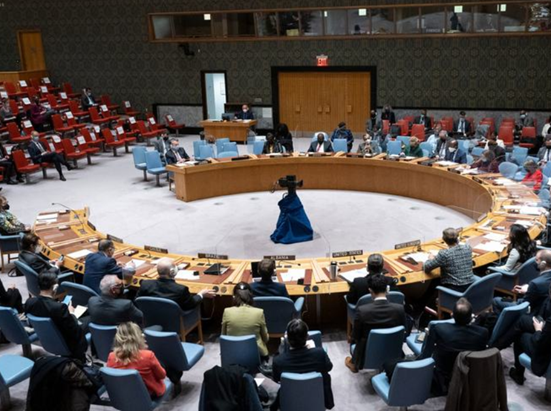
The third meeting of the heads of parliaments of the Central Asian states and the Republic of Korea was held in Tashkent on December 15-17, 2025. “The main purpose of the event is to help ensure the implementation of agreements reached at the highest level between the Central Asian states and the Republic of Korea, deepen interparliamentary dialogue and bring interaction to a new level,” the press service of the Senate of the Oliy Majlis of Uzbekistan reported. During the meeting, issues of economic cooperation, digital transformation and environmental protection were discussed. As a result of the forum, a Joint Declaration was adopted, setting out the priorities of the regional partnership.
Conclusion
The current period in Central Asia is characterized by deep internal transformation and a pragmatic foreign policy course. The countries of the region demonstrate their commitment to strategic reforms: Uzbekistan in the social and educational sphere, Kazakhstan in the political structure. At the same time, they are actively involved in the international arena, whether it is the fight against common threats, like Tajikistan, or the development of a multilateral dialogue, like Uzbekistan. These processes indicate the desire of the Central Asian States to build sustainable, modern societies and strengthen their role in regional affairs.
Scenario 1. Accelerated modernization and regional consolidation: Uzbekistan will successfully implement the reform of “zero” classes, which will become a catalyst for improving the quality of education throughout the region. Constitutional reform in Kazakhstan will strengthen political stability and become an example for evolutionary changes in other countries. An active interparliamentary dialogue, including with the Republic of Korea, will develop into specific infrastructure and investment projects. A joint anti-terrorism position will contribute to strengthening regional security. As a result, Central Asia will strengthen its sovereignty, economic potential, and international standing as a zone of stability and cooperation.
Scenario 2. Implementation challenges and rising tensions: The implementation of educational reform in Uzbekistan may face financing problems, a shortage of qualified personnel, and unequal access between cities and villages. The political transformation in Kazakhstan, despite the statements, may lead to a period of intra-elite competition and temporary uncertainty. Foreign policy initiatives can become hostages to global geopolitical competition, which will make it difficult to implement purely regional projects, such as cooperation with Korea. In addition, the ongoing threat of terrorism can destabilize the situation, especially in the border areas. This will require even closer and faster coordination from the countries of the region to overcome internal and external challenges.