
«The Crisis of the Pan‑American Model and the Transformation of Regional Leadership»
Summary: The article examines key geopolitical events in North America for October–November 2025. The period was marked by profound geopolitical shifts in North America, where the US plans to conduct military operations against Mexican drug cartels triggered an acute crisis in relations with Mexico. In parallel, conflict tensions are rising in Latin America, manifested in the diplomatic rupture between Peru and Mexico, as well as in the collapse of the Summit of the Americas. These processes reflect the weakening of the former US‑led Pan‑American dominance system and the growing political autonomy of several states in the region. Washington, employing proactive and unilateral instruments of pressure, is encountering increasing resistance that deepens regional contradictions. The emerging structural crisis indicates the formation of a multipolar architecture in this macro‑region.
Introduction
During the period from October till early November 2025, North America became the epicenter of profound geopolitical shifts that defined a new phase of tension and the reshaping of regional relations. The dominant trend was the escalation of US‑Mexico relations and the continuing strain in US‑Venezuela relations, which moved from the sphere of diplomatic disagreements into the realm of direct military threat. In parallel, there was an active consolidation of several Latin American states around an agenda focused on expanding national sovereignty. These processes have led to deepening contradictions in the region, signaling structural transformations toward a multipolar model.
Trump’s Fight Against Drug Cartels
The key event shaping the current geopolitical dynamics is the decision by President Donald Trump’s administration to prepare a military operation against Mexican and Venezuelan drug cartels.
According to several US media outlets, including The Wall Street Journal and Politico (sources within the White House and the Pentagon remain undisclosed), the possibility of conducting limited special operations against cartel leaders and their infrastructure is being considered. These operations would involve the use of unmanned aerial vehicles and special forces units.
This initiative demonstrates a shift in Washington’s approach to the issue of drug trafficking — moving away from the previous model of cooperation and advisory support for local structures toward more active measures that go beyond bilateral security agreements.
Mexico’s response was immediate. President Claudia Sheinbaum, in her statement, emphasized the country’s willingness to coordinate efforts with the US in the fight against drug-related crime. However, she noted that all actions must be carried out in compliance with the principles of sovereignty and international law.
It should be noted that the Mexican government has already taken a number of large‑scale measures to strengthen control over organized crime: the number of military units deployed to guard the border has been increased; monitoring and intelligence operations programs have been expanded; efforts to extradite individuals suspected of drug trafficking have been intensified. Thus, the US initiative reflects not only Washington’s domestic agenda in the field of national security but also the need to coordinate mechanisms of interaction with neighboring states. This is essential to prevent the escalation of bilateral tensions and the rise of instability in border areas.

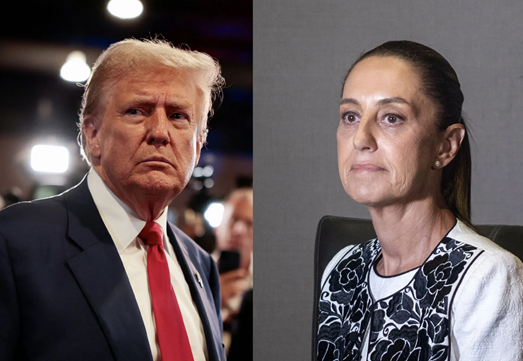
Presidents of the US and Mexico: Donald Trump and Claudia Sheinbaum
Mexican‑Peruvian Escalation Parallel to the growing political disagreements on the North American continent, processes have intensified in the Latin American subregion that reflect a number of states’ desire for greater autonomy in foreign policy. One of the most notable episodes was the diplomatic incident between Peru and Mexico, which culminated in the temporary severance of diplomatic relations. The formal pretext was Mexico’s granting of asylum to former Peruvian minister Betsy Chávez at its embassy in Lima. Chávez is accused of participating in a coup attempt. Peruvian authorities regarded this move as a “hostile act” and direct interference in internal affairs. This incident goes beyond a bilateral dispute and fits into the broader context of ideological confrontation in the region. Mexico, led by a left‑wing administration, demonstrates solidarity with political forces that oppose the current Peruvian government — which, in turn, seeks closer ties with the United States. This rupture not only deepens the divide within Latin America but also isolates Mexico from some regional partners, potentially increasing its reliance on its own resources in its standoff with Washington.

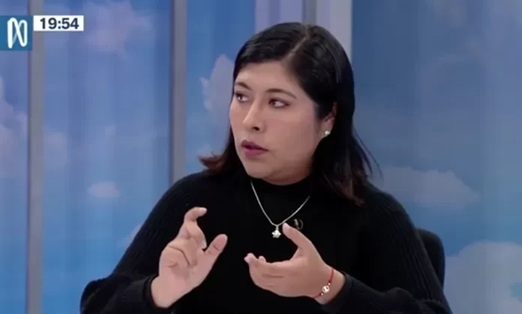
Former Peruvian Prime Minister Betsy Chávez
Postponement of the Summit of the Americas and Its Alternatives
Another indicator of the regional divide was the Dominican Republic’s decision to postpone the Summit of the Americas. The official reason cited was a “thorough analysis of the situation in the region”; however, the key factor was the Dominican Republic’s refusal to invite representatives from Venezuela, Cuba, and Nicaragua to the summit. This, in turn, triggered a boycott by Mexico and Colombia. This episode clearly demonstrates that the format of the Pan‑American dialogue — traditionally initiated by the United States — is experiencing a profound crisis. The inability to bring leaders from all regional countries to the same table due to ideological differences indicates a transformation of Washington’s former model of regional leadership. The postponement of the summit is a tactical pause that does not resolve the systemic problem: tensions are rising in the region, and the US is facing difficulties in building regional consensus.

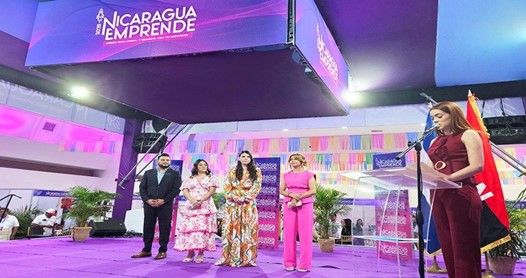
Entrepreneurship Festival «Nicaragua Emprende»
In this context, alternative projects and centers of attraction continue to gain momentum. For instance, Nicaragua successfully hosted the largest entrepreneurship festival, «Nicaragua Emprende», with state support. The event, overseen by President’s daughter Camila Ortega, aimed to strengthen domestic economic ties and foster the development of the creative economy. Although not directly political, this event reflects Nicaragua’s — and several other regional countries’ — desire to diversify economic ties and gradually bolster the internal resilience of their national markets.
UN Vote on Cuba
At the same time, diplomatic pressure on the US to change its policy toward Cuba continued on the international stage. The latest UN General Assembly resolution — which overwhelmingly called on Washington to lift the blockade on Havana — demonstrates limited diplomatic support for the US position on this issue. The vote, in which only the US, Ukraine, and Israel opposed the resolution, underscores that even Washington’s traditional allies in Latin America do not support its hardline stance toward Havana. This negatively affects the US image and indicates the strengthening of Cuba’s position as a country defending its right to political independence.

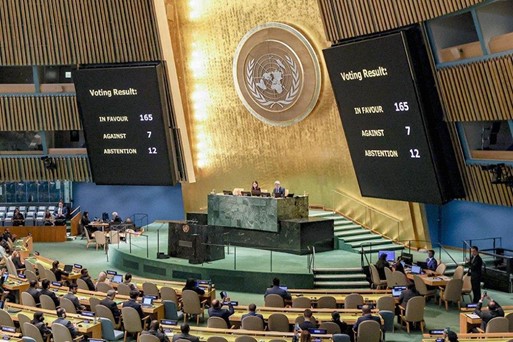
UN General Assembly Vote
Moreover, events that do not have a direct political character reflect broader trends shaping regional dynamics. For instance, the public response by Mexican President Claudia Sheinbaum to a personal incident involving public harassment was perceived by society as confirmation of her political style — an orientation toward principled stances and the protection of national interests. The incident drew attention to issues of safety, public accountability, and the role of leadership in direct contact with society. Mexican authorities view this case as part of their strategy to strengthen legislative protections against harassment and improve support mechanisms for victims.
In the same vein, the tragic explosion at the Waldo’s store in the Mexican city of Hermosillo — which took the lives of more than 20 people, including six children — instantly transformed from a private catastrophe into an event of national significance, testing the effectiveness of local authorities. The decisive response by Sonora Governor Alfonso Durazo — who expressed condolences and promised comprehensive support to the victims — along with the swift official statement ruling out a terrorist motive, aimed to demonstrate control and prevent panic. This incident highlighted chronic problems in public safety related to compliance with regulations on the storage of flammable materials and the state of infrastructure. It also renewed calls for stricter government oversight in the trade and services sector.
Meanwhile, in another Latin American region, the Nicaraguan government announced its intention to strengthen the national system for combating cybercrime. This decision, voiced by TELCOR regulator head Nayima Díaz, reflects a global trend but also demonstrates a specific foreign policy vector. By emphasizing the role of the Russian Federation as the initiator of the UN Convention against Cybercrime and referring to it as a “brotherly country,” Nicaragua is not merely responding to technological challenges but also signaling its strategic alliances in the field of international security. This initiative is positioned as part of a socially oriented policy aimed at protecting the most vulnerable segments of the population from digital threats. It resonates with the region‑wide search for models of sovereign development in the context of globalization.
Conclusion
Thus, during the reporting period, the contours of a structural crisis in North America have become more clearly defined. The US plans for military operations in Mexico have created an explosive hotspot of tension, the consequences of which could be unpredictable and lead to large‑scale destabilization. In parallel, the Latin American subregion is demonstrating a growing desire toward autonomy. This is manifested in diplomatic conflicts, the collapse of regional forums, and the search for alternative development models. The United States, facing this challenge, increasingly resorts to unilateral instruments of pressure — which in turn strengthen resistance and consolidate its opponents. The existing divisions in the region reflect long‑term processes of restructuring the system of international relations in the Western Hemisphere. Under these circumstances, US influence remains significant but is becoming part of a more complex structure of interactions. The role of regional actors is growing — actors that seek to pursue independent and balanced foreign policies, taking into account national interests and new forms of partnership.
The further evolution of the situation will depend on two key factors: whether Washington will carry out its threats against Mexico; whether the emerging coalition of Latin American states will be able to propose a viable alternative to American dominance. In this context, it is appropriate to outline the following forecasts and development scenarios:
Scenario 1. «Managed Transformation»: Regional actors continue to develop independent policy vectors while maintaining dialogue with the US. The Pan‑American structure gradually transforms into a format of multilateral cooperation, where interregional blocs begin to play a key role (CELAC, USMCA+, OAS 2.0).
Scenario 2. «Escalation of Competitive Interaction»: If Washington intensifies its pressure, the formation of alternative centers of influence — involving China and BRICS — becomes possible. This would lead to increased political stratification in the region, but simultaneously accelerate the emergence of new security mechanisms and economic cooperation frameworks.