
Short description: The article examines the key international events of the second half of January 2026, which demonstrate the increase in political turbulence and the transformation of traditional institutional and diplomatic practices. The main focus is on the crisis of public administration in Bulgaria, the acute diplomatic conflict over Greenland, which is chaotic in traditional multilateral formats, and related processes within the transatlantic alliance. The events in the Balkans, the Arctic, and Davos reflect a multi-level crisis of legitimacy: internal — political elites, external — institutions of collective security and diplomacy, and personal — among ideological allies. Based on the analysis of current dynamics, potential scenarios of destabilization and adaptation in the European and transatlantic space are formulated.
Preface
The second half of January 2026 was a period of concentrated manifestation of systemic dysfunctions at various levels. International activity developed along two main but interrelated tracks: the deepening of the internal political crisis in a separate EU state and the escalation of the diplomatic conflict, which is reformatting the rules of interaction within the Western alliance. The resignation of the Bulgarian president in order to participate directly in parliamentary politics, the US military and political pressure on Greenland and the subsequent collapse of the working atmosphere at the World Economic Forum represent a range of challenges – from the dysfunction of the national democratic model to the denial of the foundations of multilateral diplomacy. These processes indicate a deepening gap between formal institutions and real political practices, where personal political capital, power pressure, and transactional transactions displace procedural norms, both at the national and international levels.
1. Political crisis in Bulgaria: the disintegration of formal institutions and the personification of power
On January 20, Bulgarian President Rumen Radev resigned, explaining this decision as the need to destroy the “vicious model of governance” and the “mafia model of power” that, according to him, had been established in the country. This step followed the failure to form a government and made early parliamentary elections inevitable — the eighth in five years. Radev is expected to form his own party to run in the elections in order to return to power as prime minister.
This event is a classic case of institutional collapse and the personification of politics: The leapfrog of seven technical governments in one presidential term and the inability to form a stable cabinet indicate a deep split in the political field and the inability of the party system to generate a stable majority. This creates a vacuum filled by figures appealing directly to the people, bypassing the parties. The voluntary resignation from the ceremonial post of president to participate in the executive branch demonstrates how the formal separation of powers and roles can be ignored in an acute crisis of legitimacy. Radev positions himself not as an arbitrator, but as a direct “savior from chaos,” which is a sign of super-presidential ambitions within the framework of a parliamentary republic. Radev’s assessment as a “pro-Russian” politician, his negative attitude towards the introduction of the euro and opposition to military aid to Ukraine add a geopolitical dimension to the internal crisis. His potential rise to executive power may become a test for the stability of the EU’s foreign policy consensus in its eastern flank.

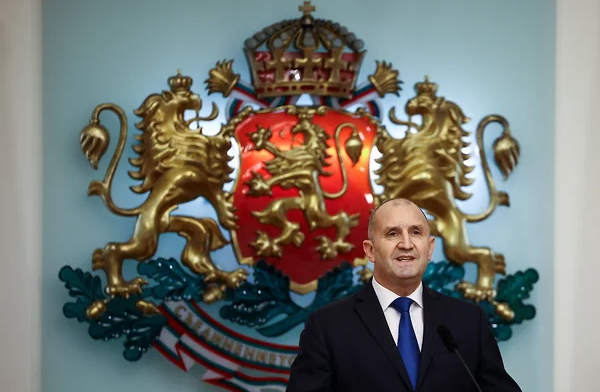
Bulgarian President Rumen Radev
This process illustrates the trajectory in which chronic instability leads to the dismantling of checks and balances and the rise of personalistic models of government.
2. The Greenland crisis: the erosion of transatlantic norms and tactical solidarity
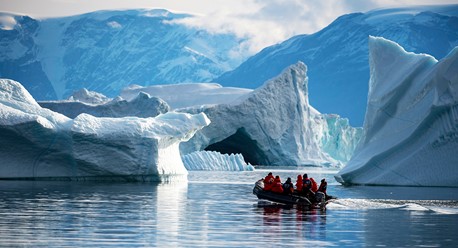
At the same time, an acute diplomatic crisis was developing, initiated by statements by US President Donald Trump about his intention to annex Greenland with threats of sanctions against European countries that prevent this. The situation has reached a point where Greenland’s Prime Minister, Jens-Frederik Nielsen, publicly admitted the possibility of a US military invasion and urged the population to prepare for disruptions. This crisis serves as a stress test for Western alliances and diplomatic practices.: The negative reaction of Trump’s traditional allies in Europe, such as Alice Weidel (AFD), Jordan Bardella (National Rally) and Nigel Farage, is revealing.
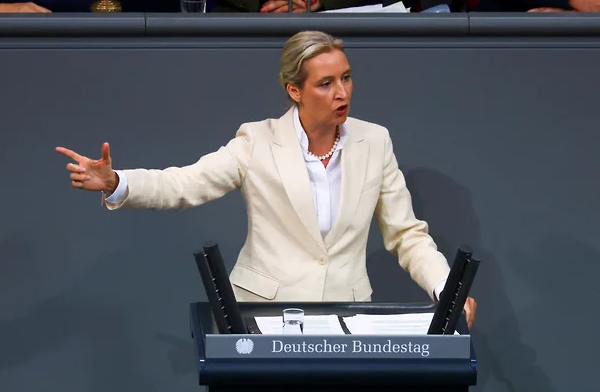
AfD Co-Chair Alice Weidel
Their criticism, based on the principles of sovereignty and non-interference, demonstrates the limits of ideological solidarity in the face of direct threats to the national interests of key European powers. Trump’s subsequent rejection of the annexation and the announcement of a “deal” on mining and missile defense deployment confirm the hypothesis of using maximalist rhetoric as a pressure tool to achieve concrete concessions. This turns the fundamental issues of an ally’s territorial integrity into a bargaining chip. The statement by the Prime Minister of Greenland about preparations for a possible invasion is unprecedented in relations between NATO allies and indicates a complete loss of strategic trust. The US imposition of duties on EU countries that have sent troops to the island formalizes the sanctions regime within the alliance.

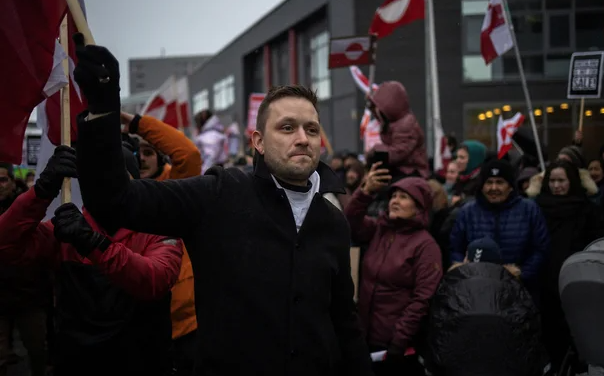
Jens-Frederik Nielsen— Prime Minister of Greenland
This plot shows how unilateral forceful actions by a key player can devalue the norms of alliance solidarity and sovereignty in a short time, transferring relations to a purely transactional, conflict-based plane.
3. Chaos in Davos: the institutional failure of multilateral diplomacy
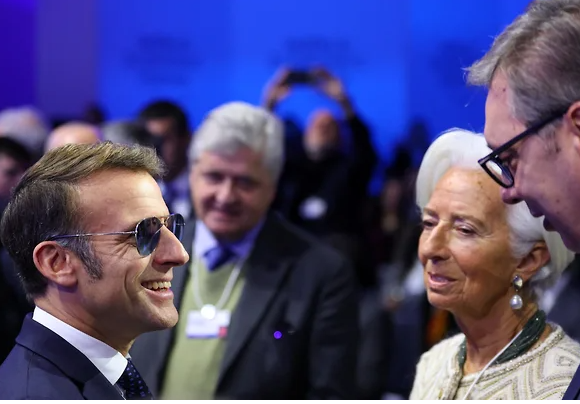
The World Economic Forum (WEF) in Davos, held under the motto “The Spirit of Dialogue”, has become the epicenter of organizational and diplomatic collapse. The forum was characterized by the rejection of key participants (the UN Secretary General, Denmark, Iran), public humiliation (the publication of Macron’s personal letter by Trump), disruption of program events and a general atmosphere of “disturbing thoughts.” Davos has traditionally functioned as a platform for informal consensual communication between the global elite. His preoccupation with one acute political conflict (Greenland) and the demonstrative disregard for diplomatic etiquette on the part of a key participant (Trump) indicates the impossibility of maintaining neutral platforms in conditions of high geopolitical polarization.
The position of the Ukrainian delegation, which has found itself on the periphery of attention due to the dominance of the transatlantic crisis, illustrates how the strategic interests of less powerful states can be marginalized when the interests of great powers clash, even within a formally friendly camp. Meetings on the sidelines of the forum (for example, the Russian representative Dmitriev with his American colleagues), against the background of general chaos, emphasize that real negotiations are shifting to closed ones, while public platforms are losing functionality.
The crisis in Davos symbolizes the end of an era when multilateral institutions could serve as a stabilizer and a platform for dialogue, regardless of current contradictions.
Conclusion and potential development scenarios
The period under review demonstrated the interrelationship of crises at different levels: national (Bulgaria), alliance (NATO/EU-USA) and global institutional (Davos). The common denominator is the rejection of procedural norms in favor of direct action, whether it is personalized authority, forceful pressure or public confrontation.
Based on these dynamics, the following potential scenarios can be identified for the development of the situation in the medium term:
Scenario 1: “Consolidation of authoritarian tendencies and disintegration of alliances”
The political model on which Rumen Radev relies is being successfully implemented in Bulgaria and is being imitated in other unstable countries of Eastern Europe. The transactional and confrontational approach of the United States towards its allies, tested in the Greenland crisis, is becoming the new norm, which leads to the formal or actual withdrawal of a number of European countries from a number of joint projects with the United States and their reorientation towards strengthening their own security structures (the European army). Multilateral formats such as the G7 and the WEF are finally losing their importance, giving way to narrow, flexible coalitions for specific tasks. Europe is plunging into a double crisis: internal democratic degradation in the east and external strategic uncertainty in the west.
Scenario 2: “Rejection reaction and sub-alliance renaissance”
The sharp reaction of the European right to Tramp’s actions on Greenland is becoming a catalyst for the formation of a new consensus within the EU around the protection of sovereignty, which temporarily sidelines traditional internal disputes. This accelerates the creation of truly functioning pan-European structures in the field of defense and economic coordination. The failure of Davos encourages the search for new, more manageable dialogue platforms without universal claims (for example, forums at the level of individual regions or industries). In Bulgaria and similar countries, the failure of populist projects that are unable to quickly solve systemic problems leads to a painful but more fundamental restructuring of the party system.
The current situation in the second half of January 2026 is most consistent with the elements of Scenario 1, indicating a trajectory of increasing chaos and confrontation. However, signs of resistance to unilateral actions (criticism from the European right, EU mobilization) create prerequisites for elements of Scenario 2 associated with painful consolidation and adaptation. The future trajectory will depend on the ability of European elites to transform the shock of the Greenland crisis into an institutional response, as well as whether voters in countries like Bulgaria can distinguish rescue rhetoric from real stabilization programs.