
Internal factors and foreign policy of the Southeast Asian States
Brief description: The political and diplomatic events of autumn 2025 in Southeast Asia reflect the relationship between the internal political dynamics of the countries of the region and their foreign policy strategies. ASEAN’s actions against the background of difficult negotiations with the United States and the situation in Myanmar, as well as the different approaches of key states — Vietnam, Indonesia and the Philippines — demonstrate a range of adaptation models. The crisis in Myanmar is having a growing impact on regional security. In the current conditions, internal political stability is becoming a significant factor influencing the foreign policy course, and the prospects of the region will be determined by a set of factors, including the state of socio-political dialogue in its countries.
The autumn of 2025 in Southeast Asia was characterized by a number of events reflecting the long-term development trends of the region. The relationship between the ability of States to pursue independent policies and the state of their internal political processes has emerged.
External interaction and internal political processes: regional security issues
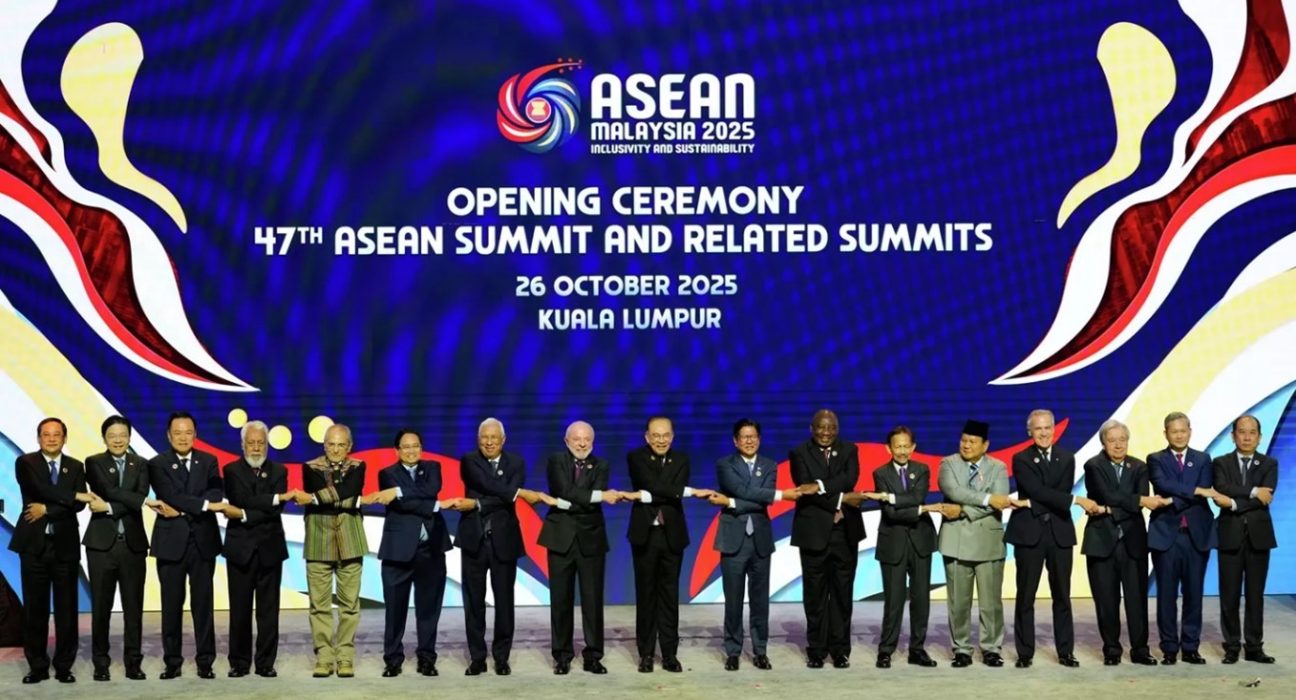
The tone for regional cooperation was set at the 47th ASEAN Summit in Kuala Lumpur (October 26-28), during which the United States emphasized the conclusion of bilateral agreements. Washington has signed a number of bilateral deals: Malaysia has agreed to invest in the American economy in exchange for maintaining current trade conditions with China; Cambodia, Thailand and Vietnam have concluded framework agreements providing for mutual commitments in the areas of trade and procurement. Against this background, other events of the summit — the admission of Timor-Leste as the 11th member from 2026 and the mediation role in the signing of the Kuala Lumpur Pact on the demilitarization of the disputed section of the Thai-Cambodian border – took place in parallel with these negotiations. These events have demonstrated that ASEAN remains functional in addressing certain local issues, while negotiations on the situation in Myanmar have not led to tangible results.
Adaptation strategies for regional players During the period under review, Vietnam intensified diplomatic activities aimed at diversifying international relations. On October 29, a Comprehensive Strategic Partnership with the United Kingdom was announced, marking Hanoi’s first such partnership with a Western European country; the agreement was accompanied by a package of green energy agreements. In parallel, negotiations were conducted with the EU on raising the status of relations within the framework of the JETP energy transition program. In November, Prime Minister Pham Minh Chin visited the Middle East and Africa, where a Strategic Partnership with Algeria was established on November 19.


Prime Minister Pham Minh Chin meets with Kuwait’s Prime Minister Sheikh Ahmed Abdullah Al-Ahmad Al-Sabah
In Kuwait, which holds the presidency of the Cooperation Council for the Arab States of the Persian Gulf, the focus of the negotiations was on attracting investments and cooperation in the field of energy and food security. Participation in the G20 summit in South Africa allowed Hanoi to speak on a global platform and hold a number of bilateral meetings with African leaders.
Relations with the United States developed dynamically: trade continued to grow, and the United States remained Vietnam’s largest export market.
In November, the parties held the fifth round of negotiations on an Agreement on Mutual, Fair and Balanced trade. Mutual economic dependence has deepened, as evidenced, in particular, by data on the supply of semiconductors and components from Oregon to Vietnam’s technology sector. The active diplomatic agenda of the month was completed by Hanoi’s chairmanship at the signing ceremony of the Hanoi Convention, the first comprehensive UN convention on combating cybercrime (October 25-26).
Indonesia’s foreign policy initiatives during this period were combined with domestic political processes. The central event was the Indonesia Foreign Policy Conference (CIFP) in Jakarta in November, the key thesis of which was the transition to a multipolar world and the increasing role of Indonesia.
At the same time, mass protests took place in the country, which were caused by economic factors and social stratification. Against this background, President Prabowo’s decision to posthumously award former President Suharto the title of National Hero on November 10, 2025, was a notable domestic political event. As noted by The Economist, this decision caused a mixed reaction in society due to various assessments of the historical period of Suharto‘s rule.


Indonesian President Prabowo Subianto at the 47th ASEAN Summit in Kuala Lumpur, RIA Novosti
The Philippines’ foreign policy in October and November 2025 was shaped by domestic political events, including protests in Manila (November 16-18) related to corruption allegations and the aftermath of Typhoon Kalmaegi. At the same time, the course towards strategic partnership with the United States was maintained in the context of disagreements with China in the South China Sea.
The official position announced at the 7th Katipunan Conference (October 15-16) was aimed at promoting an approach based on international law to protect sovereignty in the South China Sea. This course included deepening cooperation with the United States, including expanding the Enhanced Defense Cooperation Agreement (EDCA), as well as developing defense and economic ties with Japan, Australia, and other countries. The internal agenda of the conference included issues of military modernization, economic diversification and strengthening resilience to climate threats.
This course has been criticized by a number of expert circles. An analytical report by the Center for People Empowerment in Governance (CenPEG) on November 5 suggested that through mechanisms like EDCA, the Philippines is increasing its dependence on U.S. strategy, which limits its foreign policy sovereignty and increases the risks of involving great powers in conflict. As an alternative, a model focused on direct bilateral negotiations with China was proposed.
The Philippines’ foreign policy initiatives were determined by the interaction of these approaches. Internal challenges created the need to demonstrate effective solutions, which contributed to a focus on cooperation with the United States as a source of rapid support. The administration of President Ferdinand Marcos Jr. relied on opinion polls, according to which, according to Oculum Research and Analytics (2024), the majority of Filipinos have traditionally expressed confidence in the United States and expressed concern about China’s actions. Thus, the foreign policy course also served as an instrument of internal consolidation. Critics of this approach pointed to the contradiction between the declared strengthening of sovereignty and the deepening of military-strategic dependence on the United States.

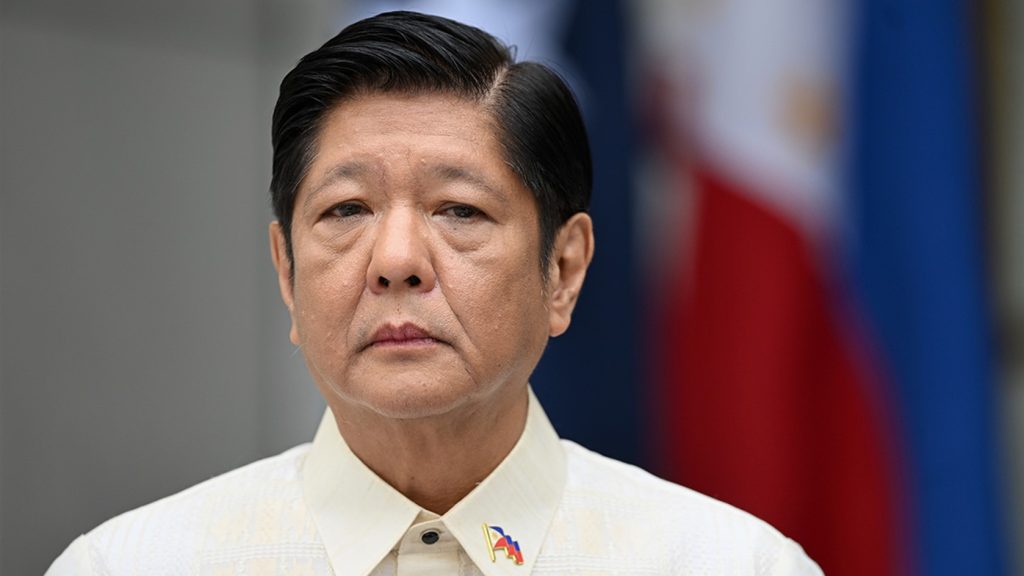
Ferdinand Marcos Jr., President of the Philippines
The situation in Myanmar
By the end of 2025, the crisis in Myanmar continued to have an impact on the region. According to the UN, by October, more than 3.5 million people had been internally displaced, and about 22 million were in need of humanitarian assistance. The consequences of the earthquake in March 2025 complicated the humanitarian situation, as access to aid was limited. The situation has cross-border consequences: Refugee flows are putting pressure on Thailand, Bangladesh and Malaysia; there is an increase in the production of synthetic drugs; the collapse of the health system contributes to epidemiological risks for neighboring countries.
These factors pose challenges to regional security. ASEAN’s efforts within the framework of the “Five Points of Consensus” adopted in 2021 did not lead to a resolution of the crisis.
Conclusion
The events of autumn 2025 point to the differentiation of the foreign policy trajectories of the countries of Southeast Asia. The most likely scenario seems to be the preservation of ASEAN as a format while deepening the multidirectional strategies of key participants: Vietnam may continue its course towards multi—vector diplomacy, Indonesia may balance between the main centers of influence, and the Philippines may deepen its alliance with the United States. The situation in Myanmar is likely to remain a source of challenges. An alternative would be to strengthen the bipolar dynamics in the region in the event of a further escalation of the contradictions in the South China Sea or an aggravation of the crisis in Myanmar.
Thus, the internal political dynamics of Southeast Asian countries is becoming a factor influencing their foreign policy strategies and position in the region. For external players, this means the need to take into account the internal political contexts of the countries of the region when building interaction with them. In this regard, it is advisable to identify the following forecasts and scenarios of development:
Scenario 1. “Fragmentation and pragmatic adaptation”
This scenario assumes that current trends will continue, and key factors will act based on pragmatic considerations. ASEAN will retain its institutional framework, but its role as a single strategic center will weaken. The regional architecture will take the form of a network of overlapping and multi-speed cooperation formats. Vietnam will continue its multi-vector diplomacy, deepening economic ties with both the West and partners in the Global South, while avoiding rigid ties to any one bloc. Indonesia, focusing on internal consolidation, will balance between the great powers, positioning itself as a neutral mediator, but its foreign policy activity may decrease. The Philippines will continue to deepen military-strategic cooperation with the United States and its allies, but will strive to minimize open confrontation with China in the economic sphere. The crisis in Myanmar will remain at a standstill, representing a chronic source of humanitarian challenges and instability, but it will be able to be largely localized within the country and its immediate borders thanks to limited international intervention and efforts by neighboring States. As a result, the influence of the United States and China in the region will remain balanced, none of the centers of power will be able to achieve dominance, and the countries of Southeast Asia will maneuver, taking advantage of competition, but unable to form a united front.
Scenario 2. “Escalation of confrontation and forced disengagement”
In this scenario, the escalation of both internal and external contradictions will lead to a sharp polarization of the region. A critical trigger could be a large-scale incident in the South China Sea, a complete collapse of statehood in Myanmar with the crisis spreading beyond its borders, or a deep internal political crisis in one of the key ASEAN countries. This will force States to make a more unambiguous strategic choice. The Philippines, possibly together with Vietnam, will form a clear defense alliance with the United States, Australia and Japan, which will be perceived by China as a direct threat. In response, Beijing may step up economic and military pressure, as well as conclude a formal security treaty with Myanmar or Cambodia. Indonesia, despite its ambitions, may be drawn into this split. ASEAN as an organization will be paralyzed due to deep disagreements among its members and will lose its role as a negotiating center. The crisis in Myanmar will turn into a proxy war, where the warring parties will receive support from external sponsors. The region will be divided into two competing blocs with minimal interaction between them, which will lead to a disruption of supply chains, an arms race and the constant threat of a direct military clash between the great Powers in Southeast Asia. Sovereignty and the room for maneuver for the countries of the region themselves will be significantly limited by the logic of big geopolitics.