
Dynamics of regional security in the Asia-Pacific region: January 2026
Short description: The review analyzes key security trends in East Asia and the Asia-Pacific region in January 2026. The focus is on the implications of the new U.S. defense strategy, the strategic rapprochement between Japan and South Korea, as well as China’s multilevel diplomacy aimed at countering the consolidation of U.S. allies. The domestic political events in Japan and its impact on the foreign policy course of Prime Minister Sanae Takaichi are considered separately. The conclusion is drawn about the formation of a fragile and confrontational security architecture driven by the paradox of deepening economic interdependence and increasing military-political confrontation.
1.Preface
January 2026 was a month of strategic reconfiguration for East Asia, where foreign policy maneuvers were closely intertwined with domestic political instability. The new National Defense Strategy (NDS) of the United States, which marked the transition to an era of “conditional partnership” and delegation of responsibility to allies, acted as a key catalyst for change. However, the reaction of regional players turned out to be more difficult than simply following Washington’s directives. The rapprochement between Japan and South Korea in an attempt to build a genuine strategic partnership was carried out against the background of the deep internal fragility of Tokyo, where the ruling coalition was fighting for survival amid the upcoming early elections. At the same time, China was playing a multi-level game, combining pragmatic “partnership diplomacy” with the acceleration of technological autarky. As a result, the January events exposed not only shifts in the balance of power, but also the critical dependence of the new regional dynamics on the internal political stability of key capitals.
2. The new U.S. defense strategy and prospects for the region
Publication of the new National Defense Strategy (NDS) On January 23, the United States acted as the main catalyst for regional dynamics. The document proclaimed a “fundamentally different approach,” focusing on protecting American territory and containing China through burden shifting. In the new American paradigm, China appears not as an ideological antagonist, but as an economic rival. In the regional context, this explicitly meant demanding that South Korea assume a leading role in deterring the DPRK with “critical but more limited” support.


U.S. National Defense Strategies
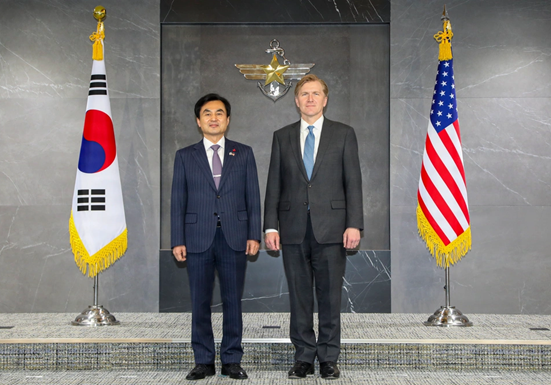
This logic was immediately operationalized by the visit of U.S. Deputy Secretary of Defense Colby to Seoul and Tokyo to negotiate cost-sharing and promote a policy of “peace through strength.” Paradoxically, the US strategy aimed at strengthening alliances by increasing their independence has not rallied allies exclusively around Washington. On the contrary, it has pushed Japan and South Korea to accelerate the deepening of their own bilateral cooperation as a way to diversify risks and seek additional support for each other against the background of growing transactional relations with the United States. This indirectly contributes to the formation of the very regional center of power that could act more autonomously.
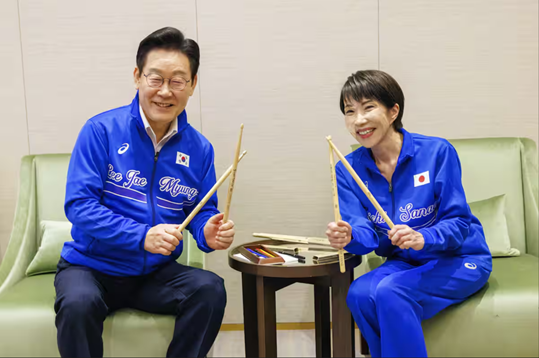
3. Diplomatic initiatives on the eve of the parliamentary elections in Japan.Strategic rapprochement between Japan and South Korea. The meetings of Prime Minister Takaichi Sanae and President Lee Jae Myung in Japan on January 13-14 demonstrated a qualitatively new approach to relations, driven by strategic pragmatism. The rapprochement is driven by a common perception of threats: China’s increased pressure, North Korea’s nuclear missile challenges, and growing uncertainty about the United States’ global strategy. In response, the parties have built a comprehensive diplomacy. The symbolic level was represented by a carefully planned visit to the Horyu-ji Temple in Nara, an object embodying the deep historical and cultural influence of the Korean Peninsula on Japan. The level of personal diplomacy (“shuttle diplomacy”) Informal interactions, such as playing drums together, were reinforced, which helped humanize leaders and create a narrative about personal chemistry.

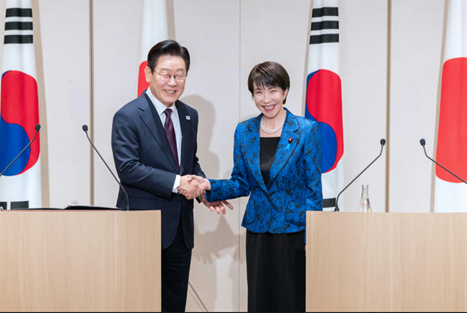
South Korean President Lee Jae-Myung and Japanese Prime Minister Sanae Takaichi
The essence of the meeting was the pragmatic level of specific agreements. The two sides reaffirmed the vital role of trilateral cooperation with the United States, but also agreed to step up their own dialogue to strengthen supply chains for critical materials — a direct response to economic coercion from China. They also agreed on progress on sensitive historical issues such as DNA identification of the remains of Korean workers at the Nagasu (Josei) mine, which President Lee called “significant progress.”
Thus, the emerging Seoul-Tokyo axis is not just a reaction to US pressure, but an independent strategy of the middle Powers to create a stable center of power to ensure their own security and economic stability. This progress remains fragile and depends on the ability to translate personal agreements into institutional cooperation, bypassing old territorial and historical disputes.
Strengthening the Europe–Asia axis. On January 16, 2026, during the visit of Italian Prime Minister Giorgia Meloni to Tokyo and her talks with Japanese Prime Minister Sanae Takaichi, the parties agreed to switch to a “special strategic partnership”, focusing on in-depth cooperation in the fields of economic security, defense and technology.

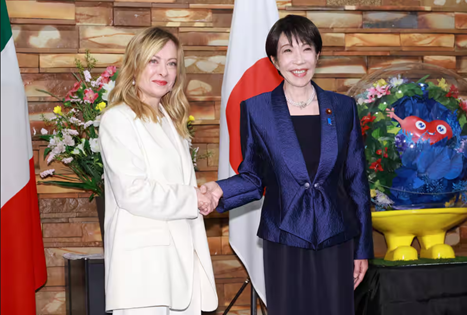
Prime Minister Sanae Takaichi (right) shakes hands with Prime Minister Meloni of Italy before the meeting
The negotiations consolidated progress in several strategic areas:
Economic security and supply chain. The central element was an agreement to strengthen cooperation in ensuring the supply of critically important minerals. This is a direct response to the vulnerabilities identified by Chinese restrictions and part of an overall strategy to reduce strategic risks from China.
Military-industrial cooperation. The parties confirmed the priority of an ambitious trilateral program with the United Kingdom to develop a new generation fighter with a target date for commissioning in 2035. This cooperation makes Japan and Italy key technology partners in the high-tech sector.
Technological and space sovereignty. Agreements were reached on intensifying cooperation in the field of artificial intelligence and semiconductors, as well as on the creation of a new advisory body for cooperation in space exploration.
Meloni’s visit to Tokyo has significance beyond the scope of bilateral relations. Italy, being a major European power and a member of the G7, with its strategic turn towards Japan signals a growing consensus in the EU on the need to contain China and support FOIP. This enhances transcontinental cohesion among democratic allies. Both sides are striving to avoid direct confrontation, but their coordinated actions indicate a transition to a tougher and more prepared position aimed at reducing critical dependencies and protecting technological sovereignty.Diplomatic tour of the Minister of Foreign Affairs of Japan. Minister Toshimitsu Motegi’s tour illustrates how Japan is giving concrete content to the concept of a “Free and Open Indo-Pacific Region” (FOIP). The signing of the ACSA with Manila is a transition from rhetoric about cooperation to practical military logistics. This agreement directly enhances the potential of the Philippines, a country at the forefront of territorial disputes with China, and deeply engages Japan in security issues in the South China Sea. As CNN notes, this marks a new stage in Japan-Philippines defense relations. Deepening cooperation with India, especially in the field of critically important minerals, has a double meaning. First, it creates a counterweight to economic coercion from China. Secondly, it strategically links the East Asian and South Asian theaters, strengthening the Tokyo-Delhi axis as a pillar of stability in the Indo-Pacific region.

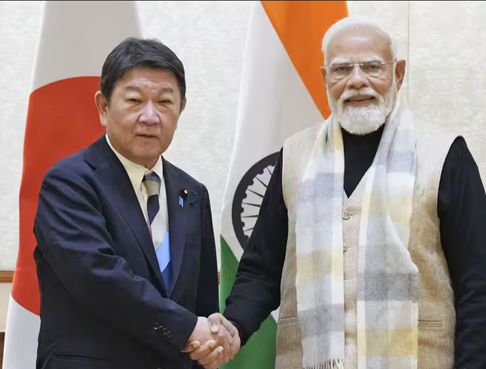
Japanese Foreign Minister Toshimitsu Motegi and Indian Prime Minister Narendra Modi
Parliamentary elections in Japan. Significant events are also taking place in Japan’s domestic policy against the background of Japan’s foreign policy initiatives. On January 23, Japanese Prime Minister Sanae Takaichi dissolved the lower house of Parliament (the House of Representatives). The elections themselves will take place in conditions of deep fragmentation of the political field and after a period of rule by an uneasy coalition of the Liberal Democratic Party (LDP) and the Japanese Renewal Party, which replaced decades of the LDP-Komeito alliance.
The goal of the ruling coalition: Prime Minister Takaichi has clearly outlined the threshold for victory: winning a simple majority (233 out of 465 seats) by the coalition. Achieving this goal will strengthen its internal position and allow it to continue its course towards a “responsible and active fiscal policy” and strengthening its defense capability.
Opposition strategy: The newly created Centrist Reformist Union, uniting the remnants of the Constitutional Democratic Party and the Komeito, sets an ambitious goal to become the largest party in parliament. His strategy is based on mobilizing the traditional Komeito electorate and offering alternatives to both the LDP and leftist parties. However, its formation has complicated coordination with the Communist Party of Japan, which could lead to a split in votes and weaken the opposition front.
A comparison of the election programs in terms of foreign policy shows the following:
The coalition of the LDP and the party «Renewal»: a course to strengthen power: The ruling parties advocate the most radical strengthening of defense capabilities in the post-war decades. Their common promises include the revision of three key national security documents as early as 2026 and the creation of a full-fledged National Intelligence Agency (equivalent to MI6). The LDP goes further, proposing to abolish the rules restricting the export of defense technologies, which will pave the way for deeper military-industrial cooperation with partners. The Renewal Party advocates speeding up this revision and promotes the idea of acquiring nuclear submarines with new propulsion systems. This agenda is directly related to Takaichi’s recent diplomatic efforts to strengthen ties with the Philippines, India and Italy, aimed at creating a deterrent network against China.
Centrist Union: caution within the alliance: The opposition bloc adheres to a more traditional interpretation of the pacifist constitution. He supports the strengthening of the Japan-US alliance, but insists on strict adherence to the principle of “exclusively defensive defense” and the preservation of the Three Non-Nuclear Principles. While they consider the constitutionality of security laws in “crisis situations threatening the existence of the state,” their overall approach is more restrained compared to the ambitious plans of the ruling coalition.
Radical opposition: Parties such as the Communist Party of Japan and the Reiwa Shinsengumi demand the complete repeal of security laws and the renunciation of three key defense documents, as well as joining the Treaty on the Prohibition of Nuclear Weapons. Although their electorate is limited, their criticism serves as a beacon for pacifist-minded voters.
4. China’s multilevel diplomacy.
While Japan and South Korea were strengthening bilateral ties, China was playing a complex multi-level game. His reaction to the rapprochement between Tokyo and Seoul included both internal mobilization for technological sovereignty and active foreign diplomacy. The central event was President Lee Jae-Myung’s visit to China on January 4-7. This was the first trip by a South Korean leader of this level in six years, designed to restore economic ties that had cooled after the deployment of THAAD (English Terminal High Altitude Area Defense — “high-altitude atmospheric interception system”) in 2017. Seoul has achieved tactical success: the parties have made progress in negotiations on a free trade agreement, signed 15 intergovernmental agreements and 32 business deals. However, the visit also clearly outlined the boundaries of Chinese pragmatism. Beijing declined to comment on the launch of a North Korean ballistic missile, which coincided with the visit, and did not provide explicit support for the denuclearization of the DPRK. The cultural “thaw” also did not take place. Thus, China used economic leverage to attract Seoul and mitigate the effect of its rapprochement with Japan, but avoided any strategic concessions on security issues.

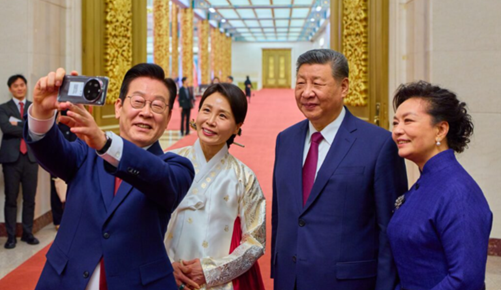
South Korean President Lee Jae-Myung and Chinese President Xi Jinping
In the western direction, an important event was the meeting that took place from January 14 to 17. Canadian Prime Minister Mark Carney was on an official visit to China. In Beijing, Carney met with Xi Jinping, Premier of the State Council of the People’s Republic of China Li Qiang and Chairman of the National People’s Congress Zhao Leji.
During the visit, the parties signed 8 documents covering trade and economic cooperation, energy, finance and investment, law enforcement cooperation, food security, humanitarian sphere and media. Among them, the Roadmap for Trade and Economic Cooperation is the first high-level document of this type.
5. Conclusion and scenarios of the situation development
The events of January 2026 consolidated several fundamental trends that took shape in the previous year: the US transition to a risk management strategy through delegation, the accelerated formation of a network of flexible coalitions of medium–sized powers around the Japan-South Korea core, and China’s pragmatically tough response combining economic cooperation with a tough security line. The key paradox of the era remains the deepening of economic interdependence against the background of increasing military and political bipolarization.
Based on these dynamics, the following scenarios can be identified for the development of the situation in the region:
1. Basic scenario: “Controlled confrontation”. The region will continue to move along the inertia set in January. Confrontational rhetoric and military buildup will be accompanied by the preservation of economic ties and diplomatic channels. The Tokyo–Seoul axis will strengthen, but will avoid direct provocations against China. North Korea will conduct new missile tests, which will strengthen coordination between the United States, Japan and the Republic of Korea. Internal political stability in key capitals (especially in Tokyo after the elections) will be the main deterrent to a sharp escalation.
2. Escalation scenario: “Crisis of confidence in the Taiwan Strait.” Increased military coordination within FOIP (especially Japan-Philippines cooperation) and China’s retaliatory exercises could lead to a dangerous incident in the South China or East China Seas. Taiwan remains the most dangerous point. Any strengthening of Taiwan’s ties with Japan or the United States, perceived by Beijing as provocative, could provoke a large-scale demonstration of China’s strength, putting the region on the brink of open conflict and forcing the allies to make extremely difficult choices.
3. Fragmentation scenario: “The disintegration of fragile alliances.” Internal political upheavals in key countries (for example, the victory of more isolationist forces in Japan or South Korea, and further polarization in the United States) will only undermine emerging coalitions. China will be able to effectively use economic pressure to destabilize unity (for example, by playing on the differences between Seoul and Tokyo on historical issues again). This will lead to a return to a more chaotic and transactional model of regional security, where each country will act alone, increasing overall risks.