Africa in the focus of change: the growth of subjectivity, competition of megaprojects and challenges to regional stability
Brief description: The political situation in Africa in October–November 2025 is characterized by a combination of internal crises and external pressures. North Africa is facing protests, diplomatic maneuvers, and a struggle for influence in Libya and Western Sahara. In West Africa, the Alliance of Sahel Statescontinues to be institutionalized and partnerships with Russia and China continue to grow. East Africa accelerates digital transformation and deepens cooperation with China amid declining Western aid. Central and Southern Africa are becoming the arenas of infrastructure projects and diplomatic conflicts affecting regional stability.
Preface
The political dynamics of Africa in October–November 2025 demonstrates a combination of growing internal crises, increasing competition between global factors and the desire of the countries of the region to strengthen their own subjectivity. North Africa is facing protests, diplomatic shifts, and a struggle for influence. In West Africa, the Alliance of Sahel States’ institutional structures continue to be formed and cooperation with new external partners continues to increase. East Africa is undergoing a transition from grassroots innovation to government regulation and deepening cooperation with China. Central Africa is becoming an arena of infrastructural competition, especially around the Lobitu corridor. The combination of these processes forms ambiguous scenarios for the further development of the region.

North Africa
North Africa in the grip of contradictions: the rise of internal conflicts and the search for regional stability.
In October–November 2025, North Africa found itself in a state of increasing political turbulence, where internal crises were combined with geopolitical shifts. The most acute events unfolded in Tunisia: at the end of November, mass protests took place across the country against the increasing repression of President Qais Said, expressing dissatisfaction with the restriction of civil liberties and the arrests of politicians. At the same time, part of the opposition went on a hunger strike to protest the persecution by the authorities, which increased tensions and showed a growing crisis of confidence in the political leadership. At the same time, Tunisia continued its harsh migration policy, repatriating about 10,000 migrants and declaring that it did not intend to become a “transit zone,” which also increased internal and external resonance.
At the regional level, an important event was the trilateral meeting of Egypt, Algeria and Tunisia, where the parties called for the intensification of the political process in Libya, the withdrawal of foreign mercenaries and the creation of conditions for elections. This reflects the desire of neighboring States to take on more responsibility for stabilizing Libya, which remains a source of migration and security risks for the entire region.
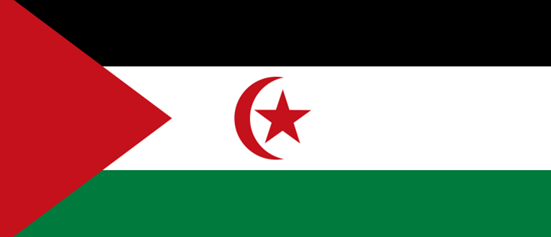
A significant diplomatic breakthrough has taken place in Morocco: the UN Security Council has recognized the Moroccan plan for the autonomy of Western Sahara as the most realistic solution. This strengthened Rabat’s international position, increasing its influence in the region and creating a new imbalance in relations with Algeria, which traditionally supports the Frente Polisario.
Algeria, in the face of geopolitical changes, has launched an active “charm offensive” against the United States, seeking to improve bilateral relations that were previously tense. This demonstrates Algeria’s desire to strengthen its foreign policy position against the backdrop of competition with Morocco and the growing role of North Africa in global energy and security. Amid the political crises, the region’s economies continue to look for ways to develop: new enterprises are being launched, international business contacts are being strengthened, as in Tunisia, where new pharmaceutical and industrial projects are being formed. However, economic progress faces political risks that worsen the investment climate. Collectively, North Africa in the fall of 2025 demonstrates duality: on the one hand, diplomatic achievements and attempts at regional coordination; on the other, the growth of internal conflicts, protests and competition between key states. The countries of the region are driven by multidirectional forces: the desire to strengthen the international position and the need to contain internal instability. The success or failure of this balance will determine the political dynamics of North Africa in the coming years.
West Africa
Formation of the parliamentary structure of the Alliance of Sahel States strengthening of cooperation with the Russian Federation.
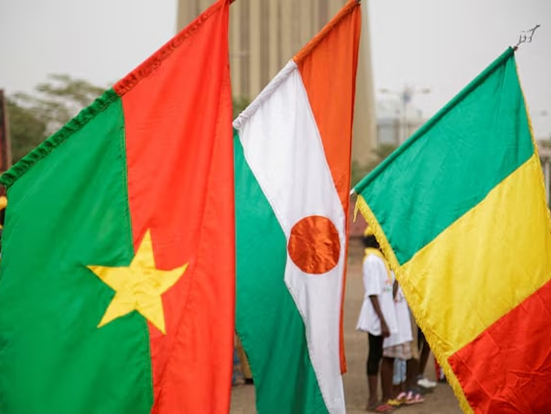
The Sahel States Alliance will officially establish a single parliament in December 2025, and the parliamentarians approved interim agreements on the work of the body at a meeting in September. This was announced by the office of the President of Mali and Chairman of the Alliance of Sahel States Assimi Goita following his talks with a delegation of parliamentarians from the Sahel countries.
The meeting took place on October 7 at the Presidential Palace. The parliamentary delegation was led by the President of the National Transitional Council of Mali (CNT), General Malik Dio. Niamey was represented by Mamoudou Djingarei, Chairman of the Niger Reconstruction Advisory Council (CCR), who appreciated the dialogue within the Alliance of Sahel States. Gingarey emphasized the “spirit of brotherhood and solidarity” that now guides the Sahel people.
“The next meeting, scheduled for December, will allow us to officially sign the document on the creation of a single parliament, which will be an important stage in building our confederation,” said the representative of Niger.
France’s withdrawal created a security vacuum that led to a surge in terrorism and a series of military coups in Mali, Burkina Faso and Niger. Seeking sovereignty, the new military governments withdrew from the West African ECOWAS bloc and formed their own Alliance of Sahel States. An important factor is the struggle for natural resources, during which the new authorities nationalize assets and revoke licenses from Western companies. In these circumstances, Russia has significantly expanded its presence, becoming a key external partner for the countries of the alliance. Cooperation, which began in the field of security, now covers the economy, education, and even agreements on the peaceful use of atomic energy.
The new course of the authorities has received broad support from the local population, who see the military’s actions as protecting national sovereignty, despite the difficult socio-economic situation and high levels of poverty. In the economic sphere, the Alliance of Sahel States aim to deepen internal integration, planning in the future to create a monetary union and introduce their own Sahel currency, which will allow them to leave the zone of French influence and gain financial independence. At the same time, trade relations with the ECOWAS neighbors are temporarily maintained on the same terms to mitigate the consequences of the rupture.
These events led to a large-scale geopolitical reorientation of the region, marking the decline of French and American influence, which resulted in the withdrawal of their troops and the loss of control over strategic resources such as uranium. New players have filled the vacuum of security and economic partnership: Russia has become a key ally in the military and mining sectors, while China and Turkey are increasing investments and arms supplies. Thus, the future of the Sahel now directly depends on the ability of the new alliance to independently destroy the terrorist underground and build a sustainable economy with the support of alternative centers of power.
Senegal: Liquidity crisis amid oil boom
S&P Global Ratings has downgraded the sovereign rating of Senegal with the possibility of further reduction. The main reason was the critical level of public debt, which reached 119% of GDP, and an acute lack of financing. The situation escalated sharply after the IMF froze the $1.8 billion aid program in 2024. The new authorities in Dakar conducted an audit and uncovered large-scale fraud with the accounts of the previous government, which paradoxically cut off the country from cheap Western money. In an attempt to close budget holes, the government is forced to raise taxes and borrow at high interest rates in the regional market (more than 7%), creating an effect of crowding out and depriving private businesses throughout the West African Union (UEMOA) of available loans.
The current situation creates a unique precedent: while the financial rating is falling, the real economy of Senegal is showing rapid dynamics (growth forecast +6.8%) due to the launch of large Sangomar and GTA deposits. The country has fallen into a classic “liquidity trap”: oil and gas revenues are already pushing GDP up, but tax revenues from them are coming to the treasury with a delay and do not yet cover the current huge debt servicing costs.
East Africa
The specifics of East Africa’s technological development: from “grassroots” innovation to government regulation.
There is a clear discrepancy between official statistics documenting the lag of African countries and the actual dynamics of technological development on the continent. Traditional eurocentric metrics such as the Global Innovation Index (GII) or WIPO patent activity data show poor performance in local settings. They focus on formal spending on R&D and laboratory inventions, ignoring the fact that much of the economic activity takes place in the informal sector, and the national statistical database is often incomplete.
To obtain an objective picture, it is necessary to shift the focus to alternative approaches that take into account the specifics of local ecosystems. Grassroots innovation and adaptive technologies, often classified as “survival innovations,” are of key importance. Unlike the Western model, which is aimed at creating fundamentally new products, the African model is focused on inclusivity and solving basic problems of access to services.
Kenya is taking large-scale steps to strengthen its status as a leading technology hub in East Africa. The Nairobi strategy is being implemented simultaneously in two directions: borrowing best international practices for the public sector and creating a legal framework for the fintech industry.
In the field of public administration, Kenya relies on proven solutions. On the sidelines of the World Telecommunications Development Conference (WTDC-25), Kenyan Minister of Information and Digital Economy William Kabogo Gitau discussed prospects for cooperation with his Azerbaijani counterpart Rashad Nabiyev.
As Nabiev noted, “The Kenyan side has expressed interest in implementing SIMA [cloud electronic signature] and mygov [e-government portal] solutions in its country.” The parties are also considering the possibility of cooperation in the field of satellite services.
In parallel with digitalization, the authorities are creating a legislative foundation for a new economy. The Kenyan parliament has passed a bill on the regulation of digital assets, which gives the Central Bank the authority to license issuers of stablecoins and crypto exchanges. Chairman of the Finance Committee of the National Assembly Kuria Kimani stressed that the legalization of the market is necessary to attract investment and protect the interests of young people.
“We hope that Kenya will become the gateway to Africa. <…> The majority of young people between the ages of 18 and 35 now use virtual assets for trading, making payments, as well as for investing or running a business,” Kimani said. The document is awaiting the signature of President William Ruto. This step fits into a broad continental trend towards the adoption of cryptocurrencies: for example, in South Africa, Altvest Capital Ltd. It has already announced plans to raise $210 million to create Africa’s first corporate bitcoin reserve.
The strategic turnaround of Kenya, Zambia and Tanzania: from Western aid to partnership with China.
In November 2025, a clear trend towards deepening strategic partnership with China took shape in East Africa against the background of a reduction in financial support from the United States and the European Union. The key players in the region — Kenya, Zambia, and Tanzania — are increasingly relying on Chinese investments to implement their national development programs, which marks a new round of geopolitical competition on the continent.
Kenya, which has long been considered a stronghold of Western influence in the region, became a striking example of the change of vectors. Nairobi’s disappointment in Washington’s partners, who did not provide the necessary funding, forced the republic to look for alternative sources for its Vision 2030 program. The country’s authorities openly call the Chinese initiative “One Belt, One Road” a lifeline that allows them to solve specific tasks: from building high—speed highways to providing the population with drinking water. The foundation for this rapprochement was laid back in April 2025 during President William Ruto’s visit to China, where he reaffirmed his commitment to the “one China” principle. Beijing responded with large—scale projects, including the Nairobi-Mombasa railway and the largest Garissa solar power plant, cementing Kenya’s status as a key logistics hub on the maritime section of the Silk Road.
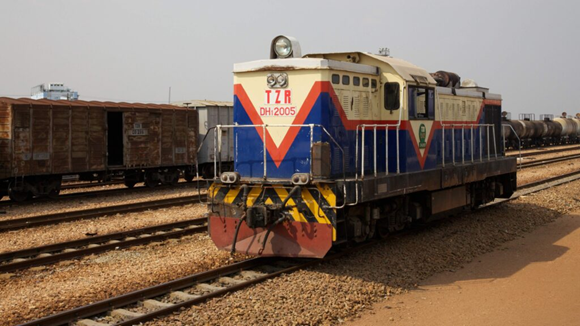
A symbol of China’s final return to the big African game was the signing in November 2025 of a $1.4 billion trilateral agreement between China, Zambia and Tanzania on the modernization of the TAZARA railway. This event took place during the historic visit of Premier of the State Council of the People’s Republic of China Li Qiang to Lusaka, the first visit of this level in the last 28 years. The project provides for the reconstruction of tracks and infrastructure, which should increase the capacity of the highway from the current 100,000 to 2.4 million tons per year.
This deal has deep geopolitical implications, representing Beijing’s direct response to the Lobito Corridor project supported by the United States and the EU, which connects DR Congo and Zambia with the Atlantic Ocean. The West is trying to reorient the export of critical minerals to the Atlantic, while China, by resuscitating TAZARA, maintains the flow of resources towards the Indian Ocean — into the sphere of its logistical dominance. It is noteworthy that despite Zambia’s high debt burden to China, African leaders are choosing new Chinese loans because of Beijing’s comprehensive approach. Unlike Western programs, China offers not only loans, but also localization of production: in addition to the railway, construction of a refinery and an energy complex has already been agreed in Zambia, as well as the creation of industrial zones with duty-free access to the Chinese market. Thus, by the end of 2025, China will successfully convert the vacuum left by the West into increased control over the continent’s key transport arteries.
Central Africa
The role of the Lobitu corridor in global competition for resources and strengthening Africa’s agro-industrial potential.
The Lobitu railway corridor project, worth over $6 billion, has moved from diplomatic statements to practical implementation, opening the stage of a large-scale transformation of logistics in South and Central Africa. Angola, DR Congo and Zambia, with the support of international financial institutions, have begun evaluating applications for the design and construction of the first sites; the start of work is scheduled for next year. The modernization of the 1,300-kilometer line should connect the region’s copper belt with the port of Lobitu and reduce the time for exporting raw materials from 45 to less than 15 days.
The concept of the corridor is evolving: from a purely raw material route, it is turning into a “development corridor”. The growth of agricultural production — the yield of corn and soybeans in Zambia increased by 28%, grain production in Angola increased by one and a half times — made the agricultural sector a key driver of investor interest. The African Development Bank has already allocated more than $200 million for agricultural workshops, and the projected turnover of the agricultural trade could reach $ 1.2 billion by 2035.
The project is developing against the background of global competition for infrastructure initiatives. Its promotion coincides with China’s plans to modernize the TAZARA railway, which increases the importance of Lobbying to diversify the region’s access to sea routes. For the USA and the EU (PGII initiative), the corridor has become a critical element of access to metals for the “green transition”, reducing dependence on Chinese routes.
The implementation model is no less revealing. The African Finance Corporation assumed the key primary risks — the preparation of a feasibility study and legal structuring, which allowed it to attract cautious Western capital. About $2.2 billion of commitments have already been secured, and work is underway to close the financing. Thus, Lobitu becomes a symbol of the new African subjectivity: the countries of the region position the project not as another raw material artery, but as a development tool and require partners not to lend, but to fully participate economically.
Strategic strengthening of Russia’s position in Central Africa: from military assistance to humanitarian influence.
In October–November 2025, Russia and the Central African Republic significantly strengthened their strategic partnership, shifting cooperation from informal structures to an official state format. This period became an important stage in the institutionalization of the Russian presence and the consolidation of Moscow as the main external guarantor of the stability of the regime in Bangui.
The main focus was the deepening of military cooperation. In October, Russia stepped up pressure on the CAR authorities, seeking a transition from a security model based on Wagner-affiliated units to the state-run Africa Corps format. Such a step should legalize the Russian presence and expand the channels of official interaction. However, the CAR authorities are in no hurry to completely abandon the previous mechanisms: Wagner remains embedded in the protection of leadership and the fight against armed groups, and an abrupt transition, according to Bangui, could weaken security on the eve of the elections.
The context of the elections has increased the importance of Russia. In November, the court allowed President Faustin-Arcange Touadera to run for a third term, which increased the need for stability guarantees and protection from possible protests. Russian instructors and Africa Corps are seen as a key element of security during this period.
Diplomatic support has also increased: Russia voted to extend the mandate of the UN peacekeeping mission in the Central African Republic, demonstrating its commitment to international mechanisms and legitimization of the current government. At the same time, humanitarian and educational cooperation is developing – the CAR has joined the Russian Teacher Abroad program, which strengthens Moscow’s cultural influence and contributes to a long—term presence in the country. Thus, in the fall of 2025, Russia significantly strengthened its position in the Central African Republic, from military and political support for elections to humanitarian initiatives. For Bangui, this means additional stability and control, and for Moscow— securing a strategic foothold in Central Africa.
South Africa
In October–November 2025, the political situation in South Africa was influenced by several factors at once: international events, internal political competition and rising social tensions. The key event was the holding of the G20 summit in Johannesburg, the first on the African continent. Despite the refusal of the United States, Russia and China to send official delegations, the meeting ended with the adoption of a final declaration, which the South African government presented as a diplomatic success. However, the boycott by the United States and their decision not to invite South Africa to the next summit, as well as to stop financial support, complicated the foreign policy situation, increasing pressure on the South African leadership.
In October, a new Unite for Change party was created in the domestic political field, the result of a merger of several opposition movements aimed at increasing competition before the 2026 municipal elections. In parallel, the work of the Madlanga Commission continued, investigating corruption and the influence of politicians on the judicial system, reflecting institutional problems and continuing public distrust of the justice system.
In the economic and infrastructural sphere, the government has taken steps to strengthen energy security: in November, it announced the renewal of the license for the operation of a nuclear power unit and the registration of new capacities for 1,401 MW with investments of over 30 billion RAND. These measures are aimed at a long-term solution to the electricity problems that have been undermining the country’s economic stability for several years.
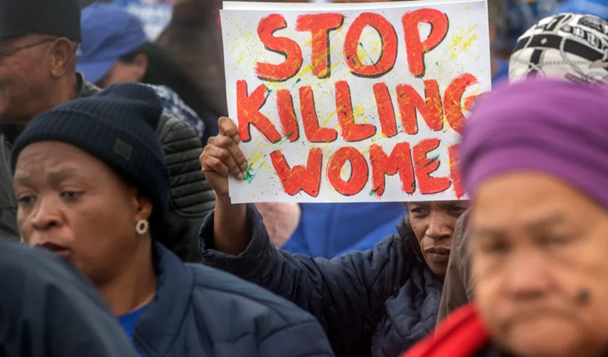
Meanwhile, social protests intensified: at the end of November, mass actions against gender-based violence took place across the country. Public pressure led to the recognition of the problem as a “national disaster,” which showed citizens’ dissatisfaction with the inability of the State to effectively address issues of women’s safety and social protection.
Thus, at the end of 2025, South Africa found itself at a difficult but dynamic political point. On the one hand, there are diplomatic achievements and attempts to modernize infrastructure; on the other, there are deteriorating relations with a number of Western partners, increasing social pressure and the need for political renewal. The country has to balance between the ambitions of a regional leader and internal systemic challenges, on which the stability of its political system and its international role depend.
Conclusion
Thus, in October–November 2025, the African continent consolidated its status as a key arena of global geopolitical transformation. The reporting period demonstrated the acceleration of the erosion of traditional Western influence, especially in the Sahel and East Africa, where the vacuum is rapidly being filled by new centers of power — Russia and China. At the same time, African states are demonstrating a growing subjectivity: they are moving from passive acceptance of external assistance to the formation of pragmatic alliances and tough bargaining for the terms of infrastructure projects (TAZARA, Lobitu corridor).
In parallel with the foreign policy diversification, internal turbulence is increasing. Socio-political crises are worsening in North and South Africa, caused by economic imbalances and the problem of the legitimacy of government. Attempts by the West to maintain control through financial pressure (Senegal, South Africa) or the creation of alternative logistics routes (Lobbying) run into the desire of regional elites for sovereignty and the search for partners offering comprehensive models of security and development without political conditions.
Further dynamics will depend on the ability of African leaders to convert external competition for the continent’s resources into domestic economic growth, while preventing their countries from becoming sites for proxy conflicts. In this regard, it is advisable to identify the following forecasts and development scenarios:
Scenario 1. “Sovereign integration and balance of power”:
Regional blocs (AGS, new alliances in the Maghreb) are successfully institutionalized, creating common economic and defense spaces. African countries are using the competition between China, Russia and the West to attract investments in processing and technology, while maintaining a multi-vector approach. Projects like TAZARA and Lobitu complement each other, turning the continent into a global logistics hub.
Scenario 2. “Block fragmentation and destabilization”:
Increased pressure from global players is leading to a severe split of the continent into opposing camps (pro-Western and pro-Eurasian). This provokes an escalation of frozen conflicts (Libya, DRC) and a series of defaults in economically vulnerable countries. Infrastructure megaprojects are becoming instruments of isolation rather than development, increasing dependence on external donors and provoking new waves of social instability.