Tensions and shifts: the escalation of the conflict with Venezuela and the right turn in Chile
Short description: The article analyzes the key political events in Latin America in October-November 2025. The period under study was marked by a sharp escalation of tension around Venezuela, where the Donald Trump administration initiated military pressure to oust President Nicolas Maduro. At the same time, the trend towards a right turn has strengthened in the region, expressed in the success of conservative candidates in the elections in Chile and Brazil, where the prosecution of ex-President Jair Bolsonaro ended. These processes reflect the deepening of the geopolitical divide and the internal reconfiguration of the political landscape of the countries of the region.
Preface
During the reporting period, Latin America became the scene of significant geopolitical and domestic political upheavals. The dominant trend has been the open confrontation between Venezuela and the United States, which has moved into a phase of forceful pressure and secret negotiations on Maduro’s resignation. Against the background of this instability, key countries in the region demonstrated a movement to the right: in Chile, the far-right candidate Jose Antonio Cast reached the second round of elections, and in Brazil, Jair Bolsonaro was imprisoned, which, however, did not stop the consolidation of the right-wing electorate. These events signal the end of the cycle of leftist dominance and Washington’s increasing influence in the region.
The escalation around Venezuela: sanctions, negotiations, and the threat of intervention The key event that determined the current geopolitical dynamics was the sharp deterioration of relations between the United States and Venezuela. The Trump administration, continuing Operation Southern Spear, launched a series of attacks on ships in the Caribbean, accusing them of drug trafficking. In response, Venezuela revoked the licenses of six foreign airlines, including Turkish Airlines, Iberia and LATAM, accusing them of participating in “state terrorism encouraged by the US government.”
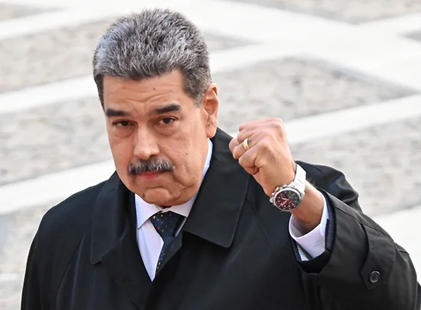
President of Venezuela – Nicolas Maduro
According to The New York Times, the confrontation was accompanied by closed-door negotiations, during which Maduro agreed to resign with a delay of “a couple of years.” However, the White House rejected the proposal because “any delay in Mr. Maduro’s abdication from power is unacceptable.” Despite the public denial of this information by Venezuelan Ministry of Internal Affairs Diosdado Cabello, the situation indicates Washington’s willingness to use all tools to change power in Caracas. The sources of the publication do not exclude that the next step may be CIA operations or direct military intervention.
There is a new political configuration in Chile and Brazil In parallel with the Venezuelan crisis, the trend towards a right turn has strengthened in the region. In the presidential election in Chile, where voting was mandatory for the first time, the far-right candidate Jose Antonio Cast reached the second round. His program, built on promises to “put Chileans first,” includes the construction of a “Border Shield” modeled on Trump’s wall and mass deportations of illegal immigrants. Since other right-wing candidates, Johannes Kaiser and Evelyn Mattei, have already called on their voters to support Kast, his victory in December looks almost guaranteed.
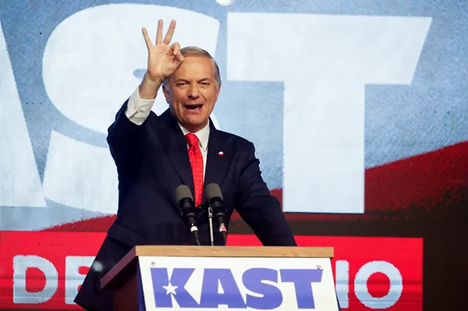
Presidential candidate of Chile – Jose Antonio Cast
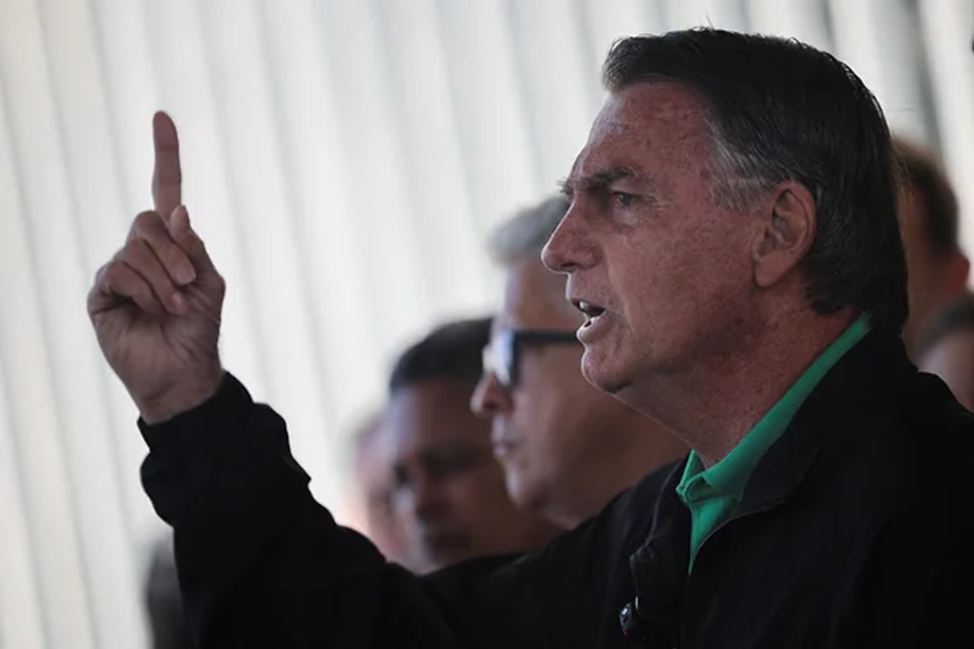
In Brazil, the Supreme Court has completed the trial of former President Jair Bolsonaro, sending him to serve a 27-year prison sentence for leading an attempted coup. Despite the symbolic significance of the verdict, it did not weaken the right-wing forces, but, on the contrary, provoked an increase in the ratings of the current president, Lula da Silva, who received political dividends from the confrontation with Trump, who tried to protect Bolsonara. According to experts, “the willingness to fight back against Trump provoked an increase in his personal rating,” which makes Lulu the favorite in the 2026 elections.
Other events: the climate agenda and domestic political crises Against the background of high geopolitical tensions in the region, other significant processes continued to develop. The United Nations Climate Conference has ended in Brazil, which resulted in the approval of 59 indicators for climate projects and the beginning of the development of a “fair transition” mechanism. At the same time, the final resolution failed to include the phrase “moving away from fossil fuels,” which demonstrates a new balance of power, where the tone is set not only by developed countries, but also by the “Global South.”

In Peru, former President Martin Vizcarra was sentenced to 14 years in prison for corruption, adding to the list of former leaders of the country serving their sentences. In Ecuador, President Daniel Noboa was defeated in a referendum where residents voted against lifting the constitutional ban on the deployment of foreign military bases, which limits the administration’s maneuvers to cooperate with the United States in the field of security.
Conclusion
Thus, during the reporting period, the contours of two key trends finally emerged in Latin America: the escalation of the conflict between the United States and Venezuela and the structural shift to the right in the largest countries in the region. The Trump administration’s forceful pressure on Maduro has created an unprecedented challenge to regional stability, while the success of the right-wing forces in Chile and the continued influence of Lula in Brazil point to a complex and fragmented political reconfiguration. These processes are leading to the formation of a new, more conflictual and dependent on Washington’s policy architecture of regional relations.
The further development of the situation will depend on whether Maduro manages to retain power in the face of growing pressure, and whether right-wing leaders will be able to consolidate their positions. In this regard, it is advisable to identify the following forecasts and scenarios of development:
• Scenario 1. “Forced stabilization”: The Trump administration manages to reach a diplomatic deal on Venezuela, which leads to a transitional government and the lifting of some sanctions. Right-wing governments in Chile, Argentina, and Brazil are forming a pro-American bloc that is stabilizing the region. • Scenario 2. “Protracted crisis”: The Maduro regime persists, and the US military pressure increases, leading to a humanitarian catastrophe and a new round of the migration crisis. Internal strife within the Brazilian right is destabilizing the region’s largest country, deepening the overall crisis.