“Electoral processes, security crises and regional solidarity
Short description: During the reporting period, key events in the region included the presidential elections in Honduras, the deepening humanitarian and security crisis in Haiti, and the continuation of energy problems in Cuba. At the same time, there is a strengthening of diplomatic solidarity between countries subject to external pressure and progress in judicial processes against transnational organized crime. These events demonstrate the complex set of internal challenges faced by the states of the region and their response to external factors, including U.S. policy and the activities of international criminal networks.
Preface
In December 2024 – January 2025, Latin America and the Caribbean became the scene of multidirectional processes. While competitive presidential elections were taking place in Honduras, a large-scale humanitarian catastrophe continued in Haiti, caused by the expansion of armed gangs. Cuba is facing another round of the energy crisis. At the same time, steps are being taken to consolidate the regional position on sovereignty issues, and the US courts are making progress in bringing to justice the leaders of international drug trafficking. These events highlight the combination of acute internal problems and the impact of the foreign policy context on the development of the region.
The electoral process in Honduras
The key domestic political event was the presidential election in Honduras. According to data from the National Electoral Council (CNE) on December 3, after processing 64.7% of ballots, the candidate from the center-right Liberal Party, Salvador Nasralla, is in the lead, ahead of conservative candidate Nasri “Tito” Asfura, who is supported by US President Donald Trump. The gap is about 7 thousand votes. The elections are held in one round based on the principle of a simple majority. More than 3 million people took part in the voting. The counting of votes continues. Both major candidates are in favor of restoring diplomatic relations with Taiwan. Nasrallah focuses on fighting corruption and increasing the effectiveness of government, while Asfura focuses on business development, infrastructure projects and strengthening ties with the United States.
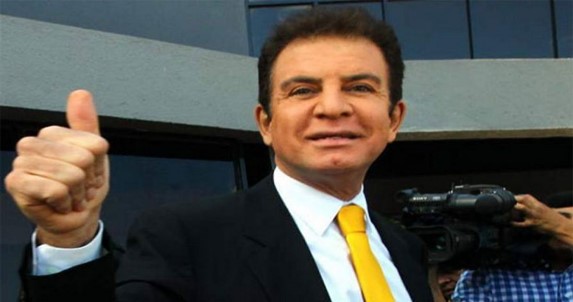
Salvador Nasrallah is a candidate for President of Honduras
The security crisis and humanitarian disaster in Haiti
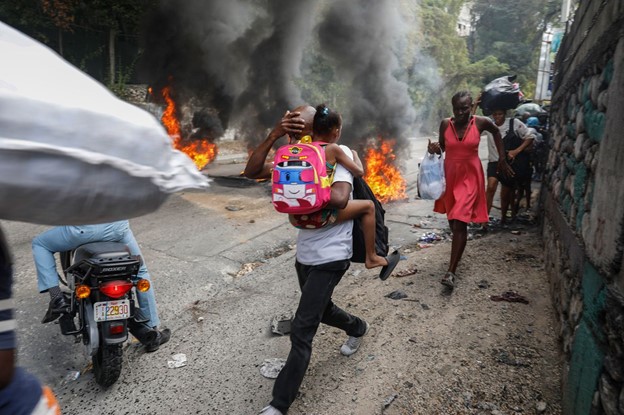
The situation in Haiti continues to deteriorate rapidly. Armed gangs have established control over half of the central Artibonite region after large-scale attacks on the cities of Bercy and Pont Sonde. Mass killings of civilians, arson attacks on homes and forced displacement of the population are reported. Police unions state the loss of control over large departments, calling it the greatest mistake in the field of security. The main police force and the Kenyan-led international mission are concentrated in the capital, Port-au-Prince, which is also heavily controlled by gangs. More than half of the population is facing hunger due to road closures, and the number of internally displaced persons has reached a record 1.4 million. One of the key forces responsible for the violence is the Gran Grif gang led by Lakson Elan, against whom international sanctions have been imposed. The authorities are not in control of the situation, which leads to an increase in vigilante sentiments among the desperate population.
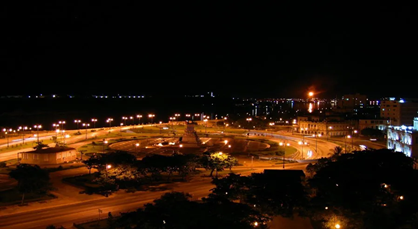
The energy crisis in Cuba Cuba is experiencing severe systemic power outages. At the beginning of the reporting period, the entire western part of the country, including Havana and the provinces of Artemisa, Mayabec and Pinar del Rio, was disconnected from the national grid. The authorities announced the start of restoration work. The crisis is chronic: in previous days, the shutdown intervals in Havana reached 8-10 hours. The official reasons are related to the deterioration of infrastructure and lack of energy resources, which, according to the Cuban leadership, is aggravated by US sanctions.
Prosecution of drug cartel leaders and regional solidarity
A significant step has been taken in the field of international justice: the son of drug lord Joaquin “El Chapo” Guzman, Joaquin Guzman Lopez, intends to plead guilty in a US federal court on charges of drug trafficking, money laundering and weapons possession. His brother, Ovidio Guzman, had previously pleaded guilty. This indicates Washington’s ongoing efforts to combat the Sinaloa Cartel, which is accused of supplying fentanyl to the United States. At the same time, there is a strengthening of diplomatic alliances among countries opposed to US policy. The Government of Nicaragua has sent a message to Venezuelan President Nicolas Maduro, expressing unconditional support and solidarity to the Venezuelan people “against the backdrop of emerging challenges in the Caribbean region.” The message stresses the condemnation of the deployment of US military forces to the region under the pretext of combating drug trafficking.
Conclusion
Thus, the reporting period demonstrated the contrast between democratic processes, as in Honduras, and acute crises of statehood, as in Haiti. The region’s problems are multi-layered: from the basic issues of energy security (Cuba) and the physical survival of the population (Haiti) to the complex challenges of sovereign development under external pressure (Nicaragua, Venezuela). At the same time, there remains a significant influence of external factors: from the electoral preferences of the US president to the judicial system prosecuting drug cartel leaders. Further developments will depend on the outcome of the elections in Honduras, the ability of the international community to provide effective assistance to Haiti, and the dynamics of relations between the countries of the region and non-regional Powers. In this regard, it is advisable to identify the following forecasts and scenarios of development:
Scenario 1. “Consolidation of multi-speed regional architecture”
This scenario assumes that the main actors will prefer pragmatic solutions. The election results in Honduras will be legitimized, and the new government will be forced to maintain working relations with all key partners. The crisis in Haiti will remain localized due to an increase in the contingent of international forces, which will stabilize key points, but will not lead to the full restoration of the sovereignty of the central Government. The energy and economic difficulties of Cuba, Nicaragua and Venezuela will be mitigated by diversifying foreign economic relations, including with Asian partners, while maintaining the existing US sanctions regime. The fight against transnational crime will remain within the framework of current legal procedures. As a result, several overlapping areas of cooperation (trade, law enforcement, and political) will form in the region with different composition of participants, where the influence of the United States will remain significant, but not dominant in all aspects.
Scenario 2. “Structural destabilization and bipolarization” In this scenario, internal crises reach a tipping point, which leads to a drastic reconfiguration of the balance of power. Contesting the election results in Honduras could provoke prolonged instability. The complete or partial failure of the international mission in Haiti will lead to an uncontrolled spread of the influence of armed groups and a humanitarian catastrophe, having a destabilizing effect on the entire Caribbean. The deepening economic difficulties in a number of countries may lead to socio-political upheavals and regime change. In response to increased external pressure, a number of states (Venezuela, Nicaragua, Cuba) may formally strengthen strategic alliances with non-regional centers of power such as China or Russia, including the possible deployment of military facilities. This will cause a mirror tightening of the policy of the United States and its allies in the region, which will lead to the formation of two competing blocs, the curtailment of multilateral mechanisms and an increase in the risks of direct low-intensity conflicts.