The African continent is once again attracting close attention. If not long ago Africa was predominantly discussed in terms of global segregation and hierarchy, and even earlier — from the perspective of colonial / neocolonial policy — today it is considered through the lens of the aspirations of the Global South and the relatively near future, when the region could potentially become an advanced economic platform. There are grounds for this, supported by data on GDP growth rates, and the availability of natural and demographic resources. Africa ranks third in crude oil reserves (after the Middle East and Latin America), similarly in natural gas reserves (after the Middle East and Europe), and second in uranium reserves (after Australia). Nigeria is the largest oil-producing country in Africa (around 2.5 million barrels per day), but it loses more than 5 billion dollars annually due to oil theft (150 thousand barrels per day). Angola is the second largest oil producer (around 1.8 million barrels per day). South Sudan, Niger, Ghana, Uganda, and Kenya are also oil-producing countries, although their production levels are significantly lower. In total, Africa produces 10 million barrels per day. Thirty percent of oil and gas fields discovered in recent years are located in countries south of the Sahara. An important factor for the development of Africa’s energy sector is that most of the funds invested in the energy sector of countries south of the Sahara since 2000 have been directed toward developing export capacities rather than the domestic market.
Africa accounts for more than 40% of the world’s cobalt, manganese, and platinum reserves — key minerals for battery production and hydrogen technologies. A significant share of global production is concentrated in South Africa, the Democratic Republic of the Congo, and Mozambique. Africa possesses 60% of the world’s best solar resources, yet only 1% of them are utilized for solar energy. There is enormous potential for hydrogen production. However, the state of the energy sector in African countries remains unsatisfactory. Their electricity supply is rated the lowest among all other regions of the world. The situation is especially challenging in countries south of the Sahara — more than 600 million people lack access to electricity and clean cooking technologies. Average electricity production per person is less than 100 kWh per year. Among the reasons and indicators of this situation are a lack of qualified personnel, smuggling of natural resources, inefficient management of revenues from natural, including energy, resources, weak energy access for the population (“energy poverty”), and insufficient use of renewable energy sources (RES).
At the same time, one of the promising projects in Africa’s energy sector is the African Clean Energy Corridor (ACEC). This is a regional initiative aimed at accelerating the development of renewable energy (RE) potential and cross-border RE trade within the framework of the East African Power Pool (EAPP) and the Southern African Power Pool (SAPP). The initiative was approved at the Fourth Assembly of the International Renewable Energy Agency (IRENA) in January 2014. Currently, it involves more than 30 governments, regional organizations, development partners, and financial institutions. By creating a larger regional electricity market, the ACEC can attract investments to meet 40–50% of electricity demand in the EAPP and SAPP regions by 2030. Joint efforts will help diversify resource availability, enhance energy security, promote investment opportunities, and create jobs. However, the implementation of the project requires significant investments. On one hand, there are prospects to expand the pool of investors through BRICS countries, and BRICS instruments (for example, the New Development Bank), as the union and its participants are now actively focusing on Africa. On the other hand, one potential outcome of the ACEC is the provision of a low-carbon future. In this regard, the interests of BRICS countries that are major hydrocarbon exporters (Russia, Iran, UAE, Saudi Arabia — although the latter has not yet fully joined BRICS operations) may be affected.
The continent has significant inter-country and regional differences in the energy sector. For example, Ghana, Kenya, and Rwanda are focused on achieving universal electricity access by 2030. In contrast, rural electrification in Niger is very low. The countries with the largest populations lacking electricity access are Nigeria, the Democratic Republic of the Congo, Ethiopia, Tanzania, and Uganda. The country with the lowest electrification level in the world is South Sudan (less than 8% of the population has access to electricity, although the country is an oil producer). Nearly a quarter of Africans rely on electricity sources not connected to the national grid. Rural residents use off-grid energy sources twice as often as urban residents. Electricity is the foundation for Africa’s emerging energy systems, which increasingly operate on RE. The most popular alternative electricity sources are solar panels (62%), generators (16%), and batteries or power blocks (9%). In Africa’s electricity generation mix, the largest share of installed capacity is natural gas-based, but the largest share of greenhouse gas emissions comes from coal-fired power plants. The northern and southern parts of Africa rely more on fossil fuels for electricity generation, while other regions are dominated by RE and gas. Characteristic problems include frequent outages and instability in Africa’s energy systems, the highest transmission and distribution losses in the world due to outdated and inadequate grid infrastructure. In most African countries, electricity tariffs are lower than the actual costs of production, transmission, and distribution, resulting in lost revenue for service providers, particularly energy companies. This leads to several negative consequences, including a lack of incentives and funding to attract new consumers, insufficient investment in generation and grid infrastructure, and high risk for electricity buyers.
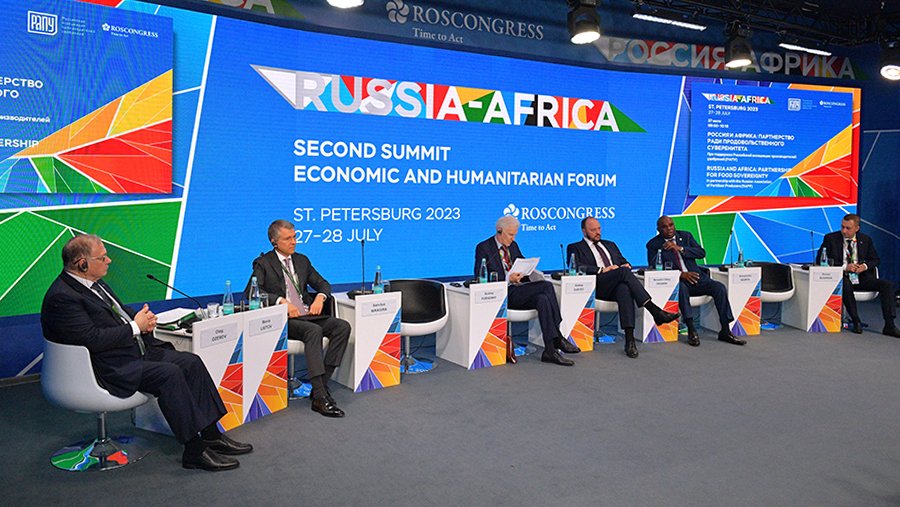
Accordingly, it can be said that many African countries need to establish or expand mutually beneficial partnerships in the energy sector. Issues of energy cooperation are also discussed at the Russia–Africa summits and the Russia–Africa Economic and Humanitarian Forum. The Association for Economic Cooperation with African Countries (AECCA) has been established. One of the focuses is the development of nuclear energy on the continent. Promotion of Russian-Chinese partnership in this area is also possible, with China potentially acting as the main investor and Russia as the supplier of technologies and specialists. China’s activity in Africa is particularly high. Its energy companies play a special role in hydropower and conventional energy, but Europeans continue to dominate in renewables. At the same time, it is noteworthy that the most expensive project in Africa is considered to be the construction of the El Dabaa nuclear power plant (the second on the continent) in Egypt by the Russian state corporation Rosatom. According to the International Energy Agency’s 2022 report, Egypt has good potential for low-carbon hydrogen production, which may also attract Russia’s interest.
At present, the majority of projects in Africa are in the field of renewable energy (RE), with traditional renewable energy projects (hydropower) being outnumbered by projects in other RE sectors (solar, wind, etc.). However, in terms of installed capacity, hydropower projects still surpass the others. Bioenergy, mainly represented by solid fuels and waste, is a traditional energy sector in Africa and ranks third in terms of installed capacity among RE sources excluding hydropower; however, its growth rate is the lowest. The largest capacities are found in South Africa, Ethiopia, Sudan, Eswatini, and Zimbabwe. Almost all of Africa’s geothermal capacity is located in Kenya, with some in Ethiopia; plans exist to develop it in Djibouti, Eritrea, Tanzania, and Uganda.
Experts consider the following areas to be promising for Russian energy companies: nuclear energy; transmission and distribution networks; new technologies for improving energy system efficiency and energy conservation; implementation of smart grid concepts, flexible grids, and digital substations; renewable energy and hydropower generation; and distributed energy. Nuclear power technologies, particularly small modular reactors (SMRs), are seen by experts as a reasonable strategic solution for the governments of countries in the region. This can provide the necessary capacity, cost-efficiency, scalability of the energy system, and economic independence. In North Africa, nuclear energy development has equally strong prospects, but the context and economic drivers are different. Countries in this region are gas producers and exporters, for example Egypt, where Rosatom is building four VVER-1200 reactors. For them, the development of nuclear energy is a way to ensure a predictable fuel balance and export revenue flow. Constructing nuclear power plants helps meet growing electricity demand while freeing up gas for industrial and petrochemical development within the framework of “domestic market – exports – industry.”
Among African countries in general, Egypt, South Africa, and Nigeria may be of particular interest to Russia.
South Africa is one of the largest economies on the continent and a country with one of the highest levels of electricity access in Africa. Electricity is widely used in the industrial, commercial, and residential sectors. The majority of electricity in South Africa is traditionally generated from coal, which is unsurprising given that the country ranks seventh in the world in coal production. At the same time, there is a trend of gradual depletion of the most important easily accessible coal deposits. South Africa also ranks seventh in the world in total coal power plant capacity. For a long time, the sector has faced a lack of investment in expanding production capacity and updating its fixed assets. Increasing electricity consumption leads to accelerated wear of equipment, which cannot be replaced quickly enough due to insufficient funding. This funding shortage has also affected the implementation of new projects. A characteristic feature of South African electricity is its high degree of monopolization. The largest company, Eskom, is also the continent’s largest electricity producer. The monopoly accounts for over 90% of all electricity supplied to end consumers. Eskom operates the national transmission infrastructure and owns the country’s hydro, gas, the only nuclear, and most coal power plants. Additionally, Eskom supplies electricity to the Southern African Development Community (SADC) countries. Almost all electricity produced in South Africa (91%) is consumed domestically, 4% is imported, and 5% is exported. There has been a significant increase in electricity tariffs, with average household rates rising the fastest in recent years.
The situation is worsened by electricity theft through unauthorized connections to the grid and widespread non-payment by consumers. High transmission losses and a low level of technological development are typical for South Africa’s power sector, as in other African countries. In fact, South Africa has been experiencing a national-scale energy crisis since 2007 (including rolling blackouts and other disruptions). The plan developed in South Africa includes, among other measures, the creation of new solar and wind generation capacity, construction of gas-fired power facilities, personnel training, and improvement of technological processes. Russia can also contribute to its implementation, including in the field of green energy — for example, Unigrin Energy is building a 115 MW solar park in South Africa and is ready to scale up solar energy use in the region.
The electricity consumption levels in Egypt and South Africa are 1,500 and 3,600 kWh per capita per year, respectively.
For Nigeria, the priorities are the use of Russian expertise and competencies for the efficient development of resources and project financing. The issues of using gas, including LNG, as a convenient fuel for a cost-effective and environmentally friendly energy transition are also addressed.
Russian companies such as Tatneft, Inter RAO – Export, and PJSC SUEK have expressed interest in Nigeria.
Political risks have a significant impact on the state of the energy markets in African countries and the prospects for cooperation with Russia. The situation in Egypt and South Africa is currently relatively stable in this regard. However, there are also serious negative factors. In South Africa, the ruling African National Congress (ANC) lost the support of a substantial portion of the population and its parliamentary majority, which it had held for the past 30 years, as a result of the 2024 elections. Although the ANC, receiving around 40% of the vote, remains the largest political party and the main political force in the country, it now has to enter coalition agreements, increasing variability in decision-making, including in policy development and adoption. Moreover, the ANC has effectively split, initiated by former leader Jacob Zuma (2009–2018), who was accused of corruption. At the end of 2023, he created his own party, Umkhonto we Sizwe (translated from Zulu as “Spear of the Nation”), which intensified the election campaign. Many experts attribute the ANC’s loss of voter trust to accumulated problems in the economy and social sphere: high unemployment (33%, among youth – 44%), inflation, property inequality (South Africa ranks first in the Gini index), crime and corruption, degradation of the energy system, and social and municipal services. On the foreign policy front, South Africa’s position is complicated by the unstable situation in neighboring countries (Mozambique, Eswatini, Zimbabwe), the ongoing shifts in the balance of power across the African continent, and challenges to its status and role by other African states.
In Egypt, a prolonged period of revolutionary upheavals ended in 2014 with the establishment of President Abdel Fattah el-Sisi’s rule. According to experts, there is no significant political opposition to him. The population is more concerned with socio-economic issues, including a high inflation rate (over 30%). Egypt is heavily dependent on IMF loans. Cairo is also concerned about developments in the Gaza sector, although the escalation of the Palestinian-Israeli conflict simultaneously increases Egypt’s role as a potential mediator and helps redirect voter dissatisfaction outward. On the foreign policy front, Egypt also faces challenges from pirates and the Houthi movement, which create additional sources of regional tension.
The situation in Nigeria is even more complex. The country is often cited among Africa’s economic leaders and is the most populous on the continent. On the other hand, it experiences high inflation, unemployment above 30%, currency devaluation, and a rapid rise in the cost of living, with 63% of the population living in poverty. This has led to mass protests and unrest. The country is characterized by “gerontocracy” and a low level of trust in the government (around 25%, one of the lowest in Africa). The crisis state of the country is reflected in an unprecedented rise in crime and terrorism. In the southeast, separatists advocating for the independence of the Republic of Biafra are active; in the south, pirates; in the northeast, Islamist groups Boko Haram and the Islamic State (both banned in Russia); and in the northwest, organized banditry. The so-called Middle Belt has become a zone of conflict between herders and farmers over water and land. The religious factor is also significant. The country is divided between oil-rich Christian southern states and the poor Muslim north, which simultaneously holds the largest portion of the electorate. In recent years, the principle of presidential rotation (zoning) has been disrupted. According to this system, every eight years the highest state office should alternate between representatives of the Muslim north and the Christian south. In addition to internal challenges, Nigeria faces serious risks due to instability in the broader Sahel-Saharan region, which has experienced the highest levels of terrorist threat in recent years. Nigerian authorities attempted to organize an intervention by the Economic Community of West African States (ECOWAS) in Niger following the military coup there in 2023. This attempt triggered significant domestic discontent. Russia is concerned about Nigeria’s pro-Western orientation, which likely explains its reluctance to express a clear intention to join BRICS. The high terrorist threat may serve as the main limiting factor for energy cooperation with Nigeria, although there are certain niches for collaboration in the electricity sector.