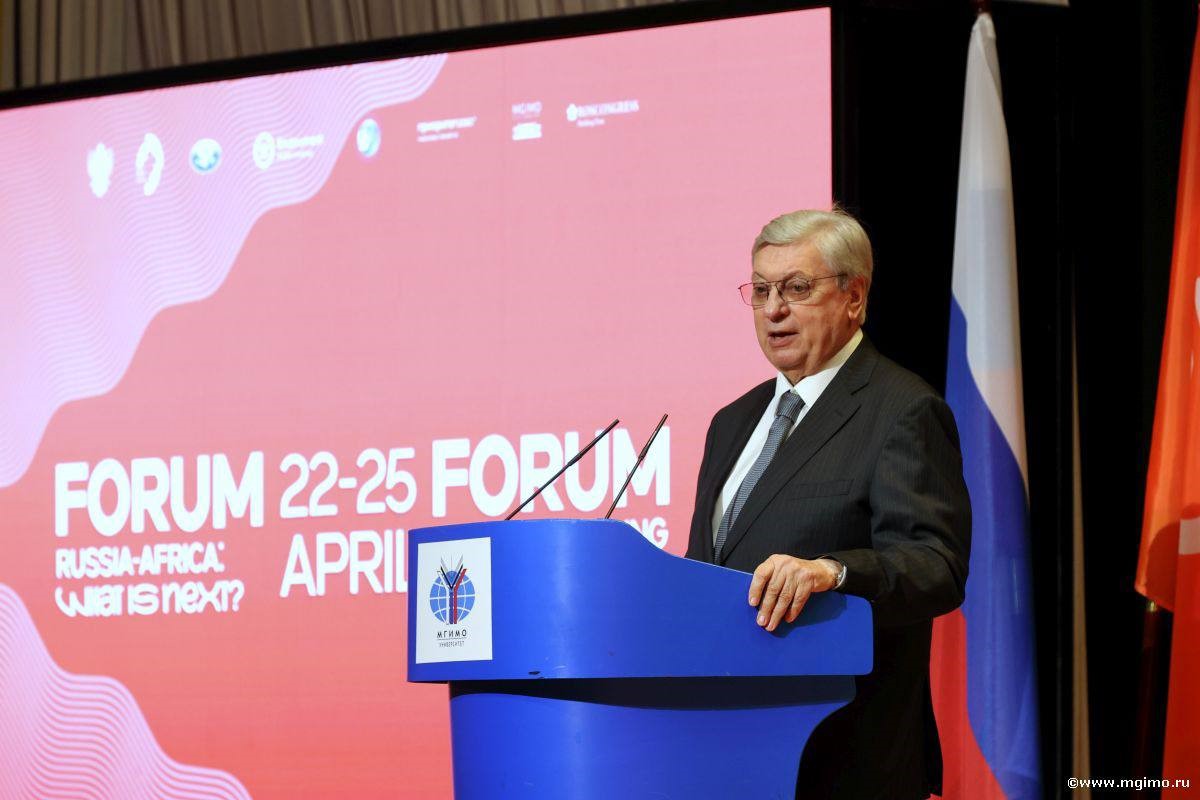
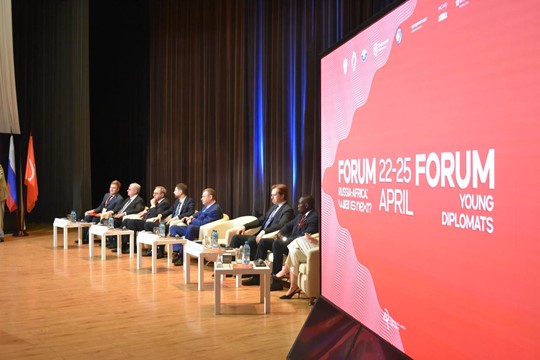
To monitor current narratives in the Russia–Africa dialogue, the team from the Autonomous Nonprofit Organization “United World” participated in the International Forum “Russia–Africa: What’s Next?”. The forum took place from April 22 to 25 at MGIMO and focused on pressing issues in Russia–Africa relations across political, economic, and humanitarian spheres. As a result of the participation, the main prospects for the development of relations between Russia and African countries were identified, which are discussed in detail in this article.
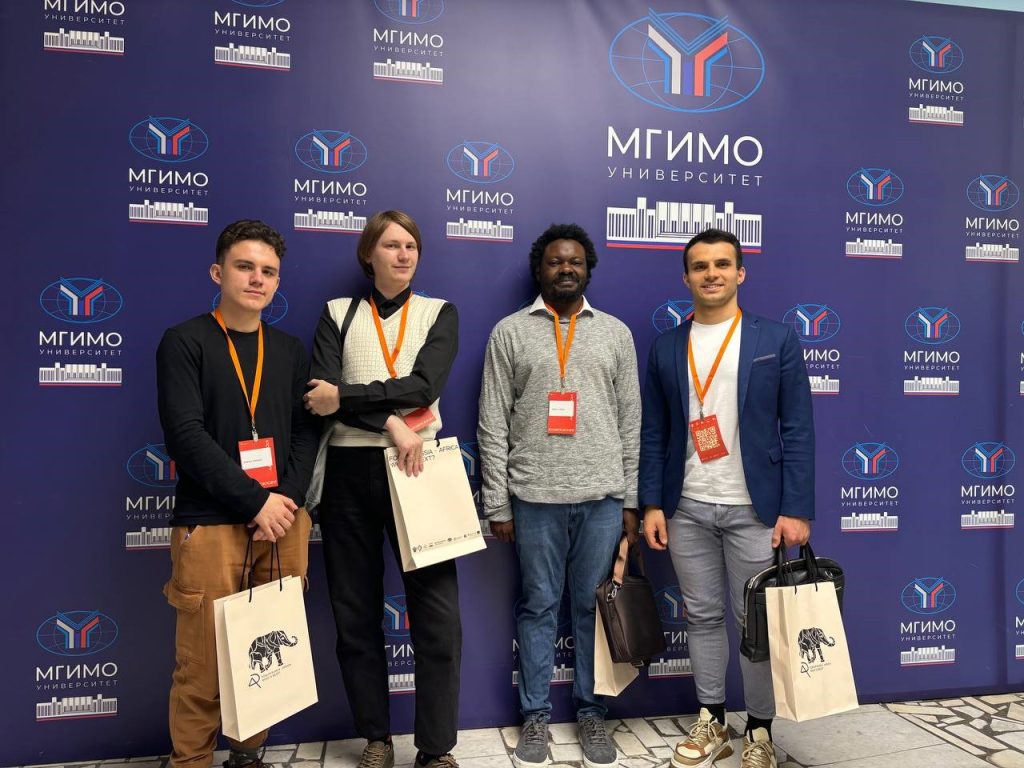
From April 22 to 25, 2025, Russia hosted the forum “Russia–Africa: What’s Next?”, serving as an important platform for discussing the prospects of cooperation between Russia and African countries. The event brought together politicians, diplomats, experts, media representatives, and youth from 41 African states to discuss strategies for strengthening partnerships in the emerging multipolar world. The forum continued the agenda of the Russia–Africa summits of 2019 and 2023, which established the framework for long-term dialogue based on the principles of equality and mutual respect for sovereignty.
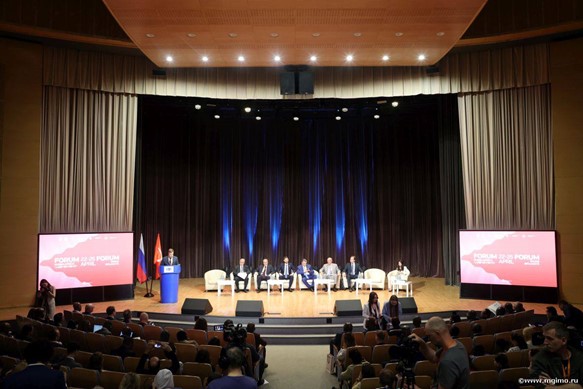
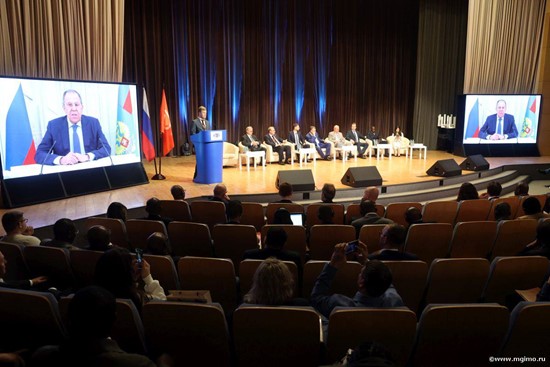
High-ranking representatives from political circles in Russia and African countries emphasized Africa’s strategic role as the continent of the future and highlighted Russia’s special role in the region’s development in line with the national priorities of African states. Participants included Russian Foreign Minister Sergey Lavrov, Russia’s Permanent Representative to the UN Vassily Nebenzya, MGIMO Rector Anatoly Torkunov, Senator of the Russian Federation from the Republic of Crimea Sergey Karyakin, former Vice President of the Seychelles Vincent Meriton, Ambassador Extraordinary and Plenipotentiary of the Republic of Cameroon to Russia Mahamat Paba Sale, Chairman of the Union of African Diasporas in Russia Kinfu Zenebe Tafesse, and many others. The politicians also highlighted the importance of youth participation in shaping the present and future of the Russia–Africa dialogue. For example, S. Lavrov specifically noted that “Africa is the future, and the future is created by youth,” emphasizing the need to involve young generations in building strong ties. The forum covered a wide range of topics: from countering neocolonialism and reforming global institutions to developing economic, educational, and cultural cooperation. Special attention was given to information security and the establishment of a Russia–Africa media dialogue, aimed at overcoming the dominance of Western media in Africa, which often shapes a one-sided perception of reality among the African population.
The event served not only as a platform for political and economic dialogue but also as a space for cultural communication. The participation of youth activists, students, and journalists from African countries — including representatives from Guinea-Bissau, South Africa, Ethiopia, Senegal, Congo, Burkina Faso, and many others—highlighted the importance of grassroots dialogue in building trust between peoples. Initiatives such as the Russia–Africa Network University, the House of Africa in Chechnya, the “Adventures of Africans in Russia” project, Russian university programs teaching the Russian language in Africa, and youth media centers served as examples of practical steps aimed at bringing Russia and Africa closer together. The forum “Russia–Africa: What’s Next?” outlined the further directions for achieving the ambitious goal of creating a solid foundation for strategic partnership, capable of addressing the challenges of the 21st century and ensuring sustainable development for both sides.
Economic, Technological, and Scientific–Educational Cooperation
As noted by Russian Foreign Ministry representative Tatyana Dovgalenko, Africa, with its young and rapidly growing population, is the future center of global development. With a population of 1.5 billion people, projected to exceed 2.5 billion by 2050, the continent possesses a unique human potential, distinguished from the demographic trends of India or China by the predominance of its young population.
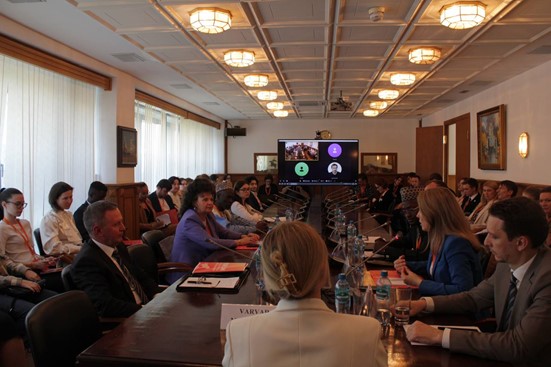
Economic, educational, and humanitarian initiatives form the core of the Russia–Africa partnership. In 2025, trade between Russia and Africa reached $22.5 billion, but as T. Dovgalenko noted, this is insufficient, and further development is needed. The program “Agenda 2063: The Africa We Want” is supported by Russia through investments, mutual settlements, and integration projects within African Union structures such as ECOWAS, SADC, and the Association of Sahel States. Educational cooperation is also expanding: the number of African students in Russian universities grew from 17,000 in 2019 to 32,000 in 2025. Successful initiatives, such as the transfer of medical technologies and Rosatom programs, demonstrate the potential for Africa’s technological and industrial development. For instance, the completion of the El-Dabaa Nuclear Power Plant in Egypt is planned for 2029, and in the Democratic Republic of Congo, a cascade of seven Grand Inga hydroelectric power stations is currently under construction. “Digital” assets are also actively developing, including the information project Africa 360, which aims to show the world the real Africa and reveal the potential of its future. Additionally, within the framework of BRICS, Russia supports African countries in creating new financial and transport systems, including the BRICS payment system, to diversify global financial flows.
Combating Neocolonialism
Forum participants particularly emphasized that the formation of a multipolar world is becoming a defining factor in contemporary international relations, with Africa serving as one of its key pillars.
Amid global geopolitical transformation, Russia positions itself as a partner to African countries, supporting African sovereignty and jointly countering new forms of neocolonialism. These include economic domination through the imposition of unfair trade agreements, political interference such as the overthrow of “unfavorable” regimes and the undermining of sovereignty, as well as a particular form of neocolonialism — information propaganda, manifested in the manipulation of public opinion through media and digital platforms. Drawing on the historical experience of the USSR in supporting anti-colonial movements, Russia offers Africa equal partnership based on respect for culture, language, and national interests. Russia’s Permanent Representative to the UN, Vassily Nebenzya, emphasized that the foundation of these relations was laid during the Soviet era, when support for decolonization inspired African peoples in their struggle for independence. Today, Russia advocates for the reform of global institutions such as the UN Security Council, proposing to grant Africa two permanent and three non-permanent seats to address the continent’s underrepresentation. It is also notable that on December 4, 2024, the UN General Assembly adopted the resolution “Eradication of Colonialism in All Its Forms and Manifestations”, developed by the Group of Friends in Defense of the UN Charter under Russia’s leading role. This resolution declares zero tolerance for new forms of neocolonialism and reflects Russia’s commitment to helping African peoples affirm their identity. As African politician Vincent Meriton noted, unlike Western countries, Russia builds relationships based on cooperation rather than exploitation, aligning with the interests of African countries striving for their own identity. This perspective was echoed by Pavel Seleznev, Dean of the Faculty of International Economic Relations at the Financial University, who stressed that Russia seeks to engage with Africa on the principles of equality and fairness.
Information Propaganda
However, achieving equality and fairness requires creating conditions of transparency and objectivity in Africa’s information space, which is currently largely shaped by Western countries. Consequently, one of the central topics of the forum “Russia–Africa: What’s Next?” was combating information propaganda as a form of neocolonialism in the media sphere, which hinders objective coverage of Russia–Africa relations. As noted by Maxim Reva, Deputy Chief Editor of the African Initiative news agency, Russia significantly lags behind the United States in shaping the information agenda in Africa. American diplomats, armed with clear talking points, respond quickly to events, whereas Russian officials often find themselves unprepared for media challenges. This asymmetry allows Western media to dominate the African information space, creating one-sided narratives that undermine trust in Russia.
According to Svetlana Zagorskaya from RIA “Rossiya Segodnya”, informational neocolonialism manifests in the use of media as a tool of manipulation. Western outlets such as BBC and CNN portray Russia as a threat, a narrative especially prominent in countries of East and West Africa. Lyubov Sakhno from TASS emphasized that fake news poses a serious problem for Africa, where access to reliable information is limited. Distorted reports about Russian policies or economic projects in Africa increase distrust and hinder cooperation. Overall, according to experts, despite the growing partnerships between Russian and African media, the primary informational environment in Africa is still shaped by Western media, which significantly misrepresent Russia and create false perceptions of the country among African audiences.
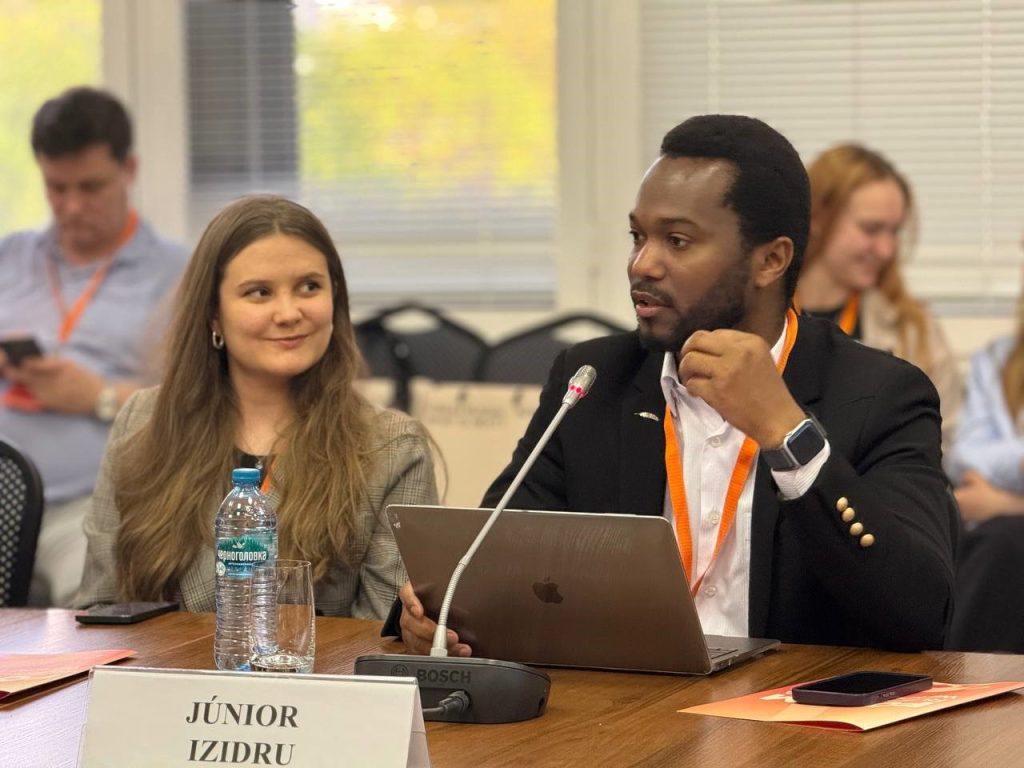
In response to these challenges, the forum outlined ways to counter information propaganda and identified directions for joint efforts. For example, TASS, leveraging its reputation as a reliable agency and providing news feeds free of charge to 400 African media outlets in six countries, plans to expand its presence to ten more countries, including Senegal, Algeria, and Ethiopia. As Svyatoslav Shchyogolev, Head of RT’s African Department, explained, the agency is actively developing seven offices in Africa and collaborates with the African Broadcasting Union to exchange content. Various Russia–Africa initiatives, including the youth media center “Russia–Africa” led by Da Silva Teixeira Junior from Guinea-Bissau, aim to create an alternative information space. Teixeira’s proposal to establish a Russia–Africa Center for Information Security highlights the need for a systematic approach to combating fake news. These efforts, supported by educational sessions for African journalists and bloggers with the assistance of the Gorchakov Fund, TASS, RIA “Rossiya Segodnya”, and RT, lay the foundation for strengthening Russia’s media influence in Africa — an effort critical for promoting a multipolar agenda and building mutual trust.
The Role of Youth
Youth is emerging as one of the key driving forces in the Russia–Africa dialogue, a theme prominently reflected at the forum “Russia–Africa: What’s Next?”. As Nikolay Petrov from TASS emphasized, the younger generation is tasked with building the future of Russia–Africa relations on the solid foundation laid by the 2019 and 2023 summits. The participation of African students, activists, and journalists from 51 countries at the 2024 World Youth Festival (WYF), as well as plans for the WYF gathering in Nizhny Novgorod in September 2025, which will also include representatives from many African countries, demonstrates the growing role of youth diplomacy. The forum highlighted that youth-led initiatives in education, media, and cultural exchange can fill the “international vacuum” of mutual understanding, as noted by Dmitry Ivanov, Director of the WYF Directorate ANO.
Educational programs occupy a central role in youth cooperation. As noted by Sergey Surovtsev, Vice-Rector of MGIMO, the university trains students from 16 African countries, and their numbers are growing each year. Saint Petersburg State University offers courses in Russian language and agriculture in Senegal, Algeria, Tanzania, and other countries, adapting programs to local languages such as Swahili. The Russia–Africa Network University, highlighted by Maxim Zalyvsky and Konstantin Trinchenko from the Ministry of Education, conducts joint scientific research and funds projects of up to 10 million rubles. Another notable initiative is the collaboration between the major pharmaceutical company Promomed and Mordovian State University named after N.P. Ogarev, which provides African students with quotas and practical training at the Mordovian pharmaceutical enterprise AO Biokhimik during their studies. Also significant is the “Russia–Africa” youth media center, led by Da Silva Teixeira Junior from Guinea-Bissau, which serves as a platform for youth cultural and informational exchange.
In addition, cultural, mass, and sporting events help strengthen friendly relations between Russia and Africa. Events such as the “Games of the Future” cyber-event and the BRICS Sports Games provide high-quality platforms for the younger generation to showcase and develop their skills and abilities.
It is also important to note the significant role of youth diplomacy, which goes beyond academic programs and encompasses creative and community projects. These initiatives are driven by young civil servants, journalists, designers, and scientists, as highlighted during their participation in various events, particularly within the framework of International Friendship Clubs under the auspices of the World Youth Festival.
New Platforms for Cooperation and the Significance of the Forum
The forum “Russia–Africa: What’s Next?” served not only as a platform for discussing current challenges but also as a catalyst for the institutionalization of Russia–Africa partnership. As noted by Russian Foreign Ministry representative Tatyana Dovgalenko, the forum helped shape the agenda for an interministerial conference in Africa in 2025 and the third Russia–Africa summit in 2026, which will take place on the African continent for the first time. These events aim to strengthen the framework of cooperation established by the 2019 and 2023 summits and elevate the dialogue to a new level. The forum demonstrated that the demand for such interaction formats is growing, as they allow for the consolidation of efforts in countering neocolonialism, promoting multipolarity, and implementing the ambitious “Agenda 2063”.
The significance of the forum lies in fostering the Russia–Africa dialogue, which is a necessary condition for creating new platforms for cooperation. Initiatives such as media forums within BRICS, proposed by TASS, and the expansion of the BRICS TV network aim to establish a unified information space that counters Western propaganda. Youth projects, including the Russia–Africa Network University and Russian language study centers in Angola, Ethiopia, and Kenya, strengthen cultural and educational ties. Plans to open BRICS Houses in 18 Russian regions and abroad, announced by Konstantin Klimenko, Rector of the Eurasian International University, highlight the potential for a decentralized dialogue. The forum also supported Klimenko’s idea of introducing a BRICS Student Card, which would provide young people from African countries with access to educational and professional benefits, further enhancing the engagement of the new generation.
Thus, the agenda of the forum “Russia–Africa: What’s Next?” clearly established that the future of Russia–Africa relations should be built on the principles of equality, respect for sovereignty, and mutual benefit. African politician Vincent Meriton emphasized that Africa, relying on support from Russia and BRICS, is ready to defend its national interests and chart its own path of development. Russia, in turn, offers not only economic and technological assistance but also a partnership model free from exploitation, contrasting with Western approaches. The forum outlined the strategic direction of Russia–Africa partnership — creating a sustainable framework for relations capable of addressing global challenges and ensuring the prosperity of both sides. Implementing the ideas presented will require further coordination, but it is already clear that Russia–Africa cooperation is becoming an integral part of the multipolar world.