Nepal, a landlocked mountainous country, faces a significant challenge in its economic development due to its reliance on trade through neighboring countries’ ports. In this context, negotiating transit agreements with India and investing in port infrastructure, such as the establishment of a Nepalese terminal at the port of Kolkata, are vital for economic growth, monetary stability, and improving Nepal’s international relations. This article explores existing agreements between Nepal and India, historical precedents of similar treaties globally, the current state of Nepalese logistics, and how the implementation of an efficient transportation model could favor its economy.
1. Existing Agreements Between Nepal and India on Transit
Nepal has established several important agreements with India that facilitate trade and the transit of goods:
- Trade and Transit Agreement of 1971: This agreement permits Nepal to trade with other countries by using Indian ports, ensuring the necessary access to maritime infrastructure for imports and exports.
- Protocol of 2001 and Subsequent Updates: These protocols have revised and adapted the 1971 agreement, introducing improvements that allow for a more efficient flow of goods between the two countries.
- Customs Facilitation: The agreements have included clauses that simplify the import and export process, reducing wait times and improving logistics.
These agreements are essential for Nepal’s economy, as the country relies on maritime routes through India for its international trade.
Main Port Used: Kolkata
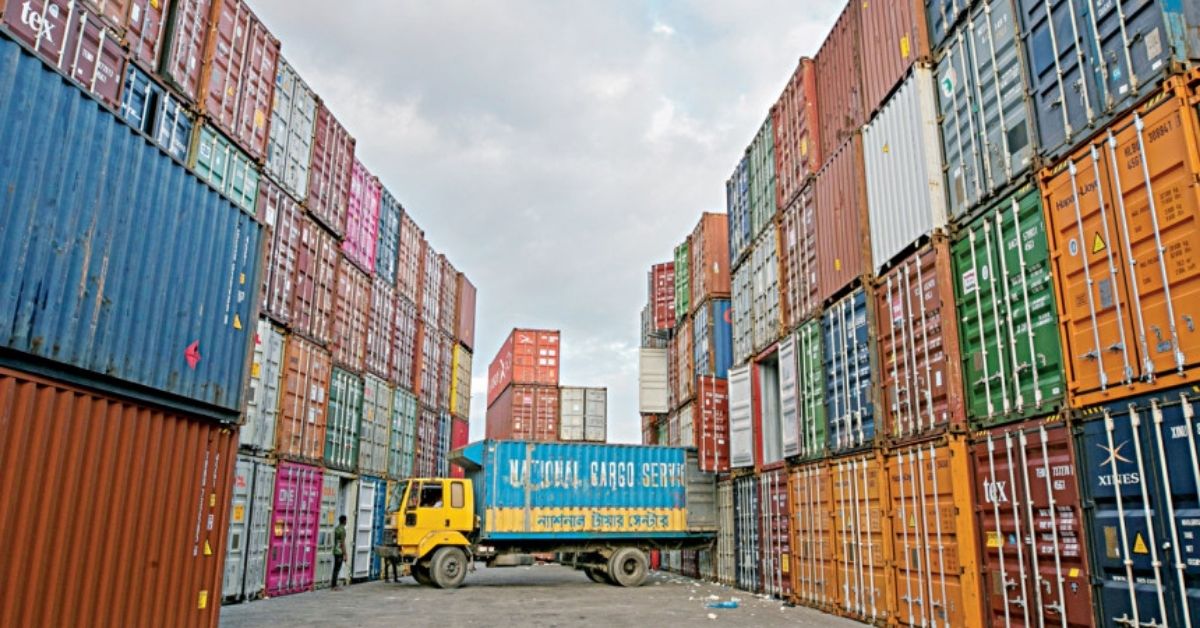
Kolkata port is the most significant for Nepal, acting as the main gateway for Nepalese trade. Through this port, Nepal can import and export goods using the established transit agreements, transporting products to and from Nepal through a network of trucks and railways that facilitate connections to the Nepalese borders.
2. International Examples of Transit Agreements and Port Operation
Nepal’s experience is not unique; several landlocked countries have established transit agreements that facilitate their international trade:
- Bolivia and Peru (1979): After losing its access to the Pacific Ocean, Bolivia signed an agreement with Peru to use the port of Ilo, allowing the country to conduct crucial imports and exports for its economy.
- Zambia and Namibia: Zambia has negotiated the use of Walvis Bay in Namibia, achieving greater efficiency in its commercial operations without direct access to the sea.
- Mongolia and Russia: Mongolia has agreements with Russia that allow it to use ports on the Russian coast, facilitating its foreign trade.
Inspiration from Chinese Investment
China’s port infrastructure strategy provides a model of how transit agreements and investment can translate into economic influence:
- Gwadar Port, Pakistan: Part of China’s Belt and Road Initiative, this port has been financed and developed by China, opening a direct route to the Arabian Sea.
- Hambantota Port, Sri Lanka: Chinese investment in this port has raised concerns about debt, but it has also significantly improved national infrastructure, facilitating international trade.
- Djibouti Port, Djibouti: China has invested in the modernization of the Djibouti port, transforming it into a key logistics hub under the Belt and Road Initiative. Managed by China Merchants Port Holdings, the port facilitates trade between Asia, Europe, and Africa.
India’s Model in Chabahar, Iran
India, for its part, has established a strategic agreement to develop Chabahar port in Iran. This port is designed to facilitate trade with Afghanistan and Central Asian countries, creating alternative routes to maritime access through Pakistan, underscoring the importance of port infrastructure investment in its foreign policy.
3. Impact on Nepal’s GDP and Logistics
The trade relationship established between Nepal and India through these agreements has a direct impact on its GDP. Since 2000, Nepal’s GDP has grown from approximately 6.9 billion USD to nearly 39.1 billion USD in 2023. This expansion has been driven largely by remittances and greater integration into the global supply chain, although the economy faces challenges such as the depreciation of the Nepalese rupee, which has fallen from 72 NPR per USD in 2000 to approximately 130 NPR per USD in 2023.
Logistics and Transportation Inspired by Historical Examples
Modern Nepali logistics can benefit from transportation models that have proven effective in similar situations. A historical example is the logistics used by France during World War I, which relied on a truck-based transport system to swiftly mobilize troops and supplies to the front. This approach to mobility and flexibility can serve as a guide for Nepal in developing its transportation network. Implementing an intermodal system that integrates roadways and railways would facilitate the smooth and rapid movement of products between different modes of transport, optimizing the flow of goods from borders to ports.
4. Political Stability in Nepal and Its Implications
The sociopolitical stability of Nepal plays a crucial role in its economic development and its relations with India. After decades of internal conflict, Nepal has transitioned to a democratic model; however, it still faces challenges in governance and social cohesion. Consolidating agreements with India could foster an environment of cooperation and trust that enhances political stability, resulting in a climate more favorable to investment.
5. Advantages for India in Strengthening Agreements with Nepal
For India, tightening economic and infrastructure ties with Nepal would not only benefit the Himalayan country but also provide significant strategic advantages:
- Countering Chinese Influence: As China increases its presence in South Asia, India has the opportunity to consolidate its influence by strengthening its ties with Nepal. This would limit China’s ability to exert power in this crucial region, ensuring that Nepal remains aligned with India’s geopolitical interests.
- Fostering a Pro-India Regional Bloc: By supporting Nepal’s economic development and facilitating its access to maritime trade routes, India can cultivate a favorable regional bloc that promotes aligned interests. This would help India cement closer and more cohesive relationships with other neighboring countries.
6. Conclusions
Nepal’s ability to negotiate a transit agreement with India, combined with the development of port infrastructure, represents a vital opportunity for economic growth. The experiences of other landlocked nations, such as Bolivia and Zambia, alongside China’s strategic use of ports in Sri Lanka and Pakistan, demonstrate that enhanced integration and economic development are achievable.
The anticipated positive impact on GDP, job creation, and improvements in logistics and transportation could be significant, promoting long-term economic stability. Strengthening its relationships with India would not only stabilize Nepal’s economy but also enable the formation of a «pro-India» alliance that counterbalances China’s growing influence in the region.
This strategic approach requires identifying economic synergies, improving bilateral relations, and fostering a trading environment that benefits both Nepal and India. Building a prosperous future necessitates collaboration, dialogue, and a shared strategic vision. The roadmap that could lead Nepal to a new era of economic growth and regional stability will depend on the ongoing commitment of both Nepalese and Indian authorities to work together for mutual benefit. (Photo: Wikimedia)
Recommended Sources
United Nations Development Programme (UNDP) – «Nepal’s Development Challenges and Opportunities.
Food and Agriculture Organization (FAO) – «Trade Agreements and Their Impact on Food Security in South Asia.»
World Bank – «Nepal: Country Overview.»
United Nations Conference on Trade and Development (UNCTAD) – «LDCs and International Trade.»
Asian Development Bank (ADB) – «Enhancing Nepal’s Transport and Trade Connectivity.»
International Trade Centre (ITC) – «Trade Map – Trade Statistics.»
South Asia Network on Economic Modeling (SANEM) – «Trade Strategies for Nepal: Past Trends and Future Directions.»
Institute of South Asian Studies – «Nepal’s Transit Trade Agreements with India and Implications.»
China-Pakistan Economic Corridor (CPEC) – «Gwadar Port and China’s Maritime Silk Road.»