Resources, Climate, and Geopolitics: The Future of the Arctic in Global Strategy
Summary: This article provides an overview of the current geopolitical situation in the Arctic, which has attracted growing interest from many countries due to its rich resources and strategic significance. The paper highlights Norway’s concerns about the potential emergence of the U.S. as a leading power in the Arctic and discusses the state of international cooperation, including issues related to the functioning of the Arctic Council. It also examines statements by U.S. leaders regarding Greenland, as well as joint Russian–Chinese and Russian–American initiatives in the region. The review emphasizes the importance of resources and climate change in shaping a sustainable global order.
Introduction
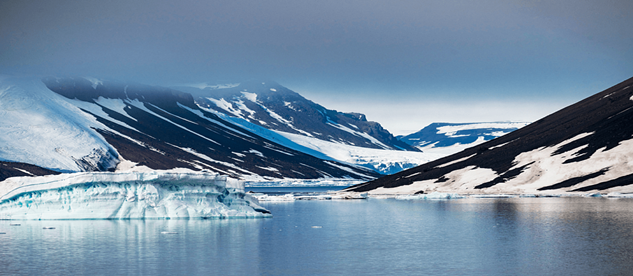
For a long time, the Arctic region was considered an area of peaceful cooperation and a natural boundary between countries with differing interests. However, in recent years, the situation has begun to change under the influence of growing geopolitical ambitions from powers such as the U.S., Russia, and China. Additionally, environmental changes caused by global warming are making the Arctic increasingly attractive in terms of resources and transport opportunities, which in turn is driving greater strategic interest in the region. In this context, issues of international cooperation, security, and stability in the high north, as well as potential shifts in the Arctic balance of power, become particularly significant. This review article highlights various perspectives and recent developments related to the evolving situation in the Arctic, illustrating how countries attempt to balance competition with the pursuit of shared interests for the future of this unique space.
Risks in the Region and the Greenland Issue
According to Professor Glenn Diesen of Southeast Norway University, Norway is concerned about the possibility of becoming a forward base for the United States in the Arctic, which has historically been a region of cooperation.“The U.S. is the main actor showing significant strategic interest in the Arctic… And what worries me most is that Norway could become a forward base for the United States in the Arctic. This is very unfortunate, as the Arctic has historically been a region of cooperation,” Diesen said on the sidelines of the annual meeting of the International Valdai Discussion Club.
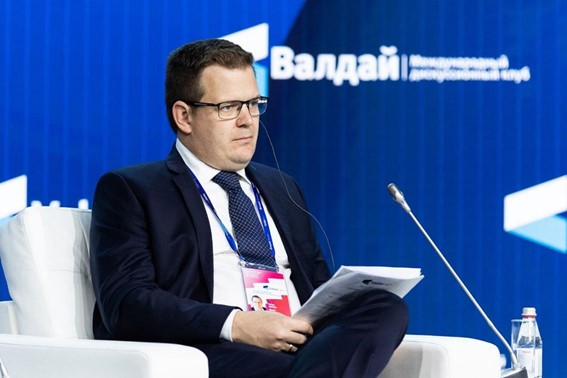
Professor at Southeast Norway University, Glenn Diesen
It becomes clear that geostrategic tension in the region is rising, and soon states will have to make a crucial choice between maintaining cooperation and engaging in open confrontation.
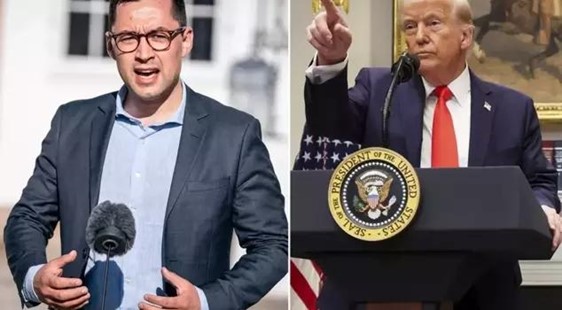
“The Arctic in the past was an appendage of great power politics, and now it is becoming a region of geostrategic tension. Competition will intensify, taking the form of a race for natural resources,” Diesen concluded. Meanwhile, President of the United States, Donald Trump, repeatedly stated that Greenland should become part of the U.S. He emphasized its strategic importance for national security and the protection of the “free world.” Former Greenlandic Prime Minister Mute Egede responded to this statement by asserting that the island is not for sale and never will be. At the same time, Trump refused to give a promise not to use military force to establish control over Greenland.
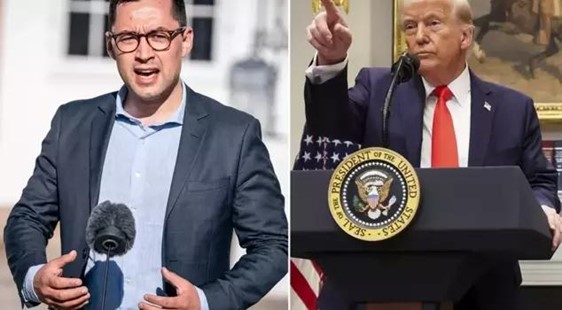
Former Prime Minister of Greenland, Mute Egede, and current President of the United States, Donald Trump
U.S.–Russia Cooperation in the Arctic
Kirill Dmitriev, head of the Russian Direct Investment Fund (RDIF) and special representative of the President of Russia for investment and economic cooperation with foreign countries, stated that cooperation between Russia and the U.S. in the Arctic would be genuinely beneficial.
“Without a doubt, we believe that cooperation in the Arctic with the U.S. will be beneficial both for Russia and the United States,” Dmitriev said on the sidelines of the “Russian Energy Week” forum.
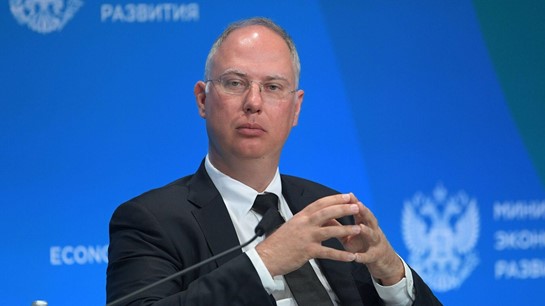
Head of the Russian Direct Investment Fund (RDIF) and Special Representative of the President of Russia for Investment and Economic Cooperation with Foreign Countries, Kirill Dmitriev
Given the advanced technologies of both countries and their respective national interests, Russia and the U.S. are ready to pursue joint projects in the Arctic region.
“Therefore, it is important to keep in mind that American companies are interested in undertaking joint Russian–American projects; they are interested in collaborative projects in the Arctic. And Russia, based on its national interests, is certainly also ready to invite American companies to participate in minority shares in certain Arctic projects,” Dmitriev added.
The prospects for Russia–U.S. cooperation in the Arctic could become an important factor in the economic and technological development of the region. Joint projects that consider the interests of both countries and leverage their advanced technologies will contribute to strengthening international cooperation, further developing Arctic resources, and ensuring stability in this strategically important region.
The Arctic Unites: Russia–China Alliance on Arctic Territories
Following the 30th regular meeting of the heads of government of Russia and China, both powers agreed to promote peace and stability in the Arctic.
Russian Prime Minister Mikhail Mishustin visited China for a two-day trip in early November. Together with Premier of the State Council of the PRC, Li Qiang, the Russian Prime Minister participated in the 30th regular meeting of the heads of government of Russia and China, during which a joint communiqué and several other documents were signed.“The aim is to promote the preservation of peace and stability in the Arctic and the sustainable development of this region. We will advance constructive cooperation based on international law and mutual respect in relevant international forums, including within the framework of the Arctic Council,” the communiqué stated.
Russian Prime Minister Mikhail Mishustin and Premier of the State Council of the PRC, Li Qiang
Thus, both Russia and China have expressed their commitment to preserving peace, stability, and sustainable development in the Arctic through the signed agreements and joint efforts.
Conclusion
Thus, the current situation in the Arctic reflects growing geopolitical confrontation and increasing competition over resources, strategic influence, and control of the region. Despite a historical tradition of cooperation, many powers are actively pursuing their national interests, often leading to disagreements and constraints on the work of international organizations such as the Arctic Council. At the same time, opportunities for joint development and cooperation remain significant and promising, particularly in the context of technological advancement and climate change, which open new logistical routes and economic growth potential. In the future, the balance of power in the Arctic will depend on the ability of major powers to find compromises and jointly ensure the security and sustainable development of this unique region.
Scenario 1. “Intensified Competition and Geopolitical Confrontation”: The U.S., Russia, China, and other actors increase their activity in the Arctic, seeking to control resources and strategic routes, while political tension rises due to restrictions on the Arctic Council’s work and potential military claims. As a result, international cooperation declines, and regions such as Greenland and Norway become arenas of competition among major powers, increasing the risk of conflict. This scenario carries the danger of regional destabilization and the potential use of military force to achieve objectives. Scenario 2. “Establishment of a Multipolar System with Balanced Interests”:Russia, China, the U.S., and representatives of European countries find a balance between competition and cooperation. Joint projects for resource development and utilization are carried out based on the interests of all parties, in compliance with international rules and mechanisms. Meanwhile, the Arctic Council restores its functioning, serving as a platform for dialogue and dispute resolution. These steps collectively contribute to the safe development of the region and the maintenance of sustainable peace.