

Short description: In this paper the key international events of the second half of January 2026 as empirical cases illustrating structural shifts in various subsystems of the world order is considered. The main focus is on the analysis of parallel processes: institution-building within the framework of multilateral economic associations, the functioning of internal political and legal mechanisms in times of crisis and the achievement of compromises in protracted trade negotiations. The events surrounding the BRICS digital currency initiative, the lawsuit in South Korea, and India’s trade agreement with the EU are seen as independent variables reflecting general trends in the regionalization of financial flows, strengthening of domestic institutions, and the pragmatization of international economic diplomacy. Based on the analysis, potential scenarios for the development of these trends in the medium term are formulated.
Preface
The second half of January 2026 provides material for monitoring multidirectional but structurally significant processes. In contrast to the analysis of a single geopolitical logic, the current review focuses on discrete events, each of which reveals the dynamics in a separate area: financial technology and multilateral cooperation, the domestic legal system and legitimacy, international trade policy. These processes develop in their own operational fields, governed by various sets of rules and restrictions. Their simultaneous observation allows us to identify macro patterns: the movement from conceptual discussions to technical implementation within new coalitions, the ability of complex political systems to self-correct through formal procedures, and the achievement of equilibrium points in seemingly deadlocked negotiation dilemmas. The current situation demonstrates the increasing complexity of the architecture of international relations, where various factors simultaneously participate in a multitude of games with different participants and rules.
1. The BRICS Digital Currency Initiative: the technical complexity of Institution Building
On January 19, it became known about the proposal of the Reserve Bank of India (RBI) to the BRICS member countries to consider the possibility of creating a single system linking their official digital currencies (CBDCs). According to Reuters, the aim of the initiative is to simplify cross-border trade and travel payments. The RBI recommended that the Indian government include this issue in the agenda of the BRICS summit scheduled for 2026 in India.
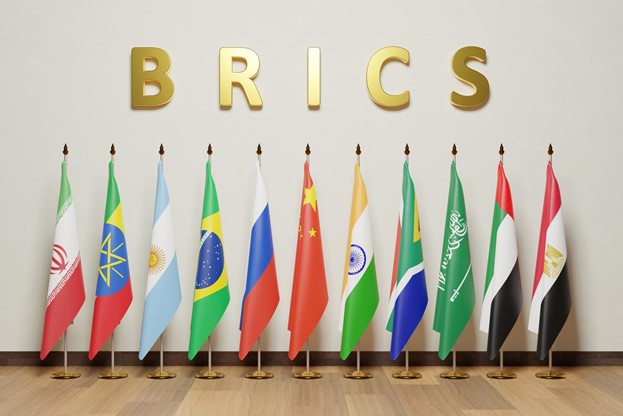
From an analytical point of view, this event represents a transition from the phase of declarations about the need for de-dollarization and strengthening settlements in national currencies to the phase of designing a specific technical and institutional infrastructure. The key aspects determining the probability of implementation. The initiative faces the fundamental challenge of integrating diverse CBDC technology platforms, each of which is developed taking into account national regulatory and architectural preferences. The unwillingness of the participating countries to delegate sovereignty over the technology platform, mentioned by Reuters sources, is a typical problem of collective action in a heterogeneous coalition. Considering bilateral currency swaps as a tool to smooth out potential trade imbalances indicates an awareness of the risks inherent in closer financial integration. This indicates an attempt to develop not just a payment channel, but an element of a multi-level financial architecture with stabilization mechanisms.
This case illustrates the general trend towards regionalization and the complication of the financial infrastructure of the world, where technical standards are becoming a new field for multilateral diplomacy and the creation of “club” benefits.
2. The trial in South Korea: an institutional reworking of the political crisis During the same period, the court of first instance in South Korea convicted former Prime Minister Han Duck-soo, sentencing him to 23 years in prison for complicity in the rebellion related to the events of December 2024. The trial, which began in August 2025, ended with a sentence exceeding the prosecutor’s request (15 years).
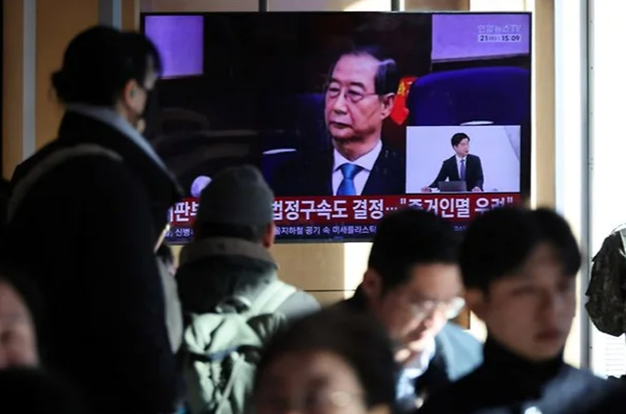
This event is a valuable case study for analyzing the functioning of complex political and legal systems in the post-crisis period. The procedural completion of a large-scale political crisis through formal judicial mechanisms, despite the high status of the accused, demonstrates the ability of State institutions to perform the functions of arbitration and legitimization in the context of acute internal conflict. The defendant’s refusal to cooperate and the seriousness of the charges underline the depth of the split, which makes the very fact of the completion of the trial significant. The discrepancy between the prosecutor’s office’s request and a stricter court decision can be interpreted as an indicator of the independence of the judicial branch of government within the framework of this system or as a reflection of different assessments of the severity of the act within the ruling establishment. In any case, this indicates the heterogeneity and internal dynamics within the institutional apparatus.
This process serves as an empirical example of how political instability is transformed into a legal framework and recycled by existing institutions, which is a key mechanism for preserving the systemic integrity of the state.
3. India-EU Agreement: resolution of a protracted negotiation dilemma
During the same time period, according to Reuters reports, India and the European Union reached a breakthrough in the protracted negotiations on a free trade agreement. A key agreed element, according to the agency, was India’s reduction of import duties on EU cars worth more than €15,000 from 110% to 40%, followed by a phased reduction to 10%.
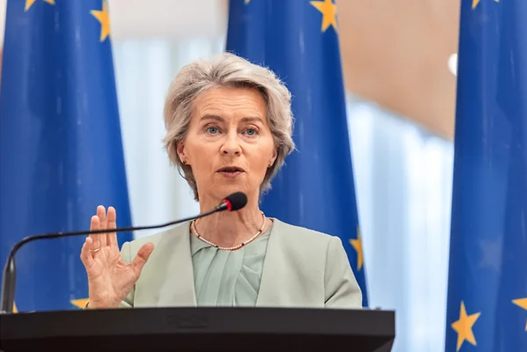
European Commission President Ursula von Der Leyen
This event is a classic example of resolving a multi-round negotiation dilemma that has lasted since 2007, with several periods of stagnation. The resumption of active negotiations in 2022 was due to external shocks in world trade, which changed the calculations of the parties regarding the costs of the absence of an agreement. The growth of bilateral trade to 120 billion euros in 2024 has created a critical mass of mutual interest. The decision is to focus on a specific, politically sensitive sector (automobiles) and propose a clear, step-by-step liberalization scheme. (110% → 40% → 10%) It is a model for overcoming the impasse through detailed, sectoral coordination, rather than through an attempt at an immediate global compromise.
This case illustrates how long-term structural economic interests (EU access to a large market, India’s integration into value chains) can eventually overcome protective lobbying barriers and administrative differences when the external context changes.
Conclusion and potential development scenarios
The events discussed in the second half of January 2026 are indicators of deep processes in three key areas: financial architecture, domestic political stability, and trade policy. They demonstrate the movement from abstract ideas to technical implementation within the framework of new coalitions, the ability of complex systems to self-regulate crises, and the power of economic pragmatism in overcoming negotiation deadlocks.
Based on these dynamics, the following scenario lines of development can be identified in the medium term:
Scenario 1: “Consolidation of heterogeneous blocks and rising transaction costs”
The BRICS Digital Currency initiative faces insurmountable technical and regulatory contradictions, but leads to the creation of several narrower, interoperable platforms (for example, within the framework of pairs Russia-China-Iran or India-UAE-South Africa). This leads to the fragmentation of the financial space into several “technological zones”, increasing the complexity and cost of cross-border transactions between them. Trade agreements such as the India-EU treaty are multiplying, but they are exclusively preferential in nature, strengthening the regionalization of commodity flows. Political systems like South Korea’s demonstrate high adaptability, but their experience is becoming difficult to transfer in the face of growing global instability.
Scenario 2: “Meta-standards development and hybrid integration”
The technical difficulties of the BRICS project do not encourage its cancellation, but rather the development of a new set of open protocols and meta-standards for the interaction of different CBDCs. These standards, developed within the framework of the BRICS, are de facto adopted by other countries, becoming a new global framework, which reduces fragmentation. The successful model of sectoral trade-offs tested in the India-EU agreement is replicated in other negotiations, leading to a dense network of partially overlapping trade rules (the “spaghetti bowl” system). Internal institutional crisis management mechanisms demonstrated in a number of countries enhance the overall stability of the system, reducing the risks of large-scale internal collapses.
The current situation is most consistent with the elements of Scenario 1, indicating a trajectory of increasing complexity and regionalization. However, the existence of processes such as the achievement of a complex compromise by India and the EU leaves room for elements of Scenario 2 related to the development of new hybrid forms of interaction. The future trajectory will be determined by the ability of key factors to develop interoperable technical solutions and their willingness to make sectoral rather than ideological compromises.