The “Caribbean Domino” Hypothesis: An Analysis of Destabilization Scenarios in the Western Hemisphere Following the Venezuelan Operation
Brief overview: The article analyzes a qualitative shift in the United States’ approach to the Western Hemisphere, triggered by a successful military operation to overthrow the government of Venezuela. The focus is placed on the transition from a policy of containment and sanctions to a strategy of direct coercive force and the construction of a managed political transition. The key cases examined include the establishment of control over Venezuela through the interim government of Delcy Rodríguez and discussions in Washington regarding the application of the “Venezuelan scenario” to Cuba. The developments are considered through the lens of the “domino” concept, whereby the fall of one regime supported by external adversaries of the United States generates momentum and a methodological template for the destabilization of the next. Based on an analysis of public statements, media leaks, and the logic of actions taken by the Donald Trump administration, the article formulates potential scenarios for further escalation or stabilization in the region.
Introduction
The second half of January 2026 marked the United States’ transition to a new, more aggressive and interventionist phase of policy in its traditional sphere of influence. The capture of President Nicolás Maduro on January 3 and the subsequent establishment of control over Venezuela through a loyal interim government became not merely an isolated action, but a precedent that created a new operational reality. The perceived success — understood as minimal immediate costs and the achievement of key objectives (control over oil resources and the removal of a hostile regime) — generated within the Trump administration a temptation to replicate this model. Public threats of the use of force voiced by Marco Rubio to ensure “maximum cooperation,” along with active discussions about applying the “Venezuelan scenario” to Cuba, indicate the emergence of a coherent doctrine based on coercive force, economic strangulation, and the search for “insiders” to facilitate a managed transfer of power. The current situation constitutes a natural experiment testing the limits of American hard power and the resilience of authoritarian regimes under conditions of direct, rather than proxy, confrontation.
- Venezuela: The Model of Coercive Force and Its Internal Contradictions
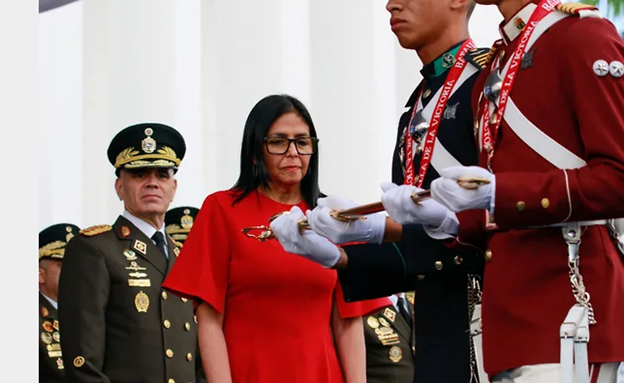
The operation to capture NicolásMaduro and install DelcyRodríguez as acting president was initially presented as a counter-narcotics initiative. However, by the end of January, its political and economic objectives had been openly declared. MarcoRubio stated that Rodríguez had “promised to open Venezuela’s energy sector to American companies, grant preferential conditions for oil extraction, and direct the revenues from its sale toward the purchase of American goods.”
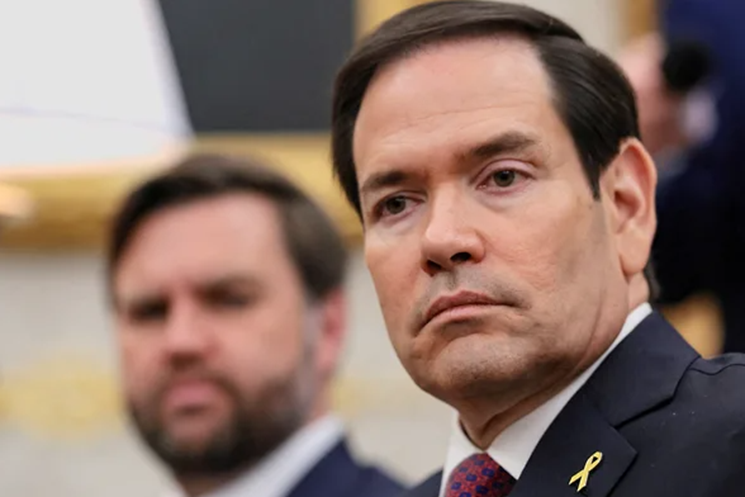
U.S. Secretary of State – Marco Rubio
This model combines direct military action (a strike on Caracas and the physical removal or capture of a key figure) with the subsequent establishment of control through a selected local administrator whose legitimacy depends entirely on support from Washington. The threat of the renewed use of force (“if other methods are not effective,” as Rubio stated) serves as the central mechanism for ensuring that administrator’s loyalty. The legitimacy of Delcy Rodríguez thus appears dual and inherently fragile.
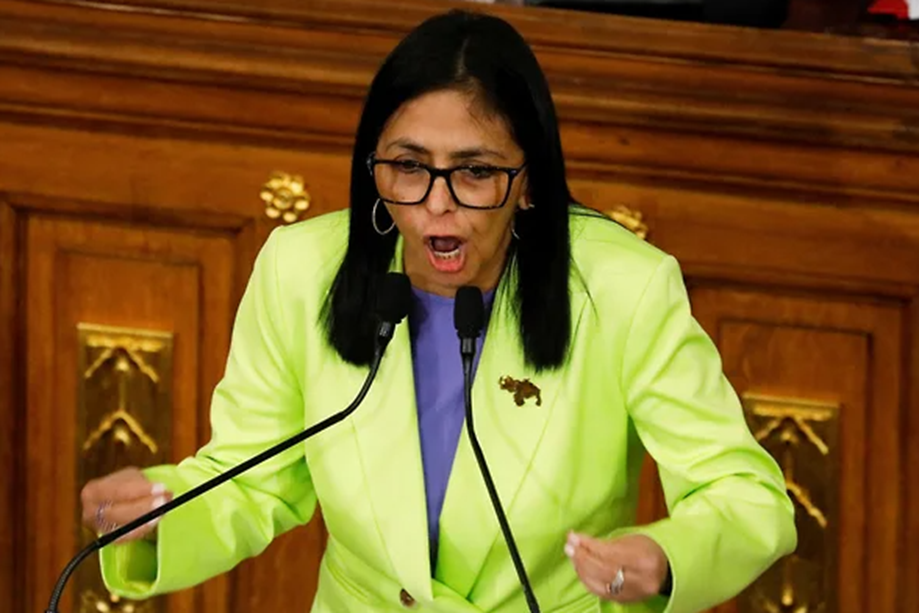
Acting President of Venezuela – Delcy Rodríguez
On the one hand, she engages in symbolic actions aimed at reinforcing sovereignty (taking the oath as commander-in-chief, establishing a cyber defense center, criticizing “orders from Washington”). On the other hand, her authority rests on implementing U.S. economic directives, leading to dependency and the potential for popular discontent. Her statements that the United States threatened her with assassination — even if they are part of domestic political theater — undermine the narrative of voluntary cooperation and expose the coercive nature of the new model.
This case demonstrates a shift from a strategy of sanctions-based pressure aimed at provoking internal collapse to a strategy of active external management employing a combination of military force and political engineering.
- Cuba: Testing the Limits of the “Domino Effect” and Identifying Vulnerabilities
Almost immediately after the relative stabilization of the situation in Venezuela, active discussions began in the American media and, judging by leaks, within the Trump administration about applying a similar approach to Cuba. Publications such as The Wall Street Journal and Politico report that the White House set a goal of achieving a regime change in Havana by the end of the year, relying on an “oil stranglehold” and elite division. Recognizing that a direct military invasion of Cuba carries unacceptable risks, the administration is focusing on economic strangulation. By cutting Cuba off from Venezuelan oil, the U.S. created “the largest… power outages and fuel shortages” (Reuters). The planned full maritime blockade (“energy is a strangulation tactic capable of toppling the regime,” Politico) is intended to bring the economy to collapse, during which an attempt will be made to identify an “insider” for a controlled political transition. Analysts acknowledge that the Cuban regime is “a much tougher nut to crack” (former official Ricardo Zúñiga, WSJ), with a more cohesive and ideologically committed elite. Within the administration, debates are ongoing between proponents of harsh pressure for quick results and those who fear that “Cuba could become… a second Iraq—with a long and unpredictable post-crisis period” (Politico). A key difference from the Venezuelan scenario is the absence of a single figure like Maduro, whose removal could paralyze the system.
This case serves as a test of the effectiveness of the economic component of the new doctrine in the context of a more resilient political system and the presence of alternative external partners (Russia and China) available to the target country.
Conclusion and Potential Development Scenarios
The developments of the second half of January 2026 indicate the Trump administration’s deliberate adoption of a strategy of “cascading instability,” in which success at one point is used as a springboard for destabilizing the next. At its core lies the hypothesis that removing a key support node (Venezuela for Cuba) and demonstrating a willingness to employ force without reservation will generate instability within other hostile regimes, thereby facilitating their collapse or transformation under American control.
Based on this logic, the following potential scenarios for the development of the situation in the region can be identified:
Scenario 1: “Successful Domino and the Establishment of Direct-Action Hegemony” Economic pressure on Cuba leads to the collapse anticipated by the Trump administration. Within the Cuban leadership, an influential figure or group is found that is willing, in exchange for guarantees of personal security and continued authority, to strike a deal and ensure a “soft” transition. Success in Cuba, achieved primarily through economic means, convinces Washington of the universality of the “strangulation and insider coup” model.
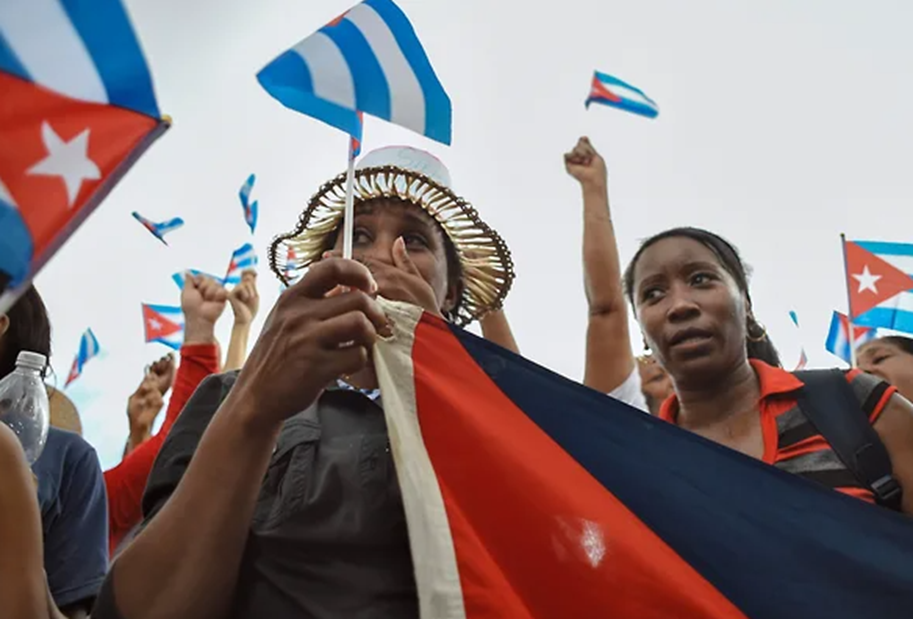
The administration proceeds to draft similar plans with regard to Nicaragua and intensifies pressure on Bolivia and other left-leaning governments in the region. The United States restores its monopoly on the use of force in the Western Hemisphere, pushing the region back into an era of overt neo-hegemonism. However, this scenario generates long-term governance challenges in managing the captured economies and risks triggering humanitarian catastrophes.
Scenario 2: “Systemic Resistance and Escalation to Direct Conflict”
Contrary to expectations, the Cuban regime demonstrates a high degree of resilience, relying on internal cohesion, assistance from allies, and adaptation to a harsh economic environment. Attempts to identify an “insider” fail. The inability to achieve rapid results through economic means pushes the more radical faction within the administration (represented by Marco Rubio) to argue in favor of a limited military operation — for example, to “unblock humanitarian aid” or to “eliminate military facilities of third countries.”
This leads to a direct military confrontation between the United States and Cuban forces, potentially involving Russian or Chinese “advisers” and equipment. The conflict takes on a protracted character, diverting significant U.S. resources, destabilizing key maritime routes (the Florida Strait), and provoking a sharply negative reaction from both adversaries and allies who are unprepared for such a масштабной и рискованной эскалации.
Scenario 3: “Backlash and the Regionalization of Resistance”
The severity of American actions and public threats to the sovereignty of regional countries (Rubio: “achieve maximum cooperation” under the threat of force) lead to an unexpected consolidation. Even critics of the Maduro and Cuban regimes, seeing U.S. methods as a direct threat to national sovereignty, begin seeking ways to resist. Brazil, Mexico, and Argentina, fearing they may become the next targets under the expanded Trump doctrine, initiate the creation of a regional crisis-management mechanism or strengthen ties with external actors (EU, China) to establish a counterbalance. Venezuela, under the administration of Delcy Rodríguez, facing growing internal resistance to its pro-American policies, begins to maneuver, attempting to exploit contradictions, thereby nullifying the economic benefits for the United States. The “domino effect” comes to a halt, and the U.S. faces a united front of passive or active resistance in a region it had considered its “backyard.”
The current situation most closely aligns with elements of Scenario 1, as the administration is acting under the assumption of success and the replicability of the model. However, the presence of open debates about the risks (Politico: “a second Iraq”) and Delcy Rodríguez’s public resistance to “orders from Washington” indicate growing pressures that could manifest as elements of Scenario 2 (escalation) or Scenario 3 (backlash and consolidation). The key factor determining the trajectory will not be U.S. military power, but rather the Cuban regime’s capacity for social mobilization and survival, as well as the response of other major regional actors to an overt return to the “big stick” doctrine.