
Political and diplomatic processes in the Asia-Pacific region and the strategic priorities of the leading Powers
Short description: The review analyzes the key political and diplomatic events in East Asia and the Asia-Pacific region in January-February 2026. The main focus is on China’s diplomatic activity against the background of events in Venezuela, its strategy of normalizing relations with Western countries (Great Britain, Canada, Finland) and Asia (Republic of Korea), as well as ongoing tensions in dialogue with Japan. Special attention is paid to the results of the parliamentary elections in Japan and the visit of British Prime Minister Keir Starmer. The article also discusses the results of the visit of the US Deputy Secretary of Defense to South Korea and the evolution of the US-South Korean alliance in this regard.
Introduction
The winter of 2026 marked a period of intense diplomatic activity in East Asia and the Asia-Pacific region. The key events were the publication of the new National Defense Strategy (NDS) of the United States, the visit of President of the Republic of Korea Lee Jae-myung to Beijing, the convincing victory of the Liberal Democratic Party in the parliamentary elections in Japan, as well as a series of visits by Western leaders to China. Against this background, Sino-Japanese tensions over the Taiwan issue persisted and Beijing’s strategic coordination with Moscow and the states of the Global South deepened. The general trend of the period under review was a more active transition of the leading powers to a pragmatic and transactional model of diplomacy, where allied commitments are increasingly being reviewed through the prism of national interests and economic expediency.
China’s foreign policy amid the crisis in Venezuela. On January 5, the Chinese Foreign Ministry issued a series of statements condemning the violent capture of Venezuelan President Nicolas Maduro and his wife, calling it a “gross violation of international law” and demanding their immediate release.
The PRC’s position was based on several principles:
1. The inadmissibility of unilateral use of force. Chinese representatives have repeatedly stressed that they oppose threats or the use of force in international relations.
2. Respect for sovereignty. China stated that it “respects Venezuela’s sovereignty and independence and believes that the Venezuelan government will properly regulate its internal affairs.”
3. Protecting economic interests. When asked about the possible impact of the crisis on Venezuelan oil imports, the Chinese Foreign Ministry representative replied that cooperation between China and Venezuela is “cooperation between two sovereign states,” and China will protect its legitimate interests.
The reaction to such significant events demonstrated China’s willingness to publicly confront the United States and use the UN platform to criticize its actions, while strengthening ties with states under pressure from Washington.
The Western vector of China’s political and diplomatic relations
Great Britain. The visit of British Prime Minister Keir Starmer (January 28-31) became the main event of the diplomatic season. It was the British Prime Minister’s first visit to China in eight years. The delegation included 60 representatives of business and culture. The results of the negotiations are impressive: 12 intergovernmental agreements were signed, including 3 key documents: a Memorandum of Understanding on Export to China cooperation, Memoranda on launching a joint study on an agreement on trade in services and establishing a bilateral partnership in the service sector, as well as a Memorandum on strengthening the work of the China-UK Joint Economic and Trade Commission.

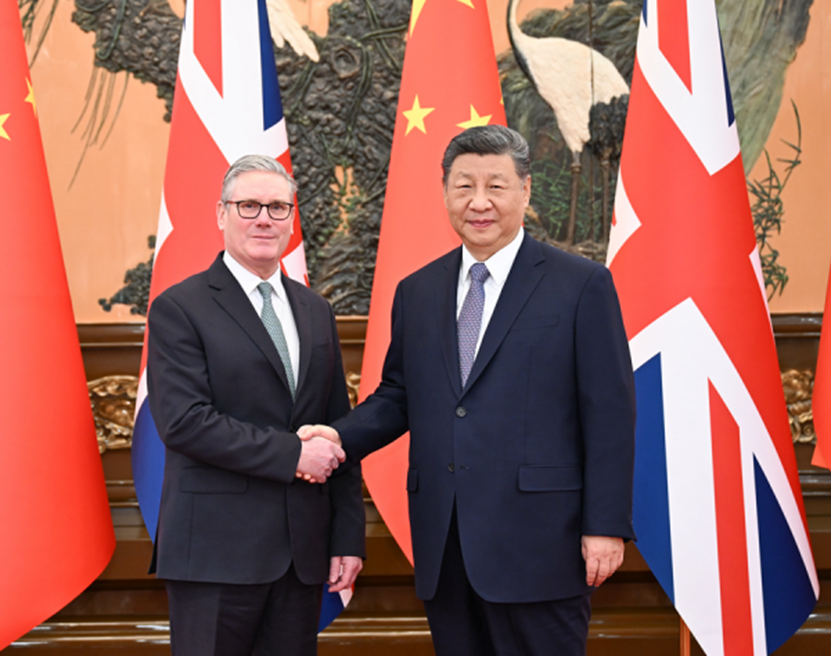
British Prime Minister Keir Starmer and Chinese President Xi Jinping
Canada. The visit of Canadian Prime Minister Mark Carney (January 14) marked a warming of relations after a period of freeze in the era of J. Trudeau. The parties signed eight agreements and issued a joint statement, the key points of which were: Canada’s confirmation of the “one China” principle, the creation of a Canadian-Chinese roadmap for economic cooperation, and the resumption of dialogue between the Ministries of finance.
Finland. The visit of Finnish Prime Minister Petteri Orpo (January 25-28) allowed Beijing to broadcast a number of signals to the entire European Union. In particular, Xi Jinping and Orpo discussed the “strategic autonomy of Europe” and the settlement of EU-China trade disputes. As the CCP chairman noted, “China and the EU are partners, not adversaries,” and Finland, as an EU member, can play a constructive role in promoting the healthy and stable development of China-EU relations.
The Asian vector of China’s diplomatic initiatives
The Republic of Korea. President Lee Jae-myung’s visit (January 4-7) was the first visit by a South Korean leader to Beijing since 2017. The high level of reception and the signing of 15 memorandums of understanding demonstrated the restoration of trust. The Chinese side confirmed the agreements reached, noting the importance of trade and technological partnership for the economies of the two countries.

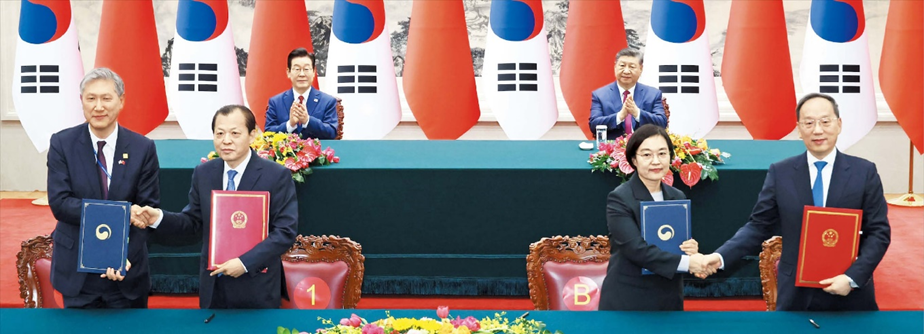
Roh Jae-hoon, Ambassador to China (from the front row, left), Liu Wei, Minister of Transport of China, Han Sung-sook, Minister of Small and Medium-sized Businesses and Startups, and Li Lecheng, Deputy Minister of the Ministry of Industry and Information Technology of China, sign separate memoranda of understanding (MOU) on transport cooperation and small and medium-sized businesses and startups at the Great Hall of the People in Beijing, China on the 5th, in the presence of President Lee Jae-meng and Chinese President Xi Jinping
Addressing Premier of the State Council of the People’s Republic of China Li Qiang, the Chinese president expressed hope for “further expansion of opportunities for mutually beneficial cooperation during the implementation of China’s 15th five-year plan.” The parties agreed on the need to move towards “fair competition that promotes mutual development” and to intensify cooperation in new areas such as the digital economy, biotechnology, and ecology.
Japan. On January 6, Chinese Foreign Ministry spokesman Mao Ning issued a detailed criticism of the Japanese government’s plans to revise three national security documents, increase defense spending and revise three non-nuclear principles. She called this a “dangerous trend” of Japan’s remilitarization, recalling Tokyo’s international obligations under the Cairo Declaration and the Potsdam Declaration.
On January 27, Chinese Foreign Ministry spokesman Guo Jian again responded to Takaichi’s statements that “the crisis in Taiwan may prompt Tokyo and Washington to take joint action,” recalling Japan’s obligations under the 1972 Joint Statement and the 1978 Treaty of Peace and Friendship, as well as “half a century of colonial rule” over Taiwan.
Russia and the Global South are in the focus of China’s foreign policy. On February 1, amid the expiration of the START Treaty, strategic consultations were held between Politburo member Wang Yi and Secretary of the Russian Security Council Sergei Shoigu in Beijing. On February 2, Chinese Foreign Ministry spokesman Lin Jian, commenting on the results of the meeting, said that China and Russia “maintain close communication on the main issues of bilateral relations” and, faced with turbulence, will “support the UN-oriented international system.”
On February 3, a new round of consultations on strategic stability was held at the level of deputy foreign ministers. The sides exchanged views on global strategic stability and multilateral arms control, agreeing to strengthen strategic coordination as permanent members of the UN Security Council.
The meeting with Cuban Foreign Minister Bruno Rodriguez on February 5 and the appointment of Special Representative for Africa Liu Xianfa (January 30) demonstrate that China continues to strengthen ties with the Global South. In response to the escalating U.S. blockade of Cuba, the Chinese Foreign Ministry expressed “deep concern” and promised to continue to support Havana.
The conducted review of political and diplomatic events in China in January and February 2026 allows us to draw the following conclusions.
First. China has used the crisis in Venezuela to strengthen its image as a defender of international law and the sovereignty of small states, contrasting itself with the unilateral actions of the United States. The capture of Nicolas Maduro has become a convenient case for Beijing to demonstrate its commitment to the UN Charter.
Second. Beijing masterfully uses the Trump administration’s foreign policy style. Threats to allies, tariffs, and disregard for international norms are pushing Western countries (Britain, Canada) to normalize relations with China. China is seen as a guarantor of stability and predictability, as evidenced by the signing of dozens of agreements and visits by leaders.
The third. Beijing’s policy towards Tokyo remains unchanged: no concessions until the Japanese government changes its rhetoric on Taiwan and abandons its remilitarization plans. The refusal to congratulate Takaichi on her party’s election victory and the harsh historical rhetoric of official representatives signal that China is ready to tolerate a deterioration in relations.
Fourth. The strategic rapprochement with Russia and the intensification of dialogue with the West do not contradict, but complement each other. China is building a multi—level architecture in which each partner fulfills its own function: Russia is the military-strategic rear, Europe is the source of technology and investment, and the Global South is the political support in international institutions.
A possible meeting between Xi Jinping and Donald Trump will be a key event in the coming months. If China manages to negotiate a “detente” with the United States, Beijing’s position will be further strengthened. If the dialogue fails, the current diplomatic offensive will become the foundation for confrontation with Washington.
Election results and diplomatic initiatives of Japan.
On February 8, 2026, elections to the lower house of parliament were held in Japan. According to Nikkei data, the Liberal Democratic Party (LDP) and its coalition partner (the Renewal Party) won a landslide victory, gaining 316 and 36 seats out of 465, respectively. This result has laid a solid foundation for the implementation of the long-term strategic goals of the Government of Sanae Takaichi.
Already on February 10, Defense Minister Shinjiro Koizumi bluntly stated at a press conference that the election results mean the confidence of voters ahead of the revision of three key defense documents and the strengthening of deterrence forces. This is an attempt to adapt the doctrine to new realities, including the US administration’s requirement for allies to increase defense spending to 5% of GDP.

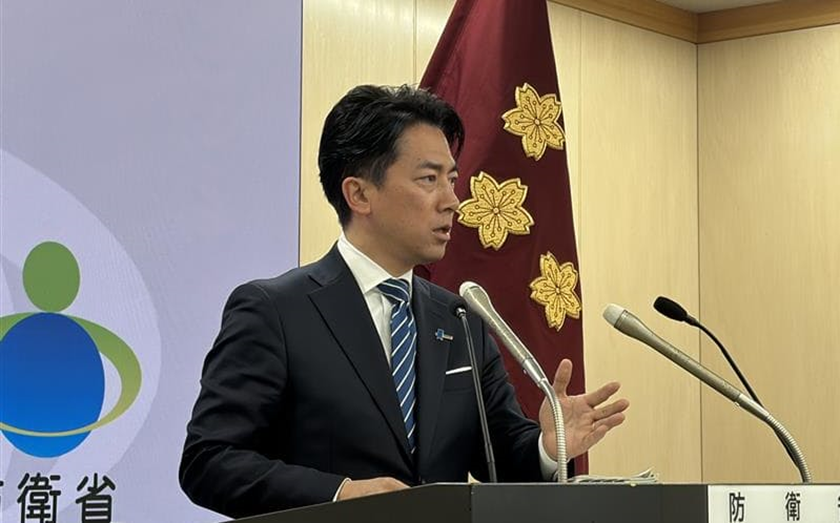
Japanese Defense Minister Shinjiro Koizumi
The main dilemma for Tokyo is finding a balance between these external expectations and the need to ensure “fiscal sustainability,” which promises to be the subject of fierce interagency disputes. The established mandate of confidence in the Cabinet of Prime Minister Sanae Takaichi is likely to allow for necessary but potentially unpopular measures, such as the search for sustainable sources of financing for defense spending, without constant regard for the position of the disparate opposition.
Describing the main diplomatic events of the period under review, the following can be highlighted:
Relations with the USA and Europe. The central place in it is occupied by relations with Washington. The direct correspondence on social media between Prime Minister Takaichi and President Donald Trump, detailed by both Sankei and Nikkei, was a symbolic act of restoring the “special relationship” to a new level. Trump’s response, calling the Japanese leader “strong and smart,” and the summit scheduled for March 19 at the White House indicate the presence of personal “chemistry” that can become a key driver of the alliance. Takaichi herself described the potential of the union as “limitless,” betting on deepening cooperation in the field of both defense and economics.
An important event in the European direction was the congratulations of Italian Prime Minister Giorgi Meloni, who called Takaichi a “dear friend” and demonstrates ideological closeness with the Japanese cabinet based on common views on sovereignty, national interests and migration policy. This reinforces the defense and economic projects concluded earlier, following the visit of the Italian Prime Minister to Japan, and creates additional potential for the formation of an informal “Rome–Tokyo axis.”
Another important event was also the visit of British Prime Minister Keir Starmer to Japan on January 31, 2026. The meeting between Japanese Prime Minister Takaichi Sanae and her British counterpart, which lasted about an hour and a half and included a working dinner, took place against the backdrop of a difficult international situation characterized by rising tensions in the Asia-Pacific region, tightening economic pressure from China and the increasing unpredictability of US policy. It is important to note that Prime Minister Starmer arrived in Tokyo immediately after a four-day visit to China. This fact gave the meeting in Tokyo a special significance. The Japanese side, whose relations with Beijing had become seriously complicated, sought to convey its concerns to London and synchronize assessments regarding China. In this regard, Takaichi’s statement at the beginning of the meeting that cooperation between Japan and the United Kingdom “symbolizes the inseparability of the security of the Euro-Atlantic and the Indo-Pacific region” was of symbolic importance. This formulation, subsequently fixed in the final documents, became the conceptual framework of the entire summit, emphasizing that London and Tokyo consider security on a global scale and are ready to coordinate their actions, despite geographical remoteness.

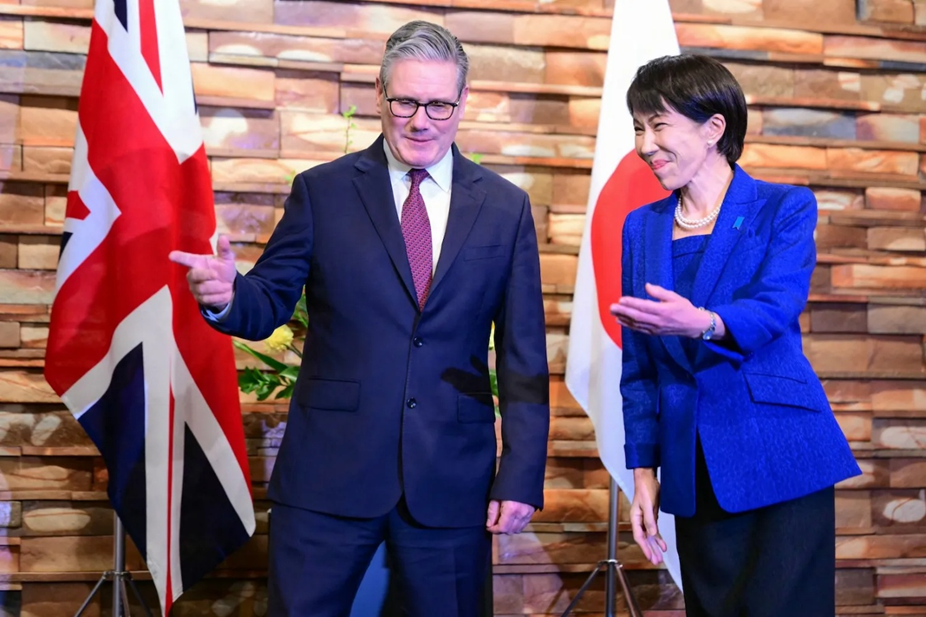
Japanese Prime Minister Sanae Takaichi greets British Prime Minister Keir Starmer before a bilateral meeting in Tokyo on January 31
The central element of the security negotiations was the confirmation of commitment to the implementation of a trilateral project with Italy to create a new generation fighter (GCAP — Global Combat Air Program), which is planned to be deployed by 2035. The leaders agreed to accelerate joint development, which is seen by Tokyo as a strategic step to reduce dependence on the United States for military technology.
The key breakthrough was the decision to increase the level of interaction in cyberspace. Following the meeting, a joint statement was signed on the launch of the “Strategic Cyber Partnership of Japan and the United Kingdom” (UK-Japan strategic cyber partnership). As Prime Minister Takaichi explained at a joint press conference, the new agreement implies not just strengthening cooperation, but its transfer to a qualitatively new level, including the exchange of intelligence on cyber threats and strengthening the potential to repel attacks from foreign countries. The parties also confirmed their intention to hold a regular meeting of the Ministers of Foreign Affairs and Defense in the 2+2 format this year, which will become a platform for further specification of military agreements.
A significant part of the negotiations was devoted to economic security issues. Amid growing international concern over China’s October 2025 export restrictions on rare earth metals and related technologies, Tokyo and London have confirmed their intention to work together to strengthen supply chains. In addition, agreements were reached to expand industrial cooperation in such high-tech areas as wind power, quantum technologies and thermonuclear fusion, on which relevant memoranda have already been prepared. The leaders also confirmed their intention to develop partnership in the space sector, agreeing to launch a new format of bilateral consultations on outer space.
During the working dinner, the Prime Ministers exchanged views on current international issues, including the situation in the Middle East, reaffirming their commitment to supporting the “two-State solution” for the Palestinian-Israeli settlement. An important outcome was the confirmation of the intention of the two countries to work together to implement the concept of a “Free and Open Indo-Pacific Region” (FOIP), which Prime Minister Takaichi seeks to develop and fill with new content. In this context, the Taiwan issue was also discussed: the Japanese side sought to gain London’s understanding of its concerns about China’s increasing military pressure in the island area.
Thus, the Tokyo summit confirmed that Japan and the United Kingdom consider each other as important partners capable of jointly responding to challenges in the field of both traditional and economic security. Keir Starmer’s visit, which took place during a pause between his trip to China and the cooling of Sino-Japanese relations, allowed Tokyo not only to synchronize positions with a key European ally, but also to demonstrate that London is ready to pursue a balanced policy combining pragmatic dialogue with Beijing and deepening strategic partnership with Japan. The launch of the “Strategic Cyber Partnership” and the focus on protecting supply chains of critical minerals mark the transition of the Japanese-British alliance to a more comprehensive model of interaction adequate to the challenges of the 21st century.
Summarizing the interim results of the political and diplomatic events at the beginning of 2026, it can be stated that the mandate received by the government provides an additional incentive to implement a policy aimed at strengthening Japan’s military potential, and considered primarily as a response to challenges from China and North Korea. In addition, by stepping up the search for new formats of cooperation, Tokyo seeks to move beyond the traditional bilateral dependence on the United States. The development of such relations (diversification in the field of economics, technology, and military-technical assistance) will be an important indicator of the transition to a more independent Japanese foreign policy. However, this course is fraught with serious risks: a regional arms race, rising government debt, and a potential backlash from neighbors. The future of Japanese security will be determined not so much by the letter of the constitution as by the ability of the Sanae Takaichi Cabinet to convert its high political capital into sustainable defense programs and strong allied commitments that can withstand the test of a changing world order.
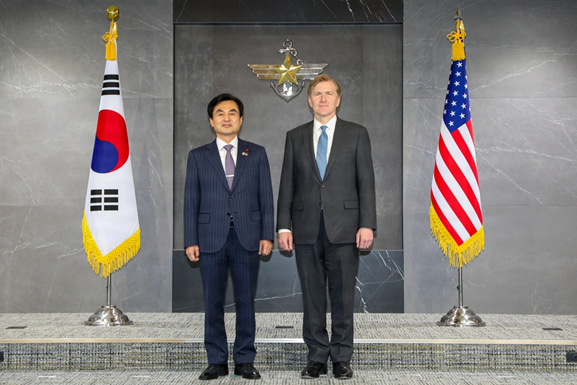
Political and diplomatic events in South Korea in January–February 2026.U.S.-South Korean relations. The visit of Elbridge Colby, Deputy Secretary of Defense for Political Affairs, to the Republic of Korea and Japan took place on January 25-27, 2026. The main content of the talks was the presentation of the new US National Defense Strategy, which had been announced a few days earlier. The document marks an important shift in American military thought: from global dominance to a more pragmatic concept of “deterrence.” At the center of this concept for the Asia-Pacific region is the First Island Chain, a line running through the Japanese archipelago, Taiwan, the Philippines, and the Korean Peninsula. Speaking at the Sejong Institute in Seoul on January 26, E. Colby bluntly stated that the United States intends to create such a military potential that will make any aggression along this chain “unworkable.” This implies the deployment of distributed, modernized and shock-resistant forces in the territories of the Allies, including the Korean Peninsula.

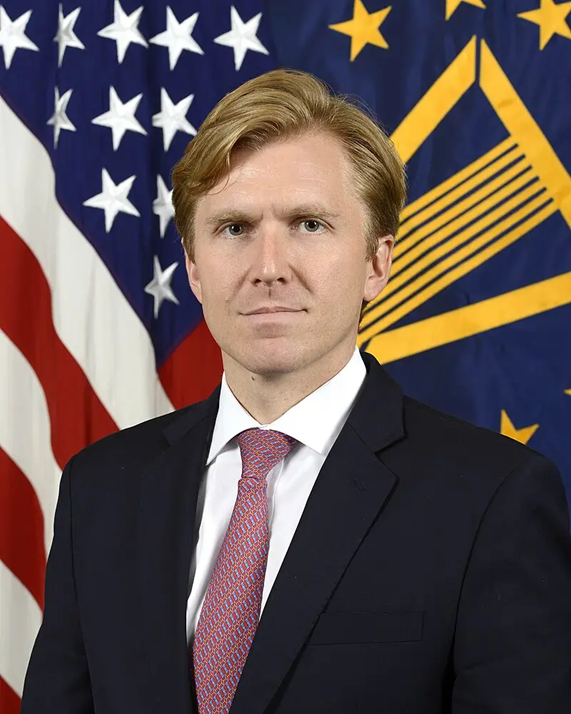
Elbridge Colby, Deputy Secretary of Defense for Political Affairs
A notable feature of the American representative’s rhetoric was the absence of harsh attacks against China. In accordance with the spirit of the new NDS, E. Colby stressed that the United States does not seek regime change in Beijing and recognizes its right to modernize, but intends to build relations from a position of strength, without harboring “naive” illusions about the results of the dialogue. This approach, according to experts, represents a rejection of the previous concept of “overwhelming superiority” in favor of a realistic assessment of military parity and a focus on avoiding escalation.
During meetings with the Minister of Foreign Affairs of the Republic of Korea, Cho Hyun, and the Minister of Defense, Ahn Gyu-back, E. Colby repeatedly described South Korea as an “exemplary ally.” This formulation goes beyond the scope of diplomatic etiquette. In the context of the new strategy, it means that Seoul is recognized as conforming to a new model of partnership, where allies should be able to take on a “leading role in the defense of the Korean peninsula.”

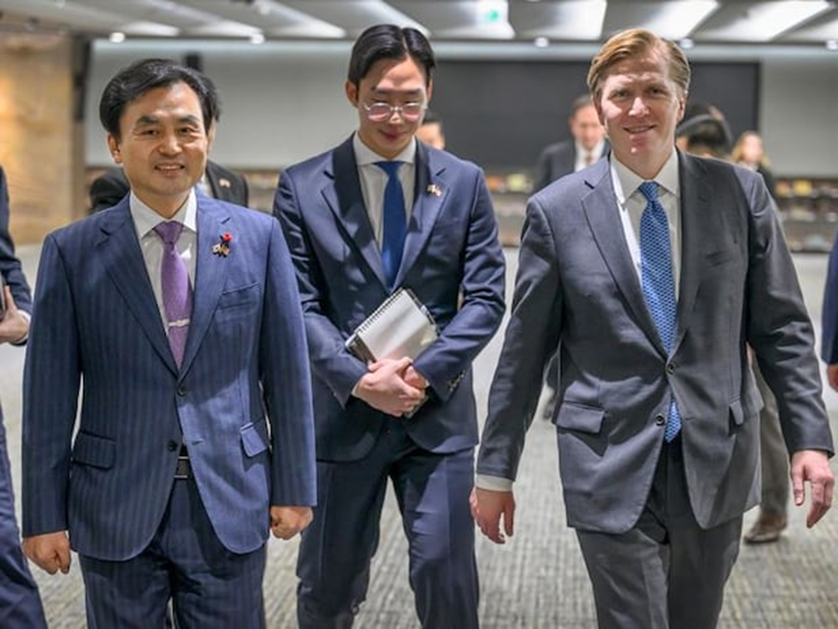
Minister of Defense of the Republic of Korea Ahn Gyu-back meets with U.S. Deputy Secretary of Defense for Political Affairs Elbridge Colby
The immediate practical implementation of this status was the discussion of three key issues:
Transfer of Operational control (OPCON). The parties confirmed their intention to assess the full operational capability (FOC) of the future command under the leadership of the South Korean general as early as 2026, which paves the way for the completion of the process of transferring operational control over South Korean forces during the war before the previously scheduled deadline.
Nuclear submarines. Washington has given the green light to the development of cooperation in the field of nuclear submarines (it is emphasized that we are talking about nuclear, not diesel-electric submarines). In Seoul, this project is positioned not as a unilateral benefit, but as a factor in strengthening the entire alliance, contributing to the overall deterrence potential.
Defense spending. E. Colby publicly approved the decision of the President of the Republic of Kazakhstan Lee Jae-myung to increase defense spending to 3.5% of GDP. The American representative stressed that alliances cannot be based on “feelings alone,” but should be based on “common risks, commensurate contributions and sustainable mutual interests.”
Thus, Elbridge Colby’s visit to Seoul in January 2026 should be considered as an important moment in the development of US-South Korean relations. He marked the transition from declarations of “joint defense” to the practical implementation of a model in which the Republic of Korea assumes primary responsibility for deterrence on the Korean peninsula, acting within the framework of the overall US strategy and receiving “critical but more limited support” from them. For Seoul, this recognition of its increased regional weight is associated with the need to increase military spending and accelerate the modernization of the army, which in the long term may lead to a fundamental transformation of the entire security mechanism in Northeast Asia.
In general, it can be said that the strategy of “pragmatic balancing” is becoming the basis of the foreign policy of the Lee Jae-myung administration. The visit to Beijing and the signing of cooperation agreements demonstrate Seoul’s desire to restore relations with its main trading partner without destroying the alliance with the United States. Relations with the United States, in turn, are entering a more complex and “transactional” phase. The Trump administration’s tariff pressure, which coincided with the publication of the National Defense Strategy, which assigns Seoul “primary responsibility” for deterring the DPRK, signals a shift from a “patronage” model to a “managed partnership” or “responsibility sharing” model. The key challenges for the near future remain: maintaining a balance in relations with China without prejudice to the alliance with Washington.
Conclusion and scenarios for the development of the regional situation.
An analysis of the events of January-February allows us to identify several fundamental trends that will determine the development of the region in the medium term.:
1. The erosion of traditional alliances and the formation of “network” diplomacy. The classic “USA-center – allies-periphery” model is complemented (and sometimes replaced) by a network of bilateral agreements where the allies actively interact with each other (Japan-Great Britain, Japan-Italy, trilateral formats). This increases the stability of the system as a whole, but also complicates its management.
2. The economy as a competitive field. Trade, investment, and supply chains are increasingly viewed through the lens of national security. Coordination between Tokyo and London on rare earth metals, China’s control over exports of critical raw materials, and the US demand for allies to increase defense spending are all links in the same chain. The economy is becoming a field of strategic competition.
3. The return of history and ideology. China’s rhetoric about Japan’s colonial past and Japanese references to the “threat from China” demonstrate that historical grievances and ideological differences remain important tools of foreign policy.
4. China as the guarantor of the existing international legal model. Beijing has consistently strengthened its image as a defender of international law (in its interpretation) and the sovereignty of small states (the cases of Venezuela and Cuba), contrasting itself with the unilateral actions of the United States. This is paying dividends in the Global South and among some European elites.
Based on this, we identify three main scenarios for the development of the situation in the region.
1. The “Controlled confrontation” scenario. None of the key players is interested in direct war, but no one is ready to give up positions either. The region is entering a phase of chronic but controlled tension. The United States continues to put pressure on its allies to increase defense spending, conducts large-scale exercises with South Korea and Japan, but avoids direct clashes with China. China is strengthening its economic presence in the EU and Southeast Asia. Japan is successfully adopting the first package of defense reforms, is facing budgetary difficulties, but is launching the GCAP R&D phase. Relations with China remain frozen. South Korea signs agreements on the transfer of OPCON. The key indicators of this scenario will be the absence of harsh statements from high tribunes, the continuation of working contacts at the ministerial level, and the absence of serious military incidents.
2. The scenario of “Tactical detente through a bipolar treaty.” President Trump, seeking a historical legacy and a major economic deal, is negotiating with Xi Jinping. The United States and China are agreeing on a moratorium on expanding alliances in Asia. The United States is reducing pressure on China on technology, China is committed not to force the issue of Taiwan and reduce aid to Russia. For South Korea, this is an acceptable scenario that allows the current leadership of the Republic of Korea to establish relations with both China and the United States. Japan, on the other hand, may find itself in a strategic impasse due to the aggravation of relations with China. The contours of this scenario will be a possible meeting between Xi Jinping and Donald Trump, positive joint statements, and the resumption of the work of trade commissions.
3. The “Escalation and confrontation” scenario. The failure of the dialogue, fueled by hawks on both sides. The economic war is gradually turning into a military-political one. The United States is imposing secondary sanctions on European and Asian companies trading with China. China is retaliating by imposing additional sanctions against the United States’ regional partners. Japan announces the start of work on its own nuclear weapons (revision of the three non-nuclear principles). For South Korea, this means a complication in relations with China. Russia and North Korea openly support China by conducting joint exercises. Signs of such a development may include the recall of ambassadors, harsh statements by top officials, the intensification of military exercises, and the suspension of trade missions.