“Overcoming regional fragmentation and the emergence of a new geopolitical subjectivity in Central Asia”
Brief description: The article covers the key political events in Central Asia in October-November 2025. The period under study was marked by a unique combination of active multi-vector diplomacy and deepening of internal regional integration. On the one hand, the holding of summits with Russia, the United States and China demonstrated the region’s desire to build balanced relations with world powers. On the other hand, internal consolidation, manifested in the resolution of long-standing border disputes and the launch of joint economic projects, has strengthened its collective subjectivity. These processes reflect the transformation of Central Asia from an object of geopolitics into an independent factor. However, the situation in Afghanistan remains a key challenge to stability, where border incidents can undermine progress. The emerging structural transformation indicates the formation of a new, more cohesive geopolitical entity in Eurasia.
Preface
The autumn of 2025 was a period of high diplomatic activity and significant internal processes for Central Asia, demonstrating the transformation of the region from a passive object of geopolitics into an independent player on the world stage. This eventful period of time was marked by several key trends: skilful multi-vector diplomacy aimed at balancing the interests of world powers; unprecedented deepening of intra-regional integration; as well as the continuation of a course towards managed domestic political reforms. At the same time, these positive developments took place against the backdrop of continuing security threats emanating from Afghanistan. The analysis of these events allows us to create a comprehensive picture of the political landscape of the region.
Central Asia is on the threshold of a new era.
Central Asia is entering a new stage of its development, characterized by the transition to real unity and the formation of an atmosphere of trust and good neighborliness. The key mechanism of this process was the Consultative Meetings of the Heads of State initiated in 2017. This format allowed the leaders of the region to conduct a direct dialogue without external mediation, which became the basis for solving long-standing problems.
Thanks to this, significant results have been achieved. Border issues have been almost completely resolved, which is confirmed by the Agreement on the Junction of Borders between Uzbekistan, Kyrgyzstan and Tajikistan. Joint projects such as Kambaratinskaya GES-1 are now being implemented in the water and energy sector, which was previously a source of conflict. The movement of citizens is also being simplified: residents of Uzbekistan and Kyrgyzstan are already crossing the border using ID cards.
These changes have led to significant economic growth. Over the past eight years, the combined GDP of the region’s countries has reached $520 billion, and mutual trade has doubled to $11 billion.
On the world stage, Central Asia has established itself as a single entity. This is reflected in the development of the Central Asia Plus formats, in which the region builds relations with leading world powers as an integral partner.
In the future, the region faces the challenges of further deepening economic cooperation, building a common security potential and solving environmental problems, including adaptation to climate change. Special attention is paid to the development of human capital against the background of population growth, which will exceed 100 million people by 2050.
Strengthening cooperation is seen as a strategic necessity to ensure stability and prosperity. The countries of the region strive to transform Central Asia into a single space of peace and opportunity, proving the effectiveness of a model based on trust and mutual support.
Thus, there has been an increase in internal regional cooperation, which has led to breakthrough results. Long-standing border disputes have been almost completely settled, which was consolidated by the Agreement on the Junction of Borders between Uzbekistan, Kyrgyzstan and Tajikistan.
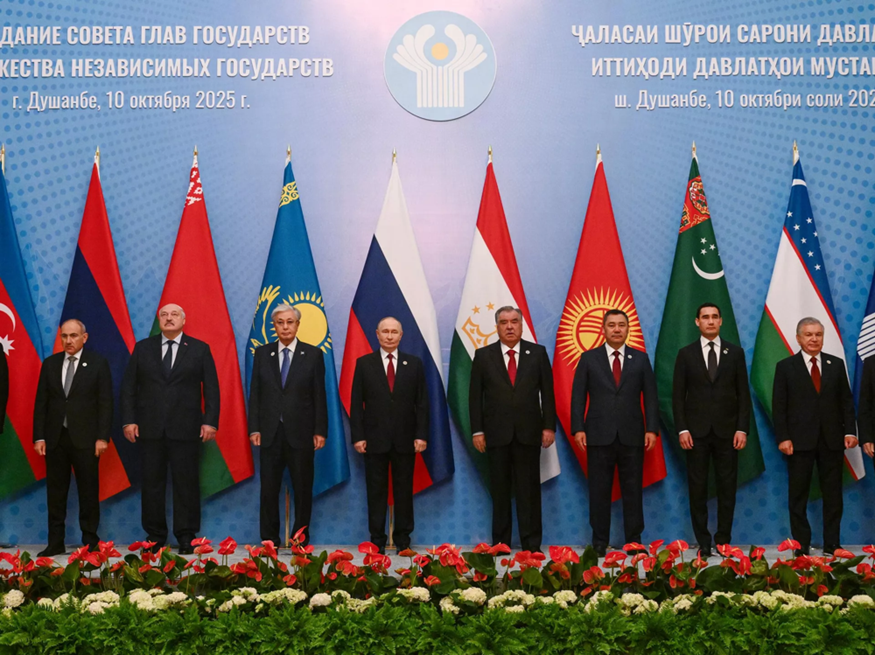
Heads of State at the Central Asia–Russia Summit
The Central Asia–Russia Summit
On October 9, 2025, the second Central Asia–Russia Summit was held in Dushanbe, chaired by President of Tajikistan Emomali Rahmon. The event was attended by the heads of Kazakhstan, Kyrgyzstan, Russia, Turkmenistan, Tajikistan and Uzbekistan.
Following the talks, the leaders approved a final communique and a joint action plan for 2025-2027. The document focused on deepening trade and economic ties, developing interconnected infrastructure, and coordinating security efforts (combating terrorism, drug trafficking, and illegal migration). The participants agreed to “remove unnecessary barriers” to strengthening economic ties, as well as to continue work on the formation of Eurasian transport and logistics corridors and settlements in national currencies. A significant outcome was the agreement on the creation of an international organization for the Russian language and on the development of projects in digital technologies and low-emission energy. In general, the summit confirmed Russia’s strategic role as a partner of the five Central Asian states and the prerequisites for “combining the potentials” of regional countries based on historical ties.
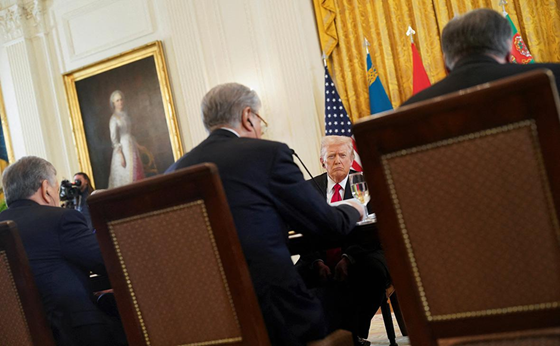
Discussions at the Central Asia–USA Summit
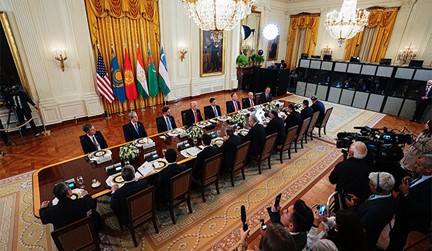
Central Asia–USA Summit (Washington, November 6, 2025)
On November 6, Washington hosted the Central Asia–USA Summit, where President Donald Trump met with the leaders of Kazakhstan, Kyrgyzstan, Tajikistan, Turkmenistan and Uzbekistan. Trump announced his intention to strengthen partnership with the region, which, according to him, previous administrations ignored.
The leaders of the Central Asian countries highly appreciated Trump’s role in world politics. President of Kazakhstan Kassym-Jomart Tokayev congratulated him on his election victory, and President of Uzbekistan Shavkat Mirziyoyev called him the “president of the world” capable of stopping the conflict between Russia and Ukraine. The Heads of state stressed their interest in economic cooperation and investments.
The main outcome of the summit was the signing of major bilateral agreements. Kazakhstan has signed contracts worth more than $17 billion, and Uzbekistan – for $135 billion, including agreements on joint development of rare earth metals. The most significant event was the accession of Kazakhstan to the “Abraham Accords”, which, according to the Vice President of the United States, will give them a new impetus.
Experts note that the United States is primarily interested in the region’s resources, in particular access to minerals. For the Central Asian countries, the summit has become an important element of a multi–vector policy that allows balancing between the dominant players – Russia and China.
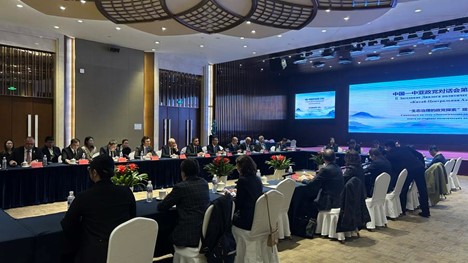
Meeting within the framework of the 2nd China–Central Asia Political Parties Dialogue
Representatives of the political Parties of China and Central Asian countries discussed high-quality development.
From October 30 to November 3, China hosted the 2nd China-Central Asia Political Party Dialogue, which was attended by about 150 representatives, including the leaders of more than 20 political parties from five Central Asian countries.
The delegations visited Beijing, Qingdao and the birthplace of Confucius, the city of Qufu, which made a great impression on the participants. Madina Nurgaliyeva, Director of the Institute of Public Policy of the Kazakhstan Party “Amanat”, noted that she was impressed by China’s ability to combine heritage preservation with long-term strategic planning. During the dialogue, the Chinese side presented the work on drafting the 15th five-year plan. According to Sheradil Baktygulov, director of the Institute of World Politics of Kyrgyzstan, this plan is important not only for China, but also for the entire region.
The delegates were particularly interested in China’s experience in poverty reduction, as the Central Asian countries are also actively working in this direction. Ecology has also become an important topic. Chairman of the Party of Communists of Kyrgyzstan Iskhak Masaliev stressed the need for international cooperation to solve environmental problems. In conclusion, Madina Nurgalieva noted that cooperation manifests itself in concrete benefits for ordinary people, such as mutual visa-free regime and trade facilitation.
In that way, the dialogue with China at the level of political parties has demonstrated the region’s interest in the Chinese model of development, especially in the areas of poverty reduction and long-term planning. For China, it is a tool of “soft power” aimed at strengthening economic ties. This multi-vector approach allows the countries of the region not only to avoid dependence on one partner, but also to maximize benefits by attracting investments and technologies from all sides.
Parliamentary elections in Kyrgyzstan
Early parliamentary elections will be held in Kyrgyzstan on November 30, as a result of the political dynamics of recent months and the decision to restructure the legislature. The shortened nature of the election cycle has led to a tight campaign schedule: pre-election campaigning will last only 20 days, which may limit candidates’ ability to communicate their programs to voters and strengthen the role of local support networks.
Citizens will have to elect 90 deputies according to the majority system in 30 districts, where mandates are distributed among the three leading candidates. A special feature of the current campaign is the requirement of gender balance: no more than two representatives of the same sex are allowed in each of the three winners. This provision is intended to increase gender representation and create a more inclusive legislative system.
According to the CEC, 467 candidates representing a wide range of political and social groups have been registered for the elections. Such competition indicates high political activity against the background of ongoing institutional transformations in the country.
From the point of view of regional dynamics, the election results are becoming important: the renewed composition of the parliament will shape the legislative agenda in the context of Kyrgyzstan’s adaptation to changing economic conditions, strengthening cooperation within the EAEU and the need to maintain internal political stability.
Electoral reform in Kazakhstan.
On October 24, 2025, at a solemn event on the occasion of Republic Day, President of Kazakhstan Kassym-Jomart Tokayev once again touched upon the reform of the electoral system. He recalled the previously announced proposal to move to a single unicameral parliament (elected on party lists) and stressed that at the local level “it is necessary to preserve the majority system of elections to maslikhats.” According to Tokayev, direct elections of akims and deputies of maslikhats are an important element of interaction between government and citizens and should not be canceled.
The President noted that this institution expanded (rural akims, then district and city akims) and became a unique practice for the region, therefore it requires “common political sense” and “the absence of excessive conservatism.”
Thus, the intention was confirmed to combine the new party-proportional principle of parliament formation with the preservation of a personal mandate at the levels of local government. Tokayev’s statement became one of the key domestic political events in Kazakhstan in the fall of 2025, signaling a smooth transition to a unicameral system while maintaining direct popular legitimacy on the ground.
A conflict on the Tajik-Afghan border.
On October 25, 2025, a new armed incident occurred on the border of Tajikistan and Afghanistan. According to media reports, Tajik border guards exchanged fire with Taliban militants near the village of Davang (Badakhshan province).
The official number of victims has not been announced, but according to sources, there are dead and injured. According to preliminary data, the reason for the conflict was a change in the course of the Pyanj River (possible flooding of territories) – the tributary of the Amu Darya is rich in gold-bearing sands, and Chinese gold mining companies laid its channel on the Afghan shore. Local residents claim that Chinese developments have destroyed the ecology of the river and caused discontent on the Tajik side, who feared water shortages and floods.
This is the second such incident in a couple of months in this region (the first was recorded in August 2025). Tajik officials have not yet commented on the situation. The incident has exacerbated the regional situation and coincided with the arrival of the Afghan Taliban delegation in Dushanbe, which may affect the further development of the dialogue between the parties.
Conclusion
Thereby, during the reporting period, the contours of its transformation into an independent and consolidated factor of international relations became clearer in Central Asia. The successful holding of summits with the United States, Russia and China demonstrated the region’s desire to build a balanced multi-vector policy, avoiding unilateral dependence. At the same time, deepening intra-regional integration, especially in addressing border and water-energy issues, creates a solid foundation for developing a common position and joint development. At the same time, instability in Afghanistan, manifested in armed incidents on the border, remains a key challenge that can undermine progress and exacerbate the situation. The ongoing processes reflect a long-term trend towards the formation of a polycentric world order, where regional associations play an increasingly important role. Under these conditions, the influence of external powers remains important, but it is becoming part of a more complex structure of interactions, where Central Asian countries seek to pursue their own pragmatic policies based on national interests and the search for profitable partnerships. The further development of the situation will depend on whether the region can maintain internal unity in the face of external pressure and whether it will be possible to stabilize the situation in Afghanistan. In this regard, it is advisable to identify the following forecasts and scenarios of development:
Scenario 1. “Regional consolidation”: The countries of the region continue to deepen integration by institutionalizing the format of Consultative Meetings and creating common economic mechanisms. The multi-vector policy makes it possible to successfully attract investments from all key partners (USA, EU, China, Russia) without becoming directly dependent. The region is becoming a stable economic and logistics hub, effectively managing external influences.
Scenario 2. “Intensification of competitive interaction”: In the event of a serious escalation on the Afghan border or increased geopolitical pressure from one of the world players, the unity of Central Asia may be put to the test. This will lead to polarization within the region, where individual countries will be forced to make a clearer choice in favor of one of the external partners, which will weaken their collective position and slow down integration processes.