
Author: Sabita Binta Azad Shifa, writer & research analyst, Dhaka, Bangladesh


Short description: The article by Sabita Binta Azad Shifa explores the strategic importance of the Port of Chittagong (Chattogram) within the broader context of China’s 21st Century Maritime Silk Road and the growing geopolitical activity in the Bay of Bengal. The author examines China’s key interests in the region, including the strengthening of logistics chains, the creation of alternative supply routes, and the expansion of “port diplomacy.” The analysis shows that Bangladesh has found itself at the crossroads of competing interests from China, India, and the United States, seeking to develop its infrastructure while maintaining political and economic sovereignty. The article also highlights domestic public sentiment, potential economic risks, and long-term scenarios for the BCIM corridor. Ultimately, the piece emphasizes that the future of Chittagong depends on a careful balance of diplomacy, strategic planning, and regional cooperation.
When Chinese naval destroyers docked at Chittagong in late 2024, the move underscored more than bilateral courtesy: it flagged Beijing’s rising ambition along the Bay of Bengal, where Bangladesh — a modest nation with large aspirations — may become a linchpin in the 21st-century maritime Silk Road.
As China intensifies its push into the Indian Ocean and Bay of Bengal via its Maritime Silk Road strategy, the modest Bangladeshi port city of Chittagong (Chattogram) is emerging not just as a logistics hub, but as a focal point of great-power rivalry, regional opportunity, and diplomatic balancing. Bangladesh now stands at a crossroads: can it harness the promise of infrastructure and trade while preserving sovereignty and neighborhood harmony?
What is the “China Indica / Maritime Silk Road” Strategy?
The so-called Indica route is a shorthand for the maritime leg of China’s Belt and Road Initiative (BRI) — especially its push through the Indian Ocean, Bay of Bengal, and ports in South and Southeast Asia. It envisions Chinese-managed or -financed sea and port nodes (e.g. Hambantota in Sri Lanka, Gwadar in Pakistan, Kyaukpyu in Myanmar) as “pearls” in a strategic string enabling China to reach energy, trade, and naval influence beyond the South China Sea.
This maritime strategy was formally launched in 2013 under Xi Jinping’s signature BRI framework. (ResearchGate) Over time, China has pursued port or infrastructure stakes in dozens of coastal or littoral states — Sri Lanka, Pakistan, Myanmar, Djibouti, Maldives, Kenya, and others. (9Dash Line) In South Asia, alongside ports, China also proposed the BCIM (Bangladesh-China-India-Myanmar) corridor to extend connectivity inland. (Wikipedia)
China’s Port Moves — How Many and Where?
By 2025, China has actively invested in or managed port infrastructure in multiple countries along the Indian Ocean and adjacent seas:
Sri Lanka: Hambantota (via China Merchants)
Pakistan: Gwadar (China-Pakistan Economic Corridor)
Myanmar: Kyaukpyu deep-sea terminal, Myanmar ports
Bangladesh: Chittagong, Mongla (Chinese assistance to enhance capacity) (Small Wars Journal)
Djibouti: Chinese naval logistics base (though closer to Horn of Africa)
Maldives / Sri Lankan smaller ports: strategic leases and development deals
In Bangladesh’s case, Chinese footprint is not limited to ports — it extends into power plants, bridges, digital infrastructure, and transportation nodes. (NDRC)
Bangladesh’s Role: Where, What, and When?
Key Projects Around Chittagong / Bay of Bengal
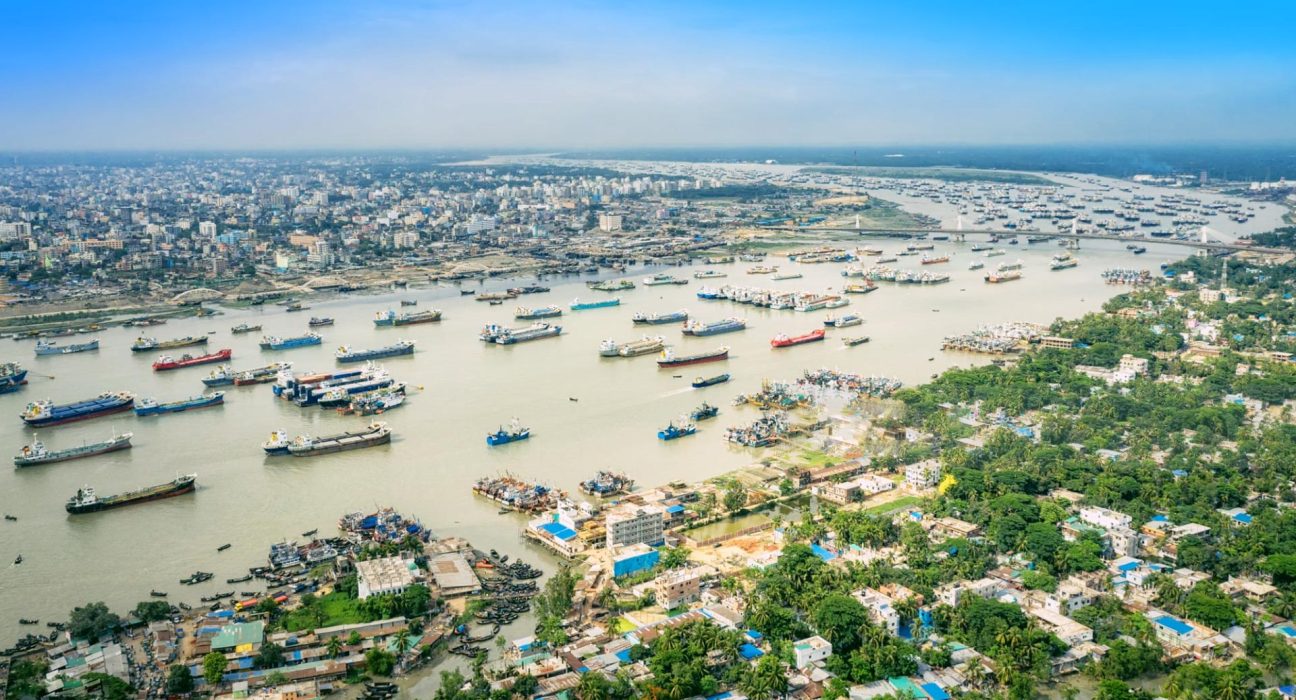
Chittagong Port (Chattogram) remains Bangladesh’s main seaport, handling over 70 % of its trade. (Wikipedia) China has pledged to modernize and upgrade its capacity. (Small Wars Journal)
Karnaphuli Tunnel: Bangladesh’s first underwater road tunnel (3.32 km segment under Karnaphuli River), built with Chinese financing and engineering. It was inaugurated in October 2023. (Wikipedia)
Chinese-assisted hospital in Chittagong: The Bangladeshi government has proposed a 500–700 bed hospital in Hathazari Upazila near Chattogram, seeking Chinese support (grant or aid) for the project. (The Business Standard)
Other hospitals & health infrastructure: Bangladesh has asked for Chinese support in developing major hospitals, including in Dhaka and northern districts. (Prothomalo)
Special Economic Zones (SEZs) and industrial parks around Chittagong are being positioned to attract Chinese investors. (The Business Standard)
Thus, Chittagong is not only a maritime node, but also a ground base for industrial, health, and connectivity infrastructure.
What’s in It for Bangladesh?
The argument for Bangladesh’s participation in this Chinese-led route is multifold:
Infrastructure financing & technology
Bangladesh obtains capital, technical know-how, and speed from Chinese contractors. Projects like the Padma Bridge, Karnaphuli Tunnel, or power plants have leaned heavily on Chinese financing and execution. (NDRC)
Trade facilitation & logistics hub potential
Enhanced port capacity and hinterland connectivity can turn Bangladesh into a transshipment and regional trade node — serving northeast India, Bhutan, Nepal, and Myanmar. (New Age)
Healthcare & soft power gains
The Chinese push to facilitate medical tourism (Yunnan hospitals opening to Bangladeshis, special visa support) indicates “soft” investments with long-term people-to-people influence. (Dhaka Tribune)
Diversification of diplomatic and strategic partners.
For Bangladesh, deeper China ties reduce overreliance on India, offering room for policy maneuvering. Analysts view Dhaka’s approach as a “balancing act.” (Lowy Institute)
Economic spillovers and employment
Chinese investments in roads, bridges, power, and industries bring jobs, local supply chains, and ancillary growth. (The Business Standard)
Yet, these gains are not without risk.
Tensions, Pressures & Regional Reactions
India’s Concerns & The Strategic Backdrop
India views the Bay of Bengal and Bangladesh’s ports as part of its strategic backyard. Chinese presence in Chittagong and Mongla is often seen in New Delhi as encroachment. (9Dash Line) Some analysts warn that Bangladesh must guard against becoming a conduit for Chinese naval access. (The Daily Star)
Projects must be carefully negotiated so that land leases, operational control, and security provisions do not erode Bangladesh’s sovereignty. (9Dash Line)
Debt and Overcommitment
The BRI model has faced criticism for “debt trap” risks. Bangladesh must ensure that Chinese loan terms remain sustainable and transparent. (New Age)
Diplomatic Balancing
Overcloser ties with China may strain Bangladesh’s relationship with India, the United States, or other regional partners. Dhaka must tread a path that allows collaboration without appearing as a proxy. This is especially delicate amid Indo-Pacific rivalry.
Furthermore, local public sentiment may sway depending on perceived benefits or sovereignty costs.
Why the Bay of Bengal Matters
The Bay of Bengal is more than water — it is a strategic theater:
It connects China’s southern maritime approach with the Indian Ocean.
It is rich in shipping lanes, energy routes, and fisheries.
Control or influence over ports along its rim enables maritime depth, surveillance, and reach.
For Bangladesh, it is the gateway for nearly all its external trade; improving its maritime infrastructure strengthens its overall sovereignty and resilience.
Thus, Chittagong is not only a node on the route — it bridges land, sea, and regional influence.
What Does China Want?
China’s strategic calculus is clear:
Maritime access and presence beyond the South China Sea, circumventing chokepoints like the Malacca Strait.
Supply chain resilience: secure sea lanes and alternative routes for trade and energy supply.
Strategic leverage: ports and infrastructure become tools of influence, bargaining, or pressure.
Soft power and legitimacy: via infrastructure diplomacy, health, and people-to-people ties.
Geopolitical encirclement of India: knitting together neighbors like Pakistan, Bangladesh, Nepal, Sri Lanka to dilute India’s regional dominance.
Chittagong is thus more than a port — it is China’s potential bridgehead into South Asia’s maritime domain.
A Bangladesh Perspective Reality Check & Outlook
Many Bangladeshis see China as an alternative partner to India, especially in sectors like trade, infrastructure, and medical access. Indeed, Bangladesh has historically leaned close to India, but frustrations over perceived postcolonial treatment, border issues, and Indian dominance have fueled wishes for more diversified ties. Nobel laureate Dr Mohammad Yunus’ and his interim government has actively pursued China links: recent state visits, medical cooperation, and infrastructure proposals under Chinese support.
China-US Focus
Chinese authorities have eased visa or medical access protocols for Bangladeshis to Yunnan hospitals, and made flights more accessible. (Dhaka Tribune) China is currently being asked to fund major hospitals — in Chattogram (Hathazari) and Rangpur — under grant/aid modalities. (The Business Standard)
If executed well, Bangladesh could secure new sources of growth, improved healthcare, and elevated geopolitical relevance. But missteps could leave it overexposed or mired in debt. The coming decade’s diplomacy, contract design, and infrastructure governance will determine whether Chittagong becomes Bangladesh’s “gateway to the 21st century” or a contested pawn.
Article write for Otralectura.com