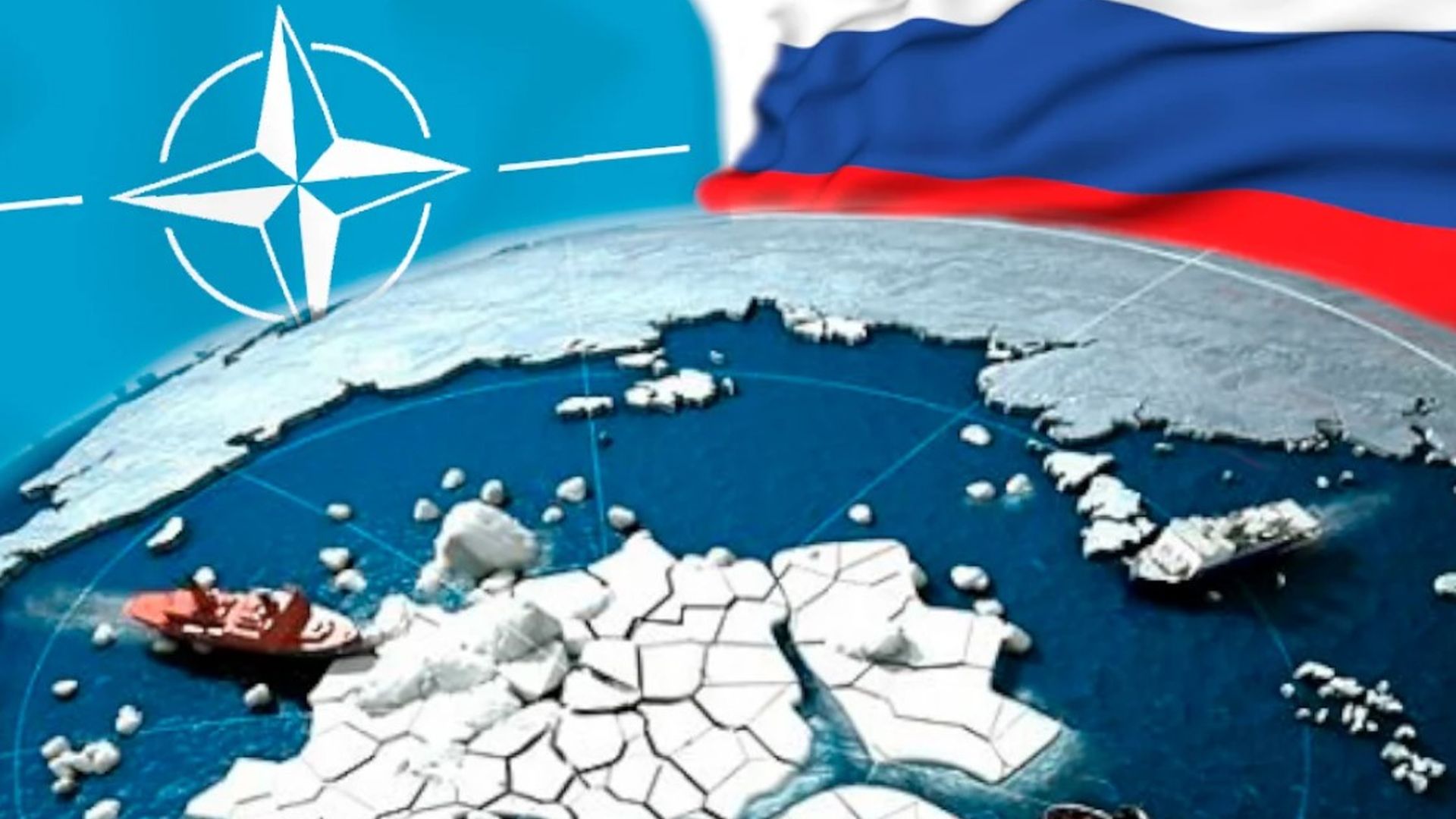
Against the backdrop of global climate warming, which is gaining momentum due to the emission of vast amounts of greenhouse gases into the atmosphere, there is a growing interest from various countries in the Arctic.
This is explained by several reasons: first, climate warming has led to a reduction of the ice cover to nearly a historical minimum, which will significantly facilitate, in the near future, the navigation of vessels through the Arctic Ocean for countries that do not possess a developed icebreaker fleet. Second, the Arctic is a territory with enormous economic and scientific research potential.
The Arctic contains 13% of the world’s oil reserves, 30% of gas, and more than 10% of nickel, gold, zinc, and cobalt, respectively. In addition, the Arctic is rich in rare earth metals, which are in demand in high-tech industries and the production of “green technologies.” Developing Arctic mineral deposits allows countries to secure millions of barrels of oil and cubic meters of gas, while enabling the production of environmentally safe technologies that significantly reduce harmful emissions into the environment.
However, the Arctic is rich not only in mineral resources but also in another extremely important resource — nearly 70% of the world’s freshwater reserves are stored in the polar ice caps of the Arctic and Antarctica. More than half of these reserves are located in the Arctic. Considering the global freshwater deficit — an unresolved issue affecting about a quarter of the world’s population — the Arctic, with its freshwater resources, could in the future meet the basic needs of millions of people, as well as support the demands of agriculture and industry.
In addition, important transport routes pass through the Arctic: the Northern Sea Route and the Northwest Passage. While the Northwest Passage is currently poorly developed, the Northern Sea Route plays a crucial role in the development of Russia’s Arctic zone. This route is 7,200 km shorter than the southern route through the Suez Canal, significantly facilitating cargo transportation to Asian countries. It can be stated with a high degree of confidence that in the coming decades the importance of both the Northern Sea Route and the Northwest Passage will only continue to grow.
The unique climatic conditions have shaped a distinctive flora and fauna in the Arctic. To preserve the region’s natural heritage and prevent threats such as glacier melting and other environmental issues, numerous scientific projects are being conducted in the Arctic. Most of these projects are located in Russia’s Arctic zone. For example, the Interregional World-Class Scientific and Educational Center “Russian Arctic: New Materials, Technologies, and Research Methods” addresses health protection issues and develops treatment methods for diseases caused by prolonged stays in high latitudes. Work is also underway in biotechnology, the study of currents in northern seas, and the development of solutions to address rapid warming.
In addition to the scientific centers of various countries, Arctic research issues are also discussed at meetings and conferences. For example, at the Arctic Circle Assembly, an annual international gathering dedicated to the Arctic, the issue of methane emissions in the Arctic and potential solutions was discussed in 2024.
Mineral resources, transport routes, and other aspects generate genuine interest in the Arctic, especially from the sectoral Arctic states. The United States, Canada, Russia, Denmark, and Norway have developed their own strategies for addressing Arctic-related issues in the course of Arctic relations.
Russia pays special attention to the development of its own Arctic zone. More than 80% of the country’s natural gas and 17% of its oil are extracted in this territory. As mentioned earlier, the Northern Sea Route also falls within Russia’s Arctic zone and holds significant strategic importance for the country’s economic development. Therefore, Russia’s Arctic policy shows a clear trend toward further development of the Northern Sea Route, fostering partnerships with other countries, and expanding the industrial complex of Arctic regions. In addition, due to the breakdown of relations between members of the Arctic Council and Russia, the government emphasizes the importance of protecting national interests in the Arctic. To this end, the Russian Maritime Collegium was established in August 2024. A more detailed description of Russia’s Arctic plans can be found in the “Arctic Development Strategy until 2035.”
According to the 2022 National Security Strategy, the Arctic is considered one of the priority regional directions of American foreign policy. The Arctic region provides capabilities for aerospace warning, aerospace control, and maritime warning for the U.S.-Canadian North American Aerospace Defense Command. It can be concluded that, in the understanding of American policymakers, the Arctic holds significant importance for the national defense of the United States. From this follows the main goal of the country’s Arctic policy — to strengthen its military, diplomatic, and economic presence in the region. Despite claims about the necessity of cooperation with “Arctic allies,” the U.S. openly accuses Russia of creating risks of military confrontation. Similar accusations are directed at China, with which Russia has established close cooperation regarding the Northern Sea Route and the development of the Arctic region in general. By accusing these countries of posing a military threat, the United States demonstrates its concern about the emergence of a multipolar world in which it is no longer the sole dominant player on the political stage.
Canada’s Arctic policy regarding the development of northern territories is similar to Russia’s in that it provides certain incentives to companies engaged in production activities under Arctic conditions. The socio-economic programs in Canada’s Arctic zone are aimed at reducing the development gap between the regions of the Far North and the Middle North. To this end, northern regions receive substantial subsidies for the development of education, healthcare, and social services. In addition to socio-economic aspects, Canada pays attention to the protection of the Arctic environment and the preservation of its natural resources.
In 2024, Canada updated its “Arctic Policy 2019,” identifying the resumption of the Arctic Council working groups’ activities as one of its priority tasks. At the same time, Canada, like the United States, frames Russia’s activities in a negative context and expresses concern about the strengthening of Russia’s positions in the North. It can be said that Canada’s policy, unlike that of the United States, takes a more peaceful approach in the Arctic region, although its contradiction regarding the desire to resume Arctic Council activities while criticizing Russian policy remains.
Norway’s Arctic policy is influenced by its chairmanship of the Arctic Council, which began in 2023 and is set to conclude in 2025. The country’s policy aims to promote stability in the region and constructive cooperation among Arctic states. Norway also addresses environmental protection in the Arctic, industrial development, and support for people living in the Far North. The country participates in various Arctic-related projects and organizes its own meetings to study the issues of the Far North regions. For example, in 2016 Norway established the Regional Forum of the Far North, which, although it does not have decision-making authority, serves as an important platform for dialogue and mutual understanding of the problems faced by Arctic regions.
Like other sectoral states, Norway maintains a cautious stance toward Russia; however, as chair of the Arctic Council, it stated in 2024 that it would regret Russia’s withdrawal from the organization. Thus, Norway’s Arctic policy is similar to that of most Arctic countries, while being influenced by its status as chair of the Arctic Council.
Denmark stands out sharply among other countries in the context of Arctic policy. As an Arctic state through Greenland, in 2025 it risks losing its island. Previously, Denmark’s Arctic interests included ensuring Greenland’s economic growth, protecting the environment, and supporting the indigenous population. Today, the country is focused on strengthening the security of its Arctic region. This is connected to the high-profile statements made by Donald Trump about his desire to purchase Greenland to enhance U.S. national security. The situation is further complicated by the fact that the residents of Greenland themselves do not wish to be part of Denmark or the United States. The Prime Minister of the territory, Múte Bourup Egede, expressed the view that the island should represent itself on the world stage and that its people are Greenlanders, not Danes or Americans. Donald Trump first proposed purchasing Greenland in 2019 and has returned to the issue again. It can be assumed that he seeks to increase his own authority and offset the negative impact of acknowledging the impossibility of ending the war between Russia and Ukraine in a single day, as he promised during his election campaign. Whatever the true motives of the United States regarding Greenland, Denmark faces a serious challenge, and its actions will determine whether it retains its status as an Arctic state.
As we can understand from the above, different countries have their own plans and objectives regarding the Arctic. To regulate these plans and find compromises between state interests, various platforms for international Arctic dialogue exist. Some organizations focus on issues concerning the indigenous peoples of the Arctic (such as the Saami Council), while others address environmental problems in the Far North (like the Northern Environmental Finance Corporation), and so on. The largest and most influential organization is the Arctic Council — a high-level intergovernmental forum whose members are Russia, Denmark, the United States, Iceland, Canada, Norway, Finland, and Sweden. The Council includes both permanent participants (organizations representing the indigenous peoples of the North) and observers (non-Arctic states, intergovernmental organizations, etc.). Since 1996, the Arctic Council has dealt with issues of Arctic development, conservation, and protection. However, the unwillingness of Arctic countries to cooperate with Russia within joint international projects, their condemnation of its policies, and the imposition of sanctions have created a crisis in relations among Arctic Council members. In February 2024, Russia suspended its annual contributions to the Arctic Council but stated that it would not leave the union as long as it does not become “hostile” to the country. Considering the current stance of European countries and the United States toward Russia, a prompt restoration of cooperative work within the Arctic Council does not appear likely.
In the context of the emergence of multipolarity, the international community faces serious challenges in the fields of economy, politics, ecology, and more. These issues also concern the Arctic. As a region with enormous resource, transportation, and other potentials, the Arctic today has become a point of contention not only among Arctic states but also among non-Arctic countries.
There is no specific international treaty defining the legal status of the Arctic. This gives rise to the problem of determining Arctic boundaries, over which disputes continue to this day. The situation worsened in 2022, when Western countries condemned Russia’s actions and severed ties in many joint projects, including Arctic ones. It is also important to note China, which is not only interested in increasing its influence in the Arctic but also claims a leading role on the global political stage.
In addition to new issues regarding the Arctic that have emerged in the context of a multipolar world, there remain longstanding problems: global warming and glacier melting, the low standard of living in northern regions compared to southern ones, and support for the indigenous peoples of the Far North. All of these issues require joint action by countries whose relations are currently experiencing a deep crisis. It can be argued that significant progress in addressing Arctic problems will occur only after connections are restored among the members and observers of the Arctic Council.