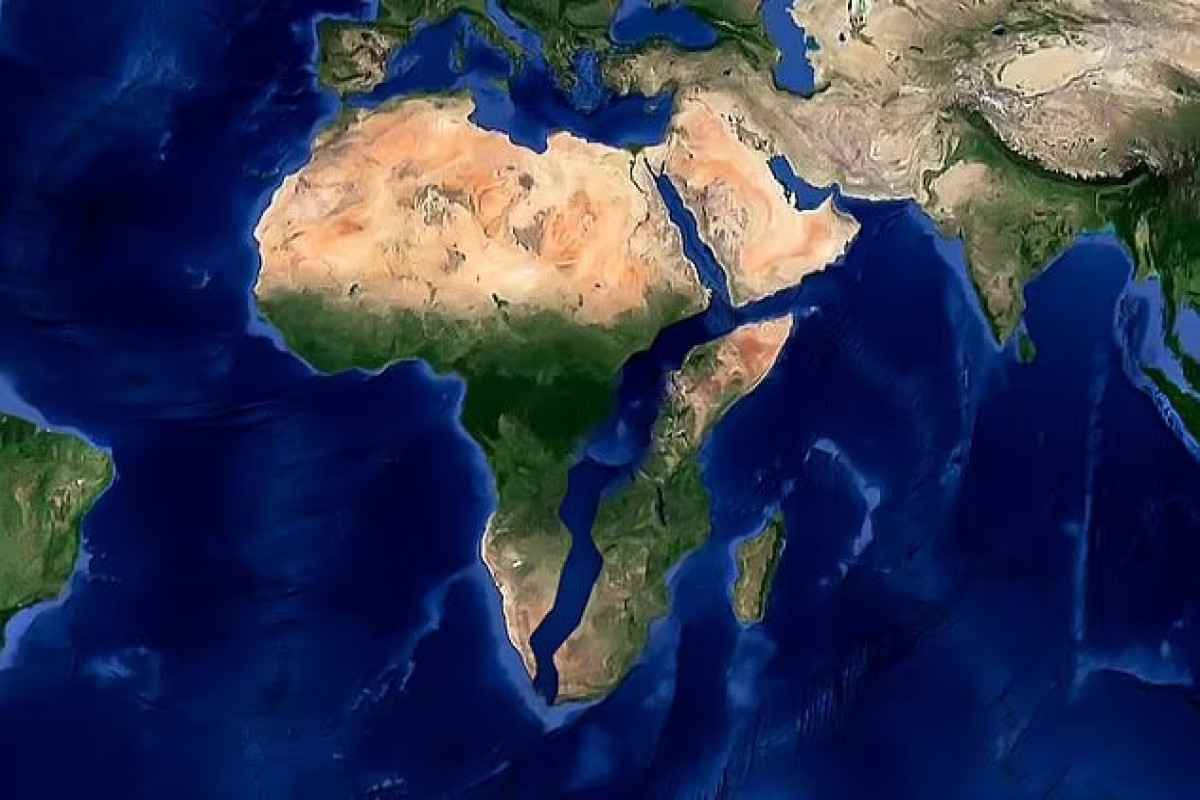
In geo-economic terms, the significance of the African continent is largely determined by its abundant natural and demographic resources (a young and active population). By 2050, Africa’s population will account for 25% of the global total, and the continent will be responsible for up to 50% of global population growth, providing five times more labor than Europe will have by that time, and more than China and India combined. Africa is often perceived as a developing continent that, in the coming years, will become a strong global player in the economy as a whole and even a driver of global growth. The region is experiencing significant growth, much of which is in agriculture. For example, in some projections for 2024–2030, Egypt and Ethiopia, which joined BRICS in 2024, are among the countries expected to have the highest growth (39.2% and 66.2%, respectively). Overall, the vast majority of African countries demonstrated stable GDP growth in 2022, and in the coming years the growth rate is expected to remain around 4%. According to the African Development Bank’s forecast, in 2023–2024, the five fastest-growing African economies – Rwanda, Côte d’Ivoire, Benin, Ethiopia, and Tanzania – will grow on average by more than 5.5% and regain positions among the world’s 10 fastest-growing economies. Growth of more than 5.5% is also projected in several other African countries, including the Democratic Republic of the Congo (DRC), The Gambia, Mozambique, Niger, Senegal, and Togo. Among this group of ten are countries seeking BRICS membership (Senegal, the Democratic Republic of the Congo, and Algeria).
On the other hand, the economies of African countries predominantly remain resource-oriented. Oil exporters are countries where net oil exports account for 30% or more of total exports. These include Angola, Cameroon, Chad, the Republic of Congo, Equatorial Guinea, Gabon, Nigeria, and South Sudan. Except for Angola, Nigeria, and South Sudan, they are members of the Central African Economic and Monetary Community (CEMAC).
A serious vulnerability is the significant number of low-income countries (the average gross national income per capita in 2019–2022 was equal to or below USD 1,135, according to the World Bank (WB), Atlas method). The WB classifies Burkina Faso, Burundi, the CAR, Chad, the DRC, Ethiopia, Eritrea, The Gambia, Guinea, Guinea-Bissau, Liberia, Madagascar, Malawi, Mali, Mozambique, Niger, Rwanda, Sierra Leone, South Sudan, Tanzania, Togo, Uganda, and Zimbabwe in this category. The rest are middle-income countries (gross national income per capita – above USD 1,135).
Finally, on the African continent, there are many countries in unstable situations and affected by conflicts. These include Burkina Faso, Burundi, Cameroon, the CAR, Chad, the Comoros, the DRC, the Republic of Congo, Ethiopia, Eritrea, Guinea-Bissau, Mali, Mozambique, Niger, Nigeria, São Tomé and Príncipe, South Sudan, and Zimbabwe.
As of 2022, based on gross domestic product (GDP) data published by the World Bank, the ten largest African economies were (in descending order):
- Nigeria (GDP USD 440,776,970,000). The main exports are oil and agricultural products. Nigeria is one of the world’s largest exporters of yams, ginger, palm oil, cocoa, and petroleum products. It has rich natural resources, including crude oil, natural gas, limestone, niobium, lead, arable land, tin, iron ore, and zinc. It is the most populous country in Africa and home to the second-largest stock exchange on the continent. Advantages include a strong financial sector and a developed services market. Major trading partners are the USA, European countries, and China.
- South Africa (GDP USD 419,946,430,000). South Africa is home to most of the continent’s largest corporations, banks, industrial enterprises, and the largest stock exchange. Key industries include mining, tourism, financial services, and manufacturing. The main export products are gold, platinum group metals, and iron ore (the most important trading partner for iron ore is China).
- Egypt (GDP USD 404,142,770,000). In recent years, the country’s economic growth has slowed due to the pandemic’s impact on tourism and manufacturing, but these effects are gradually being overcome. Egypt is one of the most visited countries in the world (over a million tourists annually). It is considered to have the most diversified economy in Africa. Major sources of income include mineral extraction (gas), tourism, finance, services, agriculture, and construction.
- Morocco (GDP USD 132,725,260,000). The Kingdom of Morocco is the most visited country on the African continent (over 8 million visitors in 2021). Morocco’s economy is based on the service sector (over 50% of the economy). Industry is the second-largest sector of the Moroccan market (over 29% of the country’s economy). The country hosts some of the largest fish markets in Africa. Agriculture accounts for 14.8% of the economy.
- Ethiopia (GDP USD 111,271,110,000). The country’s capital hosts the headquarters of the African Union (AU). The economy is a developing mixed economy with a large share of agriculture and industry (over 50% of the country’s GDP).
- Kenya (GDP USD 110,347,080,000). Kenya has a strong financial services sector and is one of the few African countries where mining and oil contribute little to GDP. The economy is largely influenced by agriculture and the service sector. An important industry is tourism (visiting protected national parks). Nairobi hosts the headquarters of powerful corporations.
- Ghana (GDP USD 77,594,280,000). Ghana’s economy is a developing mixed economy focused on various sectors. The most prominent are the service sector, agriculture, and industry. Ghana exports crude oil, gold, cocoa, and timber. It is one of the world’s largest cocoa exporters. The mining sector (gold, oil) is well developed. A negative factor is the rise in unemployment.
- Angola (GDP USD 72,546,990,000). Since the early 2000s, the situation in Angola has significantly improved. For more than five years, starting in 2002, Angola was considered the fastest-growing economy in the world. However, Angola’s economy continues to suffer from the consequences of a war that lasted more than four decades. The economy is based on oil extraction, agriculture, and the service sector. The capital, Luanda, is a major financial center in Africa. The country is rich in oil, petroleum products, natural gas, diamonds, iron ore, phosphates, bauxite, uranium, gold, granite, copper, and feldspar. It is one of the largest oil producers on the continent.
- Côte d’Ivoire (GDP USD 69,764,830,000). The country’s economy is a developing mixed economy with a strong presence in agriculture, services, and industry, which together account for over 90% of the country’s GDP. The economy is heavily dependent on agriculture. Côte d’Ivoire is the world’s largest exporter of cocoa.
- Tanzania (GDP USD 67,775,100,000). The economy is based on agriculture, which employs over 70% of Tanzania’s workforce. The country mainly exports cashew nuts, gold, cotton, and coffee. In addition, Tanzania has made significant investments in the tourism industry. The capital, Dar es Salaam, is one of the largest financial centers in Africa.
With 2023 data taken into account, the top 10 leading African economies include: 1. Egypt (GDP $476.75 mln). 2. Nigeria ($472.62 mln). 3. South Africa ($405.27 mln). 4. Algeria ($195.00 mln). 5. Morocco ($130.91 mln). 6. Ethiopia ($126.78 mln). 7. Kenya ($113.42 mln). 8. Angola ($106.78 mln). 9. Tanzania ($75.73 mln). 10. Ghana ($73.77 mln).
Thus, among the ten largest African economies, three countries have already joined BRICS (South Africa, Egypt, Ethiopia). Nigeria and Algeria (which has rich natural resources such as oil and natural gas) have expressed, in one way or another, corresponding intentions. Other countries on the list have also, to varying degrees, shown interest in BRICS. In addition, Senegal ranks 19th (its economy is based on tourism, fishing, construction, mining, and agriculture) and is widely recognized as a strong candidate for BRICS membership. The DRC ranks 12th, Sudan 13th, and Tunisia 14th, all of which have expressed readiness to join BRICS.
However, only South Africa and Egypt, among the BRICS member countries, are, according to various data, in the top 10 wealthiest African countries (with the highest per capita income). Among those who have applied, wish to join, or are interested are Algeria, Tunisia, Equatorial Guinea, Gabon, Tunisia, and Eswatini.
Nigerian experts highlight the largest sectors of African countries’ economies that are most attractive to foreign investors, including those from BRICS countries:
- Agriculture Agriculture remains the largest source of over 30% of the income of African states. More than 90% of African countries rely on agriculture as one of their three main sources of income. In Nigeria, agriculture contributes the most to the country’s GDP, accounting for over 40%, and also remains the largest employer. Investors could invest in fertilizer production, seed distribution, agricultural industrialization, machinery and equipment, farmer financing, processing, and large-scale farming. Challenges that investors may face in this sector include conflicts between local communities, crop pests, and excessive government bureaucracy.
- Oil and Gas. Africa’s oil and gas structure is based on an extensive network of oil fields located across the continent. The most promising African countries in this sector include Nigeria, Angola, Libya, Algeria, and Ghana. There are investment opportunities in the upstream, midstream, and downstream sectors, with the greatest potential in the upstream and midstream sectors. Some challenges to anticipate in the industry include conflicts between local communities, excessive taxation, oil theft, and bureaucracy.
- Mining. This sector is one of the largest employers in Africa, with revenues over the past decade increasing by billions of dollars. Mining takes place in almost all countries on the continent, where there are opportunities for exploration, extraction, and processing. Investors can take advantage of opportunities in machinery and equipment, mineral trading, or investing in mining companies. Challenges in Africa’s mining sector include disproportionately high mining costs compared to the previous two sectors, worker strikes, and bureaucracy.
- Information and Communication Technology (ICT). In recent years, the ICT sector in Africa has made significant progress. As of 2021, there were ten “unicorns” in Africa, which is considered a major achievement, given that the ICT industry in most African countries develops with almost no government support. Nigeria, Kenya, South Africa, Egypt, and Morocco are considered the most attractive in this field. Challenges include overall startup management.
- Tourism. Africa’s tourism sector is vast and focused on a wide range of activities. Africa is one of the most visited continents in the world. The largest countries investing in tourism on the continent are Egypt, South Africa, Kenya, Namibia, Mozambique, and Ethiopia. Investors can take advantage of opportunities to invest in the hospitality and transportation sectors.
African countries are most interested in cooperation in agriculture, energy, mining and production technologies (including rare earth metals), urban development and urbanization, the digital agenda (especially in the “government–citizen” sector), as well as attracting foreign direct investment, including private capital. Africa’s main trading partners currently are the EU, China, the USA, India, and the UAE. The motivation of African countries interested in engaging with foreign nations is driven by opportunities to increase investment inflows, expand the range of trading partners, and respond to trends in geo-economic and geopolitical developments. Notably, Africa is also seeking alternative options to reduce dependence on the US dollar, which is one of the triggers for African countries joining BRICS.