
Instrumentalization of crises: trade tensions and domestic political dynamics
Short description: The article examines the key political and economic events in North America at the end of 2025. The period under study was marked by an escalation of rhetoric around the future US-Mexico-Canada Agreement (USMCA) amid US concerns about China’s growing economic influence in the region. At the same time, there are signs of a weakening of the opposition Conservative Party in Canada’s domestic politics, while politicized proceedings related to the Jeffrey Epstein case continue in the United States. These processes reflect a tendency to use external and internal crises as tools to achieve tactical political goals, which increases instability and structural contradictions at both the cross-border and domestic levels.
Preface
In November-December 2025, the political landscape of North America developed under the influence of two multidirectional but interrelated trends. At the international level, the dominant topic has become an open confrontation around the foundations of regional economic integration — the US-Mexico-Canada Agreement (USMCA). Threats by the Donald Trump administration about a possible withdrawal from the treaty in 2026 have called into question the future of the world’s largest free trade area. Significant political shifts have taken place within the countries of the region, especially in Canada and the United States, indicating a regrouping of forces and the use of past scandals as an element of the current political struggle. The combination of these factors indicates a transition from models of stable cooperation to dynamics determined by pressure tactics and internal instability.
Escalating trade crisis: USMCA under threat of unilateral rupture
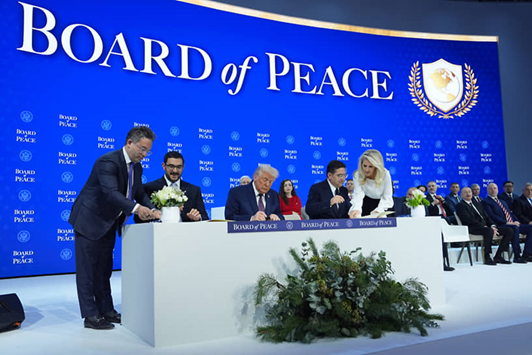
The key event that defined the geo-economic agenda of the region was the public discussion about the fate of the USMCA. The Trump administration, referring to the upcoming six-year review of the agreement in 2026, began actively using the threat of withdrawal from it as a tool of pressure on partners. The legal basis for this is article 34.7 of the treaty, which allows any of the participating countries to refuse to extend it, which starts a 16-year termination process. The formal justification for such a threat was the US statements about the “flooding” of the markets of Mexico and Canada with Chinese goods. The American side argues that the existing rules of origin, especially in the automotive industry, leave loopholes for Chinese companies. They can assemble or deeply process products in Mexico in order to subsequently export them to the United States under the guise of North American goods and without paying duties. According to analysts, this practice undermines the USMCA’s goals of reshoring production chains back to North America and contradicts the US industrial policy aimed at reducing dependence on China. Thus, the crisis around the USMCA has gone beyond traditional trade disputes and turned into an element of the global strategic confrontation between the United States and China, where the territories of Mexico and Canada have become a field of competition.
Domestic political instability in Canada: the crisis of the conservative opposition
In parallel with external challenges, significant internal political dynamics were observed in Canada, weakening the position of the official opposition. In a short period of time, the second Conservative MP, Michael Ma, defected to Prime Minister Mark Carney’s ruling Liberal Party. This event, which followed the similar transition of another Conservative MP a month earlier, allowed the Liberal government to move closer to majority status in parliament. In his statement, Ma pointed to Carney’s commitment to a “measured and practical approach,” while Conservative leader Pierre Poire accused him of betraying voters. These transitions, along with the planned January review of the leadership of the Pierre Poilievre, indicate a deep crisis within the Conservative Party.
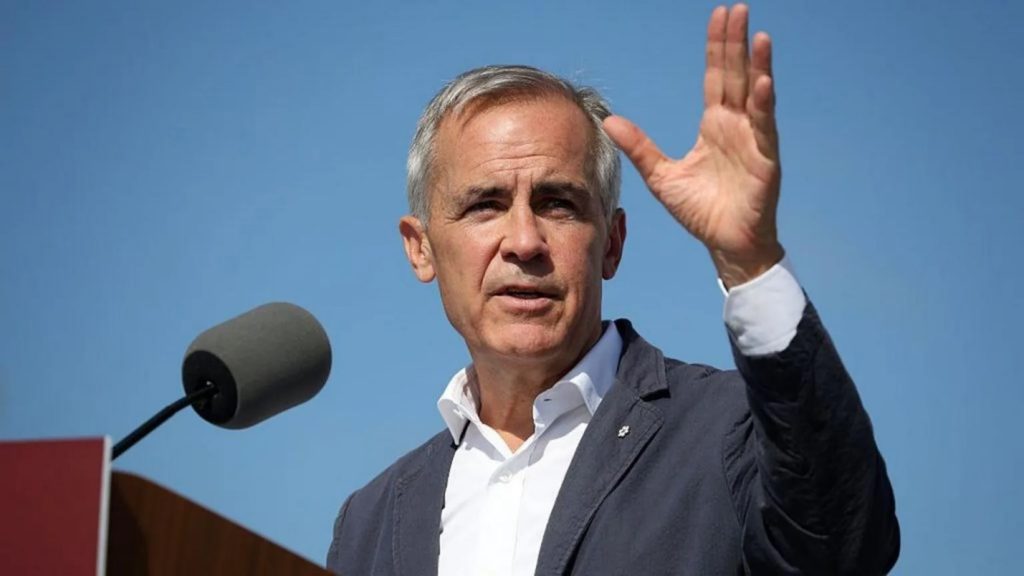
Canadian Prime Minister Michael Carney
Political analysts point out that Pierre Poilievre ‘s fighting style, which was considered the reason for the election defeat, continues to cause controversy. This internal weakness of the main opposition force reduces the effectiveness of the system of checks and balances in Canadian politics and gives the Carney government more opportunities to implement its program without risking early elections, which could have long-term consequences for the country’s political landscape.
Parallel Worlds: NATO’s forecast of a split in the global order
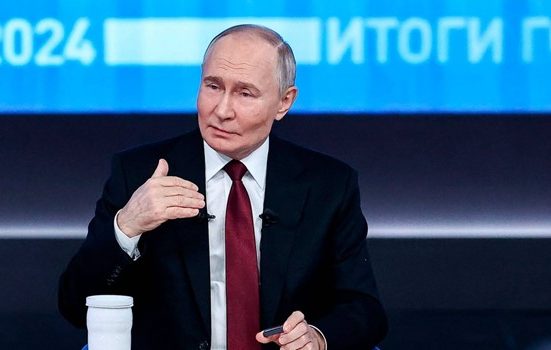
As part of the overall picture of the geopolitical turbulence observed in November-December 2025, a significant event was the strategic warning issued on December 6 by the retired senior military representative of the NATO alliance. The former head of the NATO Military Committee, Admiral Rob Bauer, speaking at the Doha forum, put forward the thesis of a fundamental restructuring of the world order. He predicted that over the next 5-10 years, the world could split into two competing and parallel systems, which would mark the end of the era of universal rules formally operating under the auspices of the United Nations. According to Admiral Bauer’s vision, the first system will unite traditional Western and pro-Western democracies: Europe, North America, as well as key allies in the Asia-Pacific region such as Japan, South Korea, Australia and Singapore. This group will inherit and continue to develop the existing liberal international order. The second pole, in his opinion, may form around the BRICS association, whose members seek to create an alternative set of rules and principles for global interaction. Bauer placed special emphasis on the practical consequences of such a split, pointing out that it would affect not only the sphere of interstate relations, but also create serious challenges for global businesses, which would have to operate in two different legal and, potentially, monetary systems.
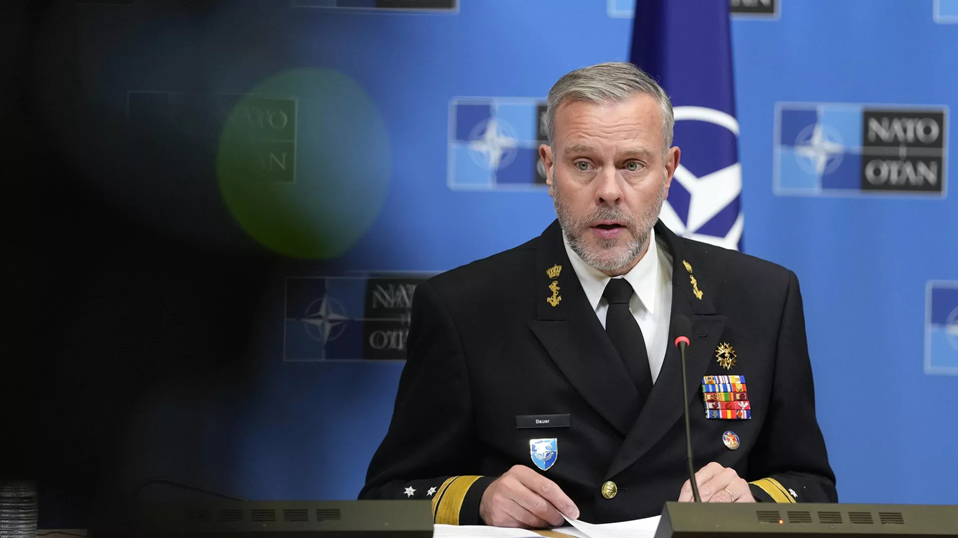
Former head of the NATO Military Committee Rob Bauer
This forecast is directly related to the current crises in North America described earlier. The US administration’s hard line on the revision of the USMCA in order to isolate the regional economy from Chinese influence is a practical example of how competing economic ecosystems begin to form. Washington’s actions can be seen as a local manifestation of the global trend towards “systemic separation.” Thus, the pressure on the USMCA partners fits into a broader context, where the leading powers are increasingly acting in the logic of creating parallel and mutually competing blocks, which leads to the fragmentation of the single economic, legal and technological space.
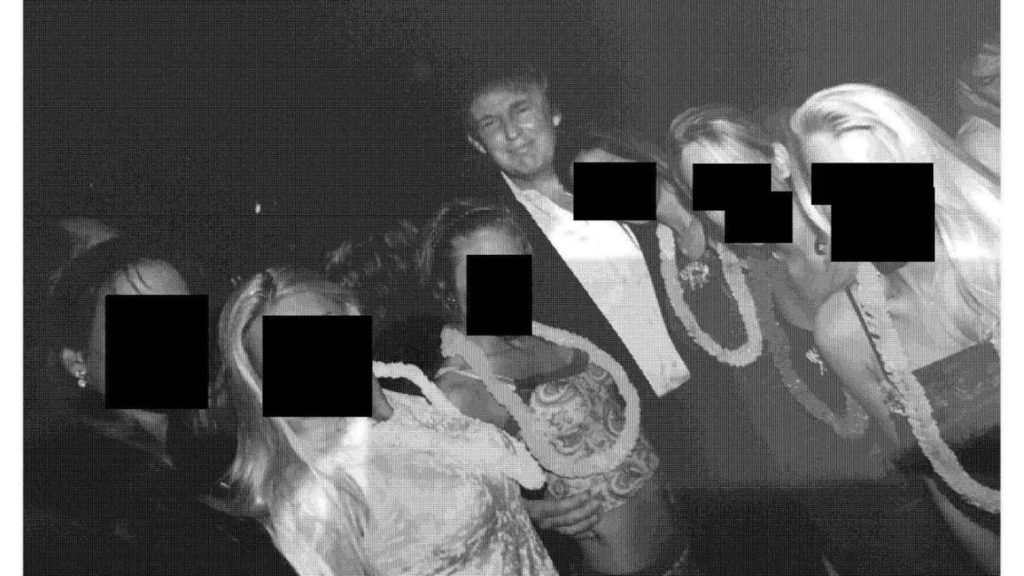
Politicizing the Past: The Epstein case in the Context of the American Internal Struggle In the United States, a new wave of publications related to the Jeffrey Epstein case has caused a significant public outcry. The House Oversight Committee, controlled by Democrats, has released almost 100 photos from the archive of a convicted criminal. The images, many of which were previously known, depict various public figures, including Donald Trump, Bill Clinton and Prince Andrew. Despite the fact that the images themselves do not imply illegal actions, their publication was presented by the Democrats as a step towards transparency and “justice for victims.” Republicans, in turn, called this a “selective use of photographs” and a “democratic hoax” aimed at discrediting President Trump on the eve of the election cycle. The White House rejected the significance of the publications, saying they had been “repeatedly refuted.” This episode demonstrates how historical scandals that are not directly related to current politics are being instrumentalized in order to wage a modern party struggle. The public discussion has shifted from issues of justice and the investigation of Epstein’s crimes to mutual accusations of using the case for political manipulation, which deepens the rift in American society and the political establishment.
Conclusion
Summing up the results of November-December 2025, it can be stated that North America has entered a phase of increased turbulence, where crisis phenomena are becoming a routine policy tool. The threat of a rupture of the USMCA, used by the United States to forcefully revise trade rules, calls into question the very model of economic integration that has been developing for decades. This external instability is exacerbated by internal political processes: the weakening of the systemic opposition in Canada and the use of historical scandals to attack opponents in the United States. The emerging picture shows not the search for a new regional balance, but the tactics of permanent pressure and confrontation used both externally and internally. The further development of the situation will depend on whether the threats against the USMCA will become practical in 2026, as well as whether the political systems of Canada and the United States will be able to overcome internal fragmentation. In this regard, the following possible scenarios can be identified.
Scenario 1. “Tactical reset”: the United States uses threats to achieve specific concessions on the rules of origin of goods in the USMCA, but retains the agreement. Within Canada and the United States, the intensity of the political struggle is temporarily decreasing.Scenario 2.“Escalation and rupture”: A tough US position leads to the actual launch of the USMCA withdrawal procedure, which causes a shock in regional supply chains. At the same time, internal political polarization in the United States and Canada continues to grow, undermining the possibility of developing coordinated responses to the economic crisis.