Central Asia on the verge of transformation: institutionalization of unity, geopolitical maneuver and resource paradox
Brief description: The political situation in Central Asia at the end of 2025 is characterized by a transition from situational partnership to the creation of a full-fledged political and economic bloc. The region is actively strengthening its subjectivity through the Tashkent summits and expanding cooperation with the United States and Japan, positioning itself as a key transit hub of Eurasia. However, Turkmenistan’s foreign policy successes and digital modernization are facing serious internal challenges: an acute water and energy crisis and the growing terrorist threat from Afghanistan.
Preface
The political dynamics of Central Asia in November–December 2025 demonstrates a qualitative shift in the architecture of regional relations — from declarative “multi-vector” to real institutionalization. The countries of the region are accelerating the creation of unified mechanisms for security and cultural interaction, strategically connecting Azerbaijan to integration. On the external circuit, there is a simultaneous activation of the United States and Japan, offering a technological and investment alternative to the influence of Russia and China. Nevertheless, this geopolitical breakthrough is developing against the background of a deep internal paradox: ambitions to create a “digital Silk Road” and export “soft power” are facing a physical shortage of basic resources and the need to mitigate the risks of instability emanating from the South. The combination of these processes forms a fork in the scenarios between a technological breakthrough and a resource impasse.
Political consolidation and institutionalization of the region.
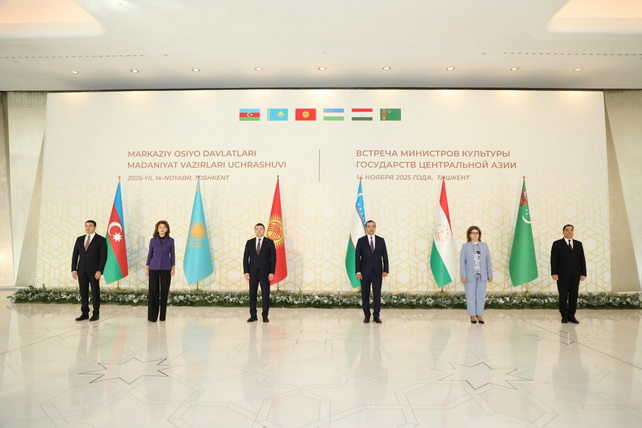
On November 13-14, 2025, Tashkent hosted the first ever meeting of the Ministers of Culture of Central Asian countries and Azerbaijan, aimed at strengthening regional humanitarian cooperation. The main outcomes of the summit were agreements on expanding creative exchanges, launching heritage digitization projects, and setting up a working group to develop a unified cultural brand in the region. The participants reaffirmed their commitment to the principles of the 2022 Friendship Treaty, emphasizing the importance of common spiritual ties for future unity. The event ended with a cultural program featuring a performance by the Kazakh troupe, symbolizing the beginning of a new stage of integration in the field of art.
The summit on November 15-16 was attended by the Presidents of Kazakhstan, Kyrgyzstan, Tajikistan, Turkmenistan and Azerbaijan, as well as the head of the UN Regional Center, Kakha Imnadze. The leaders gathered to strengthen cooperation on the economy, security and regional stability, as well as the implementation of joint projects, which are expected to result in the adoption of a package of multilateral documents. The initiative to hold such meetings was put forward by Uzbekistan in 2017, and within the framework of its current chairmanship, Tashkent has already organized more than 20 thematic events. The consistent holding of the meeting of ministers of culture and the summit of heads of state in Tashkent testifies to the transition of the Central Asian countries from situational partnership to building a full-fledged political, economic and humanitarian bloc. Azerbaijan’s participation in both formats strategically expands the geography of cooperation, turning the region into a key link in the trans-Caspian “Middle Corridor”, which is vital for diversifying logistics and entering Western markets.
Activation of the foreign policy vector: the USA and Japan
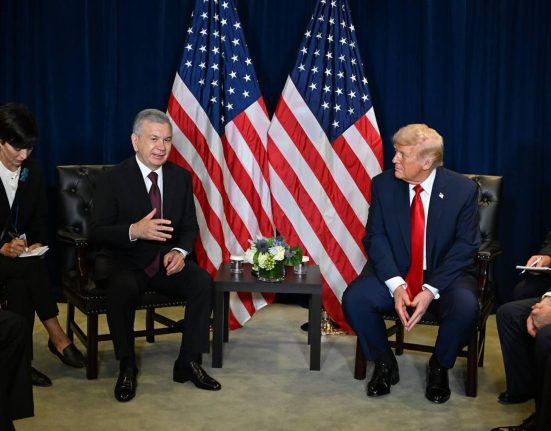
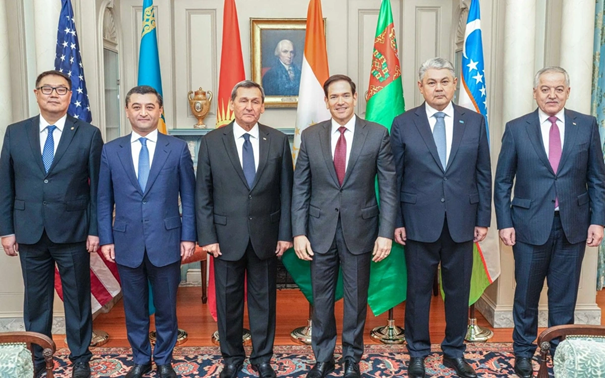
On November 5, US Secretary of State Marco Rubio hosted a reception in honor of the tenth anniversary of the C5+1 format, bringing together the foreign ministers of Central Asian countries to discuss trade and regional cooperation. Representatives of the State Department and the Senate announced the beginning of a new era of cooperation, proposing to remove outdated barriers, including the repeal of the Jackson–Vanik amendment. Special attention was paid to the updated strategy of President Donald Trump, who guaranteed the region direct communication with the White House and priority in investment issues. Rubio called this period a turning point, emphasizing the transition to a pragmatic partnership based on the convergence of national interests. In conclusion, the US president announced plans to meet with the leaders of Central Asian countries at the upcoming summit to consolidate agreements on peace and prosperity.
Japan is preparing to hold its first-ever summit with the leaders of Central Asian countries in Tokyo, which is scheduled for December 2025. This step will transform the existing twenty-year dialogue at the ministerial level into the format of a meeting of heads of State, significantly increasing the status of cooperation. Prime Minister Sanae Takaichi sees the summit as an opportunity to strengthen economic security and deepen ties with the resource-rich region amid the influence of Russia and China. A previous attempt to organize such a meeting in 2024 in Kazakhstan was canceled due to the threat of a strong earthquake in Japan. The upcoming event is intended to open a new chapter in the strategic relations between Japan and Central Asia.
The simultaneous activation of the United States and Japan is turning Central Asia into a significant subject of geopolitics, offering the region an economic and technological alternative to Russia and China. Access to Western investments in critical resources and infrastructure allows countries to diversify their economies and integrate into global supply chains. Raising the level of dialogue to summits with the leaders of the United States and Japan dramatically strengthens the negotiating positions of regional elites, allowing them to build a pragmatic partnership on favorable terms.
Economic transformations: digitalization and energy.
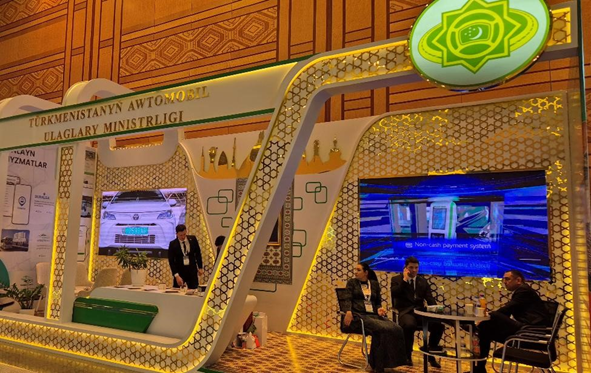
On November 12-14, 2025, the joint forums Turkmentel-2025 and ITTC-2025 were held in Ashgabat, bringing together more than 80 foreign companies and 350 delegations. The main goal was to merge digital transformation with logistics to create a Digital Silk Road. The authorities presented a Development Concept for 2026-2028, including the introduction of 5G (already launched in Arkadag), the use of AI in public administration and the construction of the trans-Caspian fiber-optic highway. International partners, including Huawei and the UNDP, have confirmed their willingness to invest in these projects. Important statements were made on the forums.:
• President Serdar Berdimuhamedov identified the digital economy as a key driver of the country’s development, placing special emphasis on strategic infrastructure projects and the expansion of 5G networks.
• Deputy Prime Minister Mammetkhan Chakiyev officially announced the “open door” policy, confirming the government’s readiness to consider any specific investment proposals from foreign partners.
• Minister of Communications Khadzhimurat Khudaiguliyev presented plans for 2026-2028, including the creation of a national artificial intelligence center, the implementation of the X-Road platform and the construction of the Trans-Caspian fiber-optic highway.
Water and Energy Agreement in Central Asia
Kazakhstan and Uzbekistan have pledged to help Kyrgyzstan avoid an energy crisis this winter caused by critically low water levels in the Toktogul reservoir. According to the agreement signed in Almaty, Bishkek will limit winter water discharge (saving it for summer irrigation of neighboring fields), and in return will receive electricity supplies. Kyrgyzstan itself has introduced austerity measures, including restrictions on street lighting and entertainment facilities, while the government is developing a long-term water strategy against the backdrop of climate change. The holding of large-scale digital and transport forums in Ashgabat against the background of emergency energy negotiations in Almaty demonstrates the dual nature of the development of Central Asia at the end of 2025. Turkmenistan is strategically emerging from isolation, seeking to diversify its economy through the creation of a transit hub and the involvement of technology giants, which significantly enhances the logistics potential of the entire region. At the same time, Kazakhstan, Uzbekistan, and Kyrgyzstan are showing political maturity by moving to legally binding mechanisms for exchanging “water for electricity” in order to jointly address climate challenges without the intervention of external arbitrators. Nevertheless, an acute paradox remains between ambitious plans for digitalization and reality: the region’s desire to introduce energy-intensive AI and 5G technologies is facing a physical shortage of basic electricity generation, which requires urgent infrastructure modernization for sustainable development.
The humanitarian dimension: ecology and cultural diplomacy.
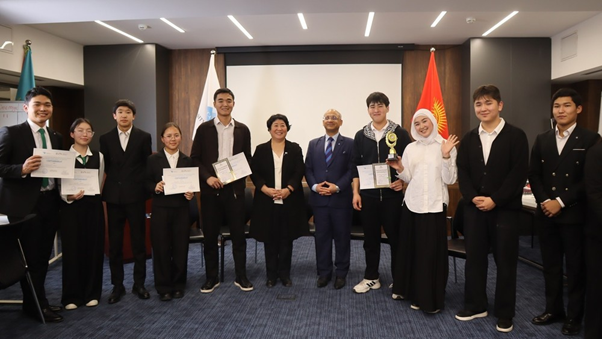
Kyrgyzstan is hosting a decade of events dedicated to the International Mountain Day and implemented as part of President Sadyr Japarov’s global initiative “Five Years of Action for the Development of Mountain Regions.” The program includes an international film forum for women directors, scientific discussions on the preservation of the Kyrgyz horse breed and innovations in alpine healthcare, as well as educational quizzes for young people. In parallel, environmental actions and exhibitions are being held throughout the country and in diplomatic missions abroad, and a global flash mob has been launched on social networks, uniting supporters of respect for nature.
The 10th anniversary festival “Voices of Friends: Poetry and Art”, organized by the London Eurasian Creative Guild (ECG), was held in the Kazakh resort of Burabai from November 29 to December 2. The event brought together writers, artists and musicians from 20 countries, placing a special emphasis this year on supporting young filmmakers through the Cinema Future program and the BISFF Film Festival. In addition to film screenings, the program included book presentations, creative workshops, and discussions, confirming the site’s status as a center for cultural dialogue without borders. In conclusion, the organizers noted that Eurasian creativity is becoming a global voice, and announced an update of the Guild’s leadership before the 2026 season. The cultural and environmental initiatives of Kyrgyzstan and Kazakhstan demonstrate the strategic transition of the region to the use of “soft power” to update its international image. Kyrgyzstan successfully occupies the diplomatic niche of the “guardian of mountains”, attracting the attention of the United Nations and the scientific community to its environmental problems and innovations. Kazakhstan is consolidating its status as a creative hub through international festivals, exporting modern culture to the West and developing event tourism. Both countries are moving away from stereotypes, integrating into the global agenda through relevant formats — from film forums to scientific diplomacy.
Challenges to regional security.
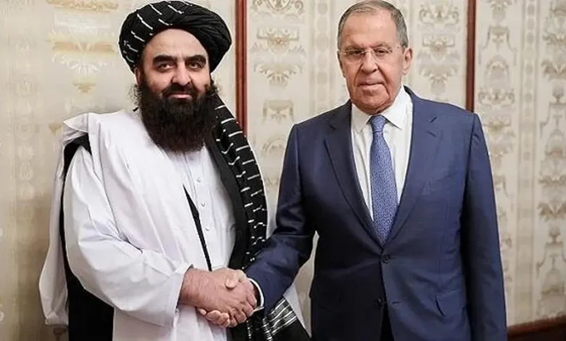
According to Eurasia Review, Russia is seriously concerned about the strengthening of ISIL in Afghanistan, seeing it as a direct threat to Central Asia and its own national security. Despite the removal of the Taliban from the list of terrorist organizations in April 2025 in order to establish dialogue, Moscow considers their counter-terrorism efforts insufficient, as evidenced by the ongoing attacks and militant activity. Russian officials, including Sergei Shoigu and Vasily Nebenzya, warn of the high risk of terrorist infiltration across borders and insist on the need for strict international control and intelligence sharing.
The activation of ISIL-K in Afghanistan creates a direct risk of armed breakthroughs across the southern borders of the region, especially in the Tajik and Turkmen directions, and also increases the likelihood of terrorist attacks inside the countries by forces of “sleeper cells”. Against the background of existing economic problems, external instability can provoke the growth of religious extremism and radicalization of local youth, undermining the social stability of States from within. In addition, the constant threat to security jeopardizes the implementation of strategic trans-Afghan projects and scares away foreign investors, whom the region relies on for its modernization. In geopolitical terms, the escalation of violence will inevitably force the leaders of Central Asia to seek military protection from Russia and the CSTO, which will significantly limit their diplomatic independence and multi-vector approach.
Conclusion
The reporting period demonstrated a qualitative transition from the declarative “multi-vector approach” to the real institutionalization of regional unity (the Tashkent summits, the Concept of Security). The involvement of Azerbaijan and the simultaneous activation of the United States and Japan are turning the region from a passive object of influence into an entity capable of conducting tough bidding for technology and investment, offering itself as a key link in global logistics (the “Middle Corridor”) and an alternative supplier of critical resources.
However, foreign policy successes are developing against the background of an acute internal paradox. Ambitious plans for the “digital leap” (Turkmenistan) and the export of “soft power” (Kyrgyzstan, Kazakhstan) face fundamental infrastructural constraints — water and energy shortages, forcing countries to switch to survival mode. The elites’ desire to diversify ties with the West runs into a real threat from the South (ISIL-K), which continues to keep the region in the orbit of defense dependence on traditional security guarantors.
The future trajectory of development will depend on the ability of the “five” to convert the geopolitical competition of the great powers into the modernization of their own basic infrastructure, while maintaining a united diplomatic front. In this regard, it is advisable to identify the following forecasts and scenarios of development:
Scenario 1. “Strategic autonomy and technological breakthrough”: the political consolidation achieved in Tashkent allows the region to act as a single negotiator, attracting Western and Asian investments (USA, Japan) to solve the water and energy crisis. Internal security mechanisms effectively counter the Afghan threat. The “Middle Corridor” and digital hubs of Turkmenistan integrate the region into the global economy, and “soft power” creates an attractive investment image, reducing social tensions.
Scenario 2. “Resource impasse and erosion of sovereignty”: Climate challenges and infrastructure deterioration are outpacing the pace of modernization, leading to disruption of water agreements and local conflicts. The escalation of terrorist activity from Afghanistan (the breakthroughs of ISIlLK) is forcing the countries of the region to abandon balancing and return to strict alignment with external defense blocs (CSTO/RF). Economic competition between neighbors blocks integration, turning the region into a zone of instability and rivalry between external players.