PREFACE
In the context of the ongoing global turbulence, cultural diplomacy is becoming an increasingly strategically important area in establishing an international dialogue. Geopolitical competition, fragmentation of the media space and growing distrust between societies create challenges that cannot be solved solely through official diplomacy. It is during such periods that the role of the second track initiatives increases – educational, cultural and youth exchanges that can restore the space of dialogue where political communications become more complicated.
From December 5-7, 2025, the Russian city of Saransk acted as a platform for the implementation of the above–mentioned format – the international cultural and educational program “Together”, which brought together students from more than ten countries: Jordan, India, Syria, Tunisia, Nigeria, China, Congo, Pakistan, Turkmenistan, Tajikistan and other countries of the global South. This composition is no coincidence: these regions are actively forming a new architecture of international relations, strengthening their own subjectivity and showing interest in multilateral formats of interaction.
The program was prepared by the State Committee for Youth Affairs of the Republic of Mordovia, as well as the Mordovian Republican Youth Center. Its key task is to create a space for intercultural interaction that helps international students adapt to the Russian cultural environment, better understand its features and form their own experience of direct communication with local residents. “It feels like Russians are able to open the door to strangers and fall in love with them, while allowing them to reveal and realize themselves to the fullest. It really means a lot to me,” said Sandhya Kanniyappan, a participant from India, testifying to the success of the task set before the implementation of the program.
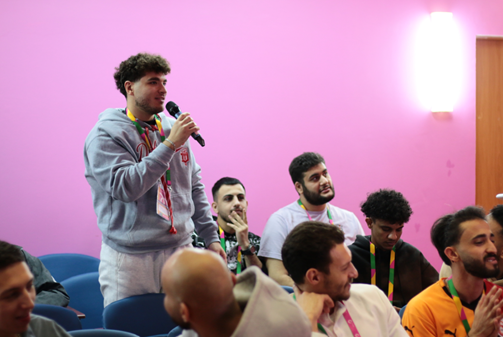
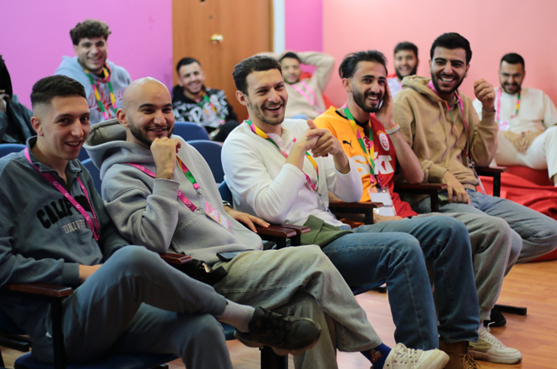
Participants of the “Together” program
CULTURAL DIPLOMACY WITHOUT SLOGANS: PRACTICE AT THE LEVEL OF HUMAN RELATIONS
The three-day program included educational blocks, team activities and cultural evenings. Special attention was paid to such formats where students could “experience” the elements of Mordovian culture not as spectators, but as participants.
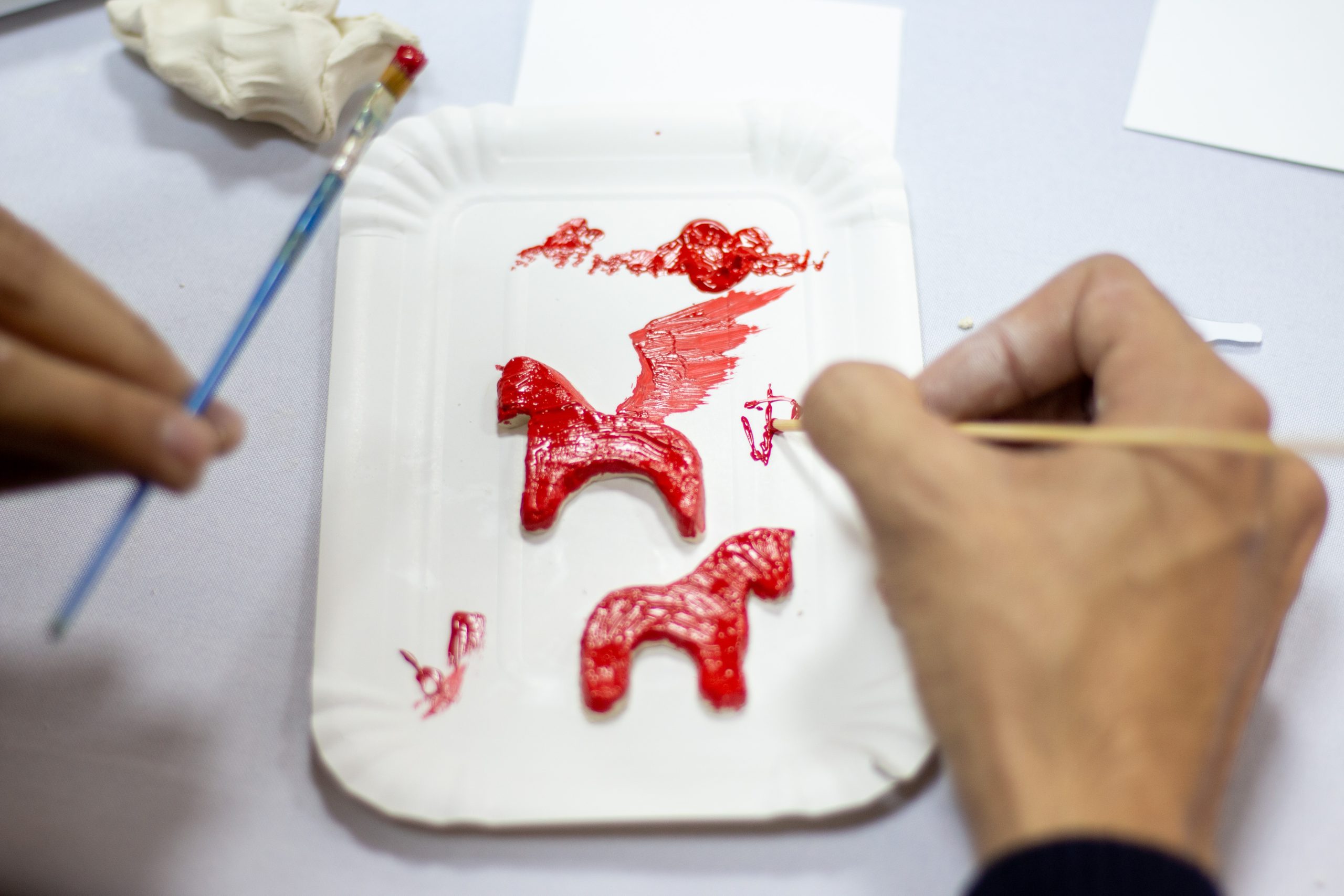
Thus, master classes in traditional crafts have become one of the central elements. Ksenia Akchurina, researcher at the Mordovian Republican Museum of Fine Arts named after S. D. Erzya, conducted a master class “Modeling traditional jewelry. Modeling and painting of a Mordovian toy horse”. The expert shared her deep knowledge of museum objects, actively involving students in the creative process. As a result of the competent pedagogical approach and the friendly atmosphere, the participants showed considerable interest and initiative.
Vasilisa Ivanova-Tyulyakina, a candidate for the Department of Russian as a Foreign Language at the Faculty of Philology of the Ogarev Mordovian State University and a teacher at the online school “Speak, Write, Think”, conducted classes on “National Culture and Traditions of the Mordovian People” and “New Year Traditions in the Republic of Mordovia” during the “Together” program. The lecturer revealed to the participants the features of Mordovian traditional culture in order to help them gain a deeper understanding of the region’s way of life.
Yulia Finogenova, a designer, decorator and public relations specialist at the Republican Youth Center, conducted a master class on making Mordovian amulet dolls. During the master class, she introduced the participants to the process of creating traditional charms, conveying the atmosphere of Mordovian culture and national decorative art. Thanks to an accessible and fascinating explanation of the doll-making technique, the participants were able to master the elements of traditional decoration and create their own amulet.
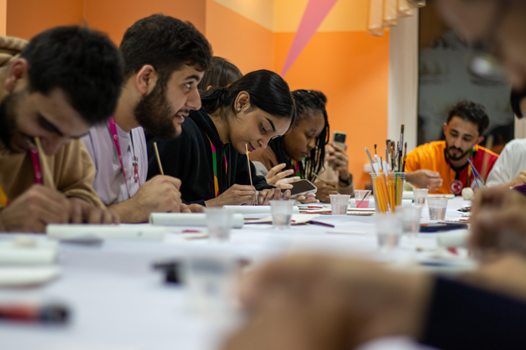
Workshops on traditional crafts
Team activities have become an important component of the program: a rope course, quests on the history of Mordovia, team games and creative collective tasks. They form communication between participants from different cultures and allow them to naturally build trust in each other. In an environment where media narratives often form images of “alien” or “distant” societies, such live contacts create a different reality – the reality of human interaction.
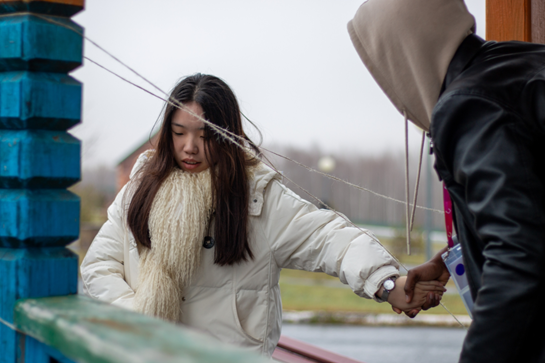
Rope course of the “Together” program
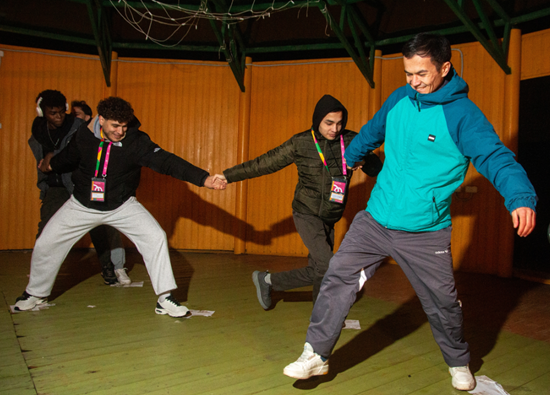
Team games of the “Together” program
In addition, as part of the educational program, Svetlana Ermakova, a representative of the State Committee for Youth Affairs of the Republic of Mordovia, spoke about the international aspect of regional youth policy. Speaker Ksenia Musatova from the Center for Monitoring and Evaluation of Modern Problems “United World” discussed with the participants how the image of Russia is being formed in Europe, and also shared her experience of studying and living abroad. In turn, Irina Taraskina, Candidate of Psychological Sciences, Associate Professor of the Department of Psychology at the Mordovian State University N.P. Ogareva gave a lecture on “Team building”, and also conducted an internship with international students on this topic.
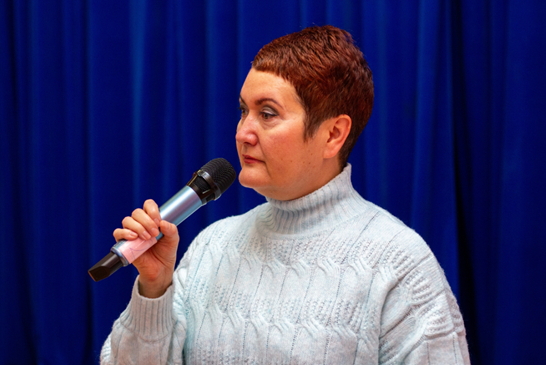
Lecture “Team Building” by I. V. Taraskina
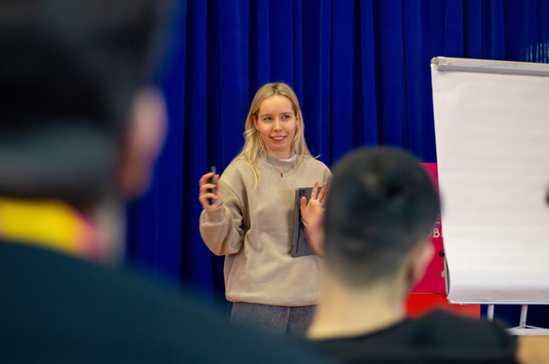
Speech by K. Musatova
Filling the substantive part of the program with events of various formats allowed participants to gain useful communication experience and get in touch with certain aspects of the culture of the Mordovian region, thereby contributing to a deeper adaptation to study in Russia.
THE SPACE OF DIALOGUE: SELF-PRESENTATIONS OF COUNTRIES AND FRIENDSHIP EVENING
One of the key elements of the program was the creative self-presentation of the participating countries. During the Evening of Friendship, students performed national musical and dance performances, talked about the traditions of their regions, shared the secrets of mouth-watering national dishes and lifestyle. Onguema Ikindu Adassa Esther, representing the culture of the Republic of the Congo, shared her emotions: “I really enjoyed this evening. When our dances were dancing, it was so beautiful!” These formats not only reveal cultural diversity, but also destroy stereotypes. The participants of the program, representing different cultural spaces, discovered that they are united by more than they share: the common values of education, the desire for dialogue, the desire to understand the world more broadly.
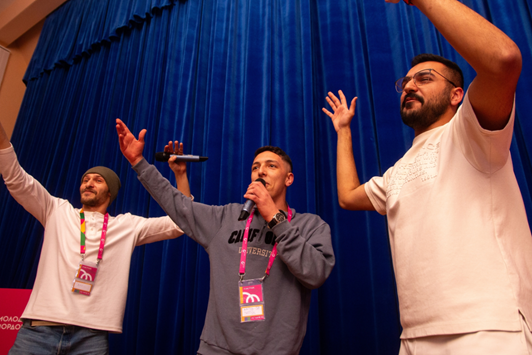
Creative self-presentation of the participating countries
THE RUSSIAN EXPERIENCE THROUGH THE EYES OF THE PARTICIPANTS: WHAT DO INTERNATIONAL STUDENTS SEE?
One of the important results of the program was the participants’ new perspective on Russia. The students noted that the real everyday culture they saw in Mordovia, in the form of hospitality, openness and collectivism, was strikingly different from the images broadcast by international media. For Ogwueleki Chigozia Vianney, a participant from Nigeria, it became admirable in Russian and other cultures that everyone tries to preserve their traditions: “For example, every building in Russia, if you notice, is like a memory. The memory of heroes, of employees of some institutions. It is important to understand that our past is our future.”
For many of them, participation in the program has become an opportunity to form their own view of the country, not clouded by stereotypes. Undoubtedly, this is an important tool of “soft power” for Russia, because a person’s personal experience is much more stable and convincing than external narratives.
MORDOVIA AS A REGIONAL ACTOR OF INTERNATIONAL CULTURAL DIPLOMACY
An interesting aspect is that the program is implemented not at the federal level, but at the regional level. Mordovia confidently sets an example: even regions can be independent participants in international cultural exchange if they work systematically with international students and educational institutions. Liu Tian Tian, a Chinese student at the Faculty of Foreign Languages, shares her opinion on this issue: “This program has deeply influenced my understanding of Russia. Now I know more about this country and about the culture of Mordovia in particular. Moreover, I even know some interesting facts about Mordovian weddings!”
Thus, this approach is consistent with world practice, where universities, cities and regional institutions are becoming important diplomatic actors, influencing international relations much more actively than was possible in the 20th century.
CONNECTION WITH GLOBAL TRENDS: MULTIPOLARITY, YOUTH EXCHANGES, CULTURAL INTERNATIONALITY
The “Together” program does not exist in a vacuum – it reflects the current processes of the global world.:
The countries of Asia, Africa, the Middle East and Latin America are forming their own centers of influence. Events of this kind become a platform where representatives of these regions interact directly. When relations between States become more complicated, it is interaction at the level of societies that remains the most stable form of international cooperation. The world’s leading universities use student exchanges as a tool for building “cultural bridges.” Akbar Avezov, a participant from Tajikistan, shares the same point of view: “I would like to express my gratitude to the organizers of “Together”. You have created not just an event, but a meeting subspace where friendship seems to be created by itself. If there are many similar programs, our friendship between Tajikistan and Russia will be even stronger than before.”
Russia is gradually building its own model, focused on regions and intercultural education. Direct human contact reduces the level of polarization, creating long-term connections between future specialists from different countries.
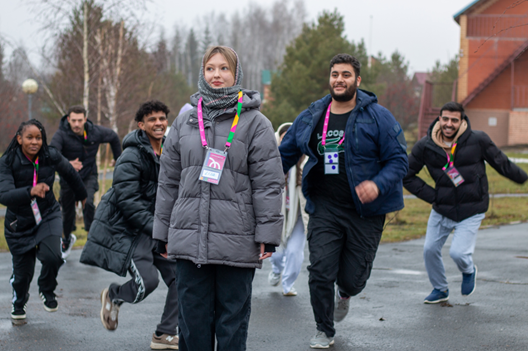
One of the rallying events
WHY IT MATTERS TODAY: THE GLOBAL CONTEXT
The Together program is a prime example of how local initiatives fit into global processes. It demonstrates that international diplomacy is not only an interstate dialogue, but also work with youth, cultures, and universities.
Unlike formal diplomatic channels, cultural and educational formats allow us to find common ground even in the face of political tensions.
The program creates a long-term effect. The participants take home not slogans, but personal experiences — trust, emotions, knowledge, connections. In addition, some people also take ambitious ideas with them, such as Tokonova Fatima.: “We do not have such programs in Kyrgyzstan. Perhaps I will try to become a pioneer in this field in my homeland. After all, we also have many students from different countries, we can arrange the same for them. I think they would really like it.”.
This format can become a model for other countries in order to develop youth cultural dialogue: international camps, educational modules, intercultural laboratories, international youth weeks.
CONCLUSION
The “Together” program has shown that cultural diplomacy remains one of the most effective and technologically advanced tools for international cooperation. In a world where official communication is often difficult, it is human connections, shared cultural practices, and educational initiatives that create long-term bridges of mutual understanding.
The experience of Mordovia is not only a regional success. This is part of a global process in which cultural diplomacy is gradually becoming one of the key foundations of the modern world order.