This article summarizes the outcomes of the First World Public Assembly, held in Moscow and bringing together representatives from over 140 countries. It examines the forum’s key themes—public diplomacy, humanitarian cooperation, cultural and scientific exchange—all centered on the fundamental idea of building a new world architecture based on trust and mutual respect among nations.
WPA: Structure and Participants
On September 20–21 in Moscow, the Assembly of the Peoples of the World held the First World Public Assembly (WPA)—an international humanitarian forum that brought together over 4,000 leaders in public diplomacy, civil society representatives, and experts from more than 140 countries. The forum coincided with International Peace Day and served as a unique platform for dialogue about a future founded on sustainability, justice, and harmony. On September 21, the Public Recognition Award “For Service to Humanity” was presented. The mission of the WPA is to promote the formation of the contours of international partnership as a conscious unity of peoples, based on the principles of shared responsibility for the future, respect for the moral ideals and cultural values of each people. The goal is to support public initiatives that correspond to the strategy of cooperation among peoples in the context of the formation of a New World. The objectives are: strengthening peace and trust among peoples; affirming the humanitarian strategy of modern civilization; forming a new architecture of international communication.
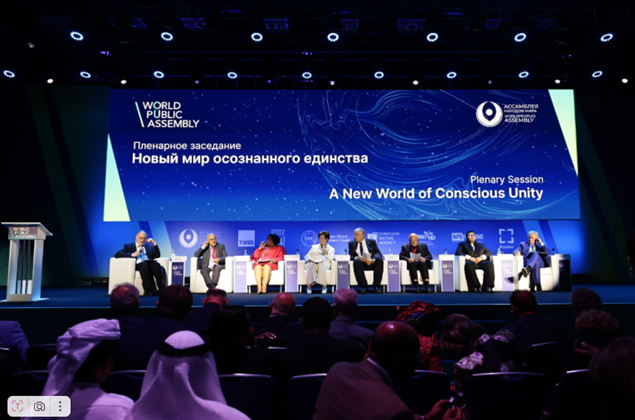
The participants included public leaders, representatives of international intergovernmental and non-governmental organizations (the UN, UNESCO, the SCO, BRICS, ASEAN, the CIS, the EAEU, the CSTO, etc.), politicians and diplomats, scholars, experts in education, culture and sustainable development, youth leaders, athletes and cosmonauts, as well as representatives of socially responsible businesses, traditional religious denominations, and leading global media outlets.
The world has changed, and governing the world from a single center is no longer relevant and does not reflect the interests of many peoples,” noted Andrey Belyaninov, Secretary-General of the Assembly of the Peoples of the World. These words reflect the key idea of the World Public Assembly: the era of unipolarity is passing, giving way to a new model of an integrated and just world based on equality and cooperation among nations.
History and Initiators In May 2017, the Assembly of the Peoples of Eurasia was founded. In 2024, at the request of partners from African countries, the Assembly was renamed the Assembly of the Peoples of Eurasia and Africa, and then in May 2025 — the Assembly of the Peoples of the World (APW). The APW is an international union bringing together non-governmental organizations and leaders of public diplomacy from more than 60 countries. Its main areas of activity are education, culture, and sports. On February 12, 2025, during a meeting with Russian Foreign Minister Sergey Lavrov, APW Secretary-General Andrey Belyaninov proposed holding a World Public Assembly to discuss pressing humanitarian issues of global significance.
The Course and Atmosphere of the Event
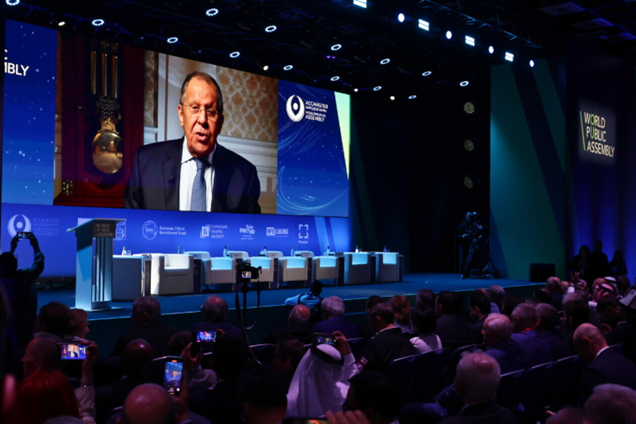
The first WPA was held on September 20–21, 2025, at the World Trade Center in Moscow. According to the organizers, representatives from more than 140 countries confirmed their participation, and the number of attendees was estimated at 4,000. The atmosphere of the forum was built on dialogue, mutual respect, and the search for new avenues of growth: participants discussed how to build a “New World of Conscious Unity,” where the human being is the central value.
The Assembly’s program included plenary sessions, panel discussions, thematic forums, round tables, and workshops, as well as dialogue platforms dedicated to culture, science and education, youth, sports, media, and socially responsible business. For the first time, the World Public Award was presented to outstanding public figures from various countries. The main theme — “A New World of Conscious Unity” — shaped the framework of the plenary session.
The overall thematic backdrop of the WPA emphasized that “governing from a single center no longer serves the interests of the peoples; integration unions shaping a new world architecture are coming to the forefront.” This approach formed the conceptual framework for all forum sessions. Participants reached a unanimous conclusion: the new era requires an architecture founded on respect, joint development, and trust.
One of the most cited speeches was delivered by Piao Yangfan, Deputy Secretary-General of the SCO: “We are living in an era of profound historical change. More and more peoples are recognizing the need to create an integrated, multipolar world order.” This statement seamlessly reinforced the Assembly’s overarching idea of the interdependence of states and peoples.
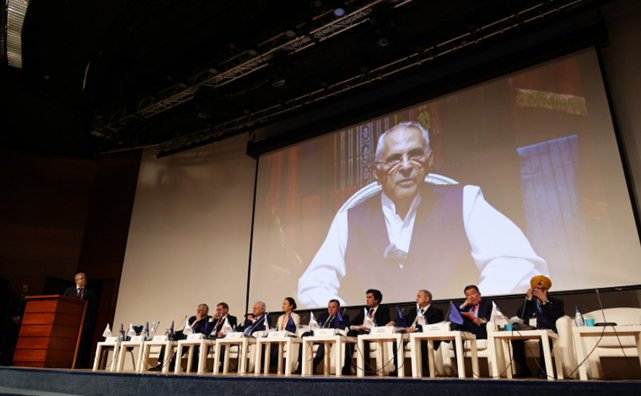
The business program included 7 panel sessions and over 40 thematic platforms, covering topics such as strategic partnership and public diplomacy; humanitarian modernization; the values of the new world; spiritual and cultural unity and service to values; and responsibility as the foundation of the future.
Participants also discussed the concept of an “Alternative Architecture of Peaceful Coexistence.” As noted in the analytical materials of the World Assembly, “the world should not be an arena of confrontation — it should become a space of cooperation and mutual respect.” This idea permeated every session of the WPA, from panel discussions to cultural events.
Main Discussion Topics
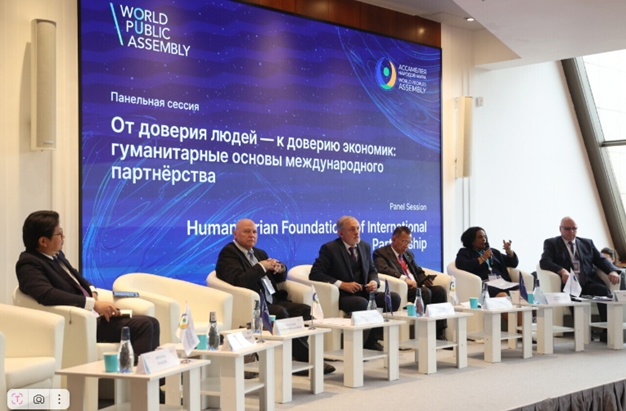
In the sessions on strategic partnership and public diplomacy, participants discussed mechanisms for collaborative work without confrontation, based on trust and honest dialogue. The “Humanitarian Modernization” block focused on human-centered progress — education, culture, health, security, and opportunities for self-realization. The topic “Values of the New World” addressed a shared value foundation — honor, service to society, responsibility, and creativity — and ways to strengthen these values in media, art, and education. Discussions on spiritual and cultural unity explored the role of religions, traditions, and literature in promoting peace. The topic of responsibility connected personal practices with public initiatives, ranging from volunteer work to corporate social responsibility.
Media, Cognitive Security, and Cultural Code. Participants of the media forum discussed the influence of modern platforms on people’s thinking and behavior, ways to counter manipulation, and the preservation of cultural codes. The role of cinema and documentary filmmaking was highlighted, as well as the importance of positive storytelling — celebrating creative work rather than focusing on conflicts. As noted in the session “How New Media Shape the Values and Heroes of Our Time,” the media space is not merely a mirror of reality but a tool for creating new meanings and heroes. Participants emphasized the need for responsible media and journalism that strengthen trust and unity. In the sessions on the “Architecture of the New World,” it was stressed that the international community has entered an era of forming a new humanitarian model, in which culture, science, and education play a central role. For this reason, the WPA paid special attention to cultural exchange. One of the forum’s key points was the idea that “Culture knows no borders — it allows us to hear the heart of other people and understand their path.” These words perfectly capture the atmosphere of the Assembly.
Peacebuilding, Energy, and Technology. Experts discussed reducing the risks of conflicts through a humanitarian agenda and building trust. Special emphasis was placed on energy security: control over energy resources affects the development of nations, and solutions lie in scientific and technological breakthroughs as well as international cooperation in the fields of energy and innovation.
Education, Science, and International Cooperation. Discussions focused on academic exchanges, volunteer programs, interuniversity projects, and the role of UNESCO. The key idea emphasized investing in human capital, supporting youth, developing future skills, and fostering scientific collaborations as pillars of sustainable development.
Literature and Artificial Intelligence. As part of the WPA, the second Congress of the World Organization of Writers (WOW) was held, where participants discussed translations, book fairs, support for young authors, and the role of AI. The consensus was that artificial intelligence is a tool, but human emotion and the author’s personal perspective remain irreplaceable. The WOW-2025 Award recognized authors from various countries, emphasizing that cultural collaboration is stronger than competition.
Future, Youth, Business, and Social Responsibility. Special events at the WPA included the International Youth Forum “Generation of Unity” and a business forum on social responsibility. Discussions focused on how companies invest in the future of societies, while youth invest in projects and communities. For young participants, this meant new connections, mentors, internships, and grants.
Speaking about the future, former SCO Secretary-General Rashid Alimov compared the impact of the WPA’s ideas to a lit candle: “One candle can light thousands of others without losing its brightness. In the same way, the ideas of peace born here will illuminate the path for all humanity.” This metaphor became a symbol of the forum and formed the basis of the resolution adopted at the conclusion of the Assembly.
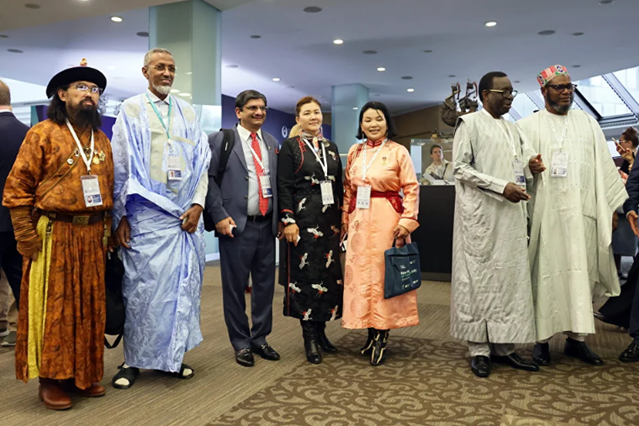
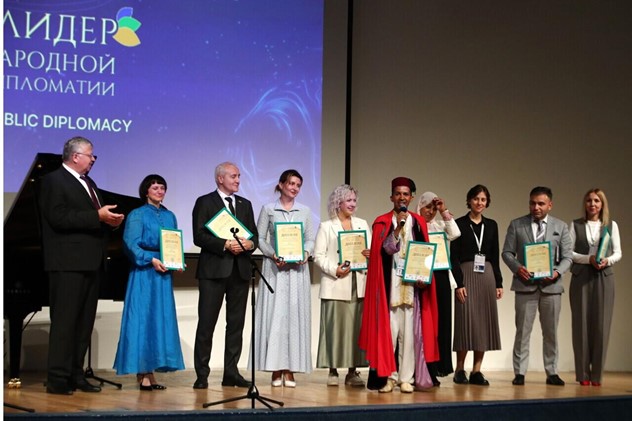
Awards, Competitions, and Support for Initiatives. On International Peace Day, the World Public Recognition Award “For Service to Humanity” was presented for the first time — honoring contributions to strengthening peace, trust, and humanitarian cooperation. The laureates included public figures, philosophers, diplomats, and cultural leaders from Russia, Jordan, Tajikistan, Kazakhstan, Angola, India, and the United Kingdom. The final stage of the 4th International Competition “Leaders of People’s Diplomacy” also took place, along with thematic forums such as “Media in the Service of Humanity,” “Generation of Unity,” and “Victorious Nations: Lessons from World War II and Responsibility for Peace,” as well as the WOW Congress and the Eurasian Festival “Constellation of the First.” To encourage new projects, a grant competition titled “Trust and Unity” was established in the field of international humanitarian cooperation and public diplomacy.
Thus, the World Public Assembly (WPA) has demonstrated that international cooperation can be built on the foundations of humanism, culture, and education. In a world facing growing challenges and crises of trust, it is public diplomacy, cultural dialogue, and investment in human capital that serve as the pillars of a new multipolar world order. The WPA will become an annual platform for dialogue, and it has already been announced that the next Assembly will be held in Vienna, continuing the tradition of humanitarian cooperation.