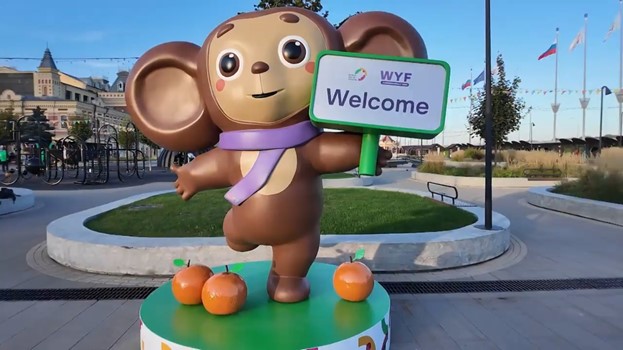
The article highlights the significance of the World Youth Festival Gathering as an international platform for dialogue, idea exchange, and collaboration among young leaders from different countries. It outlines the forum’s key areas of work, cultural initiatives, and participants’ impressions. The piece emphasizes the role of youth as a driving force of public diplomacy and as creators of a future without borders.
World Youth Festival Gathering 2025: When, Who, and Why
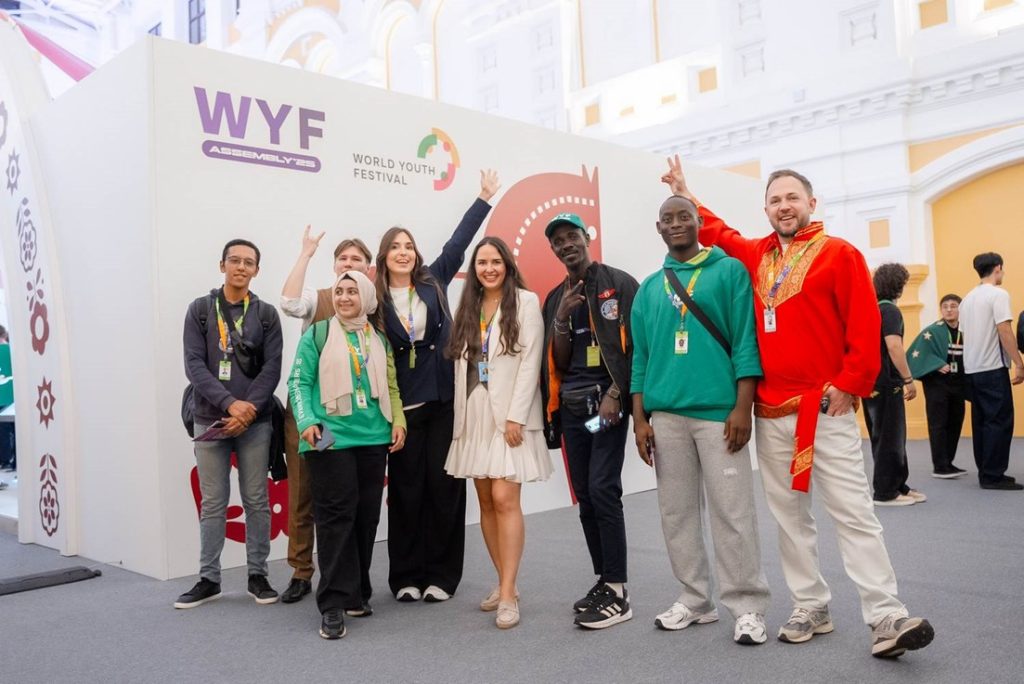
The World Youth Festival (WYF) Gathering, held in Nizhny Novgorod in September 2025, concluded as one of the year’s key events in the field of international youth cooperation. The forum brought together around 2,000 young leaders from Russia and 120 other countries, becoming a platform for exchanging ideas, building partnerships, and launching new projects — including the participation of 200 teenagers aged 14 to 17.
This Gathering was more than just a meeting — it marked the final stage of a large multinational initiative where participants could not only listen but also take action, initiate collaborations, and shape the future of intercontinental dialogue.
The event was organized by the Federal Agency for Youth Affairs (Rosmolodezh) with the support of the Government of the Nizhny Novgorod Region, and operated by the Directorate of the World Youth Festival.
The main goal of the forum was to build lasting connections among young people from different countries, promote cultural, educational, and technological dialogue, and strengthen grassroots public diplomacy through joint initiatives. According to the organizers, the Gathering was not just an exchange of opinions, but a starting point for projects, partnerships, and strategies for international youth cooperation. In a video address, Russian President Vladimir Putin emphasized the importance of such forums, noting that young people are “the driving force of change — a vital link connecting countries, cultures, and generations.”
Youth International Initiatives of Russia: A Path Toward Unity Among Nations
The World Youth Meeting (WYM) is part of a broader Russian strategy aimed at promoting the ideas of youth diplomacy and intercultural exchange. It preserves and develops the legacy of the World Festival of Youth, which took place in 2024 on the federal territory of Sirius and brought together 20,000 young people from 190 countries around the world.
In recent years, various initiatives have been launched across the country to create international youth platforms — such as the “Russia — Land of Opportunity” Forum, “Territory of Meanings”, and nationwide youth projects that invite foreign participants.
This approach is based on the concept of “public diplomacy”, where not only state institutions but also young activists, NGOs, cultural figures, and entrepreneurs have the opportunity to contribute to international cooperation.
At the same time, Russia’s youth policy strategies are increasingly integrated with digital platforms, educational programs, and interregional routes that facilitate cultural exchange between continents. The World Youth Meeting thus becomes not an isolated event, but a key link in a chain of Russia’s international programs aimed at the long-term development of friendly intercultural relations.
Broad Representation and Intercultural Dialogue
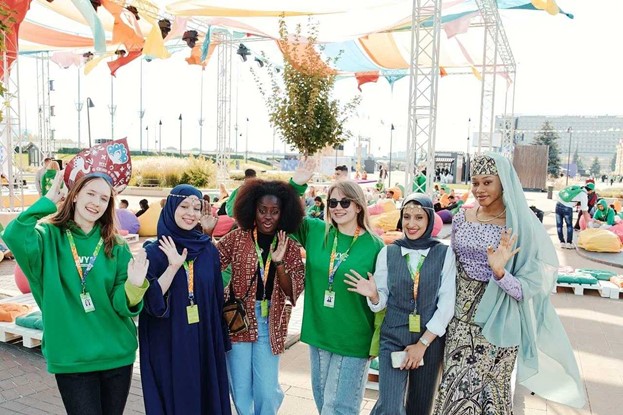
The forum brought together young leaders from nearly every region of the planet — Asia, Africa, Latin America, Europe, and the Middle East. More than 120 countries — from Argentina to Indonesia, from Kenya to Egypt — were represented within the walls of Nizhny Novgorod.
Intercultural dialogue was expressed not only through words but also through action: participants organized mini cultural evenings, national talent shows, language exchanges, and joint projects where images, ideas, and technologies blended together.
“Russia, through the eyes of the participants, is openness, friendliness, and the chance to be heard,” noted one of the delegates.
A participant from India added: “This forum is an opportunity to hear the world through the voices of young people from across the globe.”
The forum was far from a conventional “international event” — it felt like a living, collaborative project engaging the most active young people from around the world.
Nizhny Novgorod as a Starting Point: The Regional Program
The organization of the World Youth Meeting was on a grand scale — it took place across the venues of the Nizhny Novgorod Fair, including the Fair House, exhibition halls, outdoor spaces, and the city’s cultural corridors. The program was divided into days, thematic tracks, and parallel events: lectures, debates, master classes, media workshops, kvartirnik music sessions, exhibitions, and a startup zone.
In his address, Gleb Nikitin, Governor of the Nizhny Novgorod Region, emphasized the significance of the regional choice:
“For these few days, Nizhny Novgorod became a space where the foundation for a shared future was laid. We are ready to serve as a hub for international initiatives and as a platform for cultural, technological, and educational exchange.”
The regional program became a unique continuation of the main event: after the core forum (September 17–21), foreign participants visited ten regions of Russia — including the Yamalo-Nenets Autonomous Okrug, Khakassia, Mordovia, Chelyabinsk Region, and others. They explored the cultures of indigenous peoples, local landmarks, universities, and startup clusters.
This regional stage acted as a bridge — allowing participants to see Russia not only as a metropolitan center but as a diverse country with vast potential for cooperation.
Business Program: Directions and Key Tracks
The thematic atmosphere of the forum was built around seven key directions: media, creative industries and arts, public administration, entrepreneurship, sports, education and science, and digitalization & IT.
In one session of the Media track, titled “Media Literacy Without Borders”, the event took the form of a talk show and brought together experts from Singapore, Portugal, South Africa, and Venezuela. Moderator Timofey Vi, an expert from the International Fact-Checking Association, shared data showing that 62% of Russians believe they can distinguish truth from falsehood, but emphasized:
“Perhaps the main factor is bias. People tend to accept information that aligns with their beliefs… manipulators exploit this by presenting one-sided facts.”
Portuguese expert Alexandre Guerreiro addressed legal responsibility and the balance of free speech:
“You have freedom of speech, but you cannot just deceive someone with your extraordinary rhetoric… there must be a legal framework.”
The discussion also covered approaches to media-university collaboration, international fact-checking standards, cross-investigations, and mechanisms for integrating young journalists into global networks.
In the Creative Industries and Arts track, the topic “AI: Assistant or Adversary?” sparked intense debate: Can neural networks be trusted in content creation? Where is the line between support and replacement of human creativity? Speakers and participants highlighted the need for ethical frameworks, open standards, and creator responsibility, while discussing potential cases of misuse and ways to protect intellectual property.

Participants were also drawn to the practical workshop “Avito School of Entrepreneurship”, where they worked on business hypotheses, MVP (minimum viable product) testing, marketing strategies, and launching first sales. There were no long lectures: speakers provided immediate feedback on participants’ ideas, helped assess risks, and adjusted business models to align with real markets.
In the session “Evolution of Visual Communication: R–VR–Metaverse”, speakers and participants explored virtual metaverse spaces as new channels of communication. Key questions included: How can virtual environments convey cultural codes without losing meaning or identity? How can visual metaphors be designed to be understood by people from different cultures? These discussions shaped the atmosphere of the track.
The session “Cinema and National Identity” offered a platform to discuss the role of films and TV series as a powerful tool of cultural diplomacy: how visual narratives can tell stories about language, history, values, and mentality. Which stories of “our world — another world” can become bridges rather than barriers?
In the Public Administration track, the “Governance: Leadership and Regional Initiatives” case session brought together heads of regional youth policy ministries. Speakers included Viktor Kolomiets (Krasnoyarsk), Anna Musevich (Kaliningrad Region), Nail Khairullin (Yamalo-Nenets Autonomous Okrug), Svetlana Anufrieva (Nizhny Novgorod Region), among others. Experts discussed youth support programs in their regions, building ecosystems, and engaging young people in governance and civic initiatives.
A particularly exciting session was “Global Initiatives and Projects”, presented in a showcase format where participants presented their startups, social projects, and ideas for international cooperation. During the session, Deputy Prime Minister Dmitry Chernyshenko encouraged participants to move beyond ideas and work toward their implementation.
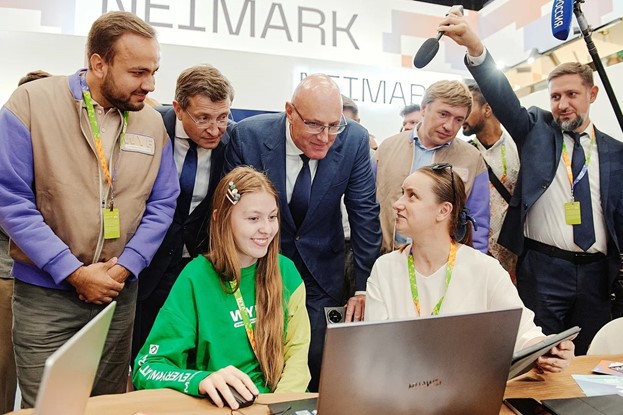
Additionally, the forum launched a BRICS Mentorship Program, aimed at young entrepreneurs from alliance countries, as well as an international content center for bloggers from 34 countries, designed to enhance intercultural content and build networks for cross-media projects.
Participants actively shared their impressions of the forum. An Egyptian journalist reflecting on the Media session noted:
“We didn’t come just to listen to trends — we created content ready for international distribution right away.”
Similarly, a young delegate from Asia emphasized:
“We came to work: ideas, prototypes, launches — all happening right here and now.”
These statements clearly illustrate that the forum’s program was focused not on passive participation but on active creation. Participants were provided with tools, connections, and feedback, enabling them to take concrete steps toward implementing their ideas during the forum itself.
Cultural Program: Spaces for Living Dialogue
The cultural program of the World Youth Festival was not merely an ornament of the forum but its heart — a space where diplomacy became emotion, and different cultures learned to understand each other without translators. Here, what cannot be captured in a business program was born: friendship, inspiration, trust, and a sense of unity.
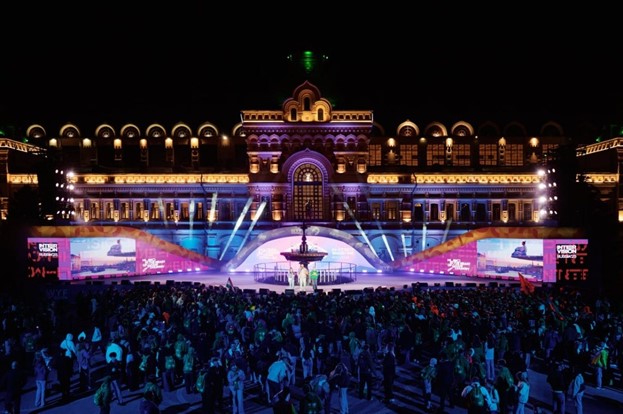
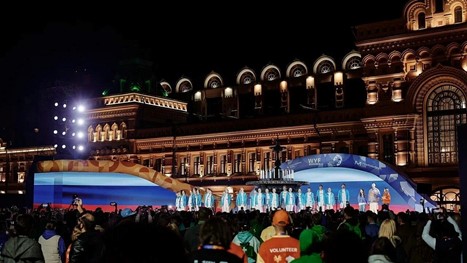
Each evening, Nizhny Novgorod came alive with new colors — streets, stages, and halls resonated with dozens of languages, rhythms, and voices. Immersive multimedia shows combined music, light, architecture, and technology into a unified narrative, where Russian history met images from other countries. One such performance, “Light of Unity”, became a festival symbol: thousands of spectators waved their national flags and applauded as the words appeared on the screen:
“We are different — and in this lies our strength.”
National Evenings and Cultural Exchanges
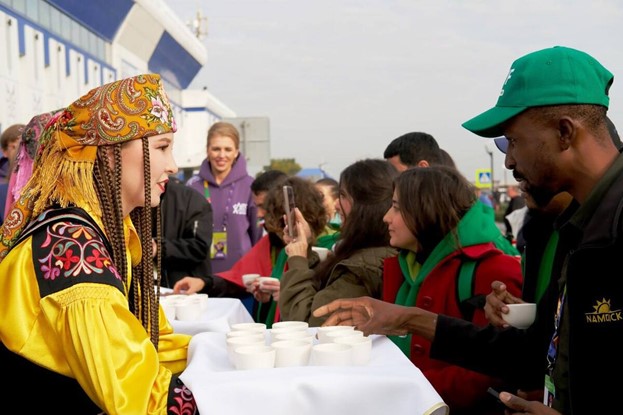
National evenings held a special place in the festival. Ugandan dances were followed by Argentine tango, and Chinese guzhengs played after Cuban percussion. Tables overflowed with treats from participants’ national cuisines — tea, sweets, spices — accompanied by stories from their childhoods. A delegate from Peru shared:
“For the first time, I felt I could share my culture not on stage, but simply by looking people in the eyes. That is true exchange.”
The warmest atmosphere, however, was found at the “Kvartirniki” — intimate spaces where formal boundaries disappeared. No microphones, no protocols — just live conversation, a guitar, soft lighting, and talks about the future. Participants shared personal stories, dreams, and reflections on what it means to be young in the 21st century. The Kvartirniki reminded everyone that diplomacy begins not on grand stages, but in human conversation. Nearby, life thrived in the cultural exchange zone — an improvised pavilion where country, language, and tradition stands formed a living world map. Everyone could leave a postcard, drawing, or symbol of their country. In these moments, the concept of borders faded: Kazakhstan exchanged pins with Nicaragua, Russia with Senegal, and Indonesia with Mexico.
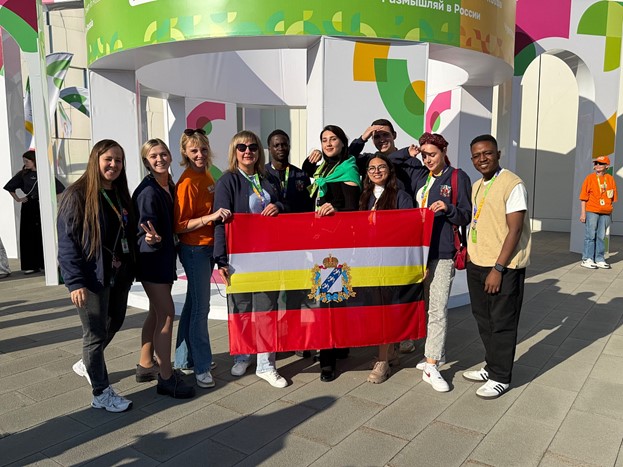
The “Pitching” platform was equally creative — young participants presented their ideas outdoors, near food courts and cafés. International collaborations emerged here: bloggers from Brazil teamed up with media students from Tatarstan, while artists from Egypt developed joint exhibition projects with peers from Yakutia.
The culmination came in the form of large-scale street events: dance flash mobs, impromptu concerts, and fidgetal competitions — a blend of sports, music, and digital technology. On the central square, the “Rhythms of the Planet” flash mob brought together hundreds of participants from different countries into a single dance.
“It felt like the heartbeat of the world,” said a participant from India.
The cultural program became the truest expression of the forum’s motto — “Collaboration Without Borders.” Here, there were no mere spectators or performers — everyone became part of a grand human orchestra.
In this way, the forum reminded everyone that no diplomacy works without emotion, and emotions are born where people look each other in the eyes, smile, share, dance, and believe in a common melody of the world.
International Significance and Future Prospects
The World Youth Meeting in Nizhny Novgorod confirmed Russia’s status as a center for international youth diplomacy. With over 2,000 participants from 120 countries, more than 215 experts from 40 states, and over 80 interactive formats, the forum functioned not merely as an event, but as a launchpad for intercontinental processes. Today, youth are not just the object of policy but active agents: they create meaning, set trends, and shape the future. In the context of public diplomacy, their role is especially significant, as young people move faster than borders, overcome barriers, and develop new formats of cooperation.
The forum has concluded, but its impact continues: ideas generated on the platforms are already turning into projects, and the networks and connections will endure. For many young leaders, this forum is not an adventure, but a starting point for a new path in public diplomacy, where collaboration truly knows no borders.