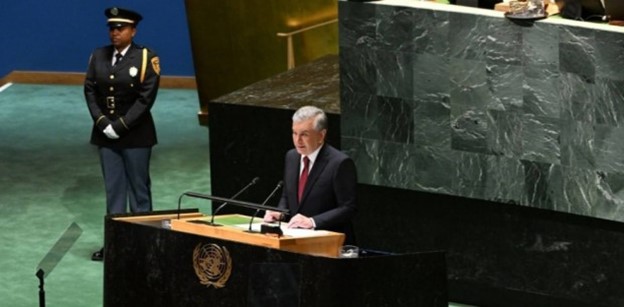
On September 24, 2025, President of Uzbekistan Shavkat Mirziyoyev took part in the 80th anniversary session of the UN General Assembly in New York, where he presented the country’s initiatives in the field of international security, sustainable development and human rights protection. Over the three decades of UN membership, Uzbekistan has transformed from a young independent republic into an active initiator of global solutions, making a significant contribution to the environmental, social and humanitarian programs of the world community.
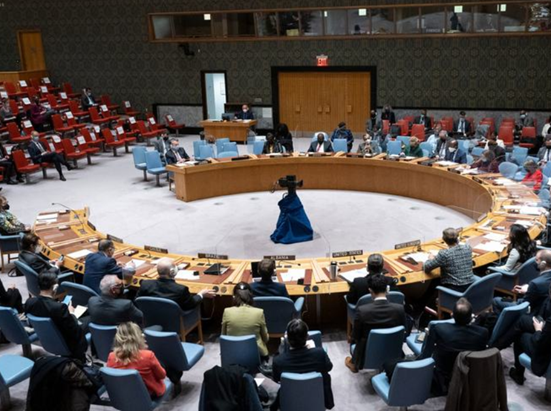
President of Uzbekistan Shavkat Mirziyoyev will take part in the 80th Anniversary session of the United Nations General Assembly in New York.
Uzbekistan became a full member of the United Nations on March 2, 1992. This milestone marked a key affirmation of the young independent republic’s readiness not only to actively engage in all international processes but also to base its foreign policy on the principles of respect for international law and the UN Charter.
More than three decades have passed since then, during which Tashkent has become one of the most active participants in global initiatives, with its proposals receiving wide recognition on the international stage.
Uzbekistan’s active participation in the United Nations has played a pivotal role in strengthening the country’s independence, securing international recognition of its sovereignty, and establishing a foundation for equal and respectful dialogue with all nations. The opening of the United Nations Office in Tashkent in 1993 marked a significant milestone, underscoring the long-term nature of Uzbekistan’s cooperation with the UN system.
From the outset, Uzbekistan’s priorities within the framework of the United Nations have focused on ensuring international and regional security, combating contemporary challenges and threats, promoting sustainable development, and addressing environmental issues. Special attention has been devoted to the Aral Sea crisis, which has emerged as a global environmental catastrophe.
It is no coincidence that Uzbekistan has put forward a series of initiatives addressing the challenges of the Aral Sea region, which have garnered broad support from the international community. Notably, in 2018, under the auspices of the United Nations, the Multi-Partner Trust Fund for Human Security in the Aral Sea Region was established.
The United Nations Secretary-General António Guterres has visited Uzbekistan twice — in June 2017 and July 2024. These visits underscored Tashkent’s growing role as a key platform for addressing global issues.
During his visit in July 2024, United Nations Secretary-General António Guterres remarked, “Uzbekistan is our reliable partner across all spheres, from peace and security, human rights, to climate and sustainable development. The country stands at the forefront of advancing the UN’s multilateral agenda”. This high appraisal highlights the core essence of the relationship: the cooperation between Uzbekistan and the United Nations is dynamic and comprehensive — spanning from strengthening regional security to the implementation of the global Sustainable Development Goals.
In recognition of his contribution to advancing solidarity and strengthening cooperation between Uzbekistan and the United Nations, António Guterres was awarded the highest degree of the Order of “Dustlik” in 2024.
The President of Uzbekistan regularly delivers speeches at the sessions of the United Nations General Assembly. His addresses at the 72nd, 75th, 76th, and 78th sessions have served as significant policy statements, addressing issues such as regional security, combating climate change, protecting human rights, and promoting intercivilizational dialogue.
The participation of the Uzbek delegation in several international forums has also been notable, including the United Nations Conference on Landlocked Developing Countries held in 2025 in Turkmenistan. These events showcase not only Uzbekistan’s active engagement but also its readiness to put forward proposals that reflect the interests of not only the region but the entire international community.
Between 2018 and 2025, Uzbekistan initiated 13 resolutions in the United Nations General Assembly. These resolutions cover a broad range of topics — from regional security to sustainable tourism and environmental challenges.
Among the most significant are the following resolutions: “Strengthening Regional and International Cooperation to Ensure Peace and Sustainable Development in Central Asia» (2018), «Proclamation of the Aral Sea Region as a Zone of Ecological Innovations and Technologies» (2021), «Enhancing the Role of Parliaments in Accelerating the Achievement of the Sustainable Development Goals» (2022), «United Nations Decade on Ecosystem Restoration» (2025).
Each of these initiatives demonstrated Tashkent’s aspiration to be a generator of ideas aimed at consolidating international efforts. In particular, the proposal to recognize the Aral Sea region as a zone of environmental innovation helped draw global attention to this environmental catastrophe and facilitated the creation of new mechanisms for international cooperation.
Moreover, at the height of the COVID-19 pandemic, Uzbekistan proposed the “International Code on Voluntary Commitments of States” during which was circulated as an official document of the United Nations General Assembly. This initiative underscored the importance of global solidarity in times of crisis.
Uzbekistan was among the first countries in the region to integrate the United Nations Sustainable Development Goals (SDGs) into its national strategic documents. As early as 2018, the country established a National Coordination Council on the SDGs, and by 2020, a comprehensive national framework of 125 indicators, adapted to the country’s specific conditions, was approved.
This year, Uzbekistan climbed 19 positions in the global SDG Index, entering the top five fastest-progressing countries worldwide and emerging as a regional leader.
The Development Strategy “New Uzbekistan” for 2022–2026 and the national Development Concept up to 2030 outline priorities aligned with the United Nations global goals: combating poverty, ensuring quality education, promoting gender equality, safeguarding health, sustainable natural resource management, and advancing digital transformation.
In collaboration with United Nations agencies, Uzbekistan has achieved a number of practical results. Notably, between 2022 and 2024, the poverty rate decreased from 17% to 8.9%, marking one of the most dynamic improvements in the region. The implementation of the Unified Social Benefits Registry, supported by UNICEF, the International Labour Organization (ILO), and the United Nations Development Programme (UNDP), doubled the coverage of vulnerable groups—from 600,000 to 1.2 million people. UNICEF and the World Health Organization (WHO) programmes contributed to increasing childhood vaccination rates and modernizing the school education system. Projects by the Food and Agriculture Organization of the United Nations (FAO) and UNDP focused on reforestation efforts in the Aral Sea region have helped consolidate the area’s status as a “zone of environmental innovation and technology.”
Currently, numerous United Nations agencies operate in Uzbekistan, including the United Nations Development Programme (UNDP), UNICEF, the Food and Agriculture Organization (FAO), the International Labour Organization (ILO), UNESCO, the Office of the United Nations High Commissioner for Refugees (UNHCR), and others. Together, they are implementing 166 projects with a total budget exceeding USD 293 million under the Framework Cooperation Programme on Sustainable Development for 2021–2025.
In recent years, Uzbekistan has welcomed dozens of heads of United Nations agencies — from UNESCO Director-General Audrey Azoulay to UNICEF Executive Director Catherine Russell, and World Intellectual Property Organization Director General Daren Tang. These visits symbolize the growing international interest in the country, which is emerging as an important platform for addressing global challenges.
In 2023, Samarkand hosted the 25th Session of the General Assembly of the United Nations World Tourism Organization (UNWTO) followed by the Public Service Forum in 2025.
The United Nations Forum on Public Service held in Samarkand, along with the 2024 “Asian Women’s Forum” organized jointly with UN Women, stand out as vivid examples of Uzbekistan’s growing role as a hub for key international initiatives.
The official opening of the UN Women office in Tashkent in May, 2025 marked a recognition of Uzbekistan’s achievements in promoting gender equality and empowering women across the country.
In 2025, the International Transport and Logistics Hub in Termez was integrated into the global supply network of the United Nations High Commissioner for Refugees (UNHCR), strengthening Uzbekistan’s role in humanitarian operations.
A significant milestone in Uzbekistan’s engagement with United Nations bodies was its election to the Human Rights Council for the 2021–2023 term. This achievement affirmed international recognition of the country’s efforts in human rights protection and the reform of national institutions.
Additionally, Uzbekistan has become a member of several prestigious United Nations bodies, including the Economic and Social Council (ECOSOC) for the 2025–2027 term, the International Labour Organization (ILO) Governing Body for 2024–2027, the Human Rights Committee for 2025–2028, the United Nations Statistical Commission for 2026–2029, and the UNESCO Intergovernmental Committee for the Safeguarding of the Intangible Cultural Heritage for 2022–2026.
Tashkent is already actively promoting its candidacy for a non-permanent seat on the United Nations Security Council for the 2035–2036 term, which would mark a new milestone in the development of its international diplomacy.
In October-November 2025, the 43rd session of the UNESCO General Conference will be held in Samarkand. This event will make history not only for Uzbekistan but for the entire international organization: for the first time in 40 years, the UNESCO General Conference will take place outside Paris, the organization’s traditional headquarters.
The choice of Samarkand as the venue for this significant forum is deeply symbolic. This ancient city, inscribed on the UNESCO World Heritage List, embodies a dialogue of cultures and civilizations, bridging East and West. For Uzbekistan, this decision represents recognition of the country’s efforts to preserve cultural heritage and promote international cooperation in science, education, and culture. It also reflects the high level of trust the Republic enjoys on the global stage.
All of this confirms that Uzbekistan has become a focal point for international engagement and cooperation.
Over three decades of cooperation with the United Nations, Uzbekistan has progressed from a young member of the international community to an active initiator of global solutions. Today, the country not only participates in implementing the organization’s goals but also takes the lead in shaping the current agenda — from combating climate change to promoting dialogue among civilizations.
For Tashkent, the United Nations remains a key platform for multilateral diplomacy. And for the international community, Uzbekistan is emerging as a reliable partner whose initiatives and practical actions make a tangible contribution to strengthening international security, advancing sustainable development, and protecting human rights.
Thus, the upcoming participation of President of Uzbekistan Shavkat Mirziyoyev in the 80th anniversary session of the United Nations General Assembly will be a significant event — one that will once again underscore the country’s strategic commitment to strengthening multilateral dialogue and advancing global initiatives. This participation will further solidify Uzbekistan’s position as a state that generates international ideas and reaffirm its meaningful role in shaping the global agenda of the 21st century.
Dunyo IA
President of Uzbekistan advocates for solidarity, open dialogue and close cooperation between the countries of the world
On September 23, general political debates of the 80th anniversary session of the UN General Assembly commenced at the United Nations headquarters in New York City, where President of the Republic of Uzbekistan Shavkat Mirziyoyev delivered a speech.
On the first day of the debates led by the session chair Annalena Baerbock, UN Secretary-General António Guterres, leaders of the member-states took part – President of the United States of America Donald Trump, President of the Federative Republic of Brazil Luiz Inácio Lula da Silva, President of the Republic of Türkiye Recep Tayyip Erdoğan, President of the Republic of South Africa Cyril Ramaphosa, President of the Republic of Korea Lee Jae Myung, President of France Emmanuel Macron, and heads of other countries.
In the beginning of his speech, the President of Uzbekistan Shavkat Mirziyoyev sincerely congratulated the participants with the 80th anniversary session of the UN General Assembly. He drew attention to the issue that the current meeting is taking place in a complex, rapidly changing global situation that calls for new vision and approaches to the work and future of the Organization.
– Today we are witnessing the weakening of the role of international institutions, intensifying confrontations, conflicts and wars, as well as a rapid increase in the technological and social inequality, deepening of economic and humanitarian crises, – stated the leader of Uzbekistan.
The leader of our country gave a high assessment to the efforts of the Secretary-General António Guterres on maintaining the UN as the main platform for the peaceful resolution of the most difficult and pressing global issues. Support for the “UN80” initiatives and firm commitment of our country to the Pact for the Future were expressed.
The President of Uzbekistan also spoke in favour of transforming and expanding the membership of the UN Security Council in order to effectively address current threats and challenges, protect the interests of the developing countries.
The Head of State reviewed in-detail the processes of irreversible reforms in Uzbekistan, carried out in full alignment with the Sustainable Development Goals. As was noted, our country consistently pursues the policy to build a democratic, rule-based, social and secular New Uzbekistan.
– Our main goal is to fundamentally transform the lives of each family and each citizen in our country, to ensure human interests, human dignity and well-being, – stated the President.
It was mentioned that in recent years, it has been managed to reduce the poverty rate in Uzbekistan from 35 to 6.6 percent. This result was achieved primarily through the education and science sector transformation, establishment of innovative industries and technological industrial enterprises, green energy development and transport infrastructure modernization, comprehensive support of small businesses, and, consequently, the creation of millions of jobs.
Preschool education coverage in our country has increased from 27 to 78 percent, the higher education – from 9 to 42 percent. Enhancing the prestige of the teaching and mentoring profession remains the most important priority.
In order to create a single international platform for the exchange of teachers’ experience and knowledge, it was proposed to hold a World Summit on professional education in Uzbekistan.
Mentioning the creation of an advanced healthcare system, the leader of our country also informed that at the initiative of the Uzbek side a high-level event will be held dedicated to the issues of combating children cancer and other catastrophic diseases.
Touching upon the topic of gender policy, the Head of our state announced on further strengthening the role of women in the social, political and business life of the country. In this context, he advocated for regular holding of the Asian Women’s Forum in the vast region, turning it into a permanent platform.
Highlighting Uzbekistan’s strong commitment to achieving the Sustainable Development Goals, the President noted that by 2030 the country intends to join the ranks of “upper-middle-income” countries.
Separate attention has been paid to the priorities of Uzbekistan’s foreign policy. The leader of the country mentioned: “Eight years ago, from this esteemed podium, we declared our strong determination to transform Central Asia into a region of peace, good neighbourliness and partnership. Today, we can confidently declare that we have achieved this strategic goal. The era of closed borders, unresolved disputes and conflicts is in the past”.
It was noted that in the past years the volume of mutual trade, investments and transportation of goods in the region has increased fivefold. Joint investment funds, cross-border trade and industrial cooperation zones are being created, and major infrastructure projects are being implemented.
An effective mechanism for deepening regional integration became the Consultative Meetings of the Heads of State of Central Asia.
– I can confidently affirm that as of now, we have started the process of forming the New Central Asia. Our region, thanks to its unity, stability and distinct identity, is steadily securing a stronger position in the system of international relations as an independent actor, – stated the President.
The Head of State proposed to implement a number of new projects and programs in the region jointly with the UN structures, in particular – holding an international forum under the auspices of ECOSOC and UNCTAD dedicated to the economic development of the Central Asian states, establishing a regional hub for green technologies in industry jointly with UNIDO, adopting programs on the rational use of water resources, creating “green” spaces, and ensuring demographic resilience.
Moreover, the adoption of a UN General Assembly resolution supporting the efforts of the Central Asian countries aimed at deepening regional partnership and economic integration was initiated.
In the context of global and regional security, the President of Uzbekistan touched upon the situation in Afghanistan. To support the aspirations of the Afghan people for a peaceful and stable life, he advocated for the united efforts of the international community, especially emphasizing the prevention of this country’s isolation.
It was mentioned that Uzbekistan plans to implement major economic and infrastructure projects in this country.
The leader of our country proposed to adopt a separate UN resolution on the development of transport and energy corridors passing through the territory of this country.
Speaking about the deepening humanitarian crisis in the Gaza Strip, the President called for the end to military actions and continuation of political negotiations.
– We strongly support the implementation of the principle of “two state solution” in accordance with UN resolutions, – mentioned the President from the Organization’s high podium.
Expressing serious concern about the situation in Ukraine, he welcomed the start of high-level dialogue on its resolution through diplomatic means.
Continuing the topic of security, the Head of state pointed to the effective implementation of the Global Counter-Terrorism Strategy in Central Asia. It was proposed to transform the Regional Council on Rehabilitation and Reintegration, created in cooperation with the UN Office of Counter-Terrorism, into an International Competence Center. The center would serve as an important platform for exchanging expertise on adapting to peaceful life for those repatriated from conflict zones.
The President also announced the readiness to create all the necessary conditions for the establishment of a regional Office of Counter-Terrorism in Uzbekistan.
The leader of our country highlighted that the vulnerability of the global transport system in the current turbulent world creates negative impacts on the stability of landlocked developing countries.
To ensure the security of international transit corridors and to establish efficient logistics networks, he called for the implementation of a Global mechanism on “Strengthening transport connectivity to achieve Sustainable Development Goals”.
The President of Uzbekistan also drew attention to the climate change problem, which is becoming increasingly acute. As he mentioned, the negative consequences of the Aral Sea desiccation must remain at the constant attention of the international community.
– We are consistently continuing our work to restore the Aral Sea ecosystem. In recent years, salt-tolerant desert plants have been planted on 2 million hectares of the dried seabed of the Sea. By 2030, green cover will be created on 80 percent of this area, – emphasized the Head of State.
Turning to the issue of water resources scarcity, the President shared plans on organizing a World Forum on water saving in Uzbekistan. Following the event, it’s planned to recognize the water crisis as a serious threat to sustainable development, as well as to adopt a “roadmap” for the wide introduction of innovation technologies globally.
The President identified the intensifying trend of climate migration as another adverse consequence of climate change, highlighting the absence of clear international mechanisms and a legal framework for resolving this issue. In this regard, he advocated for the adoption of a Global Pact for a broad international partnership and leading a coordinated policy on this serious issue.
In the context of ensuring sustainable development of all countries, the leader of Uzbekistan drew attention to the significance of preventing inequalities in digital development and the use of artificial intelligence between countries. In this context, it was proposed to create an International cooperation mechanism for the gratis exchange of practical solutions and models of artificial intelligence in healthcare, education and culture.
– I would like to emphasize another priority issue. Our future, the destiny, and the prosperity of the world are in the hands of the younger generation. It is our urgent task to instill in the minds of our youth the noble ideas, such as peace, humanism and friendship, mutual trust and respect, – stated the Leader of our country.
In this regard, the proposal was put forward to establish the World youth movement for peace and to locate its headquarters in Uzbekistan.
As mentioned the President, Uzbekistan will actively continue to deeply study and promote Islamic enlightenment ideas to the world, while consistently implementing a policy of tolerance in the society. In the coming months, the Center of Islamic Civilization will open in Tashkent, which is unique for the region. It’s planned to hold a special presentation at the UN of the rich spiritual and scientific heritage of our great ancestors – thinkers and scholars Imam Bukhari, Imam Termizi and Imam Maturidi.
Concluding his speech, Shavkat Mirziyoyev stated that the New Uzbekistan advocates for solidarity, open dialogue and close cooperation with all countries in the world, and is ready to contribute to strengthening dialogue among nations, cultures and civilizations, achieving universal human goals.