Strategic Adaptation and Foreign Policy Balance
Summary:
This review examines the key political events in Russia during October–November 2025. Against the backdrop of the Special Military Operation, the period was marked by a record number of strikes on Ukraine’s military infrastructure. Inside the country, the FSB thwarted attempted state coups, while Russia’s international activity featured the completion of its presidency of the UN Security Council. The diplomatic sphere was also marked by the cancellation of the summit with the United States and the consolidation of a strategic partnership between Russia and Kazakhstan.
Introduction:
October and November 2025 became an important stage in modern Russian history, characterized by dynamic developments across key areas of foreign and domestic policy. This period reflected consistent trends in the Russian leadership’s approach to addressing current challenges, combining military, diplomatic, and law-enforcement instruments. Against the backdrop of the ongoing Special Military Operation and persistent tensions in relations with Western countries, Moscow undertook a number of significant steps aimed at strengthening national security, protecting its geopolitical interests, and identifying new growth opportunities under sanctions pressure. Active operations in the Ukrainian direction, statements by security agencies about preventing internal threats, intensive work on multilateral diplomatic platforms, and the development of bilateral relations with key partners — all these elements formed a comprehensive picture of the Kremlin’s efforts to ensure stability in the country amid a complex international environment.
Large-Scale Missile Strikes on Ukraine: October Record
The autumn of 2025 became a period of intense activity for the Russian Federation across several key areas, including military operations, internal security, and diplomacy. Taken together, these events reflected the current priorities and challenges in the country’s foreign and domestic policy.
In October, the Russian Ministry of Defense reported a significant increase in the scale of strikes on Ukraine’s military infrastructure. According to official statements, 270 high-precision missiles were launched, which the ministry claimed to be a 46% increase compared to the previous month. The reported targets included command posts, ammunition depots, and energy system facilities supporting the functioning of the Armed Forces of Ukraine. Military officials described these actions as a response to attempts by the Ukrainian side to regain control over territories and emphasized that the strikes were carried out exclusively against military objectives in order to minimize risks to the civilian population. Separate attention was given to the use of Kinzhal and Tsirkon hypersonic missiles, presented as a demonstration of the technological capabilities of Russia’s military arsenal.
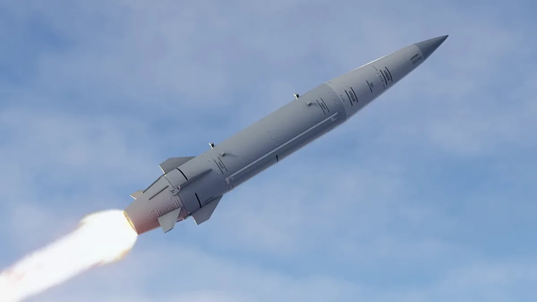
Kinzhal missile
FSB Accuses Khodorkovsky of Preparing a Coup
In parallel on the domestic front, the FSB of Russia opened a criminal case against Mikhail Khodorkovsky (designated as a foreign agent in Russia) and 22 members of the so-called “Anti-War Committee” on charges of preparing a state coup and terrorism. According to investigators, the individuals involved, while abroad, coordinated the financing of extremist groups and the recruitment of mercenaries for the Armed Forces of Ukraine.
The FSB press service emphasized that the actions of the opposition figures were aimed at undermining the constitutional order of the Russian Federation and posed a threat to national security.
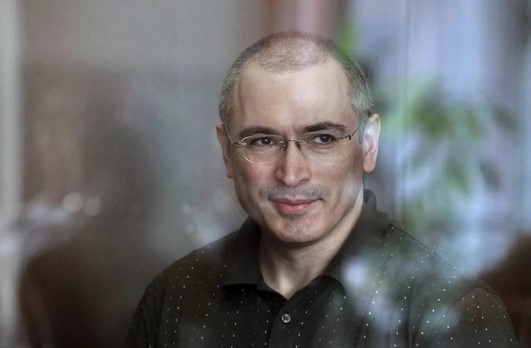
Former head of the Yukos company Mikhail Khodorkovsky (designated as a foreign agent in Russia)
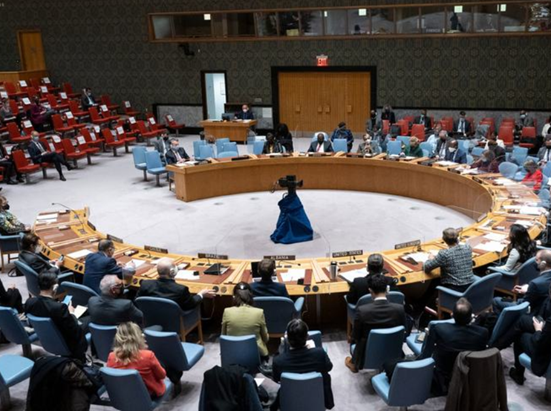
Completion of Russia’s Presidency of the UN Security Council
На международной арене Россия завершила октябрьское председательство в Совете Безопасности ООН, проведя 12 заседаний по ключевым вопросам глобальной повестки. Министр иностранных дел Сергей Лавров подчеркнул, что большинство стран поддерживают российскую позицию по многополярному миропорядку и необходимости реформы ООН.
Несмотря на тенденции последних лет в «обособлении» России на политической арене, председательство прошло без яркой негативной оценки со стороны других стран. Как отметил постпред Василий Небензя, «изоляция России — это миф, придуманный в Вашингтоне».
On the international stage, Russia completed its October presidency of the UN Security Council, holding 12 meetings on key issues of the global agenda. Foreign Minister Sergey Lavrov emphasized that most countries support Russia’s position on a multipolar world order and the need for UN reform.
Despite recent years’ trends toward the “isolation” of Russia on the political stage, the presidency passed without strong negative assessments from other countries. As Permanent Representative Vasily Nebenzya noted, “Russia’s isolation is a myth invented in Washington.”
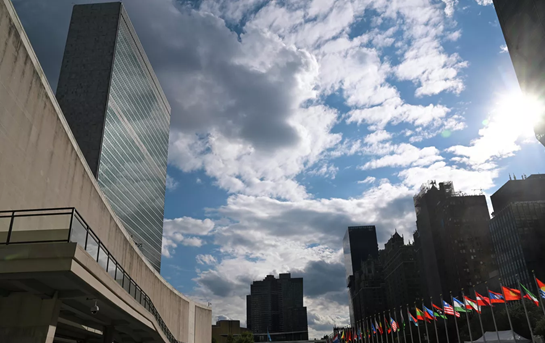
United Nations Headquarters in New York
Cancellation of the Trump–Putin Summit in Budapest
Furthermore, at the bilateral level, Russian diplomacy faced the situation surrounding the cancellation of the planned meeting between Vladimir Putin and Donald Trump in Budapest. According to media reports, the meeting was postponed at the initiative of the American side due to a lack of progress in fulfilling previous agreements. Presidential Press Secretary Dmitry Peskov stated that Russia remains open to dialogue on an equal footing. The disruption of the summit became a consequence of the ambiguous nature of relations between the two governments, which may subsequently lead to further distancing.
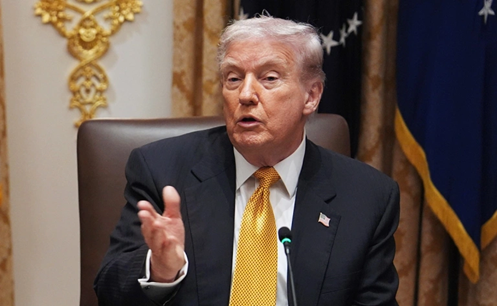
U.S. President Donald Trump
Putin–Tokayev Meeting: Strengthening Russian–Kazakh Relations
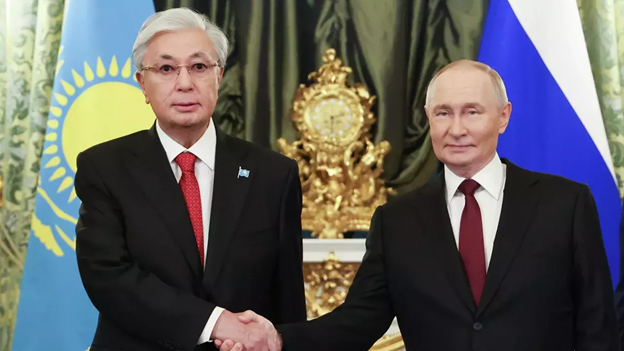
On 12 November, a meeting took place in the Kremlin between Russian President Vladimir Putin and Kazakh President Kassym-Jomart Tokayev, during which a declaration on comprehensive strategic partnership was signed. The leaders discussed the growth of trade turnover (over $27 billion in 2024) and joint projects in the fields of energy and transportation.
Tokayev noted that “external challenges are not capable of affecting the brotherly relations between Russia and Kazakhstan.” The parties agreed to hold the Year of Working Professions in 2025.
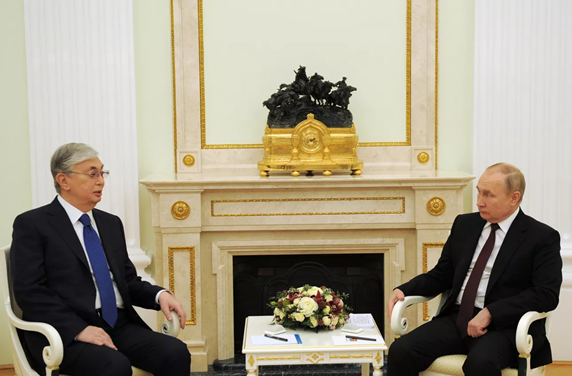
President of Russia Vladimir Putin and President of Kazakhstan Kassym-Jomart Tokayev
Conclusion
Summing up, it can be stated that the autumn months of 2025 demonstrated consistent and multi-layered efforts by the Russian leadership to implement its strategic goals amid an increasingly complex global environment. The military operation in Ukraine was marked by a phase of heightened intensity, reflected in record-scale strikes on the rear infrastructure of the Ukrainian Armed Forces using advanced weapon systems.
Foreign policy efforts were concentrated on two main directions: working within multilateral formats such as the UN Security Council to promote the concept of multipolarity, and developing bilateral relations, which showed divergent dynamics — deteriorating dialogue with Washington while simultaneously strengthening partnership with Astana.
Таким образом, текущая траектория развития России указывает на её адаптацию к долгосрочным геополитическим разногласиям с рядом западных стран и ставку на укрепление отношений с не-западными центрами силы и ближайшими союзниками по Евразийскому пространству. Успех этой стратегии в среднесрочной перспективе будет зависеть от совокупности факторов, включая устойчивость экономики, эффективность ВПК и способность формировать устойчивые международные коалиции, альтернативные сложившемуся западному порядку.
Thus, Russia’s current trajectory indicates its adaptation to long-term geopolitical disagreements with several Western countries and its reliance on deepening relations with non-Western centers of power and close Eurasian allies. The success of this strategy in the medium term will depend on a combination of factors, including economic resilience, the efficiency of the defense industry, and the ability to form sustainable international coalitions that can serve as alternatives to the existing Western-led order.
Scenario 1: “Escalation and Diversification”: Intensification of Russia’s activity in the zone of the Special Military Operation, combined with diplomatic efforts to diversify measures aimed at overcoming sanctions barriers.
Scenario 2: “Waiting and Potential Dialogue”: A decline in Russia’s activity in the SVO zone and waiting for a response from Western countries regarding the establishment of dialogue that takes Russia’s position into account.