Author: Shakhnoza Kodírova, Head of the Department of the Institute for Strategic and Regional Studies under the President of the Republic of Uzbekistan
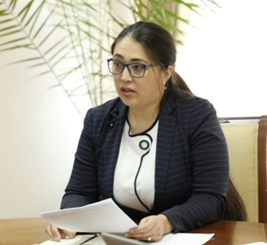
Short Description: Shakhnoza Kodírova’s article examines the evolution of relations between Uzbekistan and the United States, which have shifted in recent years from limited cooperation focused primarily on regional security to a comprehensive strategic partnership. The author highlights key milestones in political dialogue, major economic agreements, increasing U.S. investment, and growing collaboration in technology, education and humanitarian exchanges. Particular attention is given to Uzbekistan’s domestic reforms, which have opened new opportunities for international cooperation and foreign investment. The analysis shows that modern Uzbekistan–U.S. relations have developed into a multi-layered partnership contributing to regional stability and Central Asia’s integration into the global economy.
In recent years, the relationship between Uzbekistan and the United States has gained new momentum. Beyond formal diplomacy, the partnership has evolved into a deeper, multidimensional relationship. Today, active political dialogue is ongoing, economic and business ties are expanding, and humanitarian and people-to-people connections are continuously strengthening.
Until 2017, cooperation between Uzbekistan and the United States mainly focused on regional security issues and the situation in Afghanistan, with little progress in economic and investment areas. However, after Shavkat Mirziyoyev’s election and his visit to Washington in 2018, cooperation began to take on a strategic character.
This was the first visit of an Uzbek leader to the United States in 16 years and marked a new level of mutual trust. During the visit, agreements and memoranda worth over $4.8 billion were signed, paving the way for projects involving major U.S. companies.
These positive trends have been largely driven by Uzbekistan’s internal reforms and its pragmatic approach to regional and foreign policy. As a result, diplomatic engagement has intensified: regular consultations at the ministerial level have fostered systematic and structured cooperation.
Since the 2020s, relations have evolved into a multi-level structure. In 2021, the format of political consultations transformed into the “Strategic Partnership Dialogue between Uzbekistan and the United States,” covering issues of economy, security, and the environment. The first meeting of this new format took place in Tashkent and laid the groundwork for comprehensive cooperation.
In 2024, bilateral relations reached a new qualitative level with the official establishment of an expanded strategic partnership. This format is based on the convergence of key priorities: Uzbekistan aims for profound economic modernization, attracting foreign investment, integrating into global markets, and developing a competitive economy. The United States supports these efforts, reaffirming its commitment to reforms and encouraging the participation of American companies in new opportunities emerging in Uzbekistan.
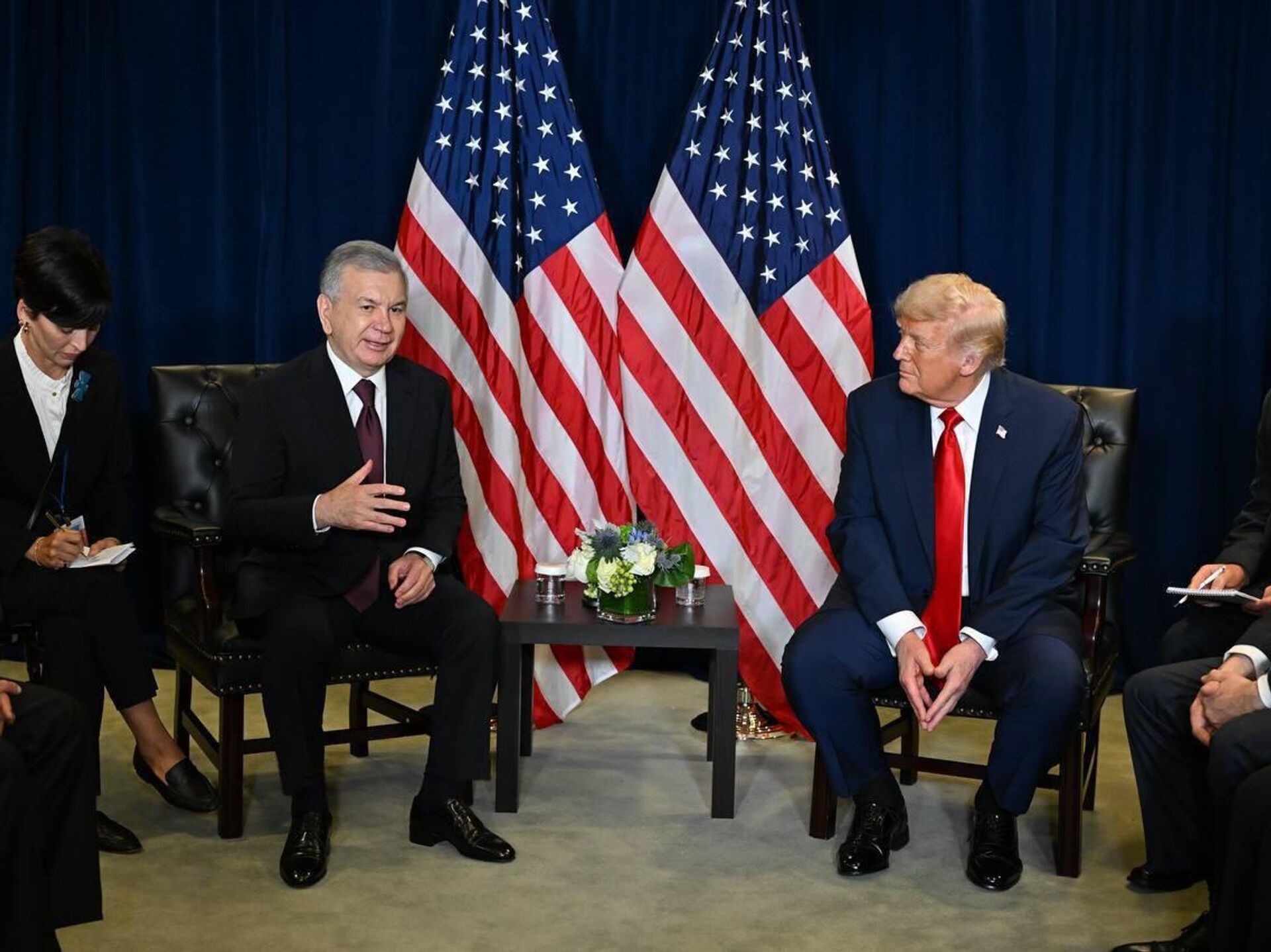
In this context, the meeting between Shavkat Mirziyoyev and Donald Trump in September this year, on the sidelines of the UN General Assembly, defined specific priorities for bilateral cooperation and laid the foundation for long-term collaboration. More than ten agreements were signed with major companies, including Boeing, Cargill, Citigroup, and others.
Subsequently, in October 2024, a U.S. delegation headed by President Biden’s Special Envoy for South and Central Asia, Sergio Gor, and Deputy Secretary of State Christopher Landau, visited Tashkent. The visit reinforced mutual confidence and underscored both parties’ commitment to advancing joint initiatives in key areas of the bilateral agenda.
Undoubtedly, the contribution of the United States to Uzbekistan’s economy remains stable: in 2024, trade volume increased by 15%, reaching $881.7 million. The investment portfolio exceeds $11 billion. These figures illustrate the ongoing expansion of economic and commercial cooperation, although total volumes remain relatively modest.
At the same time, the contemporary economic agenda goes beyond traditional trade. Joint industrial and investment projects, collaboration in logistics, civil aviation, the agro-industrial complex, and metallurgy, as well as the implementation of digital and innovative solutions in supply chain management, are gaining prominence.
Notably, structural changes in Uzbekistan’s export profile are underway. Services now account for 86% of the country’s main exports. The United States remains the primary market for Uzbek digital services: out of 800 active exporters, 448 provide digital services to the U.S., representing 45% of total IT exports. This underscores the role of the U.S. as a strategic partner in Uzbekistan’s technology sector.
To increase exports of Uzbek products to the U.S., the president directed regional authorities to establish direct links with various U.S. states. For example, in August this year, a goal was set to increase textile exports to the U.S. by five to six times. As part of this initiative, the Andijan Regional Textile Trade House opened a representative office in St. Louis, one of the country’s major logistics hubs.
The American company Oppenheimer plans to participate in financing three major projects in the Andijan region, valued at a total of $1.2 billion, including the creation of a $180 million textile industrial zone.
Uzbekistan has once again attracted the attention of the U.S. due to the presence of critical minerals and rare earth elements used in batteries, semiconductors, and modern defense systems. In April 2025, both countries signed a cooperation agreement on the extraction of these resources, and in September, American investor Cove Capital began geological exploration work.
Significant progress is also observed in the humanitarian sphere: academic exchanges and educational programs are increasing, and the interest of Uzbek youth in American education has grown notably. Currently, 40 Uzbek universities are developing cooperation projects with over 25 U.S. universities and educational institutions. The cooperation includes academic exchanges of professors and students, joint research, and the participation of American experts in the educational process.
These initiatives reflect Uzbekistan’s aspiration for greater openness and integration into the international community, creating conditions to expand contacts in tourism and cultural fields.
In this context, starting from January 1, 2026, Uzbekistan will implement a visa exemption regime for 30 days for U.S. citizens. Previously, this regime only applied to tourists over the age of 55. The new regulations significantly facilitate U.S. citizens’ access to the country, promoting tourism, business travel, and cultural exchanges, as well as opening additional opportunities for direct contacts between people and organizations of both countries.
A key element of multilateral interaction continues to be the C5+1 regional format, which brings together the United States with the five Central Asian countries. The U.S. National Security Strategy indicates the intention to intensify work within this platform to promote initiatives on climate change mitigation, energy and food security, the development of transport connectivity, and expanding Central Asian countries’ access to global markets.
In summary, the evolution of relations between Uzbekistan and the United States demonstrates how pragmatism and reform-based policies can overcome barriers and generate mutual benefits. Today, bilateral relations are broad and resilient: Uzbekistan has established itself as an important partner, recognized in Washington as a key player in regional stability. The trajectory of cooperation points toward a constructive partnership, with Central Asia serving not as a periphery but as a bridge for sustainable development and mutually beneficial collaboration.