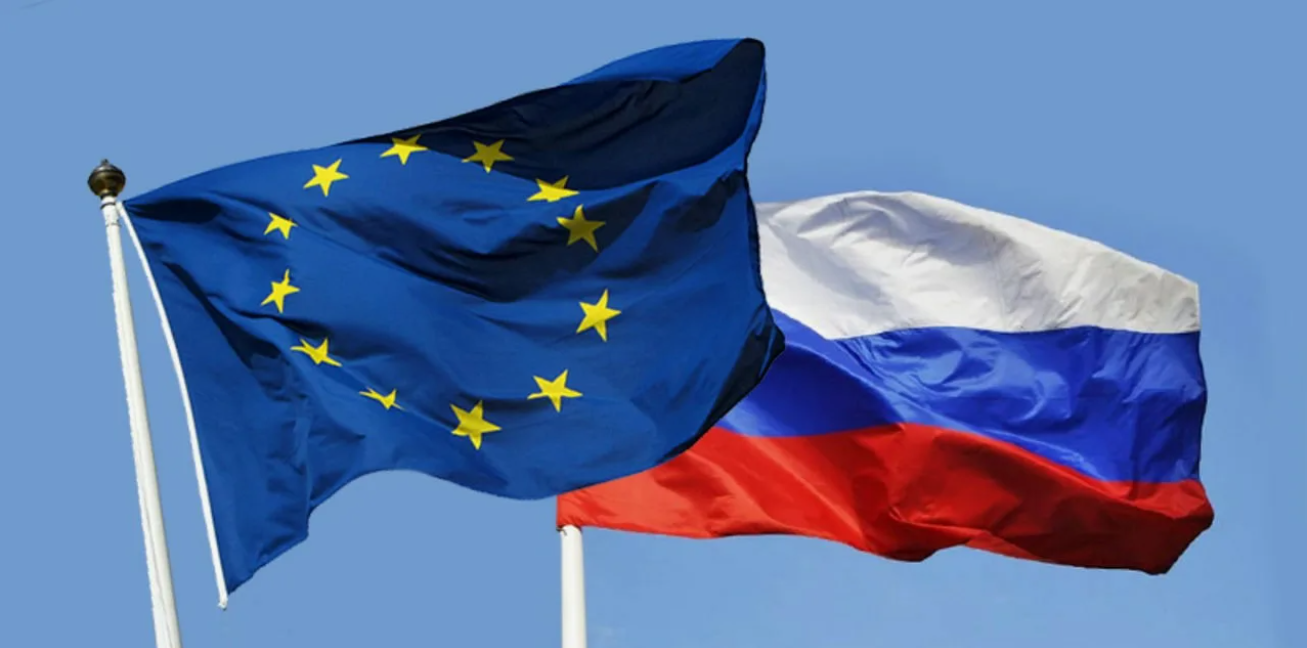
A note by Carlo Di Martino, a geopolitician and representative of the Italian socialist party Risorgimento Socialista, on the historical commonality of Europe and Russia and the need to return to a dialogue between them based on respect for culture and traditions.
The topic of relations between Russia and Europe has very ancient roots. We can trace its first signs back to the conversion to Christianity of Prince Vladimir — an event which, together with the fall of the Eastern Roman Empire and the marriage between Zoe Sophia Palaiologina and Ivan III, marked the symbolic transfer of the Roman cultural and political tradition to the Russian world. I do not begin with these historical references out of nostalgia, but because today more than ever, history and culture must once again become the language of politics. A Europe that loses sight of its own history is a Europe that loses itself. In my view, this is the deeper reason behind its current political disorientation.
A disorientation that is most clearly expressed in its relationship with truth. The most evident example is the current attempt to rewrite the history of the Second World War, downplaying the decisive role of the Soviet Union in the defeat of Nazism and obscuring the enormous human sacrifice of the Russian people. Some time ago, a great figure of this city and of Russian culture, in a work titled Winter Notes on Summer Impressions, addressed precisely the theme of the relationship between Russia and Europe. To Dostoevsky, Europe appeared as a promise unfulfilled. Though radiant in its palaces, museums, and economic wealth, it concealed a deep crisis: a brilliant civilization, but hollowed out from within. A civilization without spirit.
Well, this analysis strikes me as more relevant than ever. How is Europe attempting to respond to this spiritual and cultural void? It does so by building its legitimacy on fragile foundations: a presumed moral superiority, an idealized image of itself, in contrast to a simplified and demonized Russia. A “good” Europe versus a “bad” Russia: this binary narrative, false and reductive, flattens the complexity of history and erases our shared roots. And so, today, dialogue becomes ever more difficult.
What future, then? Personally, I believe that no matter how much one tries to rewrite or distort the past, such efforts are doomed to fail. Roots are stronger than any political attempt at division. And what do these roots tell us? That Russia is part of Europe. This is affirmed not only by geography or history: one only needs to observe the beauty of this city, or look to the common religious roots that unite us, to understand it. But perhaps there is more. Today, Russia has a great historical mission: through the strength of its culture and its tradition, it can help Europe find itself again. To rediscover the depth of its own soul. History and Tradition: these are the pillars of a balanced and humane multipolar world. Only by preserving the past can we save the present. Because if we safeguard memory, we can begin to understand the reasons of the other. And if we manage to understand them, we can return to dialogue. And, through dialogue, perhaps we can avoid new disasters. And we will finally realize that between Europe and Russia — there are far more points of contact than of division.