
Brief description: The article examines the unresolved international status of Western Sahara within the United Nations system, where the Sahrawi people’s right to self-determination remains formally recognized but unfulfilled. It reviews the legacy of the 1991 Settlement Plan, the ongoing dispute over autonomy, and the divergent positions of key states regarding UN Security Council Resolution 2797 (2025). The analysis shows that the lack of a referendum and the absence of consensus among UN members continue to hinder a durable solution. Western Sahara thus remains a critical test for international law, decolonization principles and the balance between sovereignty and self-determination.
The conflict in Western Sahara represents a persistent challenge to the foundational principles of the United Nations, especially regarding decolonization and the right to self-determination. Classified as a «non-self-governing territory» since 1963, the final status of this region remains an unresolved issue, marked by an original mandate that, according to pro-independence observers, remains unfulfilled.
Central to this dilemma is the fate of the 1991 Settlement Plan, which established the United Nations Mission for the Referendum in Western Sahara (MINURSO). Its purpose was clear: to oversee a ceasefire and organize a referendum allowing the Sahrawi people to choose between independence or integration with Morocco. However, as the text itself underscores, this referendum «never took place,» leaving the inalienable right to self-determination that the UN has consistently recognized for the Sahrawi people in limbo.
The pro-independence interpretation points to a growing concern over what they perceive as a deviation from these fundamental principles. Recent resolutions from the Security Council, such as 2797 (2025), which call for negotiations toward a «mutually acceptable political solution,» have been criticized by several delegations, including Algeria. These critiques focus on the apparent prioritization of Morocco’s Autonomy Proposal as the basis for negotiations, arguing that this «limits the creativity and flexibility» needed and «creates an imbalance» by favoring one party’s territorial ambitions over the aspirations of the Sahrawi people.
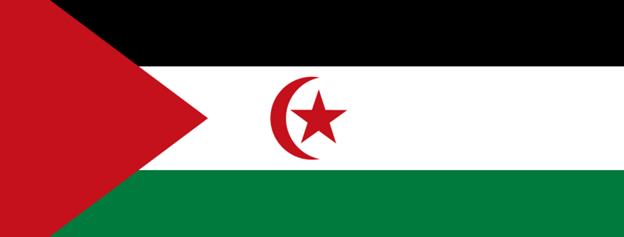
For supporters of the Sahrawi Arab Democratic Republic (SADR), the right to self-determination is non-negotiable, but rather an unmovable pillar of international law. This stance was reaffirmed by delegates like Algeria’s, who, quoting Woodrow Wilson, emphasized that «Self-determination is not a mere phrase; it is an imperative principle of action.» Similarly, Pakistan abstained from voting on a specific resolution considering that the text «does not fully address important principles, such as the principle of self-determination,» a concern shared by the Russian Federation and Guyana, who highlighted the need for a solution that «allows Western Sahara’s right to self-determination.»
The lack of consensus around these resolutions manifested in abstentions from China, Pakistan, and the Russian Federation, as well as Algeria’s non-participation in the vote. Russia and Algeria labeled the text as «unbalanced,» a clear indication that they do not consider it a neutral basis for a just resolution that meets the legitimate aspirations of the Sahrawis. Even delegations that voted in favor, such as Denmark, hurried to clarify that their vote «does not constitute recognition of Moroccan sovereignty over Western Sahara,» thus keeping the issue of the final status open and not prejudging the outcome of negotiations in favor of Morocco.
In summary, the independence of the SADR, within the framework of the UN and its legal literature, as well as public international law, the doctrine (as in the Stimson doctrine), and principles such as Rebus Sic Stantibus—alongside the 1975 Hague ruling on Western Sahara—consistently support the right to self-determination for Western Sahara without risking or setting a precedent for illegitimate processes against internal law or the principle of territorial integrity. Instead, the Sahrawis are not separatists but a people awaiting decolonization in Africa.
Although Moroccan diplomacy may attempt to portray the issue as complex, it is, in fact, firmly rooted in the right to self-determination. Despite the efforts to find a «political solution,» persistent international criticism and the refusal to recognize Moroccan sovereignty over the territory underline that any lasting and legitimate resolution must ultimately respect the will of the Sahrawi people. The struggle for self-determination in Western Sahara remains, therefore, a matter of fundamental principles and historical justice on the global stage.
Additionally, let us remember that the attempt to politically validate an unjust legal situation that does not adhere to the law is what the Stimson doctrine anticipates with the phrase «ex injuria jus non oritur» (unjust acts cannot create law), referring to Japan’s unilateral takeover of Manchuria, a situation similar to the violation of the rights of the Sahrawis by the Moroccan regime.