

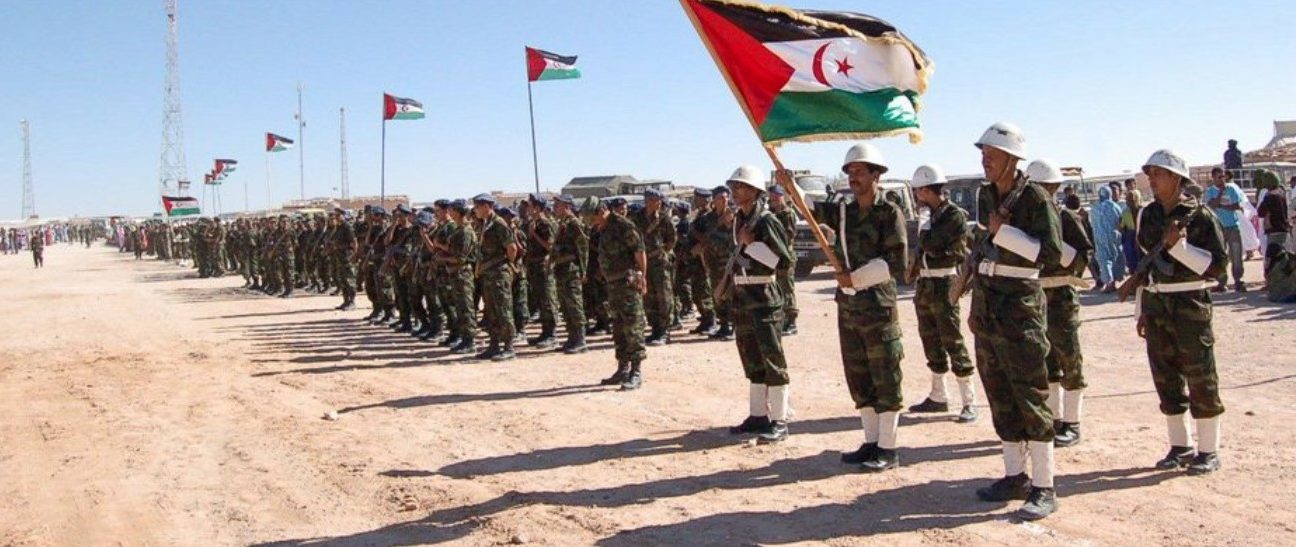
John Bolton, a diplomat and former National Security Advisor of the United States, is known for his firm stance on foreign policy. Although his career has focused on issues of global security and defense, he has shown support for the rights of the Sahrawis and diplomatic solutions to the Western Sahara conflict. Bolton has advocated for respect for Sahrawi self-determination and has backed international efforts to promote peace and stability in the region. His position reflects his commitment to the peaceful resolution of conflicts and the protection of human rights in the area.
From Spain, Koldo Salazar was able to interview him for Otralectura.com.

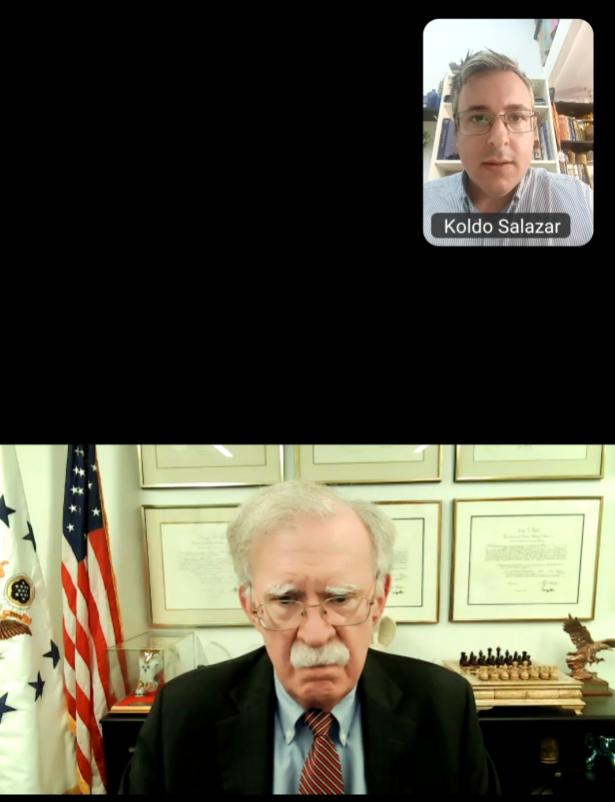
Ambassador John Bolton with International analyst Koldo Salazar
INTERVIEW
Question: How is your perception of the major developments in the situation in Western Sahara since 1975, starting with the Madrid Agreements between Spain, Morocco, and Mauritania, which led to a conflict between the Polisario and these countries? Additionally, how do you view the subsequent efforts, such as the Baker Plan and the significant diplomatic efforts led by Mr. James Baker to prepare for a referendum? What is your perception of the evolution and development of this situation over the years, involving Morocco, Polisario, and Western Sahara?
John Bolton answers: Well, I thought it was very clear to us that in 1991, after the first Gulf War, when Saddam Hussein was expelled from Kuwait, that there were a lot of changes in the Middle East and then this was a time for probably big progress particularly in questions that had when it seen no progress for a long time. In the Western Sahara looked like a perfect opportunity when we saw willingness by the government of Morocco to allow a referendum to go ahead. And, you know, it was they had agreed it would be based on the Spanish census in 1975, which didn’t seem like it was going to be very hard to do. Honestly, it was about 80,000 people eligible to vote and everybody agreed to creating MINURSO, have the ceasefire and then we would the referendum on the future in the Western Sahara and it was something that we probably could have did very quickly, but what happened was we had this and this is why the peacekeeping operating for the Iraq US military personnel involved historically from, participating in the peacekeeping one where both the parties thought that the US participation would make it fair because the American military personnel would integrity that they they’ve made the referendum part Morocco wasn’t cooperating.
And, you know, at this point the Bush administration as we were to find out ended in the election of 1992, we worked to try to see if we could get the referendum held. We thought it should have been fairly quickly. it’s not a huge operation, but it failed and when the Clinton administration came in US support for the referendum just went silent at that point. So it wasn’t until Koffi Annan who was then The Secretary General of United Nations called Baker in late 1994 and said, look, you passed this resolution. The Security Council resolution in while you were Secretary of State, would you come and see if you can make this work? And Baker agreed, he called me and he wasn’t all that familiar with the Western Sahara since I I’m sure I had told him that wouldn’t be much controversy about it. we’d get it passed fairly quickly, which we did and then and then it was blocked. But so he really began in 1994 or early 1997. Kofi called him in late 1996 and that’s when we began to work on what became the Houston Accords.
Question: In this discussion, you are talking about the resolutions of the United Nations Security Council. However, at the same time, we see that international law recognizes the self-determination of the Sahrawi people. The International Court of Justice (ICJ) clarified in 1975 the differences in cultural, linguistic, and political links between the Sahrawi tribes and the Kingdom of Morocco, emphasizing that the tribes never possessed sovereignty or legal ties with Morocco. Currently, Morocco has not shown any commitment to holding a referendum, as you mentioned. Instead, they propose an alternative plan for an autonomous region in Western Sahara. From the perspective of international law and doctrines such as that of Stimpson, which address illegal situations, is it correct to say that such measures are not legally valid because they attempt to establish law where law cannot be created unilaterally?
John Bolton answers: Moroccans think they’ve got control and, you know, they may well engineer their own referendum at some point. What a surprise it’ll be when people vote to be annexed by Morocco. This was not hard to do and, you know, even the subsequent court decisions about Moroccan sovereignty and the rest of it. The basic point was, let the people decide.
That’s where sovereignty comes from. It doesn’t come from international law, it comes from the people. And if you gave them a free and fair referendum, they’d decide whatever they want. Maybe they would decide to join Morocco, nobody thought so, especially the moroccans, which is why they realized they made a mistake in saying the vote should go forward. And the only question really for the last 30 years has been, do the people get a vote? Do they get a chance to choose independence if that’s what they want, or do they not? the moroccans fear the result of a referendum and unless somebody does something about it, they’re just never going to permit a truly free and fair election.

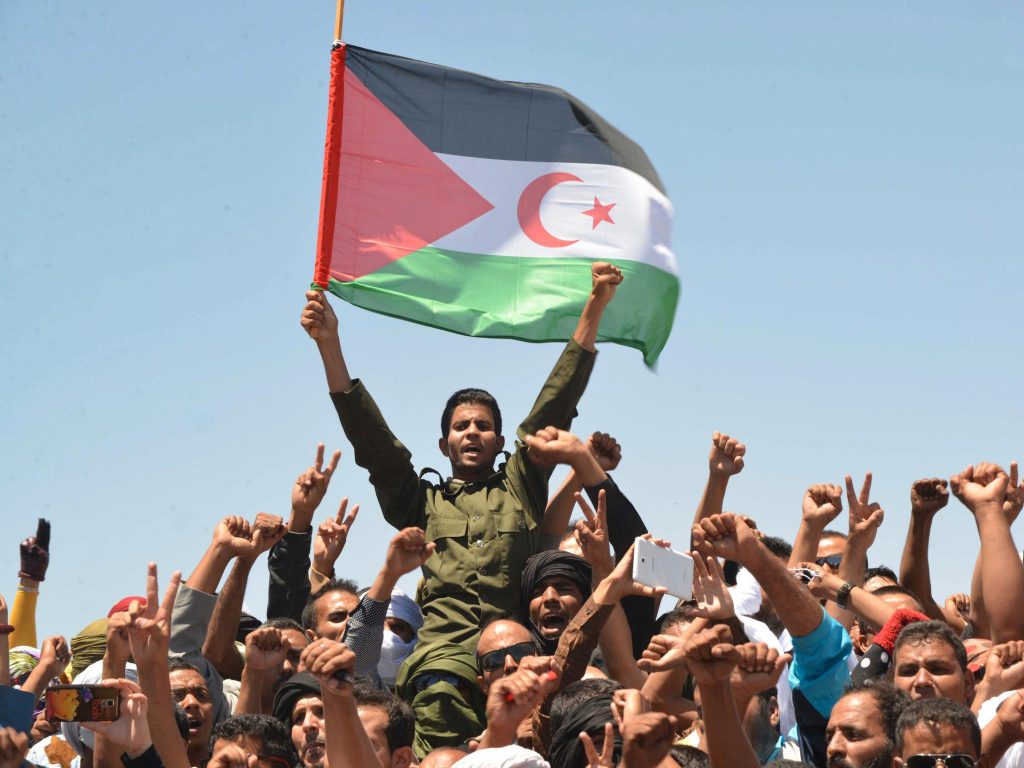
Question: The war started again in 2020 from the El Guerguerat problem on the international border. Uh, and now we see, for example, a big effort of diplomacy from Morocco and his lobbies in European countries like Spain, or the European Union, to talk about this, um, to avoid the referendum and make this autonomous plan. But at the same time, they are doing this to try to support the vision of the Polisario as a terrorist group. And they try to make links with Iran, with Hezbollah, with even Al-Qaeda and other terrorist groups. And I see in the United States, two Congressmen, Mr. Wilson from the Republican Party and Mr. Panetta from the Democrat Party, making a petition to put Polisario on the terrorist group list. What is your opinion about this? In what way are we watching this conflict?
John Bolton answer: Well, I don’t think that resolution will go anywhere. I don’t think it really has much support, although it’s not an issue that is familiar to many people, so it may, they may try to kind of get it through without. But I’ve, I’ve been, I think the first time I went to Tindouf was about 30 years ago. And I didn’t see any sign of Marxist or jihadist or Iranians or anything else and I’ve been there many times. And I’ve talked to many people in the Polisario, talked to people with the spanish government in particular, that know the circumstances in the Western Sahara, and this is just propaganda by the moroccans and their supporters, there’s no evidence of this. You know, you’ve got American NGO working in camps around Tindouf which are supporting things, and providing humanitarian assistance. We’d have heard of something I mean, you can’t carry out a charade like that, for a sustained period and not have it, not have the truth come out. So, I think it’s outrageous, but you know that, that’s how desperate I think they’re getting.
Question: How many interests has Morocco on this? Because they have local problems with another countries like Algeria. On this way, we see, for example, that Algeria has the responsibility to take these Saharawi people in Tindouf, and they have them there and Spain, for example, now, they recognize the sovereignty of Morocco. We had a scandal some years ago when newspapers filtering a letter from the President of Spain, Pedro Sanchez, talking about Western Sahara under the same vision of Morocco. Do you believe that parallel to this diplomatic work of Rabat, they have spent a lot of time and a lot of money on the lobby to spread their own version of the situation? And this is a problem or a big risk for law enforcement, international public law enforcement and the freedom, the defense of the people around the world under the philosophy of the Western world, United States of America and Europe?
John Bolton answer: Yeah, I think it’s a very negative consequence, I mean obviously there’s a lot going on in the Sahel. The relations between Morocco and Algeria have been banned for a long time. Many people see this as a surrogate conflict. I was once with Baker in ninety-seven, leading up to the Houston Accords. We visited Morocco, there was a map in the king’s chambers, normally the doors were closed but the doors were open and showed Morocco as they saw it, which included about half of Algeria, Western Sahara, and much of northern Mauritania, so you know this is not appropriate to be told about international law when they clearly have larger questions. And I think, in a sense, the POLISARIO and the Sahrawis are caught in the middle of a bigger conflict.
All I’ve ever asked for is a referendum. Again, to me, this is not hard to do. It’s getting harder now because the people who are supposed to vote are dying. And I think, you know, we have to consider that the US position is nine-tenths of the law, and that’s what the Moroccans are playing. They’re just playing. They’re just kind of sitting there behind that and hope that more and more people recognize that. They had the unfortunate example of Trump first recognizing Moroccan sovereignty in order to get the Abraham Accords. The Moroccans would have given an Abraham Accords with Israel. They have practically done it before and on at least two occasions I am aware of. They want full diplomatic recognition with Israel. Trump didn’t have to make that concession. To me, it doesn’t change anything. The Security Council resolutions say there should be a referendum, and that’s what we should all be doing.
Question: There’s sometimes when we talk in the University about the referendum and about international law we have a questions about some problem Morocco is creating in the land they catch and is the mobilization of population from Morocco to West Sahara. Sometimes some scholars think all these people Who are living there at the time of referendum have the right to vote, other say no, only the people of the census is staying doing in nineteen seventy-four and his descendants. On this point what is the situation what did you believe is people have the right to vote?
John Bolton answer: We proceed on the basis of Spanish census which ain’t perfect but it was the only thing in a mobile population that said these are the people in Western Sahara. Now Moroccans have been shipping into Western Sahara for decades now, because they keep hoping that maybe they get down there and they can fix the outcome of the referendum. I feel is the Moroccans gets into Western Sahara and they say independence for Morocco isn’t a bad idea. So the all Moroccan strategy, the Green March and all things they are trying over the years has worked enough for them yet that they’re going to take their own referendum believing MINURSO will just do it on their own. That tells you something about when the real feelings of the people are.
Question: We have as well the problems of the borders and the agreements between Morocco, European Union and some countries of European Union about the natural resources like agreements of fishing on the West Sahara territorial waters or the phosphates of Fos Bucraa, for example, they use the natural resources and make business and money with that, do you think this can be considered as a crime under the International Law?
John Bolton answer: Well I think it’s invalid, I think until the status of the territory is finally determined the government of Morocco has no more right to grant official rights or mining rights for the phosphates and you know they got a bit about jury it does. It’s that that’s we want a referendum to determinate who really does have the authority to do this and what it’s what it’s done is hold up the economic development in Western Sahara or the Saharawi people I mean it’s certainly highly ilegitimate whether it’s a crime or not you know, I’m not sure but the Moroccans act with impunity because the Security Council won’t do anything to pull its own resolution.
Question: For finish, mister Bolton and with my gratitude and I know you are really busy, I want to ask about the perception of this conflict of the West Sahara in United States of America, the Congress of United States, the Senate even in the White House.
John Bolton answer: well, you know, it’s not well understood that mean I think that’s fair to say, there have been some american politicians who have take a particular interestes, senator in half of Oklahoma was a big advocate of saharauis and the referendum, senator Mike Rams. But somehow or another there some member who are fed this line about saharauis and POLISARIO being agents of Iran, and it’s not true I mean I have looked at this there during the Cold War shore of the Soviet side helped fund them some national liberation movement if I thought they are not been agents of Bulgaria or Soviet Union at the time that I got about with them. I believe they like the algerians took side the benefit them at the time. That’s not the issue we were confronting, I mean the history is the history. The question is the people of the Western Sahara get to vote their own future or do they not? And I’ve never seen any conduct by the POLISARIO that would render inappropiate for them to be representatives of the saharauis, that’s who they vote for, so the whole thing has been really a tragedy for ordinary people who wanna get out of the Camps of Tindouf and back where they live before and there’s one thing standing away at that, that’s the goverment of Morocco.